
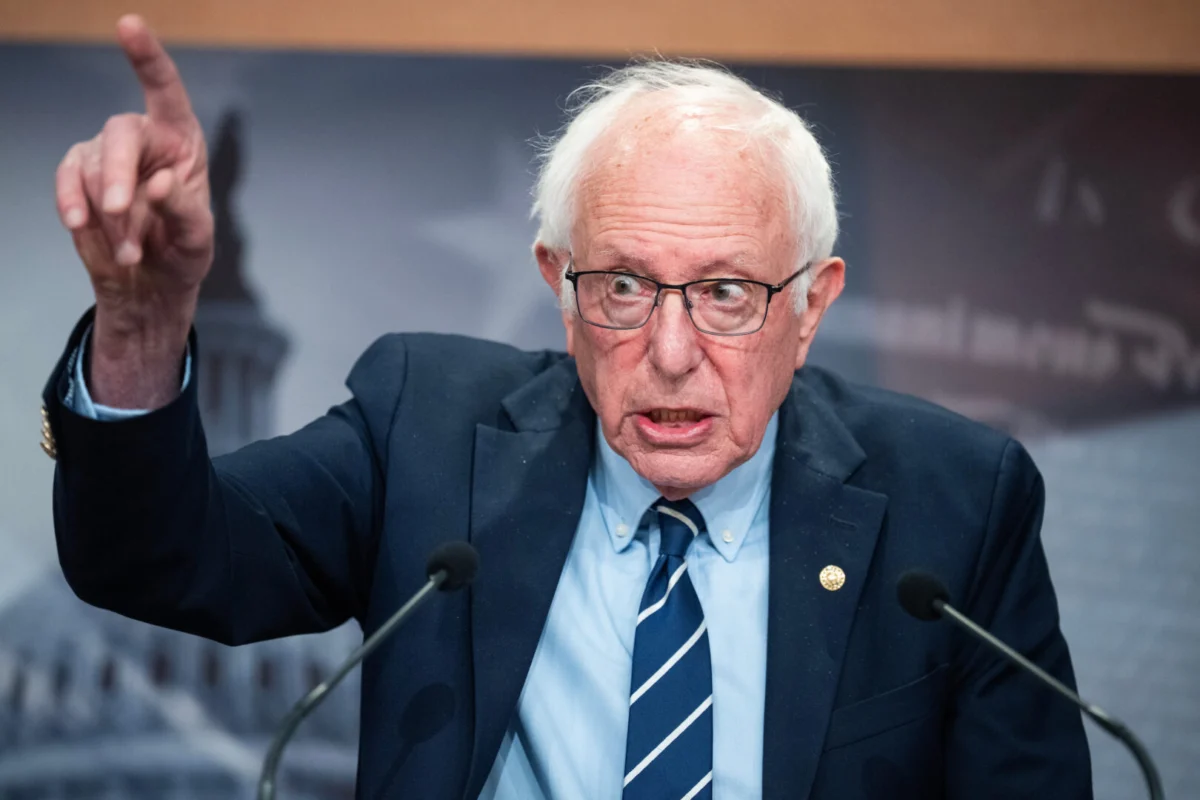
The United States Senate on Wednesday decisively defeated an effort, largely along party lines, spearheaded by Senator Bernie Sanders (I-Vt.) to halt the sale of $446.8 million worth of weapons and equipment to Israel through two joint resolutions of disapproval. The votes underscore the persistent, albeit increasingly challenged, bipartisan consensus on U.S. military support for Israel, even as a growing faction within the Democratic Party voices significant concerns over the conduct of Israel’s ongoing military operations and the humanitarian consequences.
The first resolution specifically aimed to block a $295 million transaction for D9R and D9T Caterpillar bulldozers, equipment that critics argue has been instrumental in the demolition of Palestinian homes and the expansion of Israeli settlements. The second resolution sought to disapprove a $151.8 million sale comprising 12,000 general purpose 1,000-pound gravity bombs and associated support services, munitions that have drawn sharp condemnation from human rights organizations for their destructive potential in densely populated areas.
In two separate procedural votes, senators first rejected a motion to discharge the resolution concerning the bulldozers from the Foreign Relations Committee, with a vote of 40-59. Subsequently, a similar motion for the resolution targeting the gravity bombs failed 36-63. The outcomes reflect the formidable institutional barriers to blocking arms sales and the continued strength of pro-Israel lobbying within the U.S. Congress, even as public opinion and internal party dynamics show signs of evolution.
The Contested Armaments: Bombs and Bulldozers
At the heart of Senator Sanders’ challenge were the specific types of armaments involved and their documented uses in the Israeli-Palestinian conflict and regional confrontations. The D9R and D9T Caterpillar bulldozers are heavy-duty, armored vehicles frequently modified by the Israel Defense Forces (IDF) for military engineering purposes. These machines are known for their formidable capabilities in clearing obstacles, building fortifications, and demolishing structures. Human rights groups and international observers have extensively documented their use by Israeli forces in the demolition of Palestinian homes, particularly in the West Bank and Gaza, often in areas designated for settlement expansion or security zones. Critics argue that these demolitions contribute to the displacement of Palestinian families and undermine the viability of a future Palestinian state. Senator Sanders specifically highlighted their role in "razing refugee camps and build[ing] settler-only roads that make a Palestinian state physically impossible."
The sale of 12,000 general purpose 1,000-pound gravity bombs, likely variants of the Mark 83 series, raised even more profound humanitarian concerns. These unguided munitions are designed for broad area destruction, possessing a significant blast radius capable of causing extensive damage and civilian casualties, particularly when deployed in urban environments. Senator Sanders contended that these are "the same kinds of munitions dropped on Gaza, Lebanon and Iran that have killed innocent civilians amid Israel’s multiple wars in recent months." The ongoing conflict in Gaza, in particular, has seen widespread destruction and a staggering death toll, with international bodies and human rights organizations raising alarms about the proportionality and targeting practices of Israeli military operations. The use of such heavy ordnance in densely populated areas like Gaza has been a major point of contention, fueling calls for greater scrutiny of U.S. arms transfers to Israel.
A Shifting Congressional Landscape
The votes on Wednesday serve as the latest indicator of an evolving, albeit slowly, appetite among some Democrats for unquestioning support of U.S. arms provisions to Israel. While the resolutions ultimately failed by a substantial margin, the number of senators supporting Sanders’ initiative signals a growing dissent within the Democratic caucus. During a similar vote in July of the previous year, only 23 Democrats aligned with Senator Sanders in an attempt to block arms sales. The current votes, garnering 40 and 36 votes respectively, represent a notable increase in Democratic senators willing to publicly challenge the traditional U.S.-Israel military alliance.
This trend reflects a broader shift within the Democratic Party, driven by concerns over the humanitarian situation in Gaza, the expansion of Israeli settlements, and the policies of Prime Minister Benjamin Netanyahu’s right-wing government. Younger voters and progressive wings of the party have been particularly vocal in their criticism, pushing their representatives to adopt a more critical stance toward Israeli actions. This internal pressure is increasingly forcing centrist Democrats to grapple with balancing traditional alliances with growing calls for accountability and adherence to international humanitarian law.
Senator Sanders has been a consistent voice in this debate. In September 2023, he spearheaded a similar effort to block five arms sales to Israel, none of which garnered more than 19 votes in the Senate. The recent increase in support, while insufficient to pass the resolutions, suggests a momentum building among a segment of the Senate.
Historical Precedent and Legislative Hurdles
The mechanism used by Senator Sanders—joint resolutions of disapproval—is a rarely successful tool for congressional oversight of foreign military sales. Since 1974, when Congress amended the Foreign Military Sales Act (FMSA) to strengthen its role in reviewing arms transfers, only one such resolution has ever been enacted into law out of 127 filed. That singular success occurred in 1985, when congressional opposition prompted President Ronald Reagan to postpone a major arms sale to Jordan. This historical context highlights the extraordinary difficulty of overriding presidential foreign policy decisions regarding arms sales, particularly when faced with strong executive branch and powerful lobbying group opposition.
The Foreign Military Sales Act requires the President to notify Congress of proposed arms sales above a certain monetary threshold. Following this notification, Congress has a specified period (typically 30 calendar days for NATO allies and certain other partners like Israel) during which it can pass a joint resolution of disapproval to block the sale. However, such a resolution requires a simple majority in both chambers and is subject to a presidential veto. Overriding a presidential veto then requires a two-thirds majority in both the House and Senate, an exceptionally high bar that is rarely met. The current Senate votes fell far short of even a simple majority, underscoring the formidable procedural and political obstacles to blocking these sales.
Voices from the Senate Floor
The floor debate preceding the votes showcased the deep ideological and strategic divides within the Senate.
Senator Sanders, a vocal critic of the Netanyahu government, framed his effort as a moral imperative. "The time is long overdue for members of the U.S. Senate to start listening to the American people and not to AIPAC," Sanders declared, referring to the American Israel Public Affairs Committee, a powerful pro-Israel lobbying organization. He continued, asserting, "The time is now to end all U.S. military aid to the extremist Netanyahu government, and a yes vote is an important way forward." Sanders’ remarks directly challenged the influence of external lobbying groups and called for a re-evaluation of the U.S. commitment to the current Israeli government, particularly in light of its military conduct in Gaza.
Joining Sanders, Senator Jeff Merkley (D-Ore.) voiced his support, emphasizing the broader geopolitical implications. "Make no mistake: A vote to approve arms sales to Israel at this time would be seen as a message of approval for Trump and Netanyahu’s disastrous war against Iran. I will not send that message," Merkley stated. His comment highlighted concerns about the U.S. entanglement in a wider regional conflict and the perception of unwavering American endorsement of all Israeli military actions.
Even some typically moderate Democrats expressed reservations. Senator Mark Kelly (D-Ariz.), a member of the influential Armed Services panel, acknowledged the complexities. While affirming that he "cannot and will not abandon Israel," Kelly stressed the importance of asking "tough questions" of allies. He articulated growing concerns about strategic coherence, stating, "The United States and Israel are fighting a war against Iran without a clear strategy or goal." Kelly further criticized the expanded conflict in Lebanon, which he said was "putting innocent Lebanese civilians at risk," and the "ongoing violence against Palestinians and the demolition of their homes in the West Bank," concluding that "All of this has undermined the path forward for peace." These statements from a centrist Democrat underscore the deepening unease even among those traditionally supportive of the U.S.-Israel alliance.
Conversely, Republican leadership staunchly defended the arms sales. Senate Foreign Relations Chairman Jim Risch (R-Idaho) argued that rejecting the sales would send a dangerous message of abandonment to a key ally, leaving Israel vulnerable to further attacks, particularly from Iran. "That is unacceptable," Risch asserted, emphasizing the importance of American reliability and the strategic imperative of supporting Israel’s security needs in a volatile region. This perspective reflects the long-standing Republican and conservative Democratic commitment to robust military assistance for Israel, viewing it as essential for regional stability and U.S. strategic interests.
Broader Geopolitical Backdrop: The Conflicts in Question
The Senate debate unfolds against a backdrop of escalating regional conflicts in which Israel is deeply involved. The primary flashpoint remains the conflict in Gaza, ignited by Hamas’s October 7, 2023, attacks. Israel’s subsequent military response has devastated large swaths of the Gaza Strip, leading to a severe humanitarian crisis and a death toll exceeding 35,000 Palestinians, according to health authorities in the Hamas-run enclave. The extensive use of aerial bombardment and ground operations has resulted in widespread destruction of infrastructure, including hospitals, schools, and residential areas, raising profound questions about civilian protection and international law.
Beyond Gaza, Israel is also engaged in ongoing hostilities with the Hezbollah militant group in Lebanon. Since October 7, cross-border exchanges of fire have intensified dramatically, leading to evacuations on both sides of the border and fears of a wider conflict. Hezbollah, a heavily armed and Iranian-backed organization, has launched rockets and drones into northern Israel, while Israel has responded with airstrikes and artillery fire deep into southern Lebanon.
The reference to a "joint U.S.-Israeli war against Iran" by Senators Sanders, Merkley, and Kelly, while not a declared conventional war, points to a broader, multifaceted confrontation. This "shadow war" involves Israeli strikes against Iranian assets and proxies in Syria, U.S. efforts to counter Iranian influence and nuclear ambitions, and cyber warfare campaigns. The implication is that U.S. military aid to Israel contributes to a regional dynamic that could draw the United States into more direct conflict. The sale of advanced weaponry, particularly bombs, is seen by critics as directly fueling these ongoing and potentially expanding conflicts.
The Humanitarian Dimension
The humanitarian implications of the arms sales were a central theme of Senator Sanders’ arguments. The use of 1,000-pound gravity bombs in densely populated urban environments like Gaza inevitably raises the risk of extensive civilian casualties and collateral damage. International humanitarian law mandates that parties to a conflict distinguish between combatants and civilians and take all feasible precautions to avoid civilian harm. Critics contend that the scale of destruction and loss of life in Gaza suggests a failure to adhere to these principles.
Similarly, the use of military bulldozers for demolition purposes in the West Bank, particularly in Area C (under full Israeli control), has long been a source of tension and human rights concern. These demolitions often occur without adequate notice or alternative housing, leading to the displacement of families and the destruction of livelihoods. Human rights organizations, including Amnesty International and Human Rights Watch, have consistently documented these practices and called for an end to what they describe as collective punishment and violations of international law. The approval of these arms sales, therefore, is viewed by opponents as implicitly endorsing or enabling practices that contribute to human rights abuses and exacerbate humanitarian crises.
Lobbying Influence and Political Divides
The debate also highlighted the enduring influence of lobbying groups on U.S. foreign policy. Senator Sanders’ direct reference to AIPAC underscores the significant role organizations like the American Israel Public Affairs Committee play in shaping congressional attitudes towards Israel. AIPAC is one of the most powerful lobbying groups in Washington, spending millions annually on campaign contributions and lobbying efforts to ensure continued robust U.S. support for Israel. Their extensive network and strategic endorsements often make it politically challenging for members of Congress to vote against measures seen as supportive of Israel.
The votes further illustrate the growing internal divisions within the Democratic Party. While the party platform traditionally supports a strong U.S.-Israel relationship, a progressive base increasingly advocates for a more balanced approach that prioritizes Palestinian rights and international law. This divergence creates a tightrope walk for many Democratic lawmakers, who must balance the demands of their constituents and the party’s evolving values with the powerful influence of traditional pro-Israel lobbies and the broader bipartisan consensus that still largely underpins U.S. policy.
Implications for U.S. Foreign Policy and the U.S.-Israel Alliance
The Senate’s rejection of Sanders’ resolutions, while maintaining the status quo, carries several important implications. For U.S. foreign policy, it signals a continued commitment to providing Israel with the military means to pursue its security objectives, even amidst international criticism of its tactics. This unwavering support, however, risks alienating a growing segment of the international community and undermining U.S. credibility as a proponent of human rights and international law, particularly in the Global South.
For the U.S.-Israel alliance, the votes demonstrate its enduring strength, rooted in shared strategic interests and decades of cooperation. Despite the dissent from a minority of senators, the majority view in Congress remains that Israel is a vital strategic partner whose security is paramount. However, the increased number of dissenting votes from within the Democratic Party indicates that the nature of this alliance is under increasing scrutiny and could face more significant challenges in the future, particularly if the conflicts in the region continue to escalate or if Israel’s policies remain contentious. The "tough questions" raised by Senator Kelly, even as he affirmed support for Israel, suggest a desire for greater accountability and strategic clarity from Jerusalem.
Looking Forward
While Senator Sanders’ efforts did not succeed in blocking the arms sales, they undeniably brought critical scrutiny to bear on U.S. military aid to Israel. These votes will likely embolden progressive lawmakers and advocacy groups to continue pushing for greater congressional oversight and conditionality on future arms transfers. The trajectory of Democratic support for such measures suggests that while a full reversal of policy remains distant, the debate is far from over. As the humanitarian situation in Gaza remains dire and regional tensions persist, the question of how the United States arms its allies, and under what conditions, will continue to be a defining challenge for U.S. foreign policy in the Middle East.









Leave a Reply