
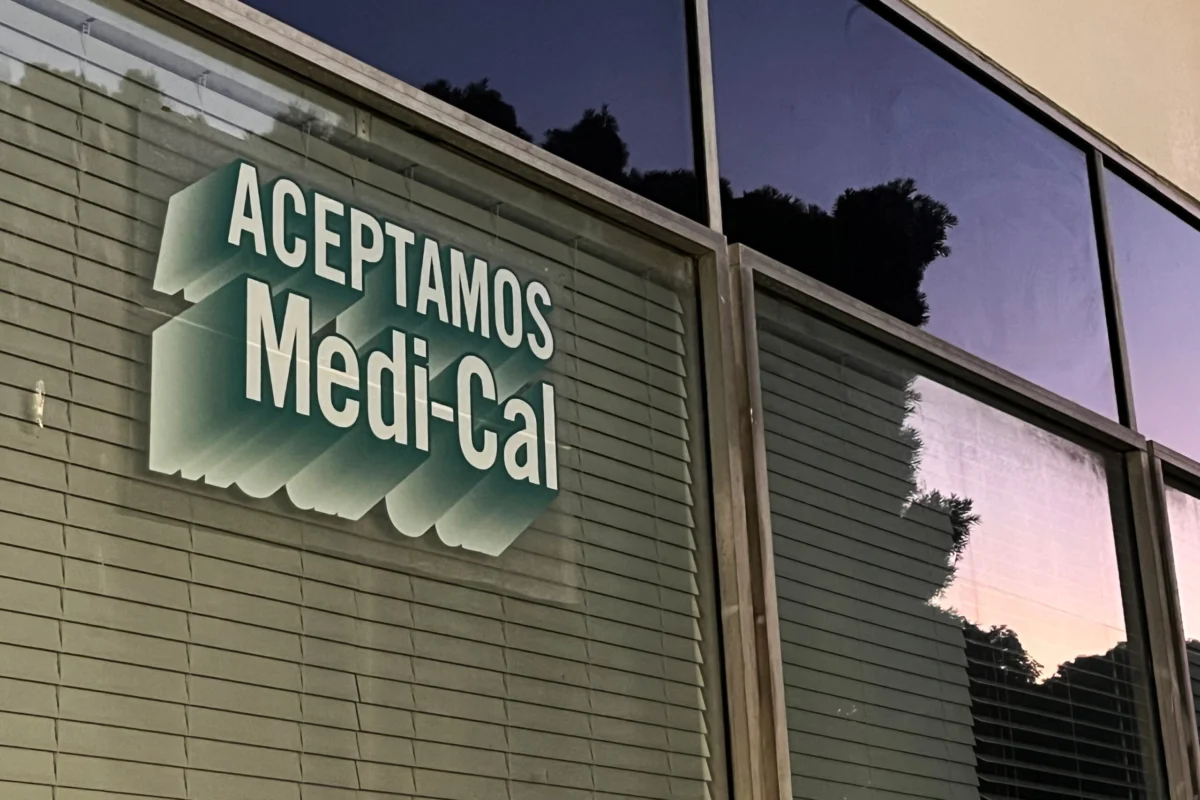
For months, a palpable sense of apprehension has permeated immigrant communities across California, casting a long shadow over essential services and making the work of community health advocates like María González in San Bernardino increasingly challenging. This cloud of fear is not an abstract phenomenon; it is fueled by a series of policy shifts and pronouncements that have created widespread anxiety about accessing vital public benefits, including healthcare and food assistance. In San Bernardino, a city where nearly a quarter of residents are foreign-born, this climate of uncertainty is directly impacting the well-being of vulnerable families.
The escalation of this concern began building over the summer, intensified by news of immigration raids conducted across Southern California. These enforcement actions, coupled with the Trump administration’s plans to share Medicaid data with Immigration and Customs Enforcement (ICE) and the implementation of state and federal restrictions on immigrant Medicaid eligibility, began to sow seeds of doubt and fear. The situation reached a critical juncture in November with the release of a new "public charge" proposal by the federal government. This proposal, if enacted, could significantly alter the landscape of legal immigration, potentially blocking certain immigrants from obtaining permanent legal residency if they or their family members have utilized public benefits, notably Medicaid.
González, a community health worker, witnesses the direct impact of these policy changes daily. Many of her clients, including U.S. citizen children of immigrants, still qualify for California’s Medi-Cal program, a cornerstone of the state’s healthcare safety net that provides coverage to over 14 million low-income residents and individuals with disabilities. However, an alarming trend has emerged: an increasing reluctance among these eligible individuals to enroll in or renew their Medi-Cal coverage. "Many people don’t want to apply," González shared, her voice laced with concern. "There are people who say they don’t even want to go outside and water their plants." This stark statement underscores the pervasive fear that even seemingly innocuous actions could be misconstrued as reliance on public benefits, potentially jeopardizing their immigration status or that of their loved ones.
A Reversal in Enrollment Trends
The chilling effect of these policies is evident in recent enrollment data. An analysis by KFF Health News revealed a significant outflow from Medi-Cal among immigrants without legal status. From June to December of the preceding year, nearly 100,000 immigrants without legal status disenrolled from the program. This figure represents approximately a quarter of all disenrollments during that period, a disproportionately high number considering that this demographic constitutes only about 11% of all Medi-Cal enrollees.
This represents a stark reversal of a previously upward trend. Until July, enrollment among immigrants without legal status had seen consistent month-over-month growth since California expanded Medi-Cal eligibility to all low-income residents, regardless of immigration status, in January 2024. This expansion was hailed as a landmark achievement in ensuring broader access to healthcare for vulnerable populations.
Official Explanations and Counterarguments
Tessa Outhyse, a spokesperson for the California Department of Health Care Services, which oversees Medi-Cal, attributed the recent declines primarily to the resumption of eligibility checks that had been suspended during the COVID-19 pandemic. Indeed, overall Medi-Cal enrollment had peaked in May 2023 and subsequently declined by approximately 1.6 million as these checks were reinstated.
However, two prominent researchers in the field, Leonardo Cuello from Georgetown University’s Center for Children and Families and Susan Babey from the UCLA Center for Health Policy Research, offered a counterpoint. They noted that California and most other states had fully reinstated eligibility checks by mid-2024. Therefore, according to their analysis, the resumption of these standard procedures alone cannot fully explain the precipitous drop in enrollment observed over the last year. Cuello suggested that the passage of federal legislation, such as the "One Big Beautiful Bill Act," and executive orders introducing further changes, have been significant drivers of this disenrollment trend.
Surveys Illuminate the Depth of Fear
Broader surveys provide compelling evidence of the widespread fear influencing immigrant communities’ decisions regarding public benefits. A KFF/New York Times survey found that immigrant adults nationwide, particularly parents, are increasingly avoiding government programs that provide assistance with food, housing, or healthcare. This avoidance is driven by a desire to prevent drawing attention to their own or a family member’s immigration status, impacting not only those without legal status but also lawfully present residents and naturalized citizens.
Cuello highlighted the particular concern surrounding parental avoidance of these programs. Given that approximately one in four children in the U.S. has an immigrant parent – and most of these children are U.S. citizens – their parents’ decisions have a direct impact on the health and well-being of American-born children. This phenomenon may help explain a nationwide enrollment drop of nearly 3% in Medicaid and the Children’s Health Insurance Program (CHIP) during the first ten months of the previous year. Data compiled by Cuello’s Georgetown colleagues further indicated a more substantial 5.6% decline in enrollment among California children during the same period.
A Recurrent Pattern of Deterrence
This is not the first time that concerns about public charge have had a chilling effect on program participation. During the first Trump administration, the criteria for public charge were broadened to include the use of Medicaid and other food and housing assistance. This policy shift led many U.S. citizen children and other eligible household members to forgo essential programs, even after legal challenges and the subsequent rescission of the rule by the Biden administration. Louise McCarthy, president and CEO of the Community Clinic Association of Los Angeles County, which represents approximately 70 health centers in the Los Angeles area, recalled the significant confusion and lasting impact of that earlier policy. "Community health center staff are still working to undo the effects of the first rule," McCarthy stated, underscoring the difficulty in fully restoring trust once it has been eroded.
The "Public Charge" Proposal: Expanding the Scope of Scrutiny
The current "public charge" proposal aims to redefine who might be considered a burden on the government. Under existing regulations, only individuals reliant on cash assistance programs or those requiring long-term, government-funded institutionalized care may face scrutiny as a public charge when applying for visas or permanent residency. However, the proposed rule would expand this definition to include the use of Medicaid and other non-cash public benefit programs. Immigration officers would also be granted greater discretion in determining whether an individual is likely to become dependent on government resources.
The Department of Homeland Security (DHS) asserts that these proposed changes are necessary to enhance the agency’s ability to assess an immigrant’s risk of becoming reliant on government assistance, aligning with a "long-standing policy that aliens in the United States should be self-reliant and government benefits should not incentivize immigration." A public comment period for this proposal concluded in December. DHS did not provide a timeline for a final decision on the rule.
Projected Savings and Stark Predictions
The DHS projects that these regulatory changes could lead to significant cost savings for federal and state governments, estimating nearly $9 billion annually from individuals disenrolling from or forgoing enrollment in public benefit programs.
However, analyses by KFF offer a more concerning outlook on the potential human cost. A KFF analysis of the proposed rule estimated that it could result in the disenrollment of 1.3 to 4 million individuals from Medicaid or CHIP. Alarmingly, this figure includes as many as 1.8 million U.S. citizen children who could lose their health coverage.
Benyamin Chao, supervising health and public benefits policy manager at the California Immigrant Policy Center, characterized the proposal as a deliberate tactic to instill fear and anxiety. He described it as part of an "assault on lawfully present immigrants and U.S. citizens who are family members, and just the general community."
Beyond Healthcare: Food Security at Risk
The fear surrounding public charge is not confined to healthcare access; it is also expected to decrease enrollment in anti-hunger programs, such as the Supplemental Nutrition Assistance Program (SNAP), known in California as CalFresh. Mark Lowry, who heads the Orange County Food Bank, expressed grave concerns about the potential strain on food pantries. He warned that a combination of disenrollment related to the "One Big Beautiful Bill Act" and the anticipated drop in CalFresh participation could overwhelm emergency food systems. "There’s no way that the emergency food system has the capacity or resources to address those needs," Lowry stated, highlighting the critical role federal nutrition programs play in providing food aid.
Resilience and Immediate Needs: A Different Perspective
Despite the pervasive climate of fear, some immigrant communities continue to access essential services, driven by immediate needs. Juana Zaragoza, who manages a program in Oxnard assisting predominantly Indigenous Mexican farmworkers with Medi-Cal enrollment, reported that overall enrollment and reenrollment rates have remained steady in recent months. Neither Zaragoza nor the community members she serves are widely aware of the public charge proposal, she indicated.
For many in her community, the immediate need for healthcare often outweighs concerns about future immigration consequences. "We encounter a lot of people who are balancing: what benefits me now and what benefits me later," Zaragoza explained. "Some just want to cover their needs in the moment." This perspective underscores the complex calculations that families make when navigating the intersection of essential needs and the looming threat of immigration enforcement and policy changes. The coming months will likely reveal the full extent of the impact of these policies on the health and well-being of immigrant families and their U.S.-born children.










Leave a Reply