
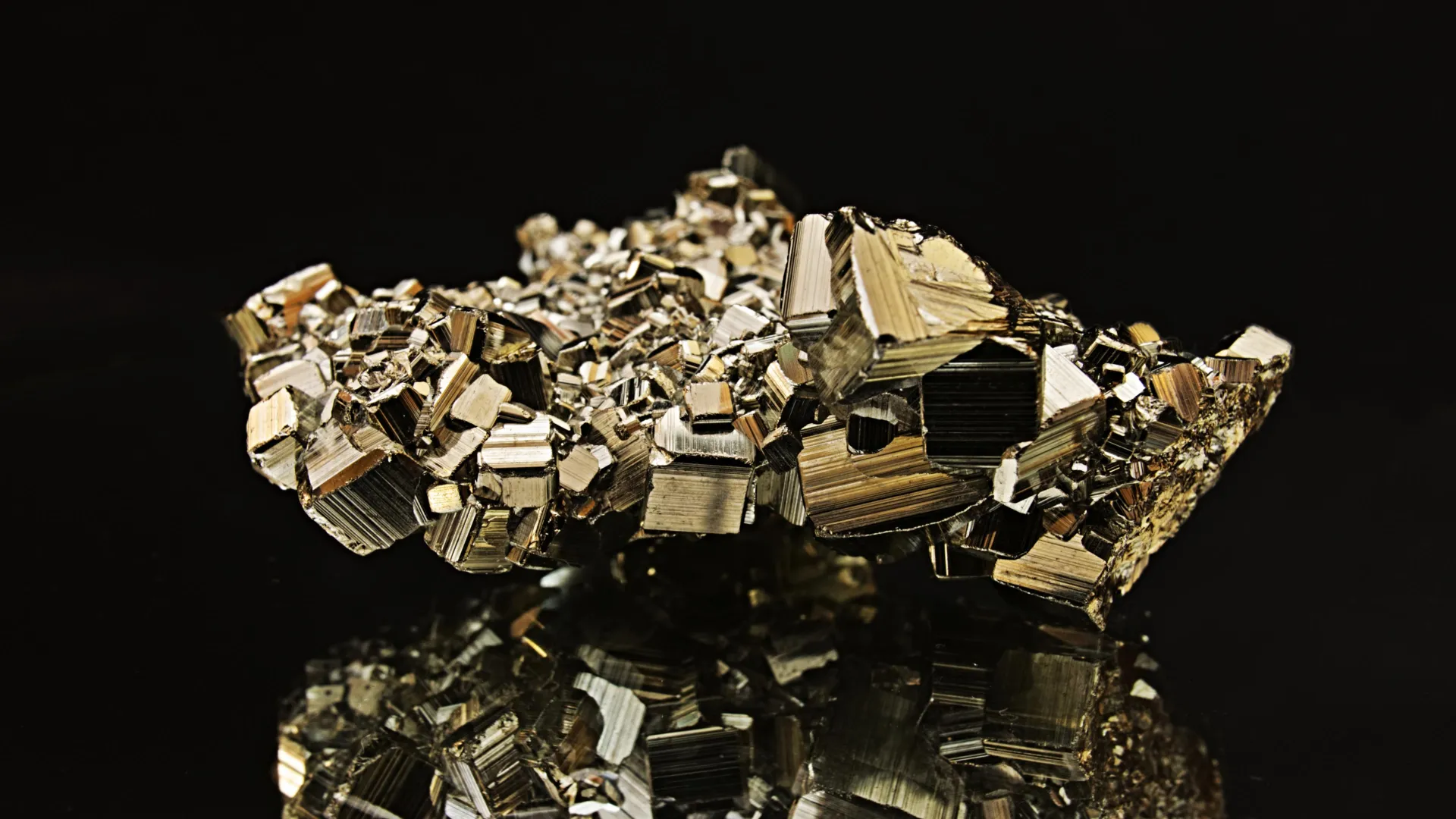
The relentless demand for lithium, the indispensable element powering our modern technological landscape and the global transition to cleaner energy, is pushing scientists and geologists to explore unconventional frontiers. While traditional mining operations continue to grapple with cost-effectiveness and environmental stewardship, a groundbreaking discovery in ancient sedimentary rocks and a renewed focus on industrial byproducts are offering tantalizing possibilities for a more sustainable lithium supply chain. Researchers at West Virginia University have identified significant lithium deposits within pyrite in middle-Devonian shale, a finding that challenges long-held assumptions about lithium’s geological behavior and could unlock vast, previously overlooked resources.
The Critical Role of Lithium in a De-carbonizing World
Lithium, a lightweight and highly reactive alkali metal, has become the cornerstone of energy storage technology. Its unique electrochemical properties allow lithium-ion batteries to store and release energy efficiently, making them the power source for everything from smartphones and laptops to electric vehicles (EVs) and grid-scale renewable energy storage systems. The aviation industry, for instance, relies heavily on lithium-ion batteries for powering portable electronic devices in the cockpit, leading to strict regulations regarding their transport. The inherent reactivity of lithium, while posing a fire risk if mishandled (hence the airline restrictions), is precisely what makes it so effective in battery chemistry. When pure lithium reacts with water, it generates heat and highly flammable hydrogen gas, underscoring the need for careful handling and containment in battery design and disposal.
The global push towards electrification and the urgent need to mitigate climate change have propelled lithium to unprecedented levels of demand. Projections indicate a dramatic increase in lithium consumption in the coming years. According to the U.S. Geological Survey, global lithium demand was estimated to be around 100,000 metric tons of lithium in 2022 and is forecast to reach over 1.5 million metric tons by 2030. This exponential growth places immense pressure on existing supply chains, which are primarily reliant on traditional mining.
Traditional Lithium Extraction: Challenges and Limitations
Historically, lithium has been extracted from two main sources: pegmatites, which are coarse-grained igneous rocks, and volcanic clays. These deposits, often found in regions like South America’s "Lithium Triangle" (Chile, Argentina, Bolivia) and Australia, are well-understood and have been commercially exploited for decades. However, scaling up production from these sources to meet projected demand presents significant hurdles.
Pegmatite mining, often involving open-pit operations, can be energy-intensive and generate substantial waste rock. The extraction process typically involves crushing the ore, followed by complex chemical processes to isolate and purify the lithium. Brine extraction, common in South America, involves pumping lithium-rich brines from underground salt flats into large evaporation ponds. While this method can be cost-effective, it is water-intensive and can have significant local environmental impacts, including water table depletion and ecosystem disruption. The long evaporation cycles, often spanning months, also contribute to a slower production rate.
Furthermore, the geographical concentration of these traditional resources raises concerns about supply chain security and geopolitical stability. As a result, the quest for new, more accessible, and environmentally responsible lithium sources has become a critical area of scientific and industrial research.
Exploring Unconventional Frontiers: Industrial Waste and Ancient Rocks
In response to these challenges, scientists are increasingly looking beyond conventional mining paradigms. One promising avenue is the recovery of lithium from materials previously considered waste. This includes mine tailings, the residue left over after valuable minerals have been extracted from ore, and drill cuttings, rock fragments generated during oil and gas exploration. These materials, often accumulated in vast quantities, may still contain valuable elements that were not economically recoverable at the time of their initial processing. This approach offers the dual benefit of resource extraction and waste remediation, potentially reducing the environmental footprint associated with both.
The research from West Virginia University represents a significant development in this unconventional exploration, focusing on a different, yet equally promising, source: ancient sedimentary rocks.
A Surprising Discovery in the Appalachian Basin
The West Virginia University research team, led by Professor Shikha Sharma of the IsoBioGeM Lab, has been investigating the potential of sedimentary rocks in the Appalachian basin for lithium recovery. Their focus has been on middle-Devonian shale formations, dating back approximately 380 million years. During this geological period, the region was submerged under ancient seas, creating environments conducive to the deposition of fine-grained sediments rich in organic material and minerals like pyrite.
Shale, characterized by its fine grain size and often high organic content, is a common sedimentary rock. Pyrite, often referred to as "fool’s gold" due to its brassy yellow metallic luster, is an iron sulfide mineral frequently found in sedimentary rocks, particularly those with organic matter. It is formed under reducing conditions, common in ancient marine environments where oxygen was scarce.
The researchers analyzed 15 samples of this Devonian shale, employing advanced geochemical techniques to determine their elemental composition. The findings, detailed by Shailee Bhattacharya, a sedimentary geochemist and doctoral student on the team, were unexpected and potentially transformative. They detected significant amounts of lithium intricately bound within the pyrite crystals embedded in the shale. "This is unheard of," Bhattacharya stated, highlighting the novelty of this association.
Lithium and Pyrite: An Unforeseen Partnership
The established geological understanding of lithium deposits primarily associates the element with silicate minerals in igneous rocks, evaporite brines, or certain clay formations. The direct association of substantial lithium quantities with pyrite, a sulfur-rich mineral, has been largely unexplored. This discovery is particularly noteworthy given the growing interest in lithium-sulfur (Li-S) battery technology within the engineering and materials science communities. Li-S batteries hold the potential to offer significantly higher energy densities than current lithium-ion batteries, albeit with challenges related to cycle life and sulfur dissolution. The unexpected geological link between lithium and sulfur in pyrite could provide valuable insights for both geological exploration and battery material development.
Bhattacharya’s ongoing research aims to unravel the mechanisms behind this unusual pairing. "I am trying to understand how lithium and pyrite could be associated with one another," she explained. This fundamental scientific question points to a significant gap in our understanding of lithium’s geochemical behavior in diverse geological settings, particularly in organic-rich, sulfur-bearing sedimentary environments. Potential mechanisms for lithium incorporation could involve:
- Diagenetic processes: During the transformation of sediment into rock, dissolved ions can be incorporated into mineral structures or trapped within interstitial spaces.
- Hydrothermal activity: Past hydrothermal fluids circulating through the rock formations might have transported and deposited lithium, which then became associated with pyrite formation.
- Adsorption onto organic matter: The high organic content of the shale could have facilitated the adsorption of dissolved lithium ions, which were subsequently trapped or co-precipitated with pyrite.
The Potential of Shale as a New Lithium Resource
The implications of this discovery are profound. If organic-rich shales, which are widespread across the globe, can indeed host significant amounts of recoverable lithium, they could represent a vast, untapped resource. This would significantly diversify the global lithium supply, reducing reliance on a few key geographical regions and potentially mitigating the geopolitical risks associated with lithium sourcing.
The widespread nature of shale formations is a critical factor. Vast deposits of shale exist in North America, Europe, and Asia, offering a decentralized potential for lithium extraction. This could lead to the development of regional lithium supply chains, enhancing energy independence and security for numerous nations.
However, Bhattacharya emphasizes the preliminary nature of the findings. "This is a well-specific study," she cautioned, highlighting the need for further research to determine the prevalence and economic viability of lithium in shale formations elsewhere. Key questions that need to be addressed include:
- Concentration variability: Are the lithium concentrations observed in these specific shale samples representative of broader shale deposits?
- Accessibility and recoverability: What are the most effective and economically feasible methods for extracting lithium from shale? This would likely involve advanced processing techniques beyond conventional mining.
- Environmental impact of shale extraction: While potentially less disruptive than traditional mining, the environmental implications of large-scale shale extraction and processing would need thorough assessment.
Broader Impact and Future Outlook
The potential to recover lithium from shale, alongside the ongoing efforts to extract it from industrial waste, offers a compelling vision for a more sustainable future for clean energy technologies. By reducing the need for extensive new mining operations, these unconventional approaches could significantly lower the environmental impact associated with lithium production. This includes minimizing habitat disruption, water usage, and the generation of mining waste.
The Biden-Harris administration, for instance, has made significant investments in securing domestic critical mineral supply chains, including lithium, to support the transition to electric vehicles and renewable energy. The U.S. Department of Energy’s Critical Materials Institute and various research grants are actively promoting innovation in mineral extraction and recycling. This discovery in the Appalachian basin aligns perfectly with these strategic objectives, offering a potential pathway to bolster domestic lithium production.
The concept of "circular economy" principles is increasingly being applied to resource management, and the recovery of lithium from waste materials and previously overlooked geological formations fits squarely within this framework. As Bhattacharya eloquently put it, "We can talk about sustainable energy without using a lot of energy resources." This sentiment underscores the critical need to innovate not only in energy generation and storage but also in the responsible sourcing of the materials that enable these technologies.
Timeline and Next Steps
- Pre-2023: Conventional lithium mining and brine extraction dominate global supply. Growing awareness of lithium demand challenges and environmental concerns spurs initial research into unconventional sources like mine tailings.
- Early 2023 – Present: West Virginia University research team begins systematic analysis of Devonian shale formations in the Appalachian basin.
- Late 2023 / Early 2024: Researchers identify significant lithium deposits within pyrite in shale samples. This groundbreaking finding is presented at scientific conferences and potentially submitted for peer-reviewed publication.
- Ongoing: Further research is needed to:
- Characterize lithium concentrations in a wider range of shale formations globally.
- Develop and test efficient, cost-effective, and environmentally sound extraction technologies for shale-hosted lithium.
- Assess the economic viability of large-scale shale-based lithium production.
- Investigate the potential for lithium recovery from other unconventional sources, such as deep-sea nodules or geothermal brines, which are also being explored.
The journey from a scientific discovery in an ancient rock to a commercially viable lithium source is long and complex. However, the findings from West Virginia University represent a significant stride forward, offering a beacon of hope in the global effort to secure a sustainable and responsible supply of the critical element that powers our electrified future. This innovative research underscores the importance of looking in unexpected places, both geologically and industrially, to meet the burgeoning demands of a de-carbonizing world.










Leave a Reply