
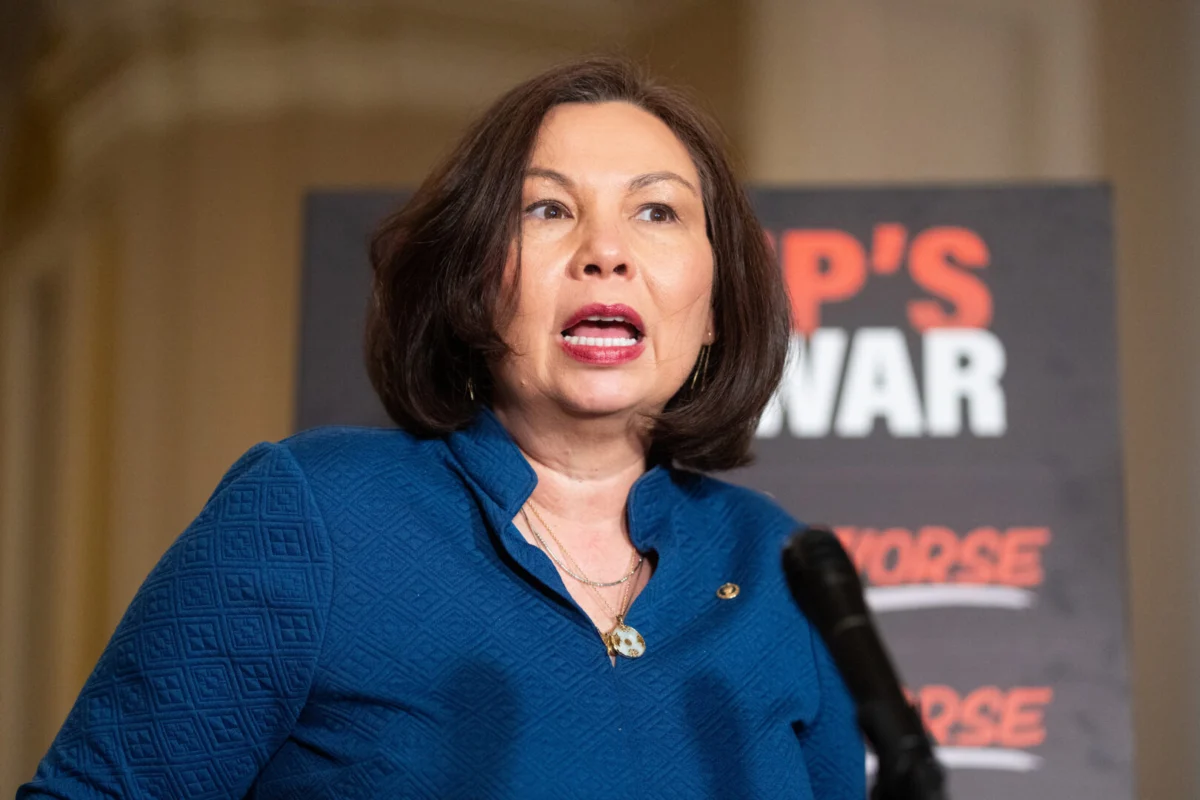
The latest legislative maneuver unfolded on Wednesday when the Senate, by a vote of 47-52, rejected a motion to discharge from the Foreign Relations Committee a joint resolution proposed by Senator Tammy Duckworth, D-Ill. This resolution aimed to mandate the president to "remove the United States Armed Forces from hostilities within or against Iran, unless explicitly authorized by a declaration of war or a specific authorization for use of military force." The vote effectively curtailed the measure’s advancement, marking the fourth such attempt by Democrats in what they have vowed will be a weekly barrage of votes, designed to compel senators to publicly declare their positions on the conflict until it ceases.
Escalating Congressional Showdown
The recurring votes underscore a deepening partisan divide over the undeclared war in Iran, now stretching beyond 47 days. Senate Minority Leader Charles E. Schumer, D-N.Y., voiced strong criticism of Republican inaction on the Senate floor Wednesday, stating, "Throughout all this miasma, all this mess, this horrible war, where are the Senate Republicans? Months into this war, and still no hearings, no testimony, no clarity on how it will end. It’s been 47 days already, where are you? And if Republicans vote no yet again, we will continue to force votes on these resolutions every week until either this war ends or Republicans get the courage to stand up to Donald Trump." This declaration signals a protracted legislative battle, with Democrats having already filed three additional Iran war powers resolutions ripe for procedural votes, and a further seven joint resolutions introduced earlier this week, poised for consideration in the coming weeks.
Consistently, these Senate votes on Iran war powers measures have followed a predictable pattern. Senator Rand Paul, R-Ky., has been the sole Republican to consistently break party ranks and support the resolutions, aligning with Democrats seeking to curb presidential war powers. Conversely, Senator John Fetterman, D-Pa., has diverged from his party, voting against these measures. The majority of Republicans have remained steadfast in their support for the ongoing military actions and President Trump’s strategic approach. Senate Foreign Relations Chairman Jim Risch, R-Idaho, articulated this stance, defending the president’s actions: "Not only does he have the right to do this, he has the duty to do this. He took an oath to defend the people of the United States of America." This argument typically posits that the president, as commander-in-chief, possesses inherent authority to protect national interests, especially in response to perceived threats, without requiring explicit prior congressional approval for limited engagements.
The Shadow of the War Powers Resolution
The legislative efforts are fundamentally rooted in the War Powers Resolution of 1973 (50 U.S.C. Chapter 33), a landmark piece of legislation enacted in the aftermath of the Vietnam War. This resolution, passed over President Richard Nixon’s veto, aimed to reassert congressional authority over military engagements, which critics argued had eroded significantly over decades, allowing presidents to commit US forces to conflicts without formal declarations of war.
Under the provisions of the War Powers Resolution, the president is required to consult with Congress "in every possible instance" before introducing U.S. armed forces into hostilities or into situations where imminent involvement in hostilities is clearly indicated by the circumstances. Crucially, if US forces are introduced into hostilities without a declaration of war or specific statutory authorization, the president must submit a report to Congress within 48 hours. Following this, the president must withdraw forces within 60 calendar days unless Congress has declared war, specifically authorized the use of force, or extended the 60-day period. A 30-day extension is permissible if the president certifies that unavoidable military necessity respecting the safety of US forces requires their continued presence for a safe withdrawal, extending the maximum unauthorized deployment to 90 days.
Historically, the War Powers Resolution has been a source of recurring tension between the executive and legislative branches. Presidents from both parties have often viewed it as an unconstitutional infringement on their powers as commander-in-chief, frequently circumventing or providing minimal compliance with its reporting requirements. Congress, in turn, has often lacked the political will or unity to enforce its provisions robustly, leading to a de facto expansion of presidential war-making authority. Notable instances include presidential actions in Lebanon, Grenada, Panama, Kosovo, and Libya, where presidents engaged in military operations without explicit congressional authorization, often citing inherent Article II powers or United Nations mandates. The current debate over Iran is a stark contemporary example of this enduring constitutional struggle.
Mounting Republican Unease and the 60-Day Deadline
While most Republicans have publicly supported the administration’s stance, signs of internal unease are beginning to surface, particularly as the 60-day statutory deadline, falling on April 29, approaches. This deadline, mandated by the War Powers Resolution, requires the president to withdraw forces from military conflicts lacking congressional authorization. Some Republican senators, who have historically shown sympathy towards non-Iran war powers efforts, are now signaling that this 60-day mark is a critical juncture for either ending the war or seeking formal congressional approval.
Senator Josh Hawley, R-Mo., who previously supported a Venezuela war powers resolution earlier this year before changing his stance, articulated this growing concern. "There’s the 60-day shot clock, so to speak, that we’re currently in the midst of, and I think that we can revisit this once we get to that point and see where we are," Hawley told reporters on Tuesday. He added, "Two weeks is a long time in the context of this conflict, and I would hope in two weeks this would be over." Hawley’s statement reflects a potential pivot point, suggesting that continued unilateral executive action beyond this deadline could trigger greater bipartisan calls for accountability or even a shift in Republican support. The pressure on these senators is amplified by their constituents, many of whom are increasingly vocal about the financial and human costs of protracted military engagements.
The Diplomatic Landscape and Economic Repercussions
The military engagement in Iran is currently unfolding within a fragile ceasefire, which is scheduled to expire on April 22. Despite this temporary lull in direct hostilities, the U.S. Navy continues its blockade of Iranian ports, a move that exerts significant economic pressure and maintains a state of low-level confrontation. Diplomatic efforts to de-escalate the conflict have been arduous and largely unsuccessful thus far. Pakistan, which has assumed a crucial mediating role, is actively working to arrange a second round of peace talks. This comes after initial discussions in Islamabad over the weekend failed to yield an agreement to end the war, as reported by The Associated Press. The complexity of the conflict, involving various regional and international actors, makes a swift diplomatic resolution challenging.
The economic implications of the conflict are already being felt globally and domestically. The blockade of Iranian ports, a major oil producer, contributes to uncertainty in global energy markets. This uncertainty, coupled with the inherent instability of a regional conflict, has already contributed to escalated gas prices for consumers and broader inflationary pressures. For many American families, the tangible economic burden of this undeclared war serves as a direct link to the necessity of congressional oversight and prompt resolution. Senator Tim Kaine, D-Va., a leading figure in the Democratic push for repeated votes, expressed optimism that these economic pressures, alongside public sentiment, could sway additional GOP votes. "We’ll have [a vote] all the weeks of this work period, including right up against the 60-day period," Kaine stated on Tuesday. He emphasized that lawmakers are hearing extensively from their constituents about the war, which may help to "sway some votes in favor of ending the conflict if the pace of this war continues, and there isn’t this comprehensive deal to end it, and people are continuing to suffer the escalated gas prices and inflation.”
Parallel Efforts in the House of Representatives
Concurrently, the House of Representatives is advancing its own version of an Iran war powers resolution, with a vote expected later this week. Lawmakers in the House agreed by unanimous consent Wednesday morning to prepare the resolution for a vote in the coming days. While the House measure faces its own set of political hurdles, there are indications of shifting support. Three of the four House Democrats who voted against a similar Iran war powers measure last month—Reps. Greg Landsman of Ohio, Juan C. Vargas of California, and Henry Cuellar of Texas—have now indicated their intention to support it this time. This suggests a growing consensus within the Democratic caucus, potentially driven by the sustained conflict and public pressure.
However, the path to adoption in the House remains challenging. It is currently unclear if any additional Republicans beyond the two who supported the last measure—Reps. Thomas Massie of Kentucky and Warren Davidson of Ohio—will cross party lines. This limited bipartisan support suggests that the resolution may still lack the necessary votes for adoption. Furthermore, even if the House measure were to be adopted, its impact would likely be symbolic rather than legally binding. As a concurrent resolution, it would probably be deemed nonbinding under a 1983 Supreme Court ruling in INS v. Chadha, which declared legislative vetoes unconstitutional. This ruling significantly curtailed Congress’s ability to unilaterally revoke executive actions without the traditional legislative process of presenting a bill to the president for signature or veto. Therefore, while a House vote would certainly send a strong political message, it would not directly compel the president to withdraw forces.
Broader Implications and The Road Ahead
The ongoing legislative struggle over the Iran conflict carries significant implications, not only for the current administration but also for the future balance of power between the executive and legislative branches regarding military action. The Democrats’ strategy of weekly votes aims to create sustained political pressure, forcing Republicans to choose between continued allegiance to President Trump’s foreign policy and adherence to congressional oversight responsibilities under the War Powers Resolution. This approach tests the internal cohesion of the Republican party, particularly those members who harbor a more non-interventionist foreign policy stance or are sensitive to fiscal costs associated with prolonged military engagements.
Beyond the domestic political theater, the conflict and the congressional response have broader geopolitical ramifications. An undeclared war, even one conducted under the guise of defending national interests, can erode international trust, strain alliances, and complicate diplomatic efforts to stabilize volatile regions. The involvement of mediators like Pakistan underscores the international community’s concern over potential regional escalation. The lack of a clear congressional mandate for the conflict could also be perceived by adversaries as a sign of internal disunity, potentially emboldening them.
As the April 29th deadline rapidly approaches, the pressure on the Trump administration to either end the hostilities or seek formal congressional authorization will intensify. The coming weeks will likely see an escalation of both legislative maneuvers and public debate. The outcome will not only determine the future of the engagement in Iran but also set a precedent for how future presidents and Congress navigate the delicate constitutional framework governing the use of military force. The fundamental question of who decides when and where America goes to war remains a contentious and unresolved issue, underscored by every vote cast in the halls of Congress on this critical matter.









Leave a Reply