
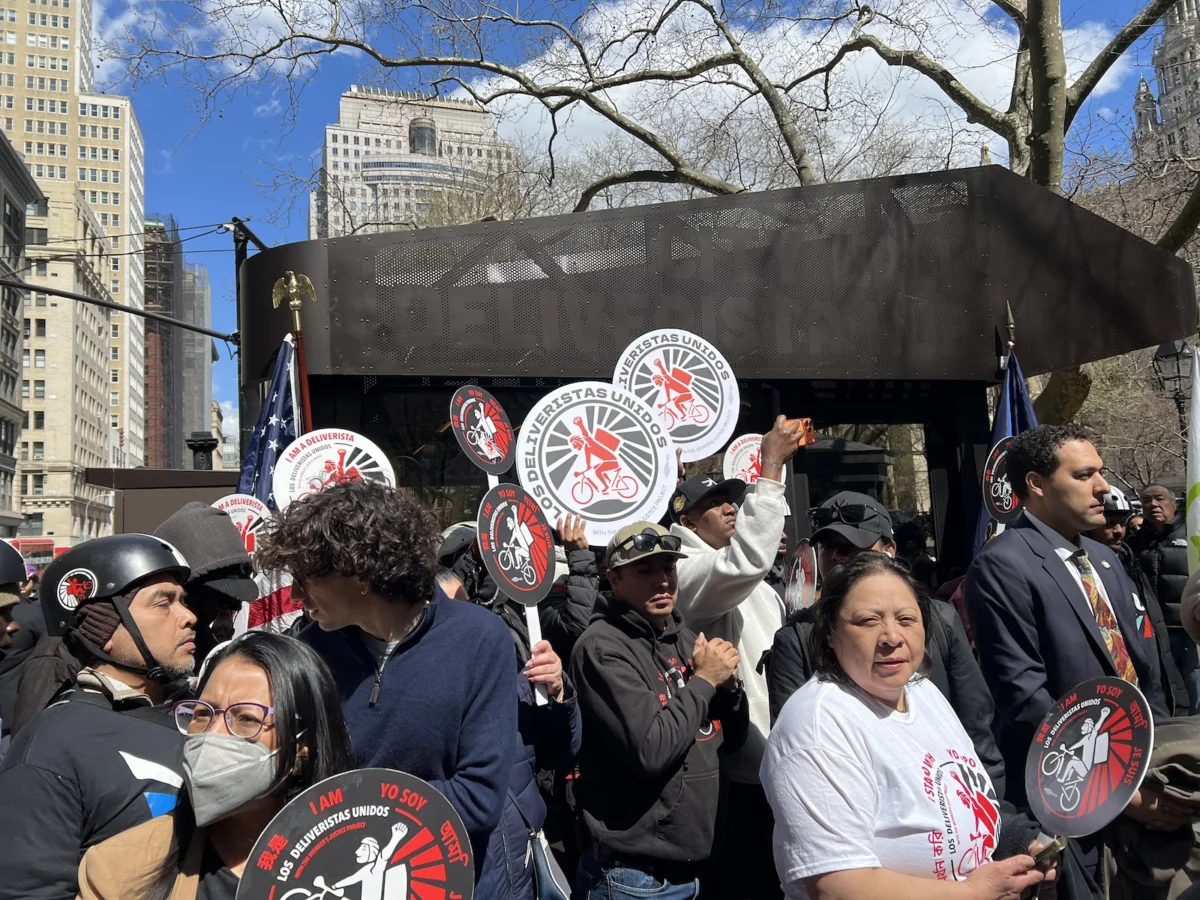
The forecast for downtown Manhattan last Tuesday warned of high winds and erratic gusts, yet the atmosphere surrounding City Hall felt more like a definitive arrival of spring. Beneath a high, brilliant sun, a crowd of municipal employees, labor organizers, and delivery workers gathered on a corner that had, until recently, been occupied by a derelict, vacant newsstand. The cause for the celebration was the official unveiling of the city’s first "deliverista hub," a sleek, modernist structure designed to serve as a sanctuary for the more than 80,000 app-based delivery workers who form the backbone of the city’s gig economy.
The structure, characterized by its clear glass windows and tall metallic columns, represents a significant victory for Los Deliveristas Unidos, a union of app-based delivery workers that has been campaigning for such infrastructure since 2021. For years, these workers—who navigate the city’s congested streets on e-bikes, scooters, and mopeds—have lacked basic amenities such as restrooms, safe charging stations, and protection from the elements. The opening of the Lower Manhattan hub marks the first physical manifestation of a long-promised network of rest stops intended to integrate worker protections into the very fabric of the city’s public realm.
A New Vision for Public Space
The transformation of a vacant newsstand into a functional worker hub is being hailed by urban planners and labor advocates as a paradigm shift in how New York City utilizes its limited sidewalk space. For decades, the city’s "public realm" has been designed primarily for pedestrians and commuters, often ignoring the needs of the industrial and service workers who facilitate modern urban life.
"This is what the public realm is made for," said New York City Parks Commissioner Tricia Shimamura during the ribbon-cutting ceremony. Standing before the hub’s industrial-chic facade, she emphasized that the project reflects a commitment to serving the people who keep the city running. "This is what it means for our city to serve the people who provide the essential services we all rely on every single day."
The hub is more than just a shelter; it is a statement of visibility. For many deliveristas, the job involves hours of isolation, exposure to extreme temperatures, and a constant search for accessible outlets or a place to sit without being asked to move along by private business owners. The new facility offers a designated space where workers can not only escape the rain or heat but also congregate, share information, and organize.
The Intersection of Labor and Climate Justice
The initiative for deliverista hubs sits at a critical juncture of labor rights and climate resilience. As New York City grapples with the increasing frequency of extreme weather events—ranging from record-breaking heat waves to sudden flash floods—the vulnerability of outdoor workers has become a pressing policy concern.
According to data from the Worker’s Justice Project, the vast majority of delivery workers in the city are immigrants who rely on two-wheeled electric vehicles. These vehicles make them particularly susceptible to "urban heat island" effects and the dangers of riding during severe storms. The hubs are envisioned as a decentralized network of "climate refuges" where workers can cool down during 90-degree days or dry off during the city’s increasingly volatile summer downpours.
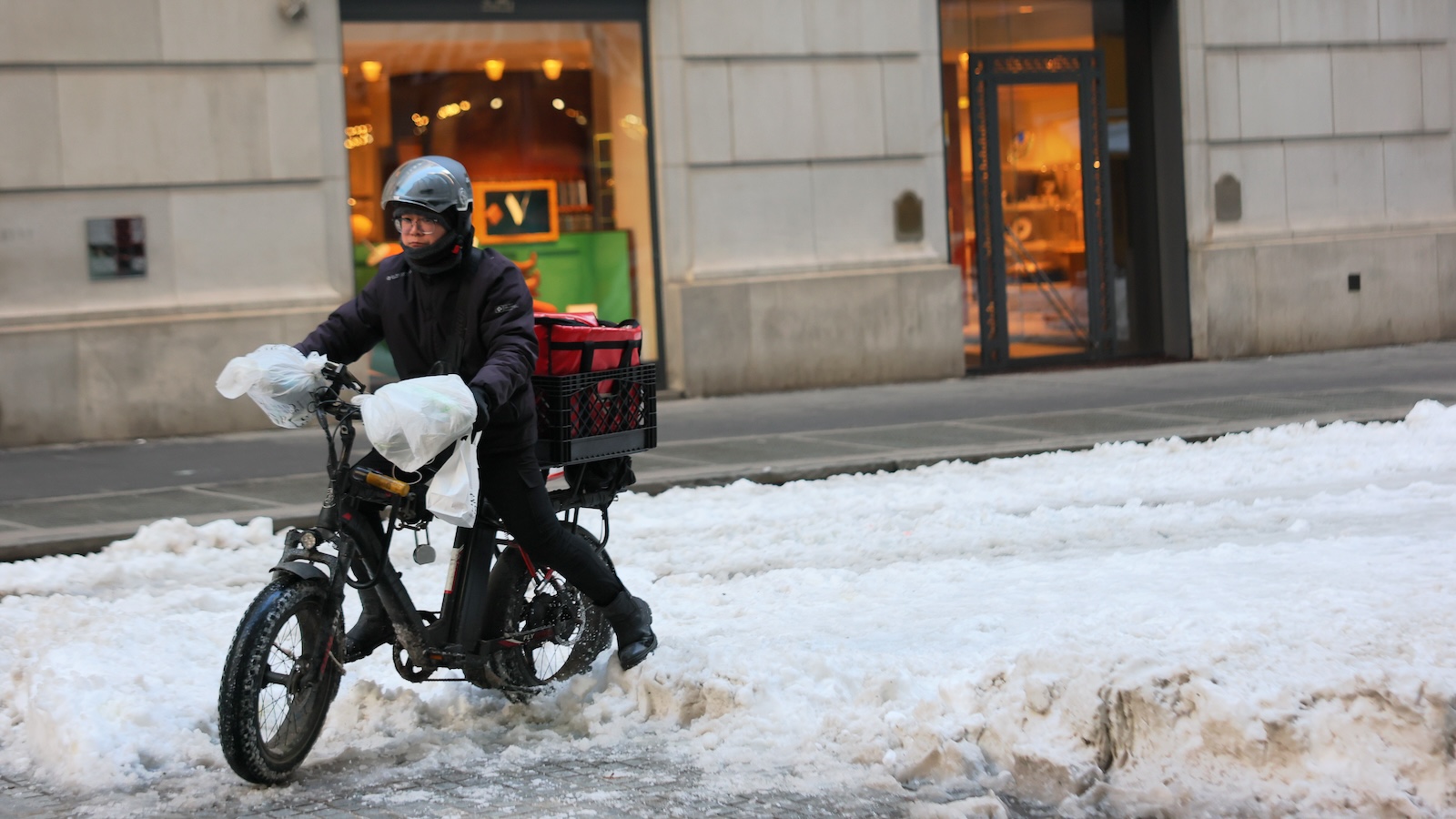
Furthermore, the hubs address a growing safety crisis regarding lithium-ion batteries. In recent years, New York City has seen a surge in fires caused by unregulated or malfunctioning e-bike batteries. The new hub includes a battery-swapping station where workers and cyclists can exchange a depleted battery for a fully charged, certified safe one for a fee of $2 per day. By providing a regulated environment for power needs, the city hopes to mitigate the risks associated with charging batteries in crowded residential apartments.
A Chronology of Advocacy and Political Will
The journey to the opening of the first hub was marked by years of bureaucratic hurdles and shifting political priorities. The concept was first popularized by Gustavo Ajche, the co-founder of Los Deliveristas Unidos, during the height of the COVID-19 pandemic. At a time when New Yorkers were sheltered in place, delivery workers were designated as essential, yet they found themselves barred from restaurants and public buildings, leaving them with no place to rest or use the bathroom.
"We were really isolated, with nowhere to go," Ajche said, speaking in Spanish. "I saw my colleagues struggling to find shelter from the cold and rain. I realized we had abandoned infrastructure all over the city, like these empty newsstands, that could be put to better use."
Despite the clear need, the project languished under the previous mayoral administration. Labor leaders noted that permitting delays and inter-agency "red tape" between the Department of Transportation, the Parks Department, and the Department of Buildings stalled progress for nearly three years.
The momentum shifted significantly with the inauguration of Mayor Zohran Mamdani. Recognizing the symbolic and practical importance of the project, Mamdani made the completion of the first hub a priority for his administration’s first 100 days. The actual physical construction of the Manhattan hub took only about a month once the final approvals were secured, highlighting that the primary obstacles were political and administrative rather than technical.
Funding and Legislative Support
The project’s realization was bolstered by significant federal support. New York Senator Chuck Schumer was instrumental in securing $1 million in federal funding to kickstart the pilot program. Schumer, an avid cyclist himself, has frequently advocated for better biking infrastructure and worker protections in the city.
"When I ride my bike through the city, I see the hard work these deliveristas do," Schumer previously stated during the funding announcement. "They deserve a place that is safe, a place that is theirs."
In addition to Schumer, the opening ceremony saw participation from New York City Public Advocate Jumaane Williams and City Council Member Shaun Abreu, both of whom have been vocal supporters of the "Minimum Pay" legislation that recently raised the base earnings for app-based delivery workers. The presence of these high-ranking officials signaled a unified front in recognizing the delivery workforce as a permanent and vital sector of the city’s economy.
Operational Reality and Future Challenges
While the hub is formally open, it is currently in a "soft launch" phase. As of the opening, the interior lacks a full HVAC system and permanent seating, though these features are slated for installation in the coming months. Currently, the primary function of the hub is the battery-swapping station and its role as an informational outpost for the Worker’s Justice Project.
Ligia Guallpa, executive director of the Worker’s Justice Project, announced that the hub will be staffed five days a week. This presence is intended to transform the structure into a "worker center" where deliveristas can learn about their legal rights, join the union, and receive assistance with insurance or wage theft claims.
"This is a victory for the working class," Guallpa told the crowd. "By pushing this project through, deliveristas are redefining what’s possible in a city where public spaces have historically been built for cars, for the wealthy, and for the privileged."
However, the path toward a city-wide network remains uncertain. With over 80,000 workers spread across five boroughs, a single hub in Lower Manhattan is a drop in the bucket. When asked about the timeline for future locations, Commissioner Shimamura and other city officials were cautious. They noted that expansion depends on securing further financing and establishing partnerships with private landowners and other city agencies, as the Parks Department does not own all the viable sites for such structures.
The Broader Impact on Urban Planning
The "deliverista hub" model is being closely watched by other major metropolitan areas, such as London, Paris, and San Francisco, which face similar challenges regarding gig-economy labor and the proliferation of e-bikes. The successful repurposing of "zombie" infrastructure—obsolete structures like newsstands or phone booths—offers a blueprint for how cities can adapt to the digital-first economy without requiring massive new footprints.
Industry analysts suggest that if the pilot proves successful in reducing e-bike fires and improving worker retention, it may encourage app-based companies like DoorDash and UberEats to contribute to the funding of future hubs. To date, the financial burden has rested almost entirely on taxpayers and federal grants, despite the fact that the business models of multi-billion dollar tech companies rely on this very workforce.
As the ceremony concluded, a light drizzle began to fall—later revealed to be runoff from window washers on a nearby skyscraper—but it did not deter the workers in attendance. They posed for photos in front of the metallic columns, their fists raised in the air, chanting "Deliverista Power!" The scene served as a reminder that while the hub is made of glass and steel, its true value lies in the dignity it affords a workforce that has long been treated as invisible.
The opening of the Manhattan hub is a significant first step, but for the thousands of workers currently pedaling through the streets of Queens, Brooklyn, and the Bronx, the hope is that this modernist shed is not a one-off monument, but the beginning of a new standard for urban labor. For now, the city has proven that it can move quickly when the political will exists, turning a relic of the past into a gateway for the future of worker rights.








Leave a Reply