
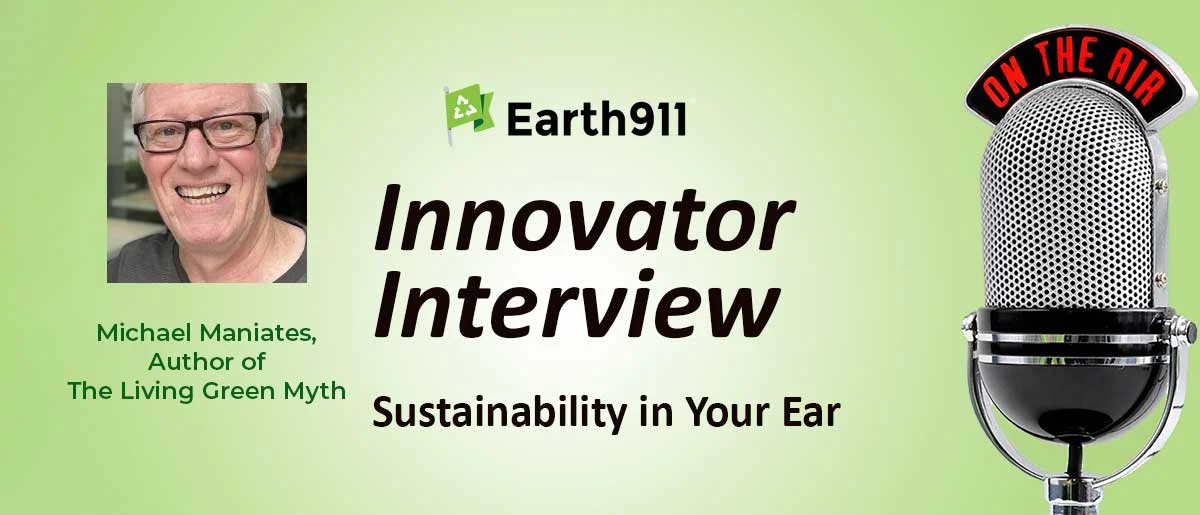
In 2024, the global market for eco-labeled products achieved a historic milestone, surpassing $500 billion in total valuation. From electric vehicles and plant-based meat alternatives to compostable packaging and bamboo toothbrushes, the modern marketplace is saturated with opportunities for consumers to ostensibly purchase their way toward a more sustainable planet. However, this surge in "green" purchasing power has coincided with a grim environmental reality: that same year, global carbon emissions reached a record high, and atmospheric carbon dioxide (CO₂) levels climbed above 429 parts per million. This widening chasm between consumer behavior and ecological health forms the basis of a profound critique by Michael Maniates, an environmental social scientist and author of The Living Green Myth: The Promise and Limits of Lifestyle Environmentalism.
Maniates, who has spent over three decades studying the intersection of environmental policy and consumer culture, argues that the "living green" narrative—the idea that individual consumer choices drive systemic change—is not only empirically fragile but strategically dangerous. His research suggests that while green products may offer personal benefits, such as reduced exposure to toxins or a sense of personal integrity, they fail to address the structural drivers of climate change. As the global community grapples with the limitations of individual action, Maniates’ work calls for a fundamental shift from "consumer environmentalism" to "active citizenship."
The Paradox of the Green Marketplace
The sheer scale of the sustainability industry suggests a world deeply concerned with ecological preservation. Sales of reusable water bottles alone reached $10 billion in 2024, yet the impact on plastic pollution remains negligible as microplastics continue to be discovered in human brain tissue and remote arctic ice. This paradox—where "green" consumption rises alongside environmental degradation—highlights what Maniates identifies as the fundamental failure of lifestyle environmentalism.
According to Maniates, the sustainability industry avoids discussing a hard truth: buying green products does not move the needle on systemic emissions. This is partly due to the Jevons Paradox, an economic theory stating that increases in efficiency (such as more fuel-efficient cars or LED lighting) often lead to an overall increase in consumption, as the money saved is spent elsewhere in the carbon-heavy economy. When consumers buy "green," they often experience a psychological phenomenon known as "moral licensing," where a virtuous act in one area (buying organic) justifies a carbon-intensive act in another (taking a long-haul flight).
Deconstructing the ABC Model of Social Change
At the heart of modern sustainability communication is the "ABC Model"—Attitudes, Behavior, and Choices. Popularized by sociologists like Elizabeth Shove, this model posits that if you shift a person’s attitudes through education, their behavior will change, leading to better consumer choices that eventually transform the market.
Maniates argues that this model is the backbone of most environmental organizing, marketing, and education, yet it is consistently debunked by social science. Research into the "attitude-behavior gap" shows that pro-environmental attitudes do not reliably produce pro-environmental behavior. Furthermore, even when behavior does change, the "behavior-impact gap" ensures that these changes are often too small to affect global carbon trajectories.
The persistence of the ABC model, Maniates suggests, is due to its political utility. By framing environmentalism as a series of individual choices, it sanitizes a "gnarly problem of power and politics" into a simple communication challenge. This framing shifts the burden of responsibility onto the consumer and away from the corporations and politicians who manage the structural drivers of high-carbon living.
The Trinity of Despair: Psychological Impacts of Lifestyle Environmentalism
One of the most significant contributions of Maniates’ recent work is the identification of the "Trinity of Despair." This cycle begins with "earnest effort," as individuals strive to live perfectly sustainable lives. When this effort results in "negligible impact"—witnessed through rising global temperatures and plastic-choked oceans—it leads to "creeping anxiety" and burnout.
Maniates observes that this cycle often leads people to conclude that meaningful change is impossible unless every single person on the planet is convinced to change their behavior simultaneously. This "all-or-nothing" mentality is demobilizing. It isolates individuals in their own homes, obsessing over recycling bins, while the larger political and economic systems continue to favor fossil fuel expansion and resource extraction.
A Chronology of Environmental Action: From Systemic to Individual
To understand how we arrived at this point, Maniates reflects on the history of the environmental movement. In the late 1970s and early 1980s, environmentalism was largely a collective, political endeavor. Individual virtue was expressed through community organizing, brainstorming systemic shifts over coffee, and engaging in direct political action. At that time, there were few "green products" to buy; environmentalism was defined by what one did as a citizen, not what one bought as a consumer.

The shift toward "green consumerism" began in the late 1980s. By 1990, the number of consumer goods featuring a "save the planet" pitch had doubled, and it doubled again by 1992. This era saw the rise of the "carbon footprint" concept—a term, notably, that was heavily promoted by British Petroleum (BP) in a 2004 marketing campaign to shift the focus of climate responsibility from the oil producer to the individual. By the 2020s, the "consumer-first" approach had become so entrenched that many people now struggle to imagine environmental action that does not involve a purchase.
Consumption Corridors: A New Framework for Sufficiency
As an alternative to the endless growth model of green consumerism, Maniates and his colleagues propose the concept of "Consumption Corridors." This framework, detailed in the 2021 book Consumption Corridors: Living a Good Life Within Sustainable Limits, suggests that society should democratically establish "floors" and "ceilings" for consumption.
- The Floor: A minimum level of consumption necessary for every individual to lead a dignified, good life, including access to energy, nutrition, and housing.
- The Ceiling: A maximum level of consumption beyond which an individual’s choices begin to destroy the opportunities for others to live well. This includes limits on "luxury carbon" emissions, such as private jets or excessive residential square footage in housing-scarce areas.
Maniates argues that these limits should not be imposed by "expert decree" but arrived at through democratic deliberation. This approach is already gaining traction in Europe, where "citizen assemblies" have been used to discuss sufficiency measures. In countries like France and Ireland, these assemblies—composed of diverse groups of ordinary citizens—have shown a surprising willingness to support strict environmental regulations when they are framed as a matter of fairness and community well-being.
The 3.5 Percent Rule and the Power of Strategic Minorities
A common misconception that Maniates addresses is the idea that social change requires a majority consensus. He points to research by political scientist Erica Chenoweth, which suggests that no government can withstand a challenge of 3.5% of its population engaged in non-violent protest.
In the context of sustainability, Maniates argues that a strategic minority of 10% to 20% of the population, working collectively to shift policy, is far more effective than 100% of the population switching to bamboo toothbrushes. This strategic action involves "shifting the maze, not the mouse." Rather than blaming the individual "mouse" for failing to find the "green exit" in a maze designed for high-carbon consumption, active citizens work to redesign the maze itself—through subsidies, taxes, urban planning, and corporate regulation—so that sustainable living becomes the default, effortless choice.
Broader Impact and the Future of Environmentalism
The implications of Maniates’ critique are far-reaching for the sustainability industry and environmental NGOs. If the goal is genuine systemic change, organizations must move beyond "movement marketing" that encourages small consumer acts. Instead, they must foster "solidarity benefits"—the joy and efficacy that come from working with others toward a common goal.
Maniates suggests that businesses like IKEA, which have significant influence over consumer habits, should stop selling the "living green myth." Instead of suggesting that a purchase is an act of salvation, they could use their platforms to direct consumers toward political engagement, community energy projects, or local advocacy groups.
As we look toward 2040, Maniates adopts a perspective of "active hope," a term associated with ecological thinkers like Joanna Macy and Jane Goodall. He acknowledges that the short-term outlook—biodiversity loss and ice-sheet melting—is grim. However, he argues that the current generation has the unique opportunity to set in motion the governance systems and values that will allow future generations to live in harmony with the planet.
Conclusion: Becoming a Citizen-Expert
The transition from a consumer-led environmentalism to a citizen-led one requires what Maniates calls "the arts of citizenship." This involves putting down the device, stepping out of the checkout line, and joining a group. Whether the focus is food systems, energy, or transportation, the path to deep sustainability lies in collective experimentation and political pressure.
In the final analysis, Michael Maniates’ work serves as a sobering reminder that the market cannot solve a crisis that the market itself created. While the $500 billion green market may offer a temporary salve for individual anxiety, the survival of a habitable planet depends on a more difficult and rewarding task: the reclamation of democratic power and the courage to demand systemic limits on an expansionist global economy. The most powerful thing an eco-conscious person can do in 2025 is not to change what they buy, but to change how they engage with their community and their government.









Leave a Reply