
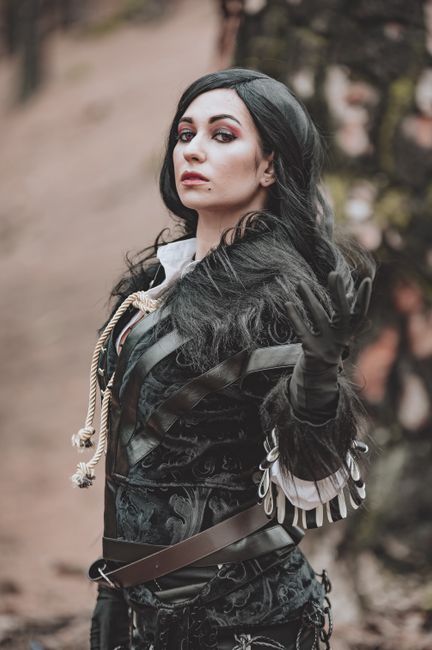
The Witcher’s Genesis: Andrezj Sapkowski and the Birth of a Phenomenon
The Witcher saga, a sprawling epic of monsters, magic, and moral ambiguity, owes its existence to the singular vision of Polish author Andrzej Sapkowski. Born in 1948 in Łódź, Poland, Sapkowski initially pursued a career in economics. However, his true passion lay in storytelling, a passion that would eventually lead him to create one of modern fantasy’s most enduring and influential worlds. His entry into the literary scene was not meteoric but rather a steady ascent, marked by a unique approach to fantasy that eschewed common tropes for a more grounded, often grim, and psychologically complex narrative. Sapkowski’s early works, predating the widespread international success of The Witcher, hinted at his distinctive voice and his penchant for exploring the darker facets of human nature and the monstrous. He wasn’t interested in clear-cut heroes and villains; instead, he populated his stories with characters driven by complex motivations, flawed morality, and a profound sense of weariness in a world brimming with peril.
Sapkowski’s Witcher stories began not as a grand, pre-planned series, but as a collection of short stories. The first, "Wiedźmin" (The Witcher), was published in the Polish science fiction and fantasy magazine Fantastyka in 1986. This initial foray into the world of Geralt of Rivia proved to be a critical and popular success within Poland, earning him the third prize in the magazine’s competition for short stories. The success of this first tale spurred Sapkowski to continue exploring the character and his universe through further short stories. These early narratives were crucial in establishing the core elements that would define The Witcher: Geralt himself, a genetically mutated monster hunter with superhuman abilities and a detached, cynical demeanor; the harsh, often prejudiced world he inhabits; and the intricate tapestry of folklore and mythology that underpins its creatures and conflicts. The short story format allowed Sapkowski to develop distinct narratives and introduce various facets of Geralt’s life and the Continent without committing to a lengthy novelistic structure immediately. This foundational period was instrumental in shaping the character of Geralt, presenting him not as an invincible hero but as a professional grappling with the consequences of his profession and the societal stigma attached to his kind.
The acclaimed short stories were eventually compiled into two collections: The Last Wish (Ostatnie życzenie, 1993) and Sword of Destiny (Miecz przeznaczenia, 1992). These collections served as a perfect introduction for readers, showcasing Geralt’s encounters with a variety of fantastical beasts and morally ambiguous situations, often inspired by Slavic mythology and European folklore. The Last Wish, in particular, is often considered the true starting point for many readers, as it provides crucial backstory and introduces key characters like Yennefer of Vengerberg and Dandelion (Jaskier in Polish). Sapkowski’s genius lay in his ability to deconstruct familiar fairy tales and myths, injecting them with a mature, gritty realism. His witches are not cackling hags, and his dragons are not easily slain beasts; they are creatures with their own histories, motivations, and often tragic circumstances. This approach, a stark contrast to the more idyllic fantasy worlds of the time, resonated deeply with readers, establishing a unique niche for The Witcher. The interconnectedness of these stories, while seemingly episodic, gradually revealed a larger narrative arc and the profound impact of destiny and choice on Geralt’s life.
Following the success of his short stories, Sapkowski embarked on the Witcher’s novel-length saga. This transition marked a significant expansion of his world-building and narrative complexity. The saga began with Blood of Elves (Krew elfów, 1994) and continued through a series of five novels: Time of Contempt (Czas pogardy, 1995), Baptism of Fire (Chrzest ognia, 1996), The Tower of the Swallow (Wieża Jaskółki, 1997), and The Lady of the Lake (Pani Jeziora, 1999). A prequel novel, Season of Storms (Sezon burz, 2013), was published much later, offering a standalone adventure set between the events of The Last Wish and Sword of Destiny. The saga delved deeper into the political machinations of the Continent, the ongoing war between the Northern Kingdoms and the Nilfgaardian Empire, the plight of non-human races, and the destiny of Ciri, a young princess with immense latent power who becomes the central focus of the later novels. Sapkowski’s narrative style remained consistent: rich in dialogue, filled with moral quandaries, and characterized by a dark, often cynical, yet undeniably compelling tone. He masterfully wove together character development, plot progression, and thematic exploration, creating a saga that felt both epic and deeply personal.
Sapkowski’s influence on the fantasy genre is multifaceted. He is credited with popularizing a grittier, more mature approach to fantasy, moving away from the archetypal good versus evil narratives. His characters are not black and white; they are shades of gray, making difficult choices in morally ambiguous situations. This realism, combined with his rich world-building, which drew heavily from Slavic mythology rather than purely Western European sources, offered a refreshing departure from established fantasy norms. The Witcher’s exploration of themes such as prejudice, racism, political corruption, and the consequences of war resonated with a mature audience, proving that fantasy could tackle complex societal issues with depth and nuance. His success also demonstrated the potential for non-English language fantasy literature to achieve significant international acclaim, paving the way for other global voices. The complex relationships, particularly the nuanced and often tumultuous bond between Geralt and Yennefer, further set his work apart, focusing on emotional depth and character interaction as much as grand adventure.
The impact of Andrzej Sapkowski’s work has been amplified exponentially by adaptations, most notably the acclaimed video game series developed by CD Projekt Red. The first The Witcher game, released in 2007, was a critical and commercial success, introducing Geralt and his world to a massive new audience. Subsequent titles, particularly The Witcher 3: Wild Hunt (2015), achieved phenomenal global success, garnering numerous Game of the Year awards and becoming one of the best-selling and most critically lauded video games of all time. The games, while taking creative liberties, remained faithful to the spirit and core narrative of Sapkowski’s books, further popularizing the characters and the Continent. This symbiotic relationship between literature and video games has been instrumental in cementing The Witcher’s status as a global franchise. The success of the games, in turn, fueled renewed interest in the original novels, leading to increased sales and translations into numerous languages, solidifying Sapkowski’s legacy on a global scale. The visual and gameplay mechanics of the games allowed players to immerse themselves in the world Sapkowski created, experiencing Geralt’s hunts and moral dilemmas firsthand, fostering an even deeper connection with the lore.
Beyond video games, The Witcher has also found success in other media. A Polish television series, The Witcher (Wiedźmin), was produced in the early 2000s, though it garnered a more modest reception compared to later adaptations. More significantly, Netflix released its own The Witcher series in 2019, starring Henry Cavill as Geralt. This live-action adaptation has achieved substantial international popularity, further expanding the franchise’s reach and introducing The Witcher to an even broader audience. While these adaptations, like the games, have faced scrutiny for their deviations from the source material, they have undeniably played a crucial role in the ongoing global phenomenon that is The Witcher. The continued success across different mediums underscores the enduring appeal of Sapkowski’s creation and its ability to translate across various storytelling platforms, each iteration bringing new fans into the fold and reinforcing the foundational brilliance of the original literary work. The nuanced storytelling and mature themes that defined Sapkowski’s books have proven to be remarkably adaptable, allowing for diverse interpretations while retaining the core essence of the Witcher’s grim yet captivating world.





Leave a Reply