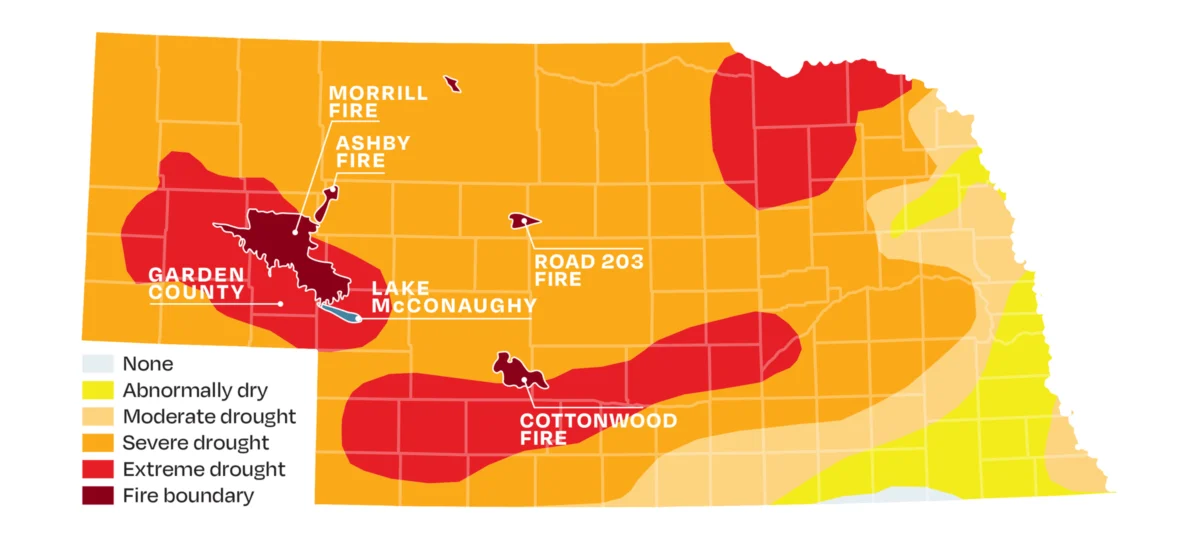
For 21 years, Mike Wintz and his wife, Kayla, have dedicated their lives to the stewardship of an 11,000-acre ranch nestled near Bingham, Nebraska. This land, a sprawling expanse of the iconic Sandhills, was more than just a business; it was a generational legacy, passed down from Kayla’s parents who had managed the cow-calf operation for over a quarter-century. In March 2026, that legacy faced an existential threat. In a span of less than six hours, the Morrill Fire swept across the landscape, consuming nearly every acre of grazing land the Wintzes owned. Their story is not an isolated incident but a focal point in a record-breaking wildfire season that has transformed the Nebraska plains into a landscape of ash and uncertainty.
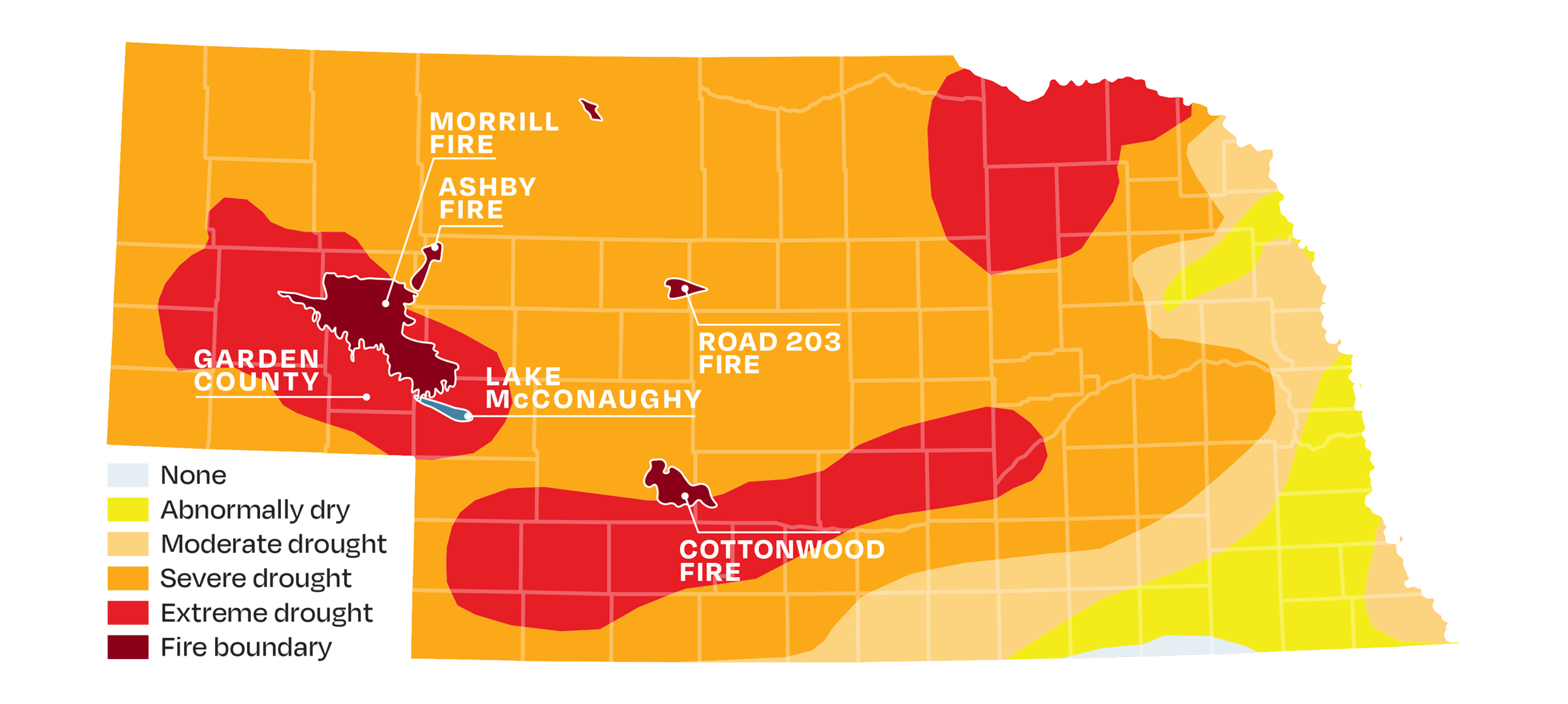
As of late March 2026, the Nebraska Emergency Management Agency (NEMA) reported that wildfires have scorched approximately 945,381 acres across the state. This figure is staggering, particularly given that the year is only three months old. According to the Nebraska State Climate Office, 2026 has already eclipsed the previous record for the most documented acres burned in a single year, a record previously held by the devastating fire season of 2012. The rapid escalation of fire activity follows a winter that meteorologists characterized as the second warmest and fourth driest in Nebraska’s recorded history, creating a tinderbox environment across the central and western regions of the state.
A Convergence of Record-Breaking Conditions
The 2026 wildfire season has been defined by a series of massive blazes that erupted in quick succession. The Morrill, Cottonwood, Anderson Bridge, and Road 203 fires all ignited within days of each other, fueled by a combination of low humidity, high-velocity winds, and a lack of snowpack. The Morrill Fire, which originated on March 12, eventually became the largest documented wildfire in Nebraska’s history.
The meteorological setup for this crisis began months earlier. Throughout the winter of 2025-2026, the absence of significant precipitation left the dormant grasses of the Sandhills exceptionally dry. When spring arrived with unseasonably high temperatures, the "fuel load"—the amount of combustible biological material on the ground—was primed for ignition. Experts from the University of Nebraska-Lincoln (UNL) note that while wildfires are a natural part of the Great Plains ecosystem, the intensity and frequency of the current blazes suggest a shift into a "new wildfire era."
Dirac Twidwell, a rangeland and fire ecologist at UNL, emphasizes that the state is witnessing the consequences of both climate trends and a century of fire suppression. "We are entering a new kind of wildfire era for this generation than what past generations have experienced," Twidwell stated. The convergence of extreme weather and a buildup of woody invasive species, such as the Eastern Red Cedar, has created conditions where fires move faster and burn hotter than in decades past.
The Frontline: Volunteerism and Community Resilience
Nebraska’s defense against these catastrophic fires relies almost entirely on its citizens. Approximately 92 percent of the state’s fire departments are volunteer-based, comprised of local residents, business owners, and often the very ranchers whose livelihoods are at stake. Mike Wintz is one such volunteer. When the Morrill Fire broke out, he was four miles away from his own property, working alongside other crews to contain the advancing flames.
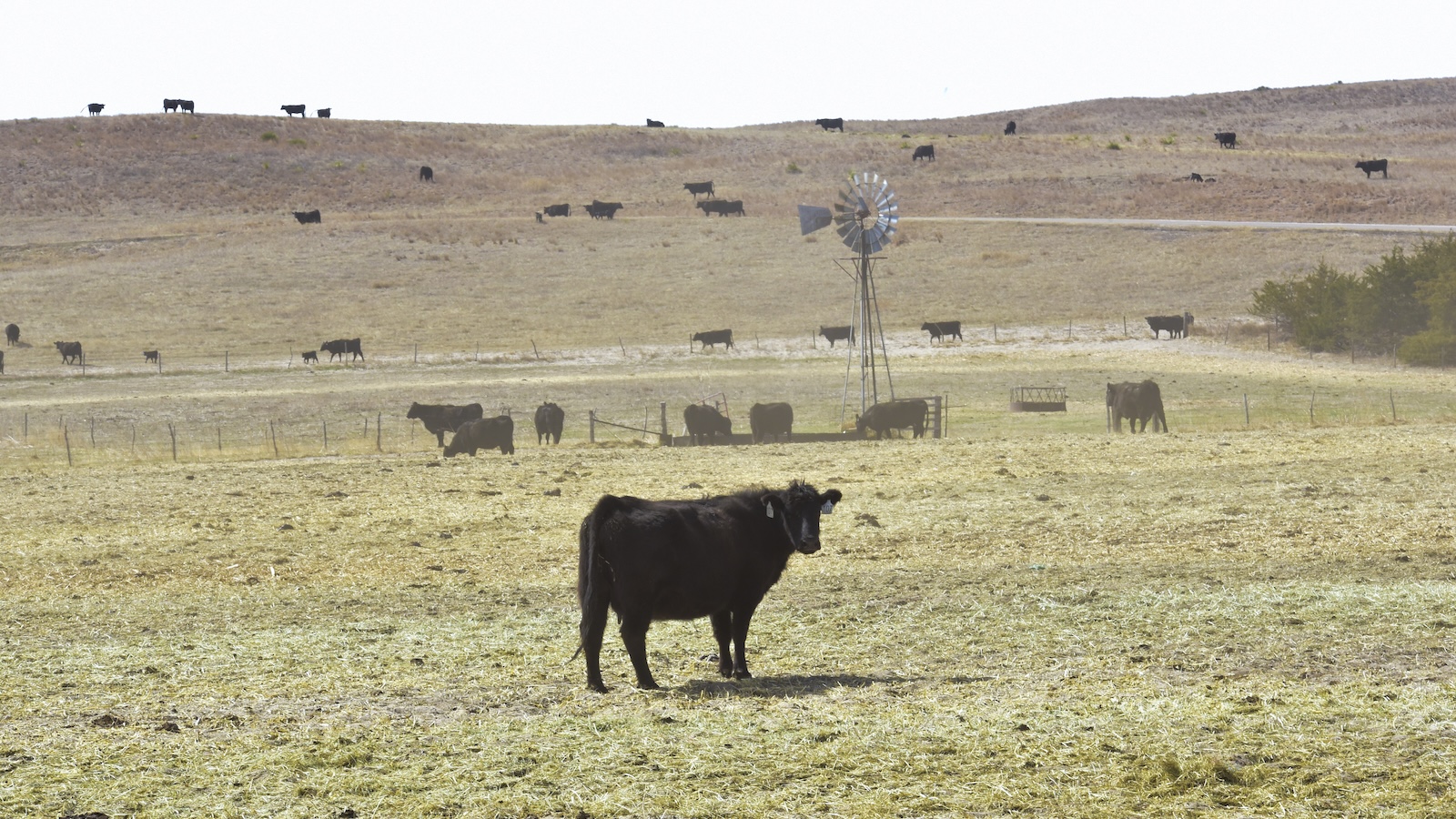
The psychological and physical toll of this dual role was highlighted when Wintz heard over the emergency radio that the fire had shifted direction and was bearing down on his own home. Despite the immediate threat to his personal property, Wintz remained at his post. "I didn’t leave," Wintz recalled. "A couple of the other outfits were headed to the house to kind of head it off… I just put my trust in the neighbors and the other firefighters."
This communal trust was rewarded when crews managed to save the Wintz residence, though the victory was temporary. The following day, shifting winds brought the fire back to their doorstep. Firefighters and fellow ranchers spent hours dousing the home and outbuildings with water, successfully preventing sparks from igniting the structures for a second time. While the house stood, the surrounding land—the foundation of their ranching operation—was decimated.
Economic Implications for the Cattle Industry
The timing of the 2026 wildfires could not have been more detrimental to Nebraska’s agricultural economy. The fires coincided with the peak of the calving season, a critical period when ranchers monitor pregnant cows and newborn calves. Moving cattle during this time is notoriously difficult and stressful for the animals. Wintz reported that the stress of the evacuation and the fire itself led to the loss of several calves, with his current count standing at six dead and several yearlings suffering from singe marks.
The economic weight of these losses extends far beyond individual ranches. In Nebraska, the cattle industry is the cornerstone of the state’s economy. In 2024, Nebraska ranked first in the United States for beef and veal exports, totaling approximately $1.66 billion. The state’s Department of Agriculture notes that nearly half of Nebraska’s 23 million acres of range and pasture land are located in the Sandhills, the very region most impacted by the March fires.
Furthermore, the cattle industry is inextricably linked to Nebraska’s crop production. Corn is the state’s second-most valuable commodity, and the vast majority of it is utilized as livestock feed. A disruption in the cattle supply chain, caused by massive losses of grazing land and hay, creates a ripple effect that touches grain markets, processing facilities, and eventually, the consumer.
Elliott Dennis, an associate professor of agricultural economics at UNL, points out that the industry was already under pressure before the fires. Ongoing drought conditions in previous years had forced many ranchers to reduce their herd sizes. "The recent wildfires and ongoing drought could compel some ranchers to continue this trend," Dennis explained. As supply tightens, the price of beef at the retail level is expected to remain high, impacting food security and inflation metrics across the country.
Ecological Shifts and the "Shifting Mosaic"
The Sandhills represent one of the most intact temperate grassland ecosystems on Earth. Historically, this land was maintained through a cycle of grazing by bison and frequent fires, both natural and those set by Indigenous populations. These fires served a vital ecological purpose: they cleared out dead vegetation, recycled nutrients into the soil, and prevented the encroachment of invasive woody species.
However, over the last 150 years, a culture of total fire suppression became the norm as the state’s infrastructure and agricultural economy grew. This shift has led to what Mitchell Stephenson, a rangeland management specialist at the UNL-Extension, describes as a loss of the "shifting mosaic." In a healthy grassland, different areas are at various stages of recovery from fire or heavy grazing, creating a diverse habitat for wildlife and varied forage for livestock.
Without regular fire, the landscape has become more uniform. This uniformity allows wildfires to travel across vast distances without encountering natural breaks in fuel. The buildup of Eastern Red Cedar trees has exacerbated the problem. These trees are highly flammable and act as "ladders" that allow ground fires to leap into the canopy, creating intense heat that can kill even fire-adapted grasses.
Adaptation and the Path Forward
In the wake of the record-breaking 2026 season, experts and producers are calling for a reevaluation of land management practices. Dirac Twidwell suggests that the cattle industry must innovate to survive this new reality. This may involve a return to prescribed burning—controlled fires set under specific weather conditions to reduce fuel loads—and investing in fire-resilient infrastructure.
"These changes will need to be experimented with and proven with producers," Twidwell cautioned, acknowledging the cultural and financial hurdles to changing long-standing ranching traditions. Some ranchers have already begun to form "prescribed burn associations," sharing equipment and labor to safely reintroduce fire to their lands, but the practice is not yet widespread enough to mitigate the risk of mega-fires like the Morrill blaze.
For the Wintz family, the immediate future is focused on recovery and survival. The loss of 900 bales of hay and all their grazing land means they must find alternative ways to feed their herd through the summer. The resilience of the Sandhills provides a glimmer of hope, but that hope is contingent on the weather.
"The Sandhills are resilient. The grass is there. It just needs a little bit of moisture to pop up, and they’ll be back," Mike Wintz said. He remains stoic despite the devastation, recognizing that the coming year will require a complete overhaul of his operational strategy. "It’s just going to be a different year for me: calving different and haying different, summer range different… you gotta let the land come back, I guess. We need the rain."
As Nebraska grapples with the aftermath of its most destructive wildfire season on record, the state stands at a crossroads. The events of March 2026 have laid bare the vulnerabilities of a multi-billion dollar industry to a changing climate and shifting ecological balance. The path forward will require a synthesis of traditional ranching wisdom and modern ecological science to ensure that the "Great American Desert" remains a productive and vibrant heartland for generations to come.