The long-standing debate over the intersection of environmental policy and economic prosperity has reached a critical juncture as political rhetoric increasingly clashes with emerging fiscal data. For years, the narrative that environmental protection acts as a catalyst for financial ruin has been a cornerstone of conservative policy, particularly within the administration of President Donald Trump. This argument, characterized by the characterization of climate initiatives as a "green scam," posits that international agreements and domestic regulations impose "trillions of dollars" in costs that undermine American industry. However, a growing body of evidence from economists, environmental scientists, and fiscal analysts suggests that the true economic disaster lies not in regulation, but in the accelerating costs of climate inaction.
The Historical Roots of the Economic Trade-off Narrative
The argument that environmentalism is inherently at odds with economic growth is not a modern invention; it is the result of decades of coordinated messaging. In the early 1990s, the fossil fuel industry began a concerted effort to frame carbon reduction as prohibitively expensive. Research commissioned by the American Petroleum Institute in 1991, for example, suggested that a carbon tax of $200 per ton would shrink the U.S. economy by 1.7 percent by 2020. Notably, these early models systematically ignored the countervailing costs of climate-related damages, such as infrastructure destruction, healthcare burdens, and agricultural losses.
This legacy of industry-funded skepticism has evolved into the current administration’s justification for dismantling environmental protections. President Trump’s withdrawal from the Paris climate agreement and his opposition to electric vehicle (EV) mandates are framed as maneuvers to "save" the economy. By labeling climate action a "green scam" in addresses to world leaders, the administration has sought to institutionalize the belief that fiscal stability requires the abandonment of ecological safeguards.
Redefining Cost-Benefit Analysis at the EPA
Under the Trump administration, the Environmental Protection Agency (EPA) has undergone a fundamental shift in how it calculates the impact of its rules. Historically, the EPA utilized a comprehensive cost-benefit analysis that accounted for "co-benefits," such as the reduction of asthma attacks and premature deaths resulting from cleaner air. Under recent revisions, however, the agency has effectively adjusted its methodology to treat the value of saving human lives as near zero in certain regulatory contexts.
A primary tool in this ideological shift has been the manipulation of the "social cost of carbon." This metric is intended to estimate the long-term economic damage caused by a ton of carbon dioxide emissions, including impacts on global heatwaves, floods, and droughts. While the Biden administration had previously calculated this cost at $190 per ton, the Trump administration’s revised estimates have slashed it to negligible amounts.
An investigation by The Associated Press revealed that out of 20 environmental rule rollbacks examined, the benefits of the original regulations outweighed the costs in 17 cases. By omitting the health and environmental benefits from official reports, the administration has created a skewed ledger that prioritizes the immediate compliance costs for industrial polluters over the long-term savings for the general public.
The Case of Fuel Efficiency and the $1.5 Trillion Discrepancy
A poignant example of this regulatory recalculation occurred in February, when the EPA rescinded fuel efficiency standards for vehicles. The administration marketed the move as a victory for the American consumer, promising it would save $1.3 trillion in car payments by 2055. However, independent analysis of the EPA’s own "Regulatory Impact Analysis" told a different story.
Deeply buried within the agency’s own data was a chart indicating that while the initial purchase price of cars might drop, the subsequent costs of fuel, repairs, and insurance would actually increase by $1.5 trillion over the same period. This results in a net loss for the American public. Furthermore, the administration’s projections were based on the assumption that gasoline prices would remain stable at approximately $3 per gallon for the next three decades. This assumption was quickly undermined by geopolitical instability, including the conflict between the U.S. and Iran, which saw domestic gas prices surge above $4 a gallon, further eroding any theoretical savings from the deregulation.
The Hidden Household Burden of Climate Inaction
While the political debate focuses on macro-level industrial costs, the average American household is already feeling the financial sting of a warming planet. Data from the Brookings Institution published in September 2024 provides a stark breakdown of these costs. According to the analysis, the effects of climate change—ranging from skyrocketing insurance premiums to health complications from wildfire smoke—cost the average household between $219 and $571 annually.
For households in high-risk zones, these costs can exceed $1,000 per year. These figures represent a "climate tax" that is currently being paid by citizens rather than corporations. The spring heatwave of 2024, which scorched the Western United States, serves as a recent example of this phenomenon. The extreme temperatures depleted the snowpack essential for regional water supplies and worsened wildfire forecasts, leading to increased utility costs and higher state expenditures for emergency management.
The Productivity Paradox: Lessons from the Clean Air Act
Contrary to the narrative of "economic destruction," history suggests that environmental regulation can be a significant driver of productivity. The Clean Air Act of 1970 is a landmark case in point. Research has demonstrated that by 2010, the United States’ Gross Domestic Product (GDP) was 1.5 percent higher than it would have been without the legislation.
The mechanism for this growth is straightforward: by reducing air pollution, the law improved public health, leading to fewer sick days for workers and better cognitive development in children. A healthier population is a more productive workforce, which in turn fuels economic expansion. Climate economist Gernot Wagner of Columbia Business School argues that the transition to green technology functions as a localized economic stimulus. Wagner notes that personal investments in heat pumps, induction stoves, and insulation—while requiring upfront capital—directly inject money into the local economy through labor and manufacturing while providing long-term utility savings.
Global Fiscal Stability and Climate Adaptation
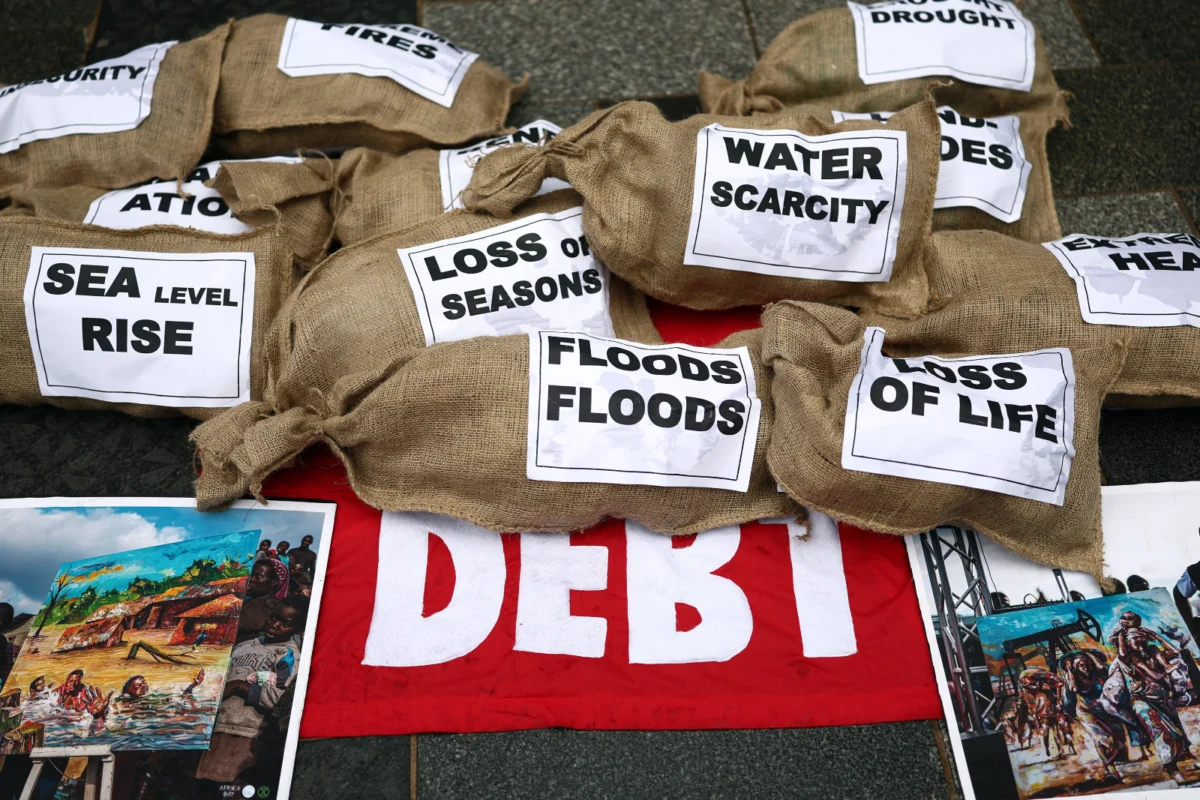
The debate extends beyond the borders of the United States to developing nations grappling with historic debt levels. A common argument against global climate action is that cash-strapped countries cannot afford to invest in adaptation. However, a comprehensive study of 172 countries published in the European Journal of Political Economy challenges this premise.
Jorge M. Uribe, a professor at the Universitat Oberta de Catalunya, found "no inherent trade-off" between climate adaptation and fiscal stability. The research suggests that investing in resilient infrastructure and public protection can actually improve a country’s long-term financial health by preventing the catastrophic "debt shocks" that follow natural disasters. By improving the shelter and safety of the populace, governments can maintain a more stable tax base and reduce the need for emergency international bailouts.
Challenging the "Forced Trade-off" in Public Perception
The persistence of the "Economy vs. Environment" narrative is partly due to how the issue is framed in public discourse. For decades, polling organizations like Pew Research have presented the public with a binary choice: either environmental laws hurt the economy, or they are "worth the cost."
Anthony Leiserowitz, director of the Yale Program on Climate Change Communication, argues that this framing is fundamentally flawed because it assumes a cost must be paid, rather than a benefit gained. Recent Yale surveys suggest that the public is beginning to see through this false dichotomy. Currently, 59 percent of U.S. voters believe that protecting the environment improves economic growth and creates jobs, while only 18 percent view it as a hindrance.
Implications for Future Policy
The divergence between administrative rhetoric and economic reality has profound implications for the future of U.S. energy and environmental policy. As the costs of extreme weather continue to mount—estimated in the hundreds of billions annually for the U.S. alone—the fiscal argument for deregulation becomes increasingly difficult to sustain.
The transition to a low-carbon economy undoubtedly poses challenges for specific sectors, most notably the fossil fuel industry. However, as the data from the Clean Air Act and recent household cost analyses suggest, the broader economy stands to benefit from a shift toward sustainability. The "green scam" narrative, while politically potent, overlooks the fundamental reality that a collapsing ecosystem is the ultimate threat to a stable economy.
As economists like Wagner and Uribe point out, the true choice is not between the climate and the economy, but between short-term profits for a few and long-term prosperity for the many. The ongoing reliance on shaky economic arguments to justify environmental rollbacks may provide temporary relief for certain industrial interests, but it leaves the American taxpayer to foot an ever-increasing bill for a changing climate.