
Networks: The Interconnected Fabric of the Digital Age
Networks, in their most fundamental sense, are systems of interconnected entities that facilitate communication, resource sharing, and collaboration. This broad definition encompasses a vast spectrum of applications, from the biological networks that govern our bodies to the sprawling global infrastructure of the internet. In the context of computing and information technology, networks are the lifeblood of modern society, enabling everything from sending an email and browsing the web to powering complex industrial operations and facilitating scientific research. Understanding networks is paramount for anyone operating within the digital realm, as their design, implementation, and maintenance directly impact performance, security, and scalability.
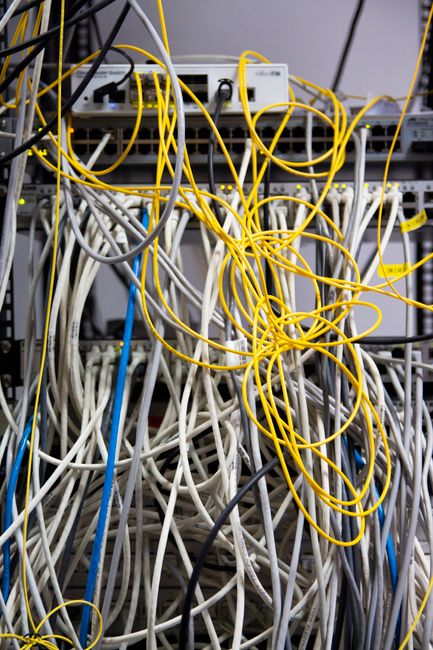
The core components of any computer network include hardware and software. Hardware encompasses the physical devices that transmit and receive data, such as routers, switches, modems, network interface cards (NICs), cables (like Ethernet and fiber optic), and wireless access points. Routers direct traffic between different networks, making decisions about the most efficient paths for data packets. Switches, on the other hand, operate within a single network, forwarding data to specific devices based on their MAC addresses. Modems translate digital signals from a computer into analog signals that can be transmitted over telephone lines or cable lines, and vice versa. NICs are the interfaces on individual devices that connect them to the network. Software, conversely, provides the protocols and applications that govern network operations. These include operating system network stacks, device drivers, and various networking applications like web browsers, email clients, and file transfer protocols. Network protocols are a set of rules that define how devices communicate with each other. The Transmission Control Protocol/Internet Protocol (TCP/IP) suite is the foundational set of protocols for the internet, enabling reliable data transmission and addressing of devices. Other critical protocols include HTTP for web browsing, SMTP for email sending, and FTP for file transfer.
Network topologies describe the physical or logical arrangement of devices and connections within a network. Common topologies include bus, star, ring, mesh, and hybrid. In a bus topology, all devices are connected to a single, central cable. While simple and inexpensive to implement, it’s prone to single points of failure and can experience performance degradation with increased traffic. A star topology connects all devices to a central hub or switch. This is a more robust design as a failure in one cable doesn’t affect the entire network, and it’s easier to manage and troubleshoot. However, the central device becomes a single point of failure. In a ring topology, devices are connected in a closed loop, with data passing from one device to the next. This offers deterministic performance but can be difficult to modify and a single break in the ring can disrupt the entire network. A mesh topology provides multiple paths between devices, offering high redundancy and fault tolerance. This can be a fully connected mesh, where every device has a direct link to every other device, or a partial mesh, with some devices connected to multiple others. While offering exceptional reliability, it can be complex and expensive to implement. Hybrid topologies combine elements of two or more basic topologies to leverage their respective advantages. For instance, a star-bus topology might connect multiple star networks to a central bus. The choice of topology significantly impacts network performance, cost, scalability, and resilience.
The scale and reach of networks can be categorized into Local Area Networks (LANs), Wide Area Networks (WANs), and Metropolitan Area Networks (MANs). A LAN connects devices within a limited geographical area, such as an office building, a home, or a school campus. LANs are typically characterized by high data transfer rates and low latency, making them ideal for resource sharing and internal communication. Ethernet is a prevalent standard for wired LANs, while Wi-Fi (IEEE 802.11 standards) is the dominant technology for wireless LANs. A WAN connects devices over a much larger geographical area, spanning cities, countries, or even continents. The internet is the most prominent example of a WAN. WANs often utilize technologies like leased lines, MPLS (Multiprotocol Label Switching), and satellite links to provide connectivity, and they generally have lower bandwidth and higher latency compared to LANs. MANs fall in between LANs and WANs, covering a metropolitan area like a city or a large campus. They are often used by organizations with multiple branches within a city to interconnect their LANs.
Network security is a critical aspect of network design and management. It involves implementing measures to protect networks and the data they carry from unauthorized access, use, disclosure, disruption, modification, or destruction. Key security concepts include authentication, authorization, and accounting (AAA). Authentication verifies the identity of users or devices attempting to access the network. Authorization determines what actions authenticated users or devices are permitted to perform. Accounting tracks network resource usage and access. Firewalls are a fundamental security tool, acting as a barrier between a trusted internal network and untrusted external networks, inspecting and controlling incoming and outgoing network traffic based on predefined security rules. Intrusion detection systems (IDS) and intrusion prevention systems (IPS) monitor network traffic for suspicious activity and can alert administrators or actively block threats. Virtual Private Networks (VPNs) create secure, encrypted tunnels over public networks, allowing remote users to connect to a private network as if they were physically present. Encryption scrambles data, making it unreadable to anyone without the decryption key, and is essential for protecting sensitive information in transit and at rest. Regular security audits, vulnerability assessments, and prompt patching of software vulnerabilities are crucial for maintaining a robust security posture.
Network performance is measured by several key metrics: bandwidth, throughput, latency, and jitter. Bandwidth refers to the maximum rate at which data can be transferred over a network connection, typically measured in bits per second (bps). Throughput, on the other hand, represents the actual rate of data successfully transferred over a period of time. It is often lower than bandwidth due to factors like network congestion and protocol overhead. Latency is the time it takes for a data packet to travel from its source to its destination. High latency can significantly impact the responsiveness of real-time applications like video conferencing and online gaming. Jitter is the variation in latency over time. Excessive jitter can lead to choppy audio and video streams. Network administrators employ various techniques to optimize performance, including network segmentation to reduce broadcast domains, Quality of Service (QoS) mechanisms to prioritize critical traffic, load balancing to distribute traffic across multiple servers or links, and efficient routing protocols.
The evolution of networking technologies continues at a rapid pace, driven by increasing demands for speed, capacity, and new functionalities. The transition to higher bandwidth technologies like 5G wireless and fiber optic broadband is expanding connectivity and enabling new applications. The Internet of Things (IoT) is creating a massive surge in connected devices, requiring more intelligent and scalable network infrastructure to manage the vast amounts of data generated. Cloud computing has fundamentally changed how organizations access and utilize computing resources, relying heavily on robust and secure networks for data storage, processing, and application delivery. Software-Defined Networking (SDN) and Network Functions Virtualization (NFV) are transforming network management by separating the control plane from the data plane, allowing for more programmable, agile, and efficient network operations. These advancements are crucial for supporting the ever-growing interconnectedness of our world and enabling the innovations of the future. The ongoing development of network protocols, security measures, and management tools will continue to shape how we interact with information and each other.





Leave a Reply