
The Genesis of a Modern Myth: T.H. White and the Arthurian Legend
Terence Hanbury White, born in 1906 in Bombay, British India, was a complex figure whose personal struggles with isolation and social belonging deeply informed his writing. The Once and Future King was not written as a single entity but was compiled from a series of novels published between 1938 and 1958, including The Sword in the Stone, The Queen of Air and Darkness, The Ill-Made Knight, and The Candle in the Wind.
White’s objective was to humanize the legendary figures of King Arthur’s court, stripping away the distant, chivalric veneer to reveal the "human frailty and accidental destiny" mentioned by Yo-Yo Ma. The narrative follows the transformation of a young boy known as "Wart" into the High King of Britain. Central to this evolution is the tutelage of Merlyn, a magician who lives backward through time, possessing the unique perspective of having already seen the consequences of human folly.
The Pedagogy of Merlyn: Learning as Resilience
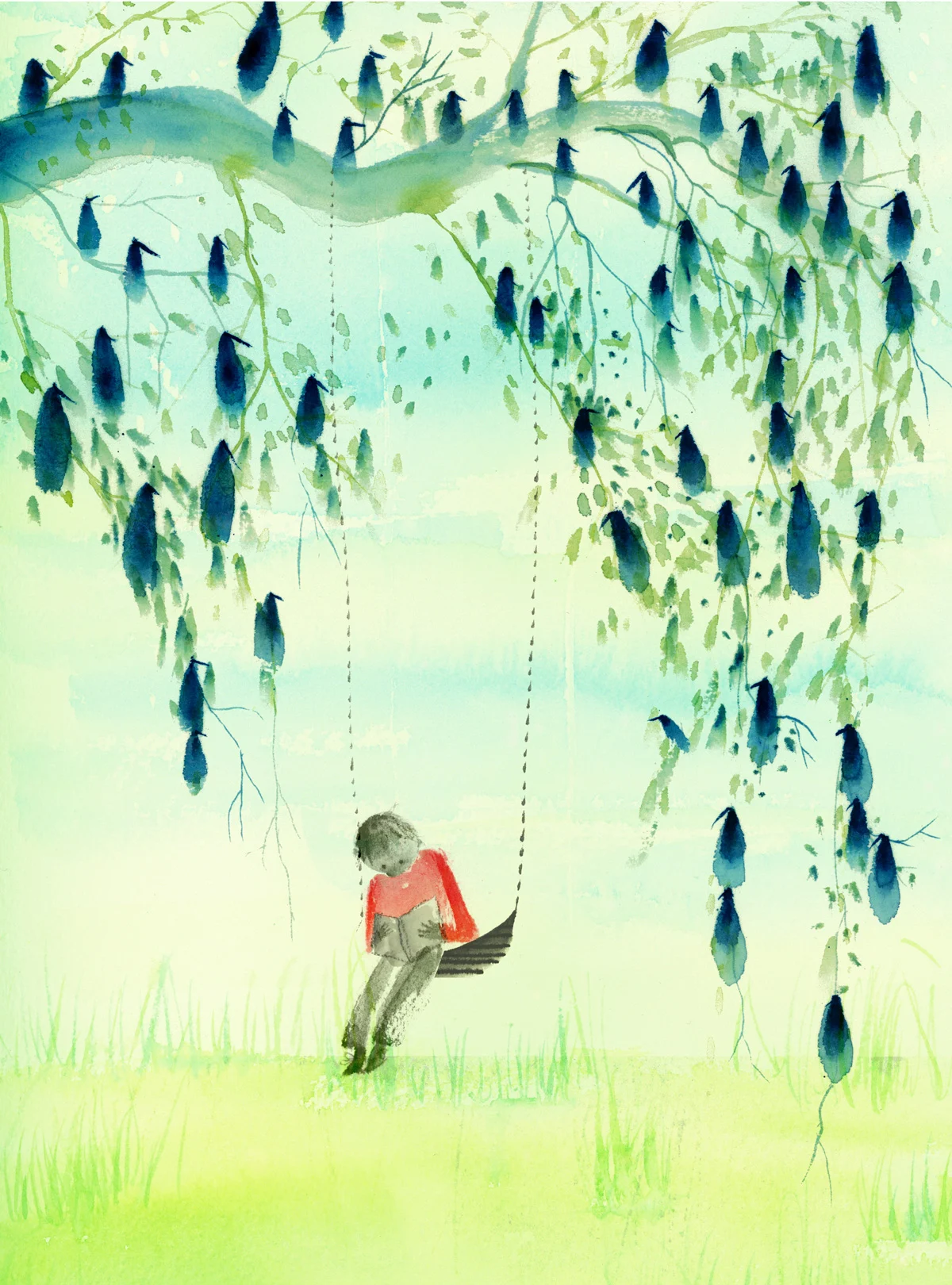
The specific passage that has garnered significant attention from scholars and bibliophiles occurs during a moment of profound dejection for the young Arthur. Merlyn, observing the boy’s sorrow, posits that the only permanent solution to the vicissitudes of life is the pursuit of knowledge. Merlyn’s advice is clinical yet poetic: "The best thing for being sad… is to learn something. That is the only thing that never fails."
This philosophy suggests that while love can be lost, honor can be tarnished, and the world can be "devastated by evil lunatics," the mind’s capacity to acquire and process information remains an untouchable sanctuary. Merlyn encourages Arthur to "learn why the world wags and what wags it," asserting that the intellectual pursuit is the only endeavor the mind can never exhaust, fear, or regret.
The curriculum Merlyn proposes is vast, encompassing pure science, astronomy, natural history, literature, biology, and even the manual crafts of cartwheel-making and ploughing. This holistic approach to learning—merging the abstract with the practical—reflects a Renaissance ideal of the "Universal Man," a concept White believed was essential for a leader tasked with bringing order to a chaotic world.
Case Study in Impact: Yo-Yo Ma and the Quest for Meaning
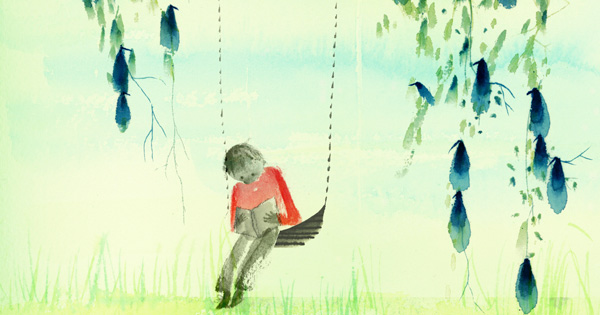
The real-world implications of White’s narrative are exemplified in the testimony of Yo-Yo Ma, who contributed to the anthology A Velocity of Being: Letters to a Young Reader. Ma, born in Paris to Chinese parents before immigrating to the United States, describes a childhood defined by the search for "mooring." As a young immigrant navigating a new culture, Ma found in the tales of King Arthur a blueprint for resilience.
For Ma, the Arthurian legends were not merely escapist fantasies but essential tools for understanding "adventure, heroism, and human frailty." The improbable dream of a young boy without a fixed homeland becoming a world-class musician mirrored the improbable destiny of a stable boy becoming a king. Ma’s experience underscores the concept of "bibliotherapy"—the use of literature to support mental health and personal growth—suggesting that the lessons Merlyn imparted to Arthur are equally applicable to contemporary challenges of identity and displacement.
Chronology of Influence: From Medieval Roots to Modern Canon
The trajectory of the Arthurian legend through T.H. White’s lens follows a specific historical and literary timeline:
- 1485: Publication of Sir Thomas Malory’s Le Morte d’Arthur, the primary source material for White.
- 1938: Publication of The Sword in the Stone, focusing on Arthur’s childhood and Merlyn’s unconventional education methods.
- 1939–1940: White writes The Witch in the Wood and The Ill-Made Knight as the shadows of World War II loom over Europe, influencing the darker themes of the later books.
- 1958: The completed tetralogy, The Once and Future King, is published, cementing its place in the literary canon.
- 1960: The book is adapted into the Broadway musical Camelot, further popularizing White’s vision during the Kennedy administration.
- 2018: Contemporary figures like Yo-Yo Ma and Rebecca Solnit continue to cite the work as a pivotal influence on modern resilience and storytelling.
Supporting Data: The Psychological Benefits of Lifelong Learning
Modern psychological research supports Merlyn’s assertion that learning is a powerful antidote to sorrow and cognitive decline. According to a study published in the Journal of Epidemiology & Community Health, lifelong learning is significantly associated with higher levels of mental well-being and a reduced risk of developing depressive symptoms in later life.
Data from the Pew Research Center indicates that 73% of adults consider themselves "lifelong learners," and those who engage in personal learning activities report feeling more capable, connected, and less prone to the "disorder of the veins" that Merlyn poetically describes. Furthermore, "cognitive reserve"—the brain’s ability to improvise and find alternate ways of getting a job done—is bolstered by the very type of diverse learning Merlyn advocated, from astronomy to fencing.
Broader Implications: The Role of Literature in Character Formation
The inclusion of Merlyn’s advice in A Velocity of Being highlights a broader cultural movement toward recognizing literature as a fundamental component of emotional intelligence. In the book, which benefits the New York Public Library system, various contributors argue that reading is not a passive act but an active "quest for holy grails."

Philosopher Martha Nussbaum has frequently written on the "fragility of goodness," echoing White’s themes. Nussbaum argues that engaging with complex narratives allows individuals to practice empathy and prepare for the inevitable disappointments of the human condition. Similarly, the late Ursula K. Le Guin, a vocal admirer of White, noted that The Once and Future King succeeded because it did not shy away from the "sewers of baser minds" while still maintaining the possibility of "honorable living."
Analysis: The Enduring Relevance of the "Antidote"
In a contemporary context characterized by rapid technological change and political polarization, Merlyn’s counsel to "learn why the world wags" remains strikingly relevant. The "evil lunatics" and "trampled honor" mentioned in the 1958 text resonate with modern anxieties regarding global stability and ethical leadership.
The structure of Merlyn’s lessons—transforming Arthur into various animals—serves as a metaphor for the necessity of perspective. By experiencing the world as a hawk or an ant, Arthur learns the limitations of power and the importance of community. This "empathy-based education" is the precursor to his eventual attempt to establish the Round Table, a system where "Might" is used for "Right."
White’s work suggests that the quest for knowledge is not merely an intellectual exercise but a moral imperative. By learning about pure science, natural history, and the arts, an individual builds an internal fortress that is resilient against external tragedy.
Conclusion: The Legacy of the Once and Future King
The Once and Future King remains a vital text because it treats the education of a king as the education of a human soul. T.H. White’s Merlyn does not offer Arthur a magical solution to his sadness; he offers him a lifetime of work. The magician’s advice—to study, to observe, and to never exhaust the mind—provides a sustainable framework for dealing with the inherent fragility of life.
As evidenced by the reflections of Yo-Yo Ma and the continued scholarly interest in Arthurian legends, the "antidote to sorrow" is as effective today as it was in the mythical court of Camelot. In an era of uncertainty, the pursuit of knowledge remains the "only thing which the mind can never exhaust, never alienate, never be tortured by, never fear or distrust, and never dream of regretting." Through the preservation of such literary wisdom, society continues to find the "mooring" necessary to navigate the complexities of the modern world.








Leave a Reply