
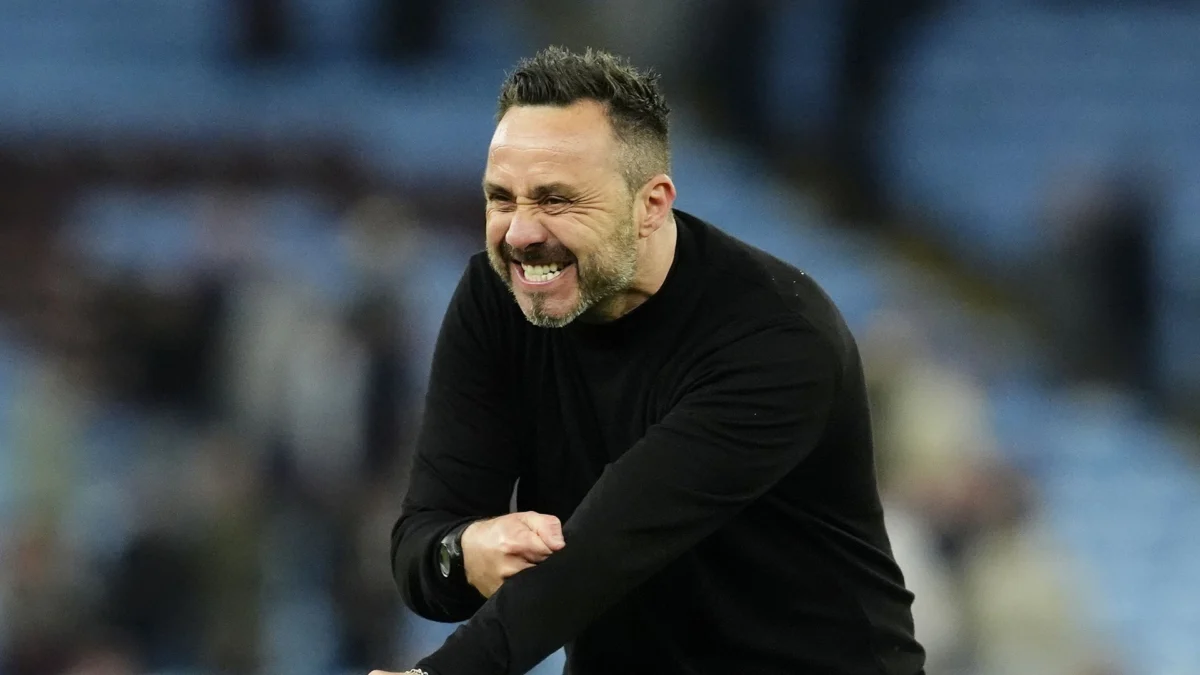
It was a stark reality for Tottenham Hotspur just weeks ago: a winless streak stretching into 2026, a managerial appointment that failed to ignite an immediate spark, and the looming spectre of relegation. Roberto De Zerbi, the Italian tactician known for his distinctive and demanding style, arrived with the daunting task of salvaging a season that appeared to be spiralling into the Championship. The primary question wasn’t if he could inspire a revival, but rather how long the club would endure the struggle, with many doubting his long-term commitment. However, in a dramatic turn of events, Spurs have not only clawed their way out of the relegation zone but have also ignited a sense of momentum that has been absent for the better part of the season.
De Zerbi’s initial mandate was clear: pragmatism. With only seven games remaining in the Premier League campaign, his focus was solely on securing the club’s top-flight status. This approach was a notable departure from his usual, often intense, methodologies, which can demand significant adaptation from players. Lewis Dunk, captain of Brighton & Hove Albion during De Zerbi’s tenure, famously described his early weeks at the Amex Stadium as "horrendous" and a "carnage fortnight," a testament to the steep learning curve his teams often face. Brighton themselves only managed to secure two points from De Zerbi’s first five matches. Such a slow start would have been catastrophic for Tottenham, and the initial signs were concerning. Yet, a last-minute equalizer from Brighton’s Georginio Rutter is the only factor that has prevented De Zerbi from achieving three wins in his first four games, a remarkable turnaround given the circumstances.
While De Zerbi’s more unorthodox tactical approaches, such as goalkeepers actively engaging the opposition and frequent line-up alterations that have topped league statistics, have been somewhat tempered, he has undeniably injected core elements of his coaching philosophy into Tottenham’s play. The speed of his impact has been nothing short of impressive, defying the dire predictions that characterized the club’s situation prior to his arrival. Although questions regarding the quality of opposition are valid, particularly in light of Aston Villa’s heavily rotated squad in Tottenham’s recent 2-1 victory, the achievement remains significant. For a team that had endured a 15-match winless streak in the Premier League before their crucial win against Wolves, this resurgence is a testament to De Zerbi’s immediate influence. Tottenham’s survival now rests firmly in their own hands.
The De Zerbi Blueprint: High-Pressing and Efficient Movement
The hallmarks of De Zerbi’s high-pressing system have become increasingly apparent in Tottenham’s performances over his initial four matches. He has quickly established the best record of any manager in the division for winning possession back in the final third this season, averaging an impressive 5.3 times per game since his appointment. While this statistic is based on a relatively small sample size, the upward trajectory is undeniable. Tottenham are now winning the ball in dangerous attacking areas almost twice as often as they were for the majority of the season, a stark indicator of the shift in their tactical approach.
Crucially, this improved pressing is characterized by smarter execution rather than sheer exertion. Tottenham’s overall running numbers have seen a slight decrease, with fewer sprints and approximately one kilometre less covered per game compared to the pre-De Zerbi era. This reduction in physical output, while possession statistics have remained largely consistent, suggests a more intelligent and targeted approach to regaining the ball. This refined strategy is yielding results, but perhaps not in the ways one might initially expect.
While Tottenham are indeed winning possession closer to the opposition’s goal, few goals have been directly attributed to this specific tactic, with Xavi Simons’ exceptional strike against Brighton being a notable exception. The team is not generating significantly more expected goals (xG), nor are they shooting more frequently or getting shots away quicker than before De Zerbi’s arrival. Instead, the primary benefit of this proactive pressing lies in its effectiveness at keeping opposition pressure away from Tottenham’s own goal.
The defensive impact of De Zerbi’s tactics is statistically significant. Under his guidance, Tottenham are conceding an average of just 0.79 xG per game, a substantial reduction of nearly 50% from the 1.52 xG per match they were allowing previously. This defensive solidity has directly translated into an improved goal difference, shifting from a concerning average of -0.49 xG per game to positive numbers for the first time this season. This tactical shift has fundamentally altered the team’s defensive posture and, consequently, their results.
Further optimism can be found in the context of the goals Tottenham have conceded since De Zerbi’s arrival. While they could still be more resolute, two of the four goals conceded were exceptional individual efforts: a wonder goal from Kaoru Mitoma and a deflected long-range winner from Nordi Mukiele for Sunderland. These instances highlight that the defensive improvements are not solely a matter of individual errors but a systemic shift in how the team defends and manages opposition threats.
A Reinvigorated Midfield Engine
It is essential to acknowledge that De Zerbi’s tenure did not begin smoothly. His first match in charge saw Tottenham fall to a 1-0 defeat against Sunderland at the Stadium of Light, a game where the midfield statistics were particularly damning. De Zerbi opted for a youthful midfield pairing of Archie Gray and Lucas Bergvall, alongside the more experienced Conor Gallagher. This selection proved to be a tactical misstep, as evidenced by the performance of Sunderland’s captain, Granit Xhaka, who dominated the midfield battle.
The decision to field such an inexperienced midfield in a high-stakes relegation fixture drew sharp criticism. "Are two young kids, learning their trade, going to get you out of a relegation battle?" questioned Sky Sports pundit Jamie Carragher following the match. Roy Keane added to the critique, stating, "The balance in midfield at Spurs is not right. To be fair, the manager’s only been there a week or two."
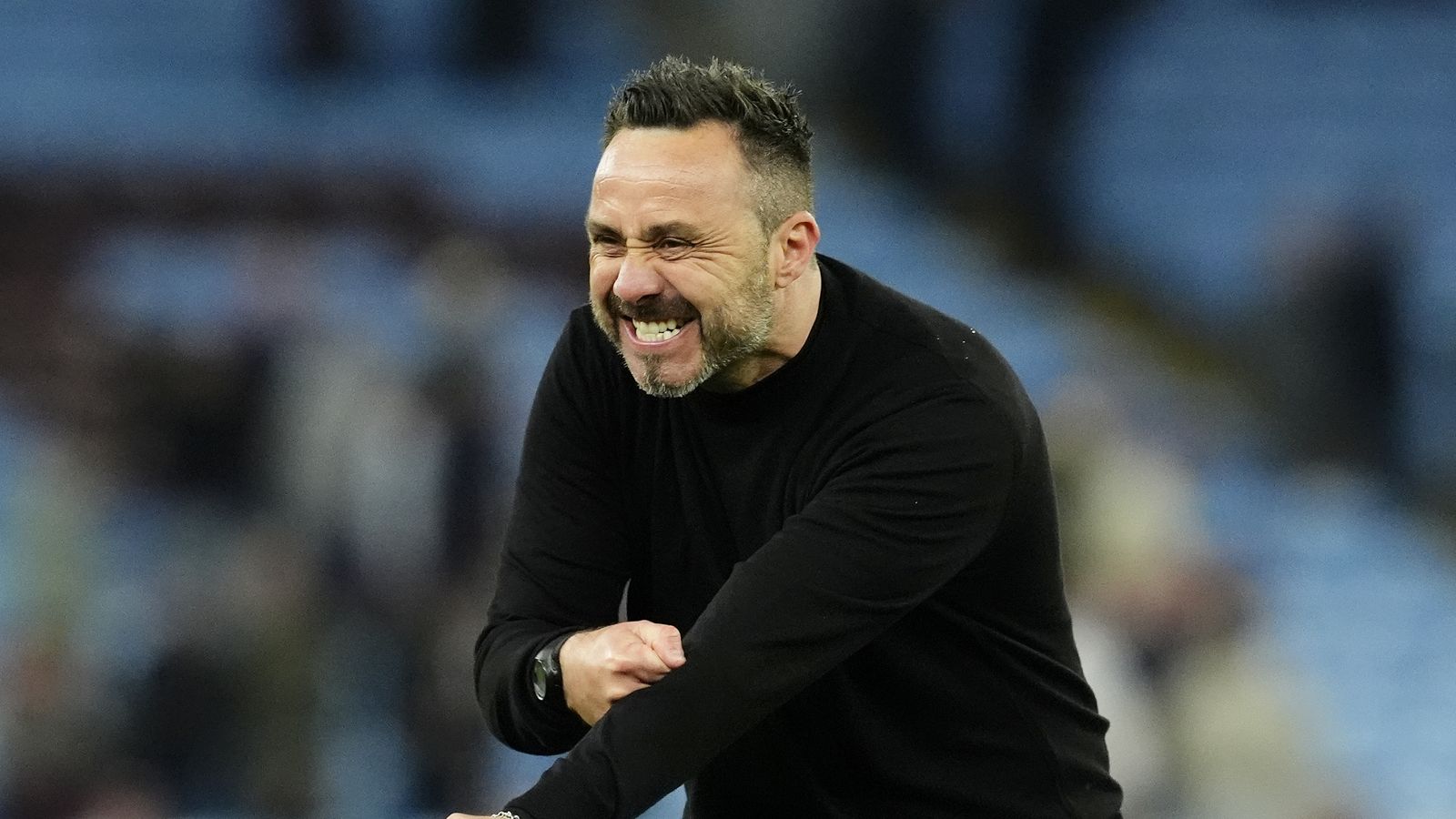
While De Zerbi is known for his preference for players who possess technical ability and a certain flair, he recognized the immediate need for a more robust and industrious midfield presence to navigate the perilous relegation scrap. He adjusted his approach, prioritizing players capable of winning duels and providing defensive stability.
Since that initial setback, Conor Gallagher has been consistently partnered by Rodrigo Bentancur in the midfield engine room for each of Tottenham’s subsequent three matches. The midfield trio was further strengthened for the crucial victory against Aston Villa, with Joao Palhinha joining Gallagher and Bentancur. This marks the first time this particular combination has started together this season, and their impact was immediate.
While this midfield trio might lack the individual flair of some other pairings in the league, their collective energy, tackling prowess, and ball-winning capabilities were instrumental in Tottenham’s performance at Villa Park. They outperformed their Aston Villa counterparts, despite playing fewer minutes, and effectively dominated the centre of the park. This demonstrates a significant improvement in midfield balance, an area that has plagued Tottenham throughout the season.
The tactical approach adopted by De Zerbi in midfield mirrors the strategy employed by Thomas Frank at Brentford. However, where Frank’s teams sometimes struggled to translate midfield dominance into sufficient attacking output, De Zerbi appears to be finding a more effective balance. His midfield selections are now geared towards winning the midfield battle, providing a solid foundation from which the team can build its attacks.
The De Zerbi Factor: Leadership and Belief
Beyond the tactical nuances and statistical improvements, the "De Zerbi factor" encompasses his renowned man-management skills and influential personality. Upon his arrival, he wasted no time in fostering a positive and confident environment within the squad. His assurance that he would remain at the club next season, regardless of their league status, provided a much-needed sense of continuity and stability, a rare commodity for Tottenham in recent times. He has instilled a demand for positivity and belief, but crucially, he has also demonstrably provided it.
De Zerbi’s coaching philosophy extends to understanding and unlocking the potential of each individual player. Before securing his first victory against Wolves, he articulated his approach: "I try to find the best solution to reach every player. Sometimes that is analysis videos but sometimes what they have done in their career for other clubs." He cited the example of Randal Kolo Muani, explaining his decision to deploy him as a right winger was based on his successful past performances in that role for Eintracht Frankfurt, where he demonstrably scored numerous goals. This ability to connect with players by referencing their past successes and understanding their individual strengths is a key component of his managerial success.
The players themselves are responding positively to De Zerbi’s methods. Conor Gallagher, who has rediscovered his influential form and looks akin to the player who captained Chelsea, is a prime example. De Zerbi’s effusive praise for Gallagher’s performance against Aston Villa, stating his side was "playing with 12 men" due to the 26-year-old’s impactful display, underscores the manager’s ability to inspire and motivate.
Gallagher himself echoed these sentiments in his post-match interview with TNT Sports: "Every player in the squad has taken to him, everyone trusts him, he makes you feel good, confident, he’s bringing the best out of players and it’s only the start. Hopefully, we can keep learning from him and build a great team." This testament from a key player highlights the profound impact De Zerbi is having on the squad’s morale and collective belief.
While the vision of building a "great team" might be a long-term aspiration, the immediate priority for Tottenham is survival. In the final stretch of the season, securing their Premier League status is paramount. For the first time in a considerable period, there is a tangible and genuine belief within the club and among its supporters that Tottenham can indeed achieve this goal. The De Zerbi revolution, though still in its early stages, has provided a much-needed lifeline and a renewed sense of hope for a club that was staring into the abyss of relegation.
Watch Tottenham vs Leeds live on Sky Sports from 6.30pm on Monday, kick-off 8pm.










Leave a Reply