
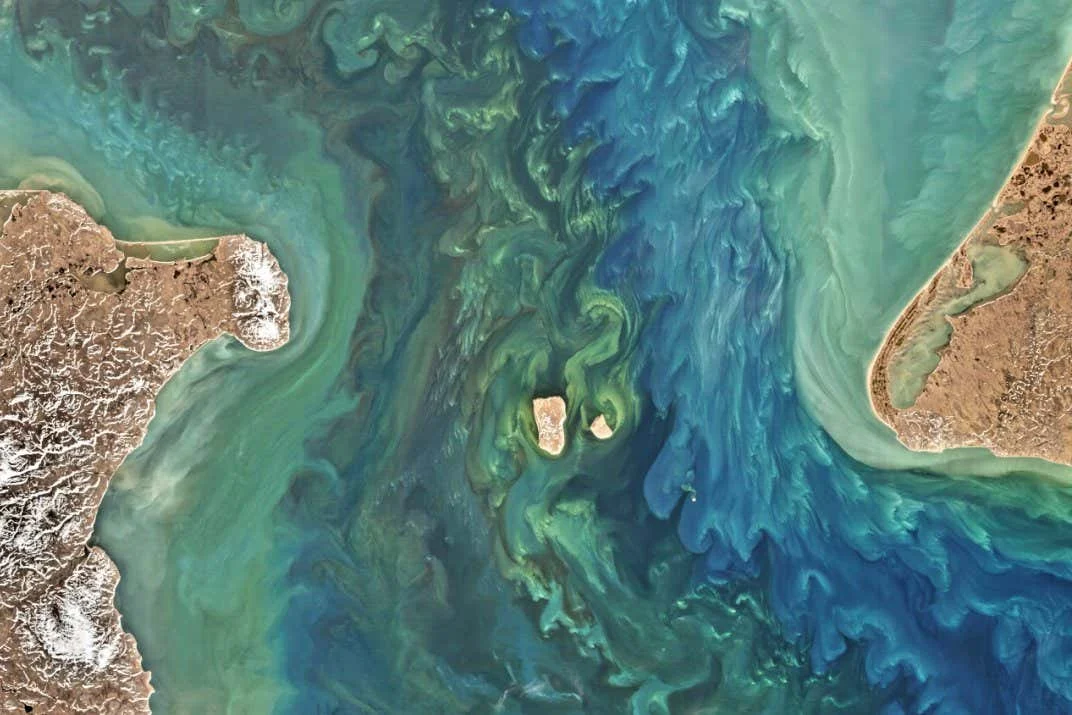
The Bering Strait, a narrow waterway separating Alaska and Russia, could one day be the site of an engineering project of unprecedented scale: a colossal dam designed to counteract the potential collapse of a vital ocean current. This audacious concept, explored by researchers at a recent major scientific conference, aims to mitigate the dire consequences of a weakening Atlantic Meridional Overturning Circulation (AMOC), a system crucial for global climate regulation.
The AMOC: A Climate Regulator Under Threat
The Atlantic Meridional Overturning Circulation (AMOC) is a vast system of ocean currents that acts as a global conveyor belt, transporting heat and nutrients across the Atlantic Ocean. At its heart is the Gulf Stream, a powerful current that plays a significant role in moderating the climate of Northern Europe, bestowing upon the region a remarkably mild temperature for its latitude. Without the AMOC, regions like the United Kingdom and Scandinavia would likely experience significantly colder winters, resembling more closely the climates found at similar latitudes in North America.
However, mounting scientific evidence indicates that the AMOC is weakening. While the exact timeline and severity of potential consequences remain subjects of intense research and debate, climate models suggest that a significant slowdown or even a complete collapse of the AMOC could lead to dramatic temperature drops in Northern Europe, potentially triggering severe weather events and disrupting ecosystems. The Intergovernmental Panel on Climate Change (IPCC) has highlighted the AMOC as a system with a potential tipping point, underscoring the urgency of understanding its dynamics and potential vulnerabilities. Recent studies have indicated that the AMOC is already at its weakest point in over a millennium, further amplifying concerns.
A Geologic Analogy Sparks an Engineering Idea
The genesis of the Bering Strait dam proposal can be traced to historical geological conditions. Dr. Jelle Soons and his colleague Dr. Henk Dijkstra from Utrecht University in the Netherlands, both specialists in oceanographic circulation, were inspired by observations of past climate states. During the Pliocene epoch, a period spanning roughly 5.3 to 2.6 million years ago, global sea levels were lower, and a land bridge, rather than the present-day Bering Strait, connected Asia and North America. Climate simulations of this era suggest that the AMOC was notably stronger, a phenomenon attributed, in part, to the absence of the continuous flow of Pacific water into the Arctic Ocean.
"I was like: ok, could we do this again?" Dr. Soons reportedly mused, referencing the possibility of artificially recreating a similar geological condition to bolster the AMOC. This thought process, rooted in paleoclimatology, led to the exploration of a modern-day engineering solution.
Simulating the Impact: From Simple Models to Supercomputers
The researchers initially investigated the potential effects of constructing a dam across the Bering Strait using relatively simple, low-resolution climate models. A key factor in their simulations was the role of freshwater. Currently, a significant volume of less saline Pacific water flows through the Bering Strait into the Arctic and subsequently into the North Atlantic. This influx of freshwater can influence the density of surface waters in the North Atlantic, a critical factor in the sinking of water that drives the AMOC. By impeding or halting this flow, a dam could potentially alter the salinity and density balance, thereby strengthening the circulation.
Their early simulations yielded mixed results, with some scenarios indicating a strengthening of the AMOC while others suggested a contrary effect. These initial findings were published in the journal Science Advances a few weeks prior to their presentation at the European Geosciences Union (EGU) general assembly.
New Simulations Reveal a Stronger Recovery
The researchers then escalated their investigation, utilizing the substantial computational power of a supercomputer to run their simulations with a far more advanced and higher-resolution climate model. Presenting their updated findings at the EGU general assembly in Vienna, Austria, on May 5th, Dr. Soons revealed that these more sophisticated simulations indicated a clearer outcome: closing the Bering Strait would indeed strengthen the AMOC. The recovery of the current was particularly pronounced when the dam was envisioned to be built earlier, ideally by 2050.
"I was surprised at how strong the recovery was," Dr. Soons stated, expressing his astonishment at the magnitude of the AMOC’s simulated response to the intervention. This new modeling suggests that a strategically placed dam could significantly counteract the forces contributing to the AMOC’s decline.
The Engineering Feasibility: A Monumental, Yet Potentially Achievable Task
The Bering Strait, while a formidable geographical feature, is relatively shallow, with its deepest point measuring only 59 meters. Furthermore, two small islands are situated within the strait, offering potential anchor points for construction. This topography suggests that a barrier could conceivably be constructed in sections.
Ed McCann, a former president of the Institution of Civil Engineers and currently associated with Expedition Engineering, offered insights into the potential construction methodology. He proposed that an effective approach would involve avoiding conventional concrete structures. Instead, he suggested utilizing floating machinery to build a barrier composed of rock and dredged sand. "This sort of construction is pretty simple, just very big and very expensive," McCann explained in an email, underscoring the immense logistical and financial challenges involved, while also hinting at a degree of technical feasibility. The sheer scale of such a project would dwarf most contemporary civil engineering endeavors, requiring a global effort and significant investment.
Uncertainties and Broader Implications
Despite the promising results from the advanced simulations, significant uncertainties and potential drawbacks remain. Jonathan Rosser, affiliated with the London School of Economics, emphasized that our current understanding of the AMOC is still incomplete. "These drastic things really do have big uncertainties attached," he cautioned, highlighting the inherent risks of intervening in such a complex global system. The precise long-term consequences of a Bering Strait dam are difficult to fully predict.
Dr. Soons himself acknowledged these concerns. While a dam might benefit Northern Europe by stabilizing the AMOC, it could also lead to unforeseen consequences elsewhere. Alterations in global rainfall patterns, changes in marine ecosystems, and impacts on shipping routes and coastal communities are all potential side effects that require thorough investigation. "Whether you would consider this a serious proposal? I don’t think we’re there yet," Dr. Soons remarked, tempering the enthusiasm with a dose of scientific prudence.
The proposal also echoes previous ambitious climate intervention concepts. In 2020, Sjoerd Groeskamp of the Royal Netherlands Institute for Sea Research proposed the "Northern European Enclosure Dam," a plan involving two barriers to isolate the sea between the UK and Europe, aiming to protect low-lying areas from rising sea levels. These grand ideas, while conceptually intriguing, underscore the growing desperation and innovation being explored in the face of accelerating climate change.
Beyond climate impacts, any such dam would inevitably affect marine mammal migrations, tidal patterns, and access for shipping to remote Arctic communities. Dr. Soons has begun to consider modifications, such as partial barriers or structures that do not extend to the full depth of the strait, but these ideas require further rigorous study.
A Glimpse into Future Possibilities
The concept of a Bering Strait dam, while currently residing in the realm of theoretical exploration and advanced modeling, represents a profound contemplation of humanity’s potential to engineer its way out of climate crises. It underscores the interconnectedness of global climate systems and the monumental challenges we face. While the immediate implementation of such a project remains a distant prospect, the ongoing research highlights the innovative thinking and the scale of solutions that may be required to safeguard our planet’s climate in the coming decades. The findings from Utrecht University serve as a critical, albeit sobering, reminder of the stakes involved in understanding and potentially influencing the Earth’s most fundamental climate regulators. Further research will be essential to fully comprehend the feasibility, risks, and rewards of such a transformative undertaking.








Leave a Reply