
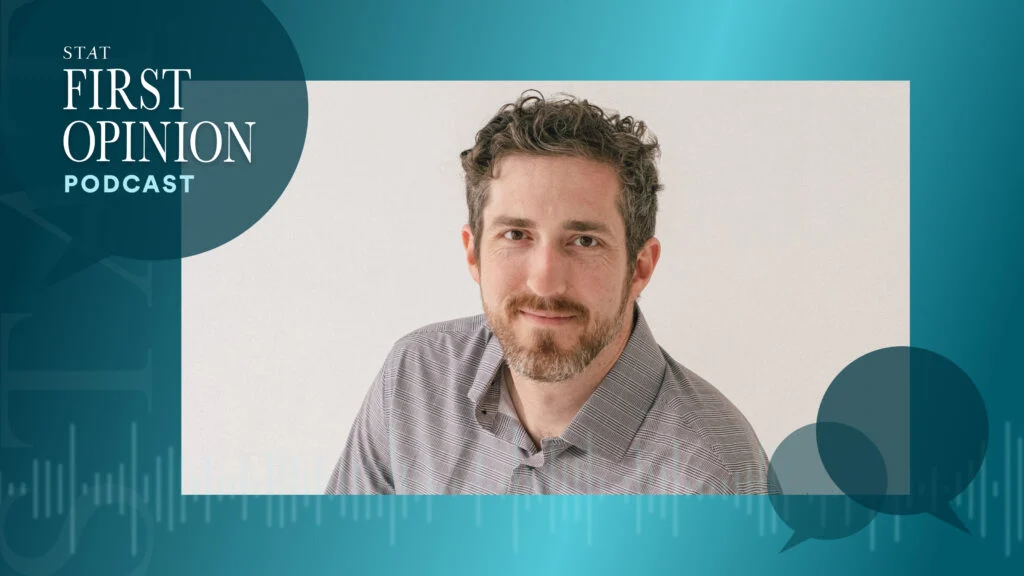
Will Flanary, better known to his millions of social media followers as Dr. Glaucomflecken, has carved out a unique niche as one of healthcare’s most prominent comedic voices. An ophthalmologist by trade, Flanary leverages his online platform not only for humor but also for critical advocacy, addressing pressing issues within the medical field, from systemic healthcare failures to ethical quandaries in medical practice and the proliferation of medical misinformation. In a recent interview with STAT’s “First Opinion Podcast,” hosted by Torie Bosch, Flanary detailed his involvement in a contentious healthcare dispute in Eugene, Oregon, discussed the evolving landscape of physician-patient interactions on social media, and expressed his strong disapproval of elective cosmetic eye surgeries.
The Eugene, Oregon Healthcare Crisis: A Fight for Local Medicine
A significant portion of the discussion centered on a complex situation unfolding in Eugene, Oregon, which Flanary described as a critical case study in the challenges facing community-based healthcare. The crisis began several years prior with the closure of University District Hospital in downtown Eugene by the PeaceHealth hospital system. This closure, including its emergency department, was met with significant outcry from healthcare professionals who foresaw the strain it would place on the remaining healthcare facilities in the region.
"Whenever news that this was gonna happen came up, there was a pretty big outcry, particularly from a lot of the staff and the emergency physicians there," Flanary explained. "They knew: ‘This is going to make life so much more difficult over in Springfield at RiverBend Hospital, which is now like the only hospital in this area. All the patients that were going to University District are now gonna be shunted over here. And we don’t have the staff, we don’t have the equipment.’"
Despite these warnings, PeaceHealth proceeded with the closure. As predicted, the sole remaining hospital, RiverBend, experienced a surge in patient volume, leading to critically long wait times in the emergency department, decreased patient satisfaction, and an overall strain on resources. This situation has persisted for several years, creating a challenging environment for both patients and healthcare providers.
The issue escalated recently when the CEO of RiverBend Hospital initiated a process to re-evaluate the contract for staffing the hospital’s emergency department. For the past 35 years, this crucial service had been provided by Eugene Emergency Physicians, a democratic, physician-owned group comprising approximately 40 local doctors deeply embedded in the community. However, RiverBend opted to solicit proposals from other entities, ultimately awarding the contract to ApolloMD, a corporate management group based in Atlanta, Georgia.
Flanary highlighted the fundamental shift this represents: "This is a huge deal. You’re taking, you know, local medicine run by people in the community who know the community, know the patients, know the other physicians. That’s really important in emergency medicine because there’s so much interaction with other areas of the hospital and knowing what the social services are in the area, where patients can go, what’s available to people. All that institutional knowledge, you’re just gonna like give that away?"
The rationale behind this decision remains opaque. The RiverBend CEO stated it was not a financial or performance-based decision, leaving many to question the underlying motivations. Flanary suggested that the replacement of a long-standing, local physician group with an out-of-state corporate entity raises serious concerns about the future of patient care and community-centered healthcare.
The Corporate Practice of Medicine and Legal Challenges
A crucial element amplifying the significance of the Eugene situation is Oregon’s recently enacted corporate practice of medicine law, set to take full effect in 2025. This legislation is specifically designed to prevent large, non-physician-owned corporate entities from practicing medicine within the state, thereby safeguarding physician autonomy and local control over healthcare delivery. The transition of the RiverBend ED contract to ApolloMD has sparked lawsuits and drawn the attention of state officials.
The Governor of Oregon has publicly urged a hold on the transition, citing potential violations of the new state law. PeaceHealth, however, maintains its decision is not in conflict with the law, while ApolloMD has presented its involvement as standard business practice. Flanary argues that this situation exemplifies the broader trend of corporate healthcare entities prioritizing financial gains or other non-altruistic motives over patient well-being, underscoring the need to keep medicine local and community-focused.
Allegations of Retaliation and Clinical Interference
Adding another layer of complexity to the Eugene narrative, internal emails have surfaced suggesting potential retaliation against the local emergency physicians. These emails, dating back to 2023 and 2024, reportedly show the RiverBend CEO, who holds an administrative license but not an active medical license to practice, attempting to influence clinical decision-making. Physicians from various specialties, including neurologists, reported receiving inquiries from the CEO questioning patient admissions, the necessity of MRIs, and other clinical judgments.
Flanary emphasized the problematic nature of such interference: "This is coming from the CEO. And if you’re an employee, how are you going to feel comfortable going against what the CEO says? It’s your employer, right? That’s scary, you could lose your job." The emergency physicians raised these concerns to PeaceHealth leadership, including the system’s overall CEO. Shortly thereafter, the CEO of RiverBend initiated the process for new emergency department contract proposals. Flanary views this sequence of events as a strong indicator of potential retaliation against physicians who voiced concerns about leadership’s clinical interference.
Social Media as a Tool for Advocacy and Awareness
Flanary’s involvement in the Eugene situation is a testament to his strategic use of social media for advocacy. He believes that by bringing such issues to light online, healthcare systems and corporations that prefer to operate discreetly are put under increased public scrutiny. "They don’t want people to know what’s happening. They want to keep it out of the news. They want to keep it away from the kind of national attention because they know this is really unpopular and that maybe this isn’t the best for patient care, but it’s maybe good for pocketbooks, maybe good for other reasons that are not as altruistic," he stated.
He drew a parallel to past instances, such as an ophthalmology-related insurance policy change that was quickly reversed after significant social media outcry. Flanary sees his role as amplifying these stories, particularly those with broader implications for healthcare policy, such as the corporate practice of medicine law in Oregon. He believes that successful legal challenges by local physicians could inspire similar legislation in other states, fostering a nationwide shift towards more localized and physician-led healthcare.
Navigating the Ethical Minefield of Medical Influencing
The conversation also delved into the increasingly complex and often controversial intersection of medicine and social media influencing. Flanary acknowledged the growing number of medical students, residents, and physicians who have cultivated significant online followings. He stressed the critical importance of ethical conduct, particularly concerning patient privacy and the potential for financial incentives to compromise professional integrity.
"It is so easy to lose your integrity as a physician," Flanary cautioned. He pointed to recent incidents where medical students or influencers faced backlash for content perceived as demeaning to patients, particularly women. He cited a specific case where a medical student posted videos that were widely interpreted as shaming women for their bodily functions, leading to significant public condemnation.
Flanary underscored the financial pressures faced by aspiring medical professionals. "There’s a lot of financial stakes here. Not just the money you’re borrowing to go to med school, but also just the money you’re making, you can make from social media." He described how lucrative offers for promoting supplements or other products can tempt those burdened by substantial debt, potentially influencing the content they create.
To navigate this landscape, Flanary advocates for strict ethical guardrails. His personal guidelines include a prohibition against any patient-related content or HIPAA violations, and a commitment to "punching up" – directing criticism towards powerful entities like insurance companies and hospital systems rather than vulnerable individuals like patients, fellow physicians, or trainees. He believes that while comedy can be a powerful tool for engagement, it must be wielded responsibly, with a clear understanding of ethical boundaries and the potential impact on public trust in the medical profession.
The Unethical Practice of Cosmetic Eye Color Change Surgery
Shifting to a more specific medical topic, Flanary expressed strong disapproval of elective cosmetic eye color change surgery. He described the procedure, which involves implanting a colored disk over the iris, as fundamentally unethical and lacking sufficient safety data.
"You’re not changing your eye color. You’re changing the appearance of your eye color," Flanary clarified. "Your eyes are the same, but what they’re doing is they’re implanting a disk that has a color to it. And it’s basically overlaying just right on top of your iris. So you’re introducing a foreign body into the eye. Into eyes that are totally healthy, that see 20/15, perfect."
He contrasted this with procedures like LASIK, which, despite being cosmetic, have undergone extensive safety testing and have established protocols for managing risks. The lack of comparable data for iris implants, coupled with the introduction of foreign bodies into healthy eyes, leads Flanary to deem the practice unethical. He acknowledged that iris implants have legitimate medical applications, such as in cases of severe eye injury or aniridia (the absence of an iris) to help modulate light sensitivity. However, he argued that these implants are being misused for purely cosmetic purposes, a practice he finds deeply troubling.
Flanary also addressed the spread of misinformation through social media, citing common patient queries about whether wearing glasses can worsen vision. He explained how such dangerous myths, often propagated by the wellness industry, can lead to serious consequences, particularly for children. Delaying or refusing prescribed glasses due to such misinformation can result in amblyopia, or lazy eye, leading to irreversible vision loss. He also warned against the misuse of unregulated eye drops, which have been linked to severe eye infections.
Finding Humor as a Coping Mechanism and a Catalyst for Change
Despite the often grim realities of healthcare, systemic issues, and the pervasive spread of misinformation, Flanary maintains that humor remains a vital tool. He sees it as both a personal coping mechanism and a powerful strategy for engaging the public on critical healthcare matters.
"At the core, that’s a big part of it still," Flanary said of humor’s role. "But it’s now changed to once I realized that if you hide things in comedy, not hide them, but just like surround an idea with humor on social media, you’re much more likely to have people pay attention to it." He finds satisfaction in transforming complex and often dry topics, like pharmacy benefit managers, into engaging and humorous content that simultaneously educates the audience.
During the COVID-19 pandemic, Flanary’s comedic content provided a much-needed respite for healthcare workers. He recalled messages from doctors and nurses expressing gratitude for the moments of laughter amidst the intense stress and tragedy they were witnessing. This experience further solidified his belief in the power of humor to connect, uplift, and even facilitate important conversations. As long as the work remains personally fulfilling and demonstrably helpful, Flanary intends to continue using his platform to bring awareness, foster discussion, and inject a much-needed dose of levity into the often-heavy world of medicine.










Leave a Reply