
The United States is currently navigating a convergence of two high-profile water crises that have moved from the realm of long-term projections into immediate, systemic threats. Driven by the dual pressures of anthropogenic climate change and intensive industrial overuse, these emergencies are unfolding across the American West and the Texas Gulf Coast. From a major metropolitan center in Texas facing a potential "Day Zero" to a decades-long political stalemate among the seven states reliant on the Colorado River, the summer of 2024 has become a focal point for water insecurity. Experts warn that these regional failures serve as a bellwether for the rest of the nation, urging municipalities to move beyond reactive measures and toward radical long-term planning.
The Collapse of the Western Snowpack
The current crisis was precipitated by a winter and spring of extreme meteorological anomalies. In February, following a period of record-breaking warmth, snowpack levels across various mountain ranges in the American West plummeted to historic lows. This trend accelerated in March, which saw temperatures reach levels that researchers describe as "unprecedented and disturbing." According to Brad Udall, a senior water and climate researcher at Colorado State University’s Colorado Water Center, the transition from a poor snowpack to a critical deficit occurred in just three weeks.
This rapid melt has direct consequences for the Colorado River, a hydrological lifeline that provides water to 40 million people and supports multi-billion dollar agricultural industries. By late spring, river flows in several key sectors had slowed to a mere trickle. The early melt means that water which should have been stored as snow—acting as a natural reservoir that releases slowly throughout the summer—has already moved through the system, leaving the region vulnerable to the hottest months of the year.
Hydropower and the Reservoir Crisis
The Colorado River is not merely a source of drinking and irrigation water; it is a vital component of the Western power grid. The river feeds Lake Powell and Lake Mead, the two largest man-made reservoirs in the United States, which together provide electricity to more than 25 million people via massive hydroelectric dams.
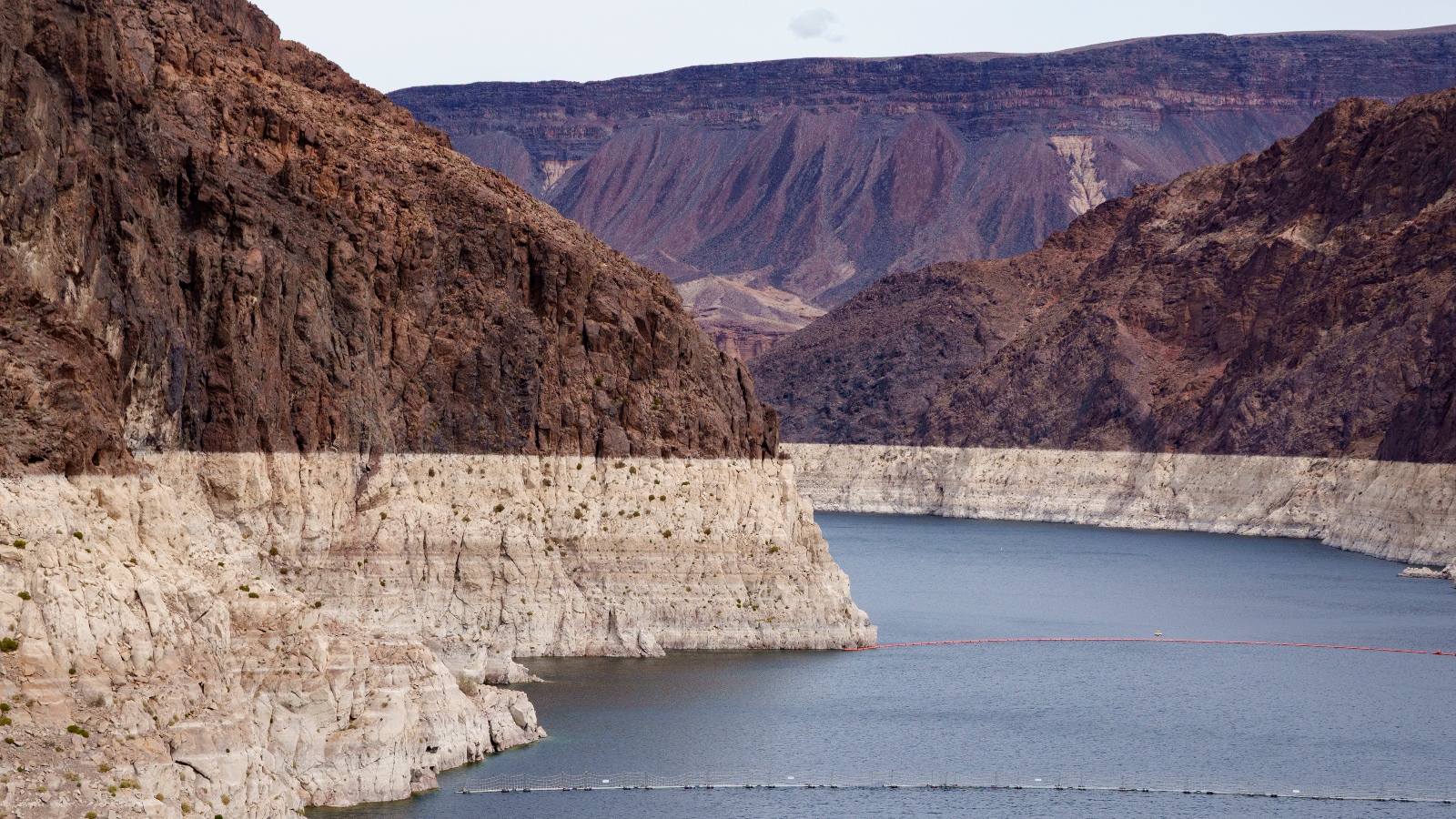
As of late spring, Lake Mead’s water levels were hovering just 17 feet above the record low set in July 2022. When reservoir levels drop too low, they approach "dead pool" status, where water can no longer flow through the turbines to generate power. To prevent a catastrophic failure of the regional power grid, the U.S. Department of the Interior recently announced emergency interventions. These plans prioritize maintaining hydropower operations at Lake Powell, though officials acknowledge this may necessitate further reductions in water availability for downstream states and potentially diminish power generation at Lake Mead.
The Breakdown of the 1922 Colorado River Compact
The physical scarcity of water is colliding with a century-old legal framework that many experts argue is no longer fit for purpose. The Colorado River Compact of 1922 governs how water is distributed among the "Upper Basin" states (Colorado, New Mexico, Utah, and Wyoming) and the "Lower Basin" states (Arizona, California, and Nevada). For decades, these states have sparred over equitable distribution, a conflict exacerbated by the fact that the original 1922 allocations were based on an unusually wet period in the river’s history.
The primary point of contention remains agricultural use. Alfalfa, grown primarily as cattle feed, is the largest consumer of Colorado River water, utilizing more volume than all the cities in the basin combined. Despite missing multiple federal deadlines to renegotiate the compact—including a critical cutoff in February—the states remain deadlocked.
Udall warns that the current scarcity could lead to a historic legal breach: the first time Upper Basin states fail to deliver the mandated volume of water to the Lower Basin. Such a violation would likely trigger protracted litigation in the U.S. Supreme Court, creating a period of extreme regulatory and economic uncertainty for the region.
Corpus Christi and the Specter of Day Zero
While the Colorado River crisis represents a regional struggle, a more acute emergency is unfolding in Corpus Christi, Texas. As the eighth-largest city in the state and a major petrochemical hub, Corpus Christi is inching toward a "Level 1" drought emergency. City officials have indicated that by September, the city could reach a point where water demand has outpaced supply for 180 consecutive days.

Unlike many Western cities that have diversified their water portfolios, Corpus Christi relies almost exclusively on surface water. The city’s primary sources, the Choke Canyon Reservoir and Lake Corpus Christi, have reached critically low levels. Recent data shows these reservoirs sitting at approximately 7.4 percent and 8.7 percent capacity, respectively. Without significant rainfall from tropical systems, some projections suggest the city’s municipal sources could run dry by 2025.
Industrial Overuse and the Economic Balancing Act
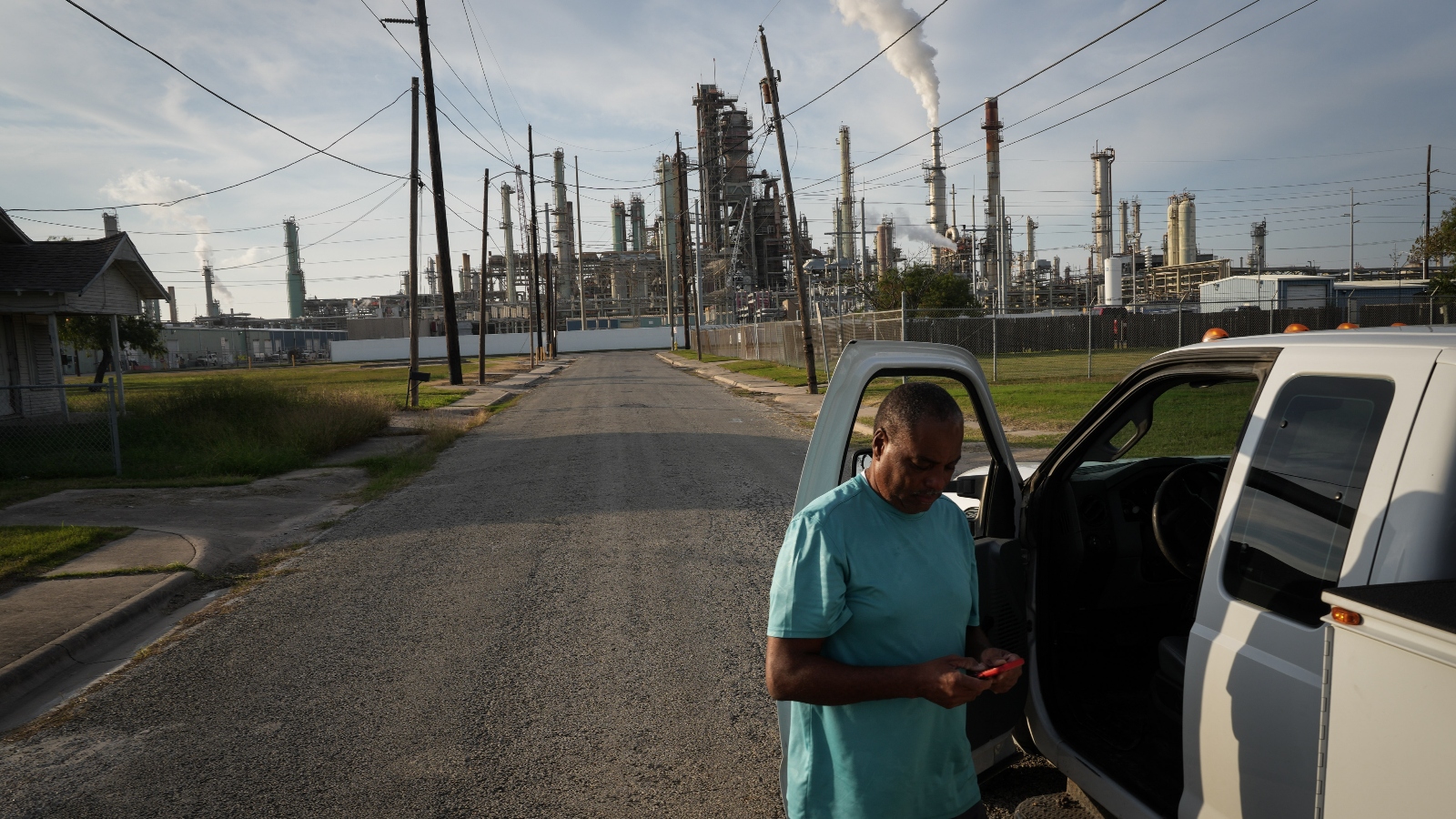
The crisis in Corpus Christi highlights the tension between industrial growth and residential sustainability. The region is a cornerstone of the American plastics and petrochemical industry. Permit statistics reveal that a single joint-venture plastics plant, operated by Exxon Mobil and Saudi Basic Industries Corporation (SABIC), consumes an average of 13.5 million gallons of water per day. In contrast, the average residential household in the city uses approximately 6,000 gallons per month.
City Manager Peter Zanoni has defended the decision to delay more stringent industrial restrictions until September, citing the need to protect the local economy and prevent operational shutdowns. However, this delay has placed the burden of conservation on residents, who already face limits on lawn watering and car washing, alongside rising utility bills.
The city’s long-term solution—a series of desalination plants—has stalled due to skyrocketing costs and environmental concerns. Initially proposed as a way to provide drought-proof water for industrial customers, the projected cost of the infrastructure has ballooned to over $1 billion. Furthermore, the Texas Governor’s office recently denied additional funding for a separate desalination project, leaving the city without a clear backup plan as its reservoirs evaporate.
The Rising Cost of Infrastructure Delay
The predicament in Texas serves as a warning about the economics of climate adaptation. Shane Walker, director of the Water and the Environment Research Center at Texas Tech University, emphasizes that water infrastructure projects only become more expensive as time passes. The "wait and see" approach often results in municipalities being forced to build more expensive, less efficient systems under the duress of an active crisis.
Walker argues that city planners must now view a 20-year time horizon as an "urgent" window. For cities experiencing rapid population growth, relying on finite groundwater or drought-vulnerable lakes is no longer a viable strategy. The transition to alternative supplies—whether through desalination, advanced water recycling, or aggressive conservation—requires decades of lead time that many cities have already squandered.
A Global Precedent for Policy Transformation
While some short-term relief may arrive in the form of an intense El Niño-driven monsoon season, climate researchers stress that weather patterns are no longer a reliable solution for structural water deficits. The shift from periodic "drought" to permanent "aridification" in the West requires a fundamental rethinking of how the United States manages its most precious resource.
The crises in the Colorado River Basin and Corpus Christi are not isolated incidents of bad luck; they are the result of slow-building problems that were largely foreseeable. As Brad Udall notes, this may be the first worldwide climate change crisis of this scale that forces fundamental policy-level decisions.
The implications are vast. Seven states, two nations, and over 40 million people are being forced to reconcile their economic ambitions with the physical realities of a warming planet. The summer of 2024 has demonstrated that the "water crisis" is no longer a future threat—it is a present reality that is reshaping the legal, economic, and social fabric of the American West. The lessons learned here will determine whether other regions can avoid a similar fate or if they will remain caught in the same cycle of reactive management and infrastructure delay.








Leave a Reply