
In a decisive move that marks a significant shift in the landscape of international environmental law, an overwhelming majority of the United Nations General Assembly has voted to adopt a resolution formally backing a landmark ruling by the International Court of Justice (ICJ). The resolution, passed on Wednesday, reinforces the world court’s 2025 advisory opinion, which established that nations have a clear legal obligation to address climate change and can be held liable for failing to protect the planet for current and future generations. The vote, which saw more than 140 countries in favor and only eight against, signals a growing global consensus that climate inaction is no longer merely a policy failure but a "wrongful act" under international law.
The resolution’s adoption represents the culmination of a decade-long grassroots effort that originated in a classroom in the South Pacific. It provides a robust political mandate to the ICJ’s findings, affirming that countries must take proactive measures to reduce greenhouse gas emissions, transition away from fossil fuels, and provide reparations to vulnerable nations already suffering the catastrophic effects of a warming climate. While UN General Assembly resolutions are generally non-binding, legal experts suggest this vote provides the necessary "political weight" to transform abstract legal norms into actionable domestic and international policies.
From Classroom to the World Court: A Chronology of the Movement
The journey toward this historic UN vote began approximately six years ago at the University of the South Pacific in Vanuatu. A group of 27 law students, witnessing the intensifying cyclones and rising sea levels threatening their island homes, proposed a radical legal strategy: asking the International Court of Justice for an advisory opinion on climate change. They successfully lobbied the government of Vanuatu, a nation of roughly 320,000 people, to lead a global coalition.
In 2021, Vanuatu officially launched its campaign at the UN, arguing that the climate crisis is fundamentally a human rights issue. By 2023, the UN General Assembly had adopted a consensus resolution—co-sponsored by a record 132 countries—requesting the ICJ to clarify the legal obligations of states regarding climate change. The court’s proceedings, held in The Hague, involved submissions from nearly 100 countries and international organizations, the largest number ever for an ICJ case.
In early 2025, the ICJ delivered its unanimous advisory opinion. The court ruled that states are legally required to ensure that activities within their jurisdiction do not cause significant harm to the environment of other states or to areas beyond national control. Crucially, the court found that persistent failure to meet international climate commitments, such as those outlined in the Paris Agreement, constitutes a breach of international law, opening the door for legal claims regarding "loss and damage."
The Mechanics of the UN Resolution and Voting Patterns
The resolution adopted this week serves to formalize the General Assembly’s endorsement of the ICJ’s findings. It calls on all member states to implement measures designed to limit global temperature rise to 1.5 degrees Celsius above pre-industrial levels. Furthermore, it requests the UN Secretary-General to submit a comprehensive report by 2026 outlining specific pathways for countries to comply with their legal obligations as defined by the court.
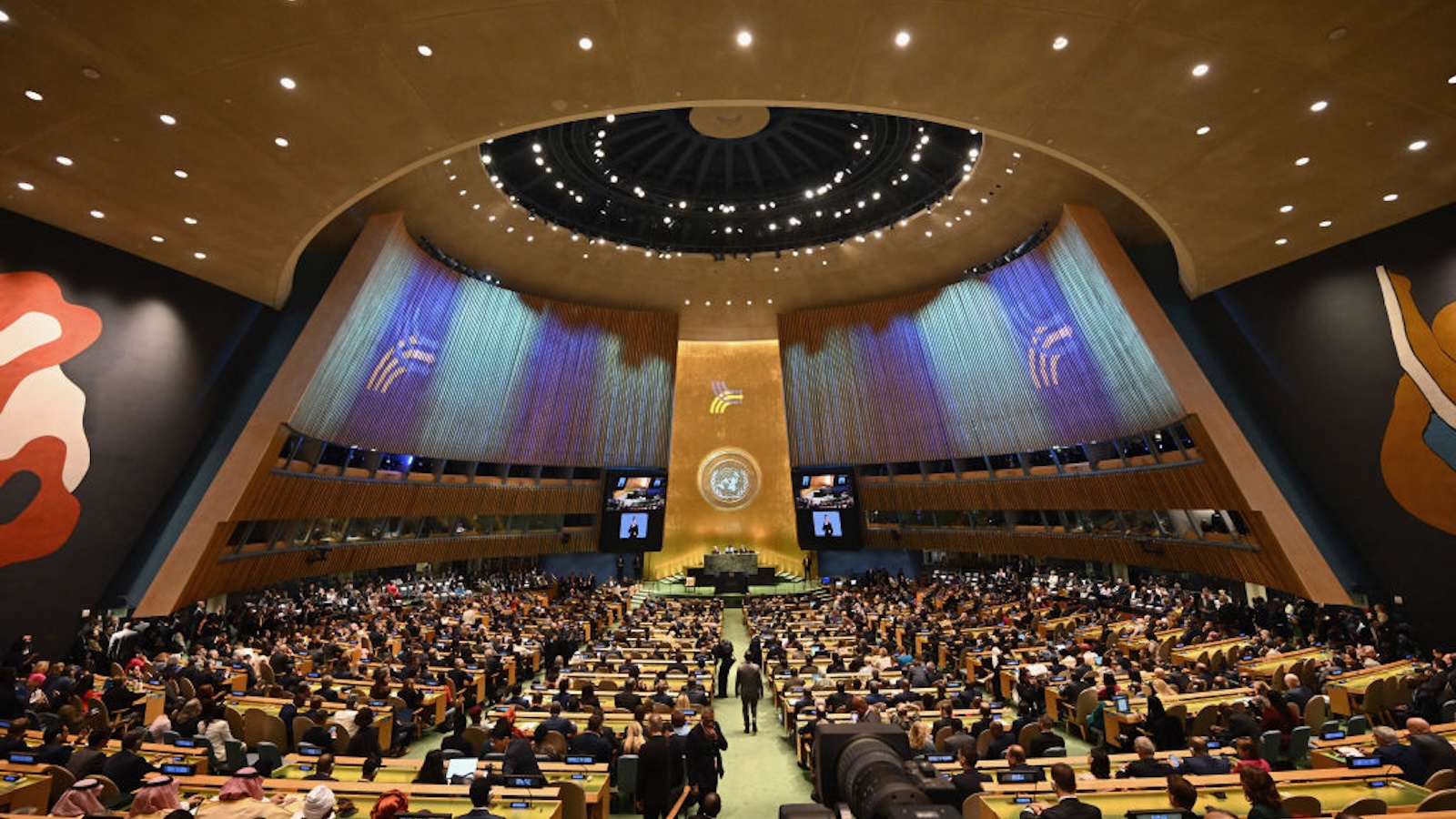
The voting results revealed a stark divide between the vast majority of the global community and a small group of influential outliers. While 140 countries voted in favor, 28 countries abstained, and eight voted against. The dissenting block included the United States, Russia, Israel, Iran, Saudi Arabia, and three other nations. Analysts note that the opposing group is comprised largely of major fossil fuel producers or nations currently undergoing shifts toward more nationalist, anti-multilateralist foreign policies.
For the Pacific Island nations, the vote is a validation of their sovereignty and survival. Vishal Prasad, director of the Pacific Islands Students Fighting Climate Change and one of the original law students involved in the initiative, described the outcome as a "turning point in accountability." He emphasized that the movement demonstrates how small nations, when organized, can shift the trajectory of global governance.
U.S. Opposition and the Rhetoric of "Alarmism"
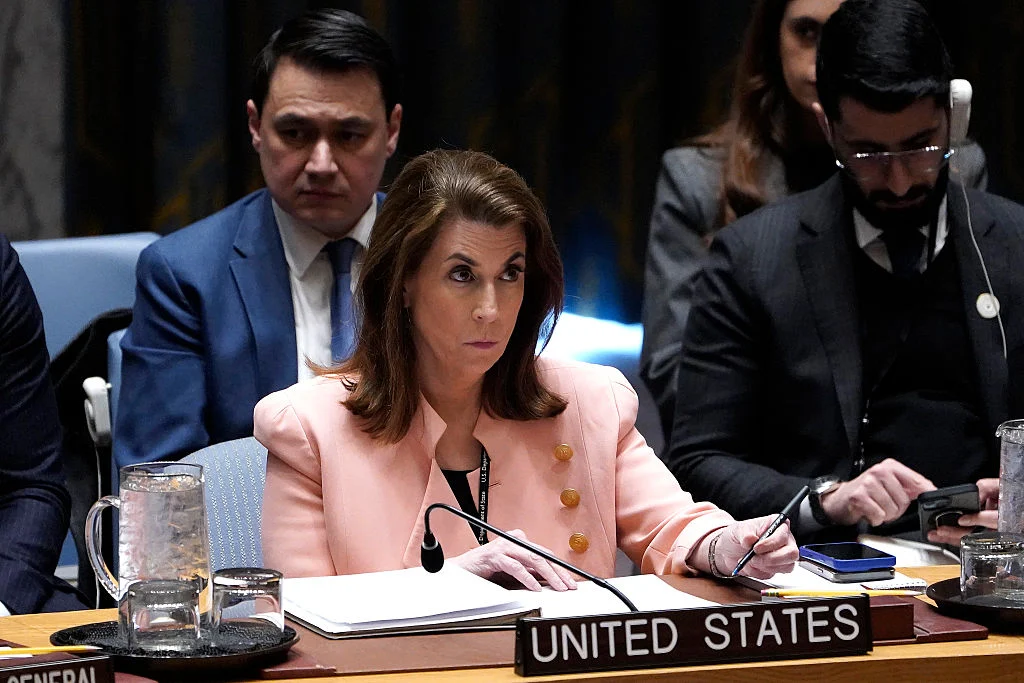
The United States, under the current administration, led the charge against the resolution. The State Department reportedly issued a series of diplomatic missives to consulates and embassies worldwide in the weeks leading up to the vote, characterizing the resolution as a "major threat to U.S. industry" and an overreach of international authority.
During the General Assembly session, Tammy Bruce, the U.S. deputy representative to the UN, articulated Washington’s objections. She argued that the resolution relied on "hyperbolic statements" and "alarmist political language" that were inappropriate for a formal legal proceeding. Bruce specifically took issue with the resolution’s characterization of climate change as a "civilizational challenge," suggesting such phrasing was intended to trigger radical policy shifts that could destabilize global markets.
The U.S. position reflects a broader trend of withdrawing from multilateral climate frameworks. Over the past year, the U.S. has actively opposed a proposed carbon tax on the international shipping industry—a sector responsible for approximately 3 percent of global carbon emissions—and has worked to block international caps on plastics production. Critics argue that this isolationist stance undermines decades of diplomatic efforts to forge a unified global response to environmental degradation.
Legal Implications and the Rise of Climate Litigation
The UN resolution arrives at a time when domestic courts are increasingly becoming the front lines of the climate battle. In Aotearoa New Zealand, the government has recently moved to amend climate laws to restrict the ability of citizens to sue major greenhouse gas emitters. This legislative pushback is seen by many as a direct response to high-profile cases like that of Mike Smith, an Indigenous Māori climate advocate.
Smith is currently pursuing litigation against six of New Zealand’s largest corporate emitters, arguing that their operations violate the rights of Indigenous communities who are disproportionately affected by extreme weather. Smith welcomed the UN vote, noting that it provides international legal cover for domestic activists. "New Zealand has a responsibility to stand with Pacific countries," Smith stated, adding that the resolution shifts the perception of climate change from a "discretionary policy issue" to a "matter of legal consequence."
Legal experts suggest that while the ICJ opinion and the subsequent UN resolution are not "enforcement mechanisms" in the traditional sense, they provide a powerful framework for "climate torts." This means that in the future, nations or even individuals may be able to sue states in international or domestic forums for damages resulting from climate-related disasters, citing the ICJ’s definition of "wrongful acts."
Supporting Data: The Cost of Inaction
The push for legal accountability is driven by the escalating economic and human costs of climate change. According to data from the World Meteorological Organization, the number of weather-related disasters has increased fivefold over the last 50 years, resulting in daily losses of approximately $202 million globally. For small island developing states (SIDS) like Vanuatu, a single extreme weather event can result in losses exceeding 60 percent of their annual GDP.
Furthermore, the International Energy Agency (IEA) has warned that to remain within the 1.5-degree Celsius threshold, there can be no new investment in fossil fuel supply projects. The UN resolution’s call for a transition away from fossil fuels aligns with this scientific consensus, yet global subsidies for fossil fuels reached a record $7 trillion in recent years, according to the International Monetary Fund. The resolution seeks to bridge this gap by establishing that such subsidies may contribute to a state’s legal liability for climate harm.
Analysis of Broader Implications
The adoption of this resolution suggests that the era of "voluntary" climate action may be coming to an end. For decades, the international response to global warming has been defined by the "pledge and review" system of the Paris Agreement, which relies on national governments to set and meet their own targets without fear of legal reprisal. By endorsing the ICJ’s view of climate change as a legal obligation, the UN has introduced the concept of "compulsory" accountability.
This shift has profound implications for international diplomacy. It empowers "Global South" nations to negotiate from a position of legal right rather than as supplicants for aid. The "Loss and Damage" fund, established at recent COP summits, may now be viewed not as a charitable endeavor by wealthy nations but as a form of legal restitution for "wrongful acts."
However, the path forward remains fraught with challenges. The opposition of major powers like the U.S., Russia, and Saudi Arabia indicates that the implementation of the ICJ’s findings will face significant hurdles in the halls of domestic power. As Nikki Reisch of the Center for International Environmental Law noted, the resolution is a "pillar of political backing," but its ultimate success will depend on whether grassroots movements and legal advocates can use it to force tangible changes in national laws and corporate behavior.
As the UN Secretary-General prepares the 2026 report on compliance, the world will be watching to see if this "turning point" translates into a measurable reduction in global emissions or if the divide between international legal norms and national industrial interests continues to widen. For the students in Vanuatu who started it all, the vote is proof that the legal system, though slow, remains a potent tool for the defense of the planet.










Leave a Reply