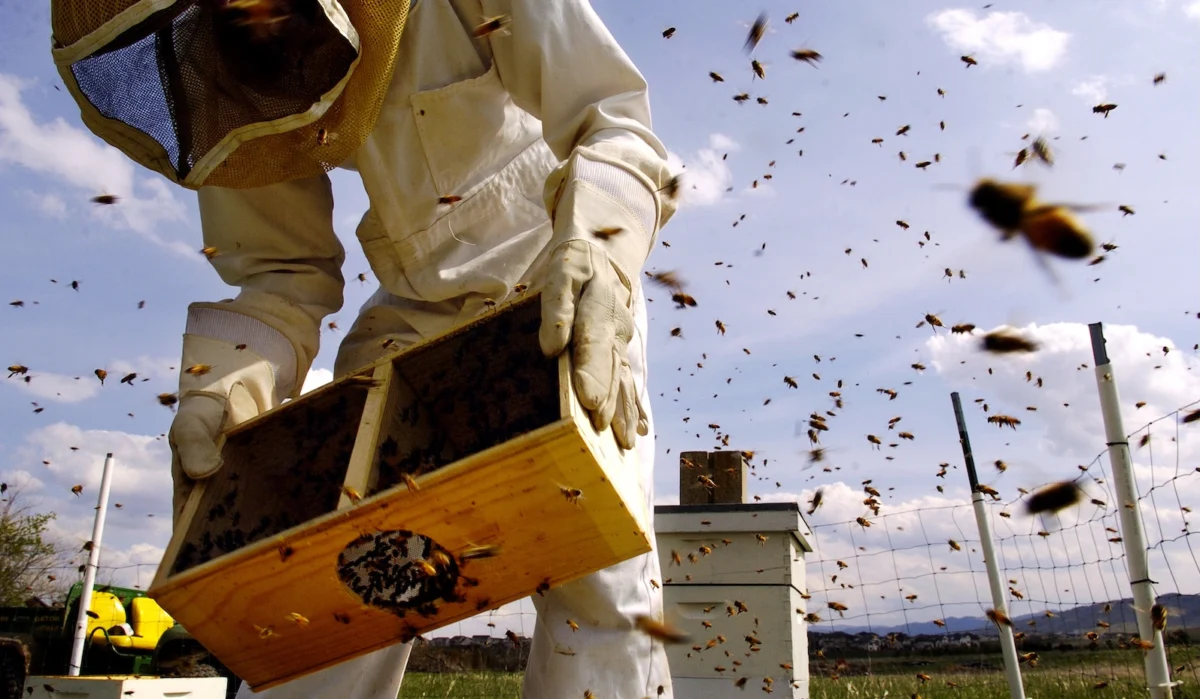
For Cory Kreft, a lifelong resident of Colorado, beekeeping was more than a profession; it was a return to his roots. Having started on a honey farm at the age of 15, Kreft eventually realized his dream by purchasing the business from his former mentor. However, in 2021, that dream began to wither. Kreft witnessed a catastrophic phenomenon as his bees began to die in unprecedented numbers, resulting in the loss of 85 percent of his hives. This was not an isolated incident. The die-offs persisted through 2022 and 2023, costing his business approximately $1 million annually. After exhaustive environmental testing, Kreft identified a specific culprit: neonicotinoids.
Neonicotinoids, often referred to as "neonics," represent a class of neuro-active insecticides chemically similar to nicotine. Developed in the 1990s, they were marketed as a revolutionary tool for modern agriculture—a "safer" alternative to the highly toxic organophosphates of the past. Today, however, they are at the center of a growing environmental and public health firestorm. While they were intended to protect crops, evidence suggests they have created a pervasive, systemic toxicity that saturates the soil, water, and the very food chain they were meant to support.
The Mechanism of a Systemic Neurotoxin
To understand the devastation experienced by beekeepers like Kreft, one must understand how neonics function. Unlike traditional topical pesticides that stay on the surface of a leaf, neonics are systemic. They are most commonly applied as a coating to seeds before they are even planted. As the plant grows, it absorbs the chemical into its vascular system. Consequently, every part of the mature plant—the leaves, the stem, the fruit, and crucially, the pollen and nectar—becomes toxic to insects.
According to Dr. Jennifer Sass, a senior scientist with the Natural Resources Defense Council (NRDC), neonics are designed to attack the central nervous system of insects by binding to nicotinic acetylcholine receptors. In target pests, this causes overstimulation, paralysis, and death. However, for non-target pollinators like honeybees and wild bumblebees, even sub-lethal exposure is devastating. When bees forage on contaminated nectar, the neurotoxins impair their ability to navigate, learn, and forage. A bee that cannot find its way back to the hive is a bee that is effectively dead, and as more workers fail to return, the entire colony collapses.
The Regulatory Loophole: The "Treated Article" Exemption
The rapid expansion of neonicotinoid use in the United States is largely attributed to a significant regulatory gap known as the "treated article exemption." Under the Federal Insecticide, Fungicide, and Rodenticide Act (FIFRA), most pesticides must undergo rigorous registration and labeling processes. However, the Environmental Protection Agency (EPA) currently classifies seeds coated with pesticides as "treated articles" rather than "pesticide products."
This classification places pesticide-coated seeds in the same category as antimicrobial-treated toothbrushes or preserved lumber. Because the seeds themselves are not registered as pesticides, there is a profound lack of oversight regarding their sale, use, and disposal. This loophole has allowed the industry to scale up use to staggering levels. Currently, nearly 100 percent of conventional corn seed and more than half of all soybean seed in the U.S. is treated with neonics.
"Anyone can legally go buy this pesticide-treated seed, dump it in a river, and then contaminate the entire water system," Kreft noted, highlighting the lack of accountability that stems from this exemption. This lack of tracking means that federal and state agencies often have no data on where these chemicals are being deployed or in what concentrations.
A Chronology of Contamination: The AltEn Disaster
The dangers of the regulatory vacuum surrounding treated seeds were most vividly demonstrated in Mead, Nebraska. In 2017, Dr. Judy Wu-Smart, an entomologist at the University of Nebraska-Lincoln, began noticing total colony collapses at her research site. From 2017 to 2020, her team experienced nearly 100 percent mortality in their beehives.
The investigation led to the AltEn ethanol plant. Traditionally, ethanol plants process raw grain into biofuel. However, AltEn had become a primary disposal site for major agrichemical companies, which sent millions of bushels of "surplus" or expired neonic-treated seeds to the facility. The plant processed these chemically treated seeds, creating a toxic byproduct known as "wet cake" or "distiller’s grains."
Because of the treated article exemption, the facility operated without the stringent environmental controls required for pesticide waste disposal. The plant sold the toxic byproduct to local farmers as "soil conditioner," leading to massive concentrations of neonics leaching into the groundwater and blowing through the air as dust. Residents of Mead reported dead birds, sick pets, and unexplained respiratory and neurological issues. Although the plant was forced to close in 2021, the environmental fallout continues. Dr. Wu-Smart reports that honey from the area still contains levels of neonics so high she considers it unsafe for human consumption.
The Economic Paradox: High Costs, Low Yield Benefits
One of the most compelling arguments against the universal use of neonicotinoid seed treatments is that they may not even be necessary for crop success. A landmark study by Cornell University found that neonicotinoid grain seed treatments provided no consistent net income benefit to farmers. In many cases, the cost of the treated seed outweighed any marginal increase in yield, as the pests the chemicals are designed to target are often not present during the early growth window the treatment covers.
Despite this, it has become increasingly difficult for farmers to purchase untreated seeds. Major seed distributors often only offer high-performance hybrids with the chemical coating pre-applied. This "default" approach to chemical use forces farmers into a system of prophylactic pesticide application, regardless of whether their fields actually face a pest threat.
Implications for Human Health
While the impact on bees is well-documented, the scientific community is increasingly concerned about the long-term effects on human health. Because neonics are systemic, they cannot be washed off produce; they are inside the food. Recent studies have detected neonicotinoid residues in over 95 percent of pregnant women tested in certain regional cohorts.
Public health advocates point to research suggesting that chronic exposure to these neurotoxins may be linked to developmental delays, learning disabilities, and reproductive issues. Dr. Sass compares the potential impact of neonics to that of lead or mercury, noting that early-life exposure—particularly during fetal development—can cause permanent neurological damage. The presence of these chemicals in tap water, breast milk, and even baby food suggests that the "safe" threshold promised by manufacturers in the 1990s may have been a gross underestimation of the risk.
The Legislative Response and the "Quebec Model"
In the absence of federal action to close the treated article loophole, several states have begun to take matters into their own hands. In 2023, New York passed the "Birds and Bees Protection Act," which bans the use of neonic-treated corn, soybean, and wheat seeds, as well as non-agricultural uses on turf and ornamental plants. Vermont has followed suit with similar restrictions.
In Colorado, the proposed SEED Act sought to provide farmers with better access to untreated seeds and to limit the unnecessary spread of neonics. However, the bill faced intense lobbying from agribusiness interests and was ultimately defeated. Opponents argued that the legislation would create administrative burdens and increase costs for farmers who rely on the convenience of pre-treated seeds.
Advocates of reform often point to Quebec, Canada, as a blueprint for success. In 2019, Quebec implemented a "need-based" model, requiring farmers to obtain a prescription from a certified agronomist before using neonic-treated seeds. Within just a few years, the use of neonic-treated corn seeds plummeted from near-universal adoption to less than five percent, with no significant decline in provincial crop yields.
Analysis: The Path Forward
The situation facing beekeepers like Cory Kreft is a bellwether for a broader ecological crisis. The current regulatory framework, designed in an era before the scale of systemic pesticide use was fully understood, is failing to protect the biological infrastructure—pollinators—that supports one-third of the human diet.
The "black box" of seed treatment disposal and the ubiquity of these chemicals in the environment suggest that a shift from prophylactic use to integrated pest management (IPM) is essential. By treating pesticides as a last resort rather than a default setting, the agricultural sector could significantly reduce environmental toxicity without sacrificing food security.
For the beekeeping industry, the stakes could not be higher. If the environment remains saturated with neurotoxins that turn every flower into a potential hazard, the commercial beekeeping model may become unsustainable. "If I can’t keep my bees alive because this pesticide is everywhere, why would I keep doing this?" Kreft asked. His question remains an urgent challenge for regulators, lawmakers, and the agricultural industry at large. Without a fundamental shift in how the United States regulates treated seeds, the silent crisis of neonicotinoids will continue to grow, with consequences that extend far beyond the hive.