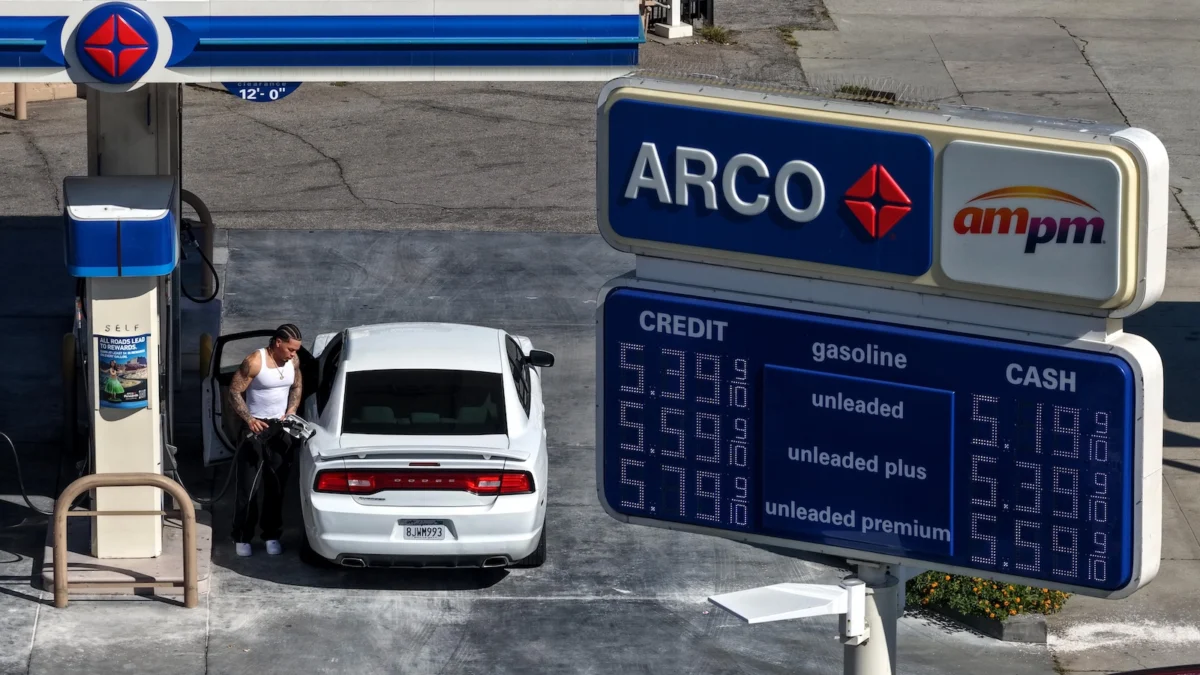
For years, the value proposition of the electric vehicle (EV) has been built on a foundation of long-term savings. Prospective buyers are frequently reminded of the money they will save by bypassing the gas pump, the elimination of oil changes, and the reduced maintenance requirements of a powertrain with significantly fewer moving parts. However, a new financial reality is emerging that threatens to undermine these economic advantages. Recent market data indicates that while EV owners save on fuel, they are being hit with significantly higher insurance premiums than their counterparts driving internal combustion engine (ICE) vehicles.
According to a comprehensive report released by Insurify, an insurance-comparison marketplace, the average cost to insure an electric vehicle in the United States has climbed to $3,159 per year. This figure represents a nearly $1,000 premium over the average cost to insure a gas-powered car. With an average insurance gap of 42 percent between the two vehicle types, this added financial burden is significantly extending the "payback period"—the time it takes for an EV owner to recoup the higher initial purchase price through operational savings.
A Granular Look at the Insurance Premium Gap
The disparity in insurance costs is not uniform across the United States; rather, it is a complex tapestry influenced by state regulations, local repair infrastructure, and regional driving conditions. The Insurify report, which analyzed more than 235 million proprietary quotes, highlights staggering regional variances. Washington, D.C., emerged as the most expensive locale for EV coverage, with annual premiums averaging $6,394—nearly $2,270 more than the $4,124 average for ICE vehicles in the same district.
At the other end of the spectrum, Maine offers the most affordable environment for EV insurance, with annual premiums averaging $1,476. Even in Maine, however, EVs remain more expensive to insure than conventional cars, albeit by a smaller margin of $184. The state of Rhode Island holds the distinction of having the widest percentage gap in the nation, with a 73 percent spread between electric and gas-powered insurance rates.
The data also reveals a clear divide based on vehicle brand and luxury status. High-end manufacturers like Tesla, Mercedes-Benz, and Audi are among the most expensive to insure, with premiums for many of their flagship models frequently exceeding $4,000 annually. Conversely, brands such as Volvo, Chevrolet, Ford, and Hyundai occupy the lower end of the premium spectrum. While Insurify did not rank the most expensive individual insurers, the report identified Lemonade, Root, and GEICO as the providers offering the most competitive rates for EV owners in the current market.
The Mathematical Delay of the EV Payback Period
The primary concern for the automotive industry and environmental advocates is how these insurance costs impact the total cost of ownership (TCO). Historically, the higher upfront cost of an EV was justified by the "break-even" point—the moment when fuel and maintenance savings surpassed the initial price premium. High insurance rates are moving that goalpost further down the road.
Julia Taliesin, an economic analyst and insurance agent at Insurify and the author of the report, noted that these premiums are a direct reflection of risk assessment. "Insurers were charging those higher premiums to balance their risks," Taliesin explained. The financial implications are stark: even in a scenario where electricity is free and gasoline remains at $4 per gallon, an EV owner must drive at least 5,800 more miles per year than previously estimated just to offset the insurance premium gap compared to a 25-mpg gasoline vehicle. For the average American driver, this could add years to the time required for an EV to "pay for itself."
The Complexity of Repairs: Why EVs Cost More to Fix
To understand why insurance companies are wary, one must look under the chassis. The fundamental reason for the insurance disparity is the elevated cost of repairs. Ryan Mandell, Vice President of Strategy and Market Intelligence at Mitchell—a leading provider of automotive repair data and software—estimates that the cost to repair an EV is roughly 15 percent higher than an ICE vehicle.
Several factors contribute to this "repair delta." First and foremost is the battery pack. As the most expensive component of the vehicle, even minor damage to the battery housing can lead to a total loss declaration by an insurer, as the cost of replacement often nears the vehicle’s residual value. Furthermore, the specialized labor required to work on high-voltage systems adds to the bill. Mechanics must follow rigorous safety protocols, which often include de-energizing the system or, in some cases, removing the battery entirely before any structural work can begin.
Mandell points to the Ford F-150 as a prime case study in these structural differences. Between 2022 and 2025, Ford produced the F-150 Lightning (electric) alongside its traditional gasoline and hybrid versions. When subjected to front-end crash testing, a notable difference emerged. In a traditional F-150, the heavy engine block acts as a structural element that absorbs a significant portion of the impact energy. Because the Lightning lacks this engine, Ford had to engineer additional reinforcements into the front-end structure to maintain safety standards.
"The Lightning had more crash parts on the front of the vehicle," Mandell said. These additional components and reinforcements resulted in a repair cost approximately 30 percent higher than the gasoline model for the same type of impact. Furthermore, Ford’s requirement to remove the battery before performing certain repairs significantly inflates labor hours, contributing to the "it adds up" effect that insurers must account for when setting premiums.
Beyond the Hardware: Demographics and Driver Behavior
While mechanical complexity is a major driver of costs, it is not the only variable in the insurance equation. Interestingly, Insurify’s data showed that insurance rates for the Ford F-150 Lightning and its gasoline counterpart were roughly the same, despite the Lightning being more expensive to fix. This suggests that "human factors" are acting as a counterbalance.
Taliesin noted that driver demographics and behavior play a critical role. "One of the most significant factors is personal driving history and credit history," she said. Because the F-150 Lightning carries a higher purchase price, its owners tend to have higher credit scores—a metric insurers use to predict risk. Furthermore, data shows that Lightning drivers have ticket and accident rates roughly half those of traditional F-150 drivers. This safer driving profile helps suppress the premiums that would otherwise be dictated by high repair costs.
Regional factors also weigh heavily. The Insurify report highlighted that climate risk, vehicle theft rates, population density, and the maturity of the local repair infrastructure all contribute to the final price of a policy. In states prone to hurricanes or flooding, EVs face unique risks; saltwater intrusion, for instance, can lead to catastrophic battery fires, a risk that does not exist for ICE vehicles in the same way.
A Global Perspective: The US vs. Europe
The phenomenon of high EV insurance is not localized to North America, but the United States appears to be an outlier in the severity of the gap. In 2024, BloombergNEF conducted a study of insurance markets in Europe and found similar spreads in the United Kingdom and Germany. France experienced a disparity nearly double that of its neighbors.
However, the baseline for American EV owners remains significantly higher. On average, U.S. EV owners pay 87 percent more for insurance than their European counterparts. Aleksandra O’Donovan, head of electrified transport at BloombergNEF, identified the Tesla Model Y as a particularly extreme example. The insurance rate for a Model Y in the U.S. is nearly triple the rate for the same vehicle in Germany. This is attributed to the U.S. market’s preference for larger SUVs and trucks, which are more expensive to insure, as well as the higher costs of healthcare and litigation in the U.S. insurance system.
The Silver Lining: A Closing Gap
Despite the daunting current data, there are signs that the insurance "tax" on EVs may be peaking. Between 2023 and 2025, the insurance gap in the U.S. widened from 29 percent to 49 percent. However, this year, the gap has begun to narrow slightly.
The most encouraging data point for prospective buyers is found in the newest models. For vehicles manufactured in the last two years, the insurance disparity drops to just 18 percent, compared to the 42 percent average across all model years. This shift is driven by several converging trends:
- The Complexity Convergence: As modern gasoline cars become equipped with advanced driver-assistance systems (ADAS), sensors, and sophisticated electronics, they are becoming almost as expensive to repair as EVs. The "simplicity" advantage of the ICE vehicle is disappearing.
- Battery Deflation: The cost of EV batteries continues to trend downward as manufacturing scales and new chemistries emerge. Lower replacement costs directly translate to lower insurance risk.
- Data Maturity: As millions of EVs hit the road, insurers finally have enough historical data to price risk accurately rather than conservatively overcharging to "protect the bottom line."
- Market Competition: Insurers are increasingly competing for the business of EV owners, who are often viewed as a desirable, high-income demographic.
"We’ve been seeing a ton of insurance-shopping behavior as insurers have been dropping their rates to compete for business," Taliesin said. This competition, combined with a general stabilization of auto insurance prices across the board, suggests that the "hidden toll" of the electric transition may eventually fade.
For now, however, the advice for consumers is clear: the "gas savings" calculation is incomplete without a call to an insurance agent. As the automotive industry navigates this transition, the total cost of ownership remains a moving target, dictated as much by the act of driving as by the technology under the hood.