
For decades, more than 100,000 pounds of abandoned lead-sheathed telecommunications cables lay dormant across the pristine floor of Lake Tahoe, resembling prehistoric sea monsters snaking through the sediment. These cables, installed during the early-to-mid 20th century and owned by the telecommunications giant AT&T, were slowly deteriorating in one of the most protected and iconic freshwater bodies in the United States. While the presence of these toxic remnants was known to local environmentalists, the path to their removal was blocked by the immense financial and scientific hurdles required to prove environmental harm in a court of law. This stalemate ended only when a strategic infusion of "science-first" funding bridged the gap between legal theory and empirical proof, catalyzing a settlement that forced the removal of the toxic infrastructure.
The resolution of the Lake Tahoe cable crisis marks a pivotal moment in environmental law, highlighting the emergence of a new model for public-interest litigation. This model, pioneered by the non-profit organization WHEN Justice, addresses the primary bottleneck in environmental enforcement: the high cost of scientific evidence. By providing the capital necessary for advanced isotopic testing and underwater sampling, the organization has demonstrated that targeted financial support can level the playing field for small environmental groups facing off against multi-billion-dollar corporations.
The Scientific Stalemate and the Tahoe Litigation
The legal battle over the Lake Tahoe cables began in earnest in 2021, when the California Sportfishing Protection Alliance (CSPA) filed a lawsuit against AT&T. The lawsuit alleged that the abandoned cables were leaching lead—a potent neurotoxin—into the water, violating the Clean Water Act and California’s Proposition 65. Despite the clear physical presence of the cables, the litigation dragged on for more than two years. AT&T’s legal defense leveraged the inherent difficulty of proving that specific lead concentrations in the water and sediment originated from their cables rather than other historical sources, such as leaded gasoline or legacy mining operations in the Sierra Nevada.
In environmental litigation, the burden of proof often rests on the plaintiff to provide "fingerprint" evidence linking a specific pollutant to a specific defendant. For a non-profit like CSPA, the costs of such evidence are often prohibitive. Scientific sampling in deep-water environments requires specialized scuba divers, sophisticated equipment, and laboratory analysis that can run into the hundreds of thousands of dollars. Without this data, the case remained in a state of expensive procedural limbo.
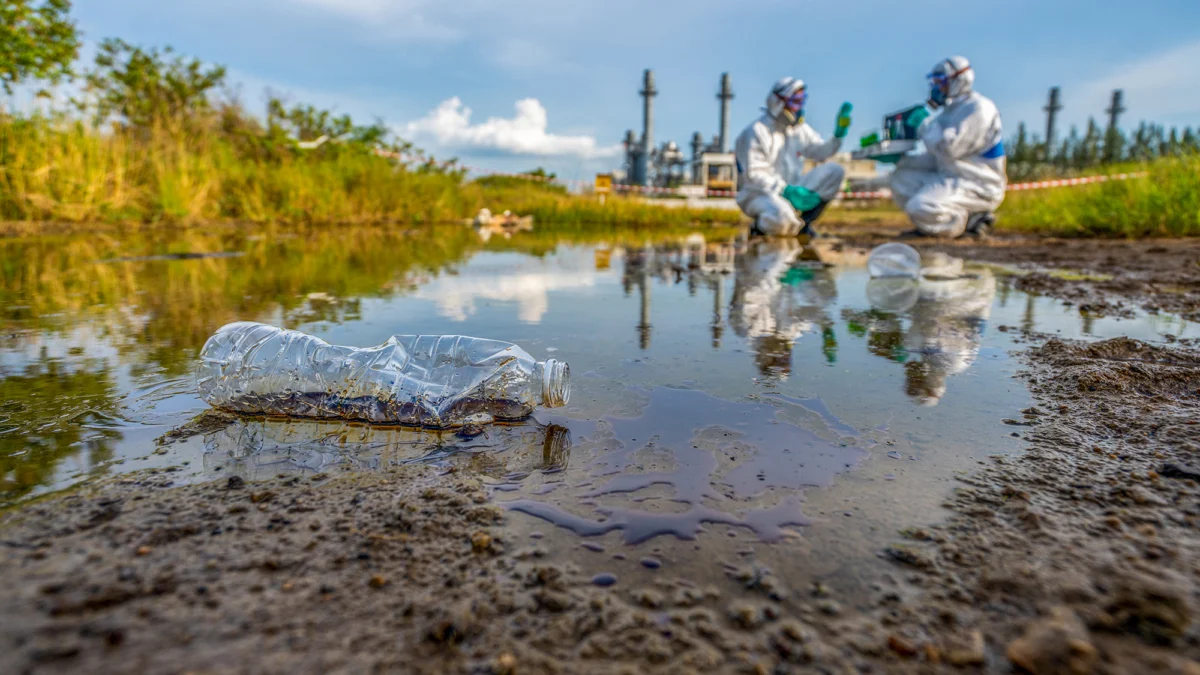
The turning point occurred when Roland Peralta, a serial entrepreneur and co-founder of the wellness company Nutrafol, stepped in to provide $100,000 in dedicated funding through his then-emerging initiative, WHEN Justice. This capital was specifically earmarked for the scientific testing that the case lacked. With these resources, a team of expert divers and scientists conducted lead isotopic testing—a process that analyzes the unique atomic signatures of lead samples. This "fingerprinting" allowed researchers to match the lead found in the surrounding lake sediment directly to the lead alloy used in AT&T’s cable sheathing.
The results were irrefutable. Within nine weeks of the scientific evidence being presented, AT&T settled the case. Within months, the cables were extracted from the lake. This victory served as the "proof of concept" for WHEN Justice, which officially launched on Earth Day in April 2026 as a dedicated platform for funding high-impact environmental litigation.
A Chronology of Environmental Accountability
The timeline of the Lake Tahoe cable removal reflects a broader shift in how environmental justice is pursued in the 21st century.
- 1920s–1950s: Lead-sheathed telecommunications cables are laid across the floor of Lake Tahoe to facilitate transcontinental communication.
- 1980s: The cables are officially abandoned in place as fiber-optic technology and newer infrastructure render them obsolete.
- 2021: The California Sportfishing Protection Alliance (CSPA) files a lawsuit against AT&T after discovering the deteriorating state of the cables.
- 2021–2023: Multimillion-dollar litigation ensues, characterized by high legal fees but a lack of definitive scientific "fingerprinting."
- Early 2024: WHEN Justice provides $100,000 for advanced isotopic testing and sampling.
- Mid-2024: Scientific data confirms the leaching of lead from the cables into Lake Tahoe’s ecosystem.
- Late 2024: AT&T settles the lawsuit, agreeing to remove the cables and cover the costs of the operation.
- 2025: The physical removal of over 100,000 pounds of lead cables is completed.
- April 2026: WHEN Justice officially launches as a public crowdfunding and strategic funding platform.
The Economic Barrier to Environmental Justice
The primary obstacle to environmental protection in the United States is rarely a lack of regulation, but rather a lack of enforcement. While government agencies like the Environmental Protection Agency (EPA) and state-level regulators are tasked with oversight, they are often hampered by budget constraints, political shifts, and bureaucratic inertia. Consequently, much of the heavy lifting in environmental enforcement falls to private citizens and small non-profit organizations.
As Erica Maharg, the environmental attorney who represented CSPA against AT&T, noted, the legal system is currently skewed in favor of those with the deepest pockets. "If you’re going up against big companies, litigation is so expensive," explained Jacqueline Biner, WHEN Justice’s chief executive and legal officer. "The way the legal system is set up right now, it sadly is not always about the merits of the case. It’s often just about who has more money."
The cost of scientific evidence acts as a "litigation bottleneck." A typical environmental lawsuit may require:
- Initial Site Assessment: $10,000 – $30,000
- Specialized Sampling (Water/Soil/Tissue): $20,000 – $100,000
- Expert Witness Testimony: $500 – $1,000 per hour
- Isotopic Analysis and Modeling: $50,000+
For a grassroots organization, these costs are often insurmountable, leading many to settle for minor concessions or abandon cases entirely. WHEN Justice’s model addresses this by providing "strategic funding at the right moment," ensuring that cases with high merit do not fail simply because they lack the capital for data collection.
Expanding the Model: From Lake Tahoe to San Pablo Bay
Building on the success of the Lake Tahoe case, WHEN Justice has expanded its focus to other critical environmental threats. One such campaign involves a lawsuit concerning a long-closed hazardous waste disposal site located on the edge of the San Pablo Bay in California.
The San Pablo Bay landfill, like many legacy industrial sites, was closed decades ago under standards that are now considered insufficient. The lawsuit alleges that toxic substances are leaching from the landfill into the bay’s sensitive ecosystem, threatening fish populations and local water quality. Similar to the Tahoe case, the challenge lies in proving the pathway of the pollution—showing exactly how contaminants are moving from the landfill through the soil and into the water.
WHEN Justice is currently fundraising to support the scientific analysis and sampling required for this case. By grounding the litigation in data, the organization aims to move the case beyond speculative arguments and toward a definitive resolution. This "pay-it-forward" model is further strengthened by the fact that many environmental statutes include cost-recovery provisions. When a case is won, the court may order the defendant to reimburse the plaintiffs for their expert fees and scientific testing. These recovered funds can then be cycled back into WHEN Justice to fund the next case, creating a self-sustaining cycle of accountability.
The Role of Crowdfunding in Corporate Transparency
A central tenet of the WHEN Justice philosophy is the democratization of environmental law. Rather than relying solely on high-net-worth philanthropists, the organization envisions an interactive platform where the public can participate directly in the legal process through crowdfunding.
"We think there is so much more power in a million people giving a dollar than in a single person giving a million dollars," said Biner. This approach serves two purposes: it provides the necessary capital for litigation, and it builds a broad base of informed citizens who are invested in the outcome of the cases. By following the progress of a lawsuit, donors gain a deeper understanding of how corporate accountability works and the scientific realities of pollution.
Roland Peralta, the organization’s founder, sees this as a necessary evolution of philanthropy. Having achieved success in the private sector, Peralta began to question the long-term impact of traditional charitable giving. "I kept asking myself, what kind of world will I leave for my son?" he said. His conclusion was that systemic change requires more than just aid; it requires the enforcement of the law against those who cause systemic harm.
Broader Implications for the Telecommunications and Industrial Sectors
The precedent set by the Lake Tahoe cable removal has sent ripples through the telecommunications industry. In 2023, a major investigation by The Wall Street Journal revealed that there are more than 2,000 abandoned lead-sheathed cables across the United States, many of which are located in soil and water near residential areas. The Tahoe settlement demonstrates that utility companies can no longer assume that "abandoning in place" is a legally viable or cost-effective strategy.
From a brief fact-based analysis, the implications are clear:
- Shift in Risk Assessment: Corporations must now weigh the cost of proactive remediation against the much higher costs of prolonged litigation and court-ordered removal.
- Standardization of Isotopic Evidence: The use of lead "fingerprinting" in the Tahoe case sets a scientific standard that will likely be used in future litigation involving lead-sheathed cables and other heavy metal pollutants.
- Empowerment of Small Entities: The availability of third-party funding for science reduces the "David vs. Goliath" disparity, making it more likely that smaller environmental groups will take on large-scale cases.
Conclusion: A New Infrastructure for Accountability
The launch of WHEN Justice represents a shift toward a more data-driven and financially savvy approach to environmental protection. By focusing on the scientific evidence that serves as the "aha" moment in the courtroom, the organization is helping to remove the barriers that have long protected powerful polluters from the consequences of their actions.
As the organization continues to scale its model, the goal remains clear: to create a world where corporate conduct is governed by transparency and where the cost of polluting is always higher than the cost of responsible stewardship. For the residents of Lake Tahoe and the ecosystems of San Pablo Bay, this new model of justice is not just a legal theory—it is a tangible reality that has already begun to clear the "sea monsters" from their waters. Through the strategic use of science and the power of collective action, WHEN Justice is providing a path for ordinary citizens to demand a cleaner, safer future.










Leave a Reply