The unveiling of the new Maharaja Lounge at Indira Gandhi International Airport (DEL) in Delhi marks a significant milestone in Air India’s ongoing multi-billion-dollar transformation. Following its acquisition by the Tata Group in January 2022, the airline has embarked on a rigorous journey to reclaim its status as a premier global carrier. Central to this strategy is the enhancement of the ground experience, a move punctuated by the opening of the new First Class and Business Class sections of the Maharaja Lounge. The First Class facility, in particular, represents a departure from the airline’s previous infrastructure, offering an intimate and high-end environment designed to compete with the world’s most renowned airport lounges in Dubai, Singapore, and Doha.

Architectural Design and Intimate Luxury
The new First Class lounge is characterized by its exclusivity and boutique scale. Because Air India’s current First Class network is strategically concentrated on select long-haul routes—primarily to North America and key European hubs—the lounge is designed to cater to a limited number of high-net-worth travelers. This smaller footprint allows for a level of personalized service and attention to detail that larger, high-traffic lounges often struggle to maintain.
The interior design blends contemporary luxury with subtle nods to Indian heritage. The facility features a dedicated dining area equipped with four tables, positioned directly across from an open-concept kitchen. This layout encourages interaction between guests and the culinary team, emphasizing the freshness of the offerings. Beyond the dining room, the lounge transitions into a series of seating areas featuring plush sofas and semi-private nooks, providing travelers with quiet spaces for relaxation or work.

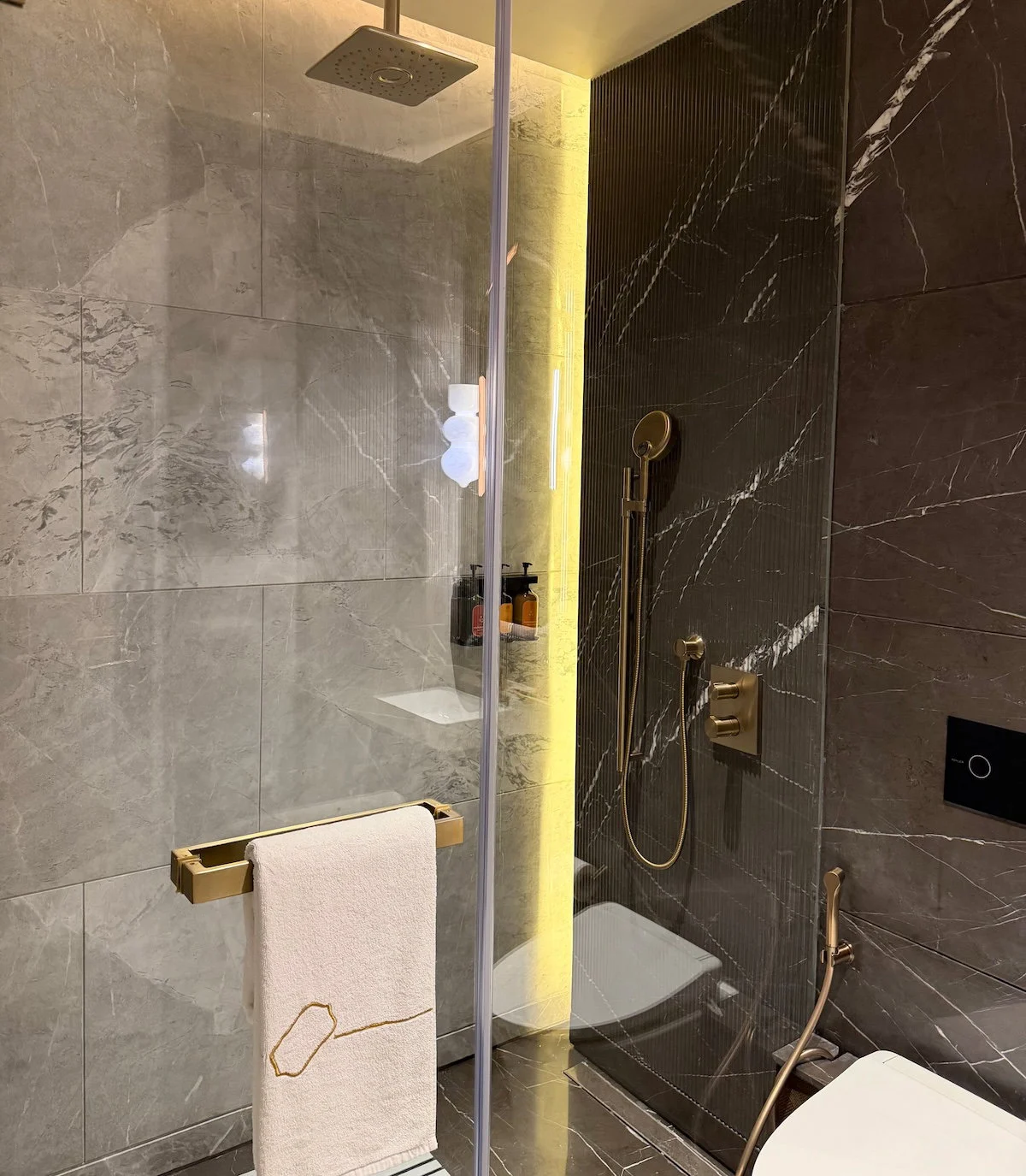
One of the standout features of the hard product is the inclusion of a fully equipped private bedroom and a secondary lounging room, both of which include desks. These spaces are designed to accommodate travelers on long layovers or those requiring a private environment for voice and video calls. The facility also includes luxurious shower suites and individual private bathrooms. Staffing protocols ensure that these restrooms are cleaned and reset after every individual use, maintaining a pristine environment characterized by meticulously folded linens and polished fixtures.
Culinary Excellence and the Cultural Soft Product
The "soft product"—encompassing service, food, and beverage—is where the new Maharaja Lounge distinguishes itself most clearly. Air India has leveraged its cultural roots to create a sensory experience that is distinctly Indian yet globally sophisticated. The centerpiece of the culinary offering is "The Maharaja Thali," a curated selection of signature regional dishes served in small portions. This traditional format allows international and domestic travelers to sample a diverse range of Indian flavors in a single sitting.

The beverage program is equally imaginative. The lounge features a specialized cocktail menu, including the "Pancha Taara" (Sanskrit for "Five Stars"). This signature drink blends cognac with ginger, star anise, cinnamon, cloves, and cardamom, representing the five traditional tastes of Indian gastronomy. Furthermore, the lounge provides a tableside tea trolley service, a traditional touch that honors India’s rich tea culture. This level of tableside service is a hallmark of elite First Class lounges and serves to elevate the brand’s premium identity.
The integration of brand heritage extends to the lounge’s décor. In a subtle tribute to the airline’s history, the walls feature artwork that incorporates actual fuselage parts from retired Air India aircraft. This blend of history and modernity aims to instill a sense of pride and continuity as the airline transitions into its new era.

The Vihaan.AI Transformation Context
The development of the Maharaja Lounge is a critical component of "Vihaan.AI," Air India’s comprehensive five-year transformation roadmap. Launched in late 2022, Vihaan.AI (which translates to "the dawn of a new era" in Sanskrit) focuses on five key pillars: exceptional customer experience, robust operations, industry-best talent, commercial efficiency, and profitability.
The transformation is divided into three distinct phases:

- Taxiing Phase: Focused on fixing the basics, including the restoration of grounded aircraft, recruitment of pilots and cabin crew, and improving basic reliability.
- Take Off Phase: Centered on building the right platforms for future growth, which includes the launch of new lounges, the introduction of the new brand identity, and the arrival of new aircraft like the Airbus A350.
- Climb Phase: Aimed at achieving a position of global leadership and significant market share.
The opening of the Delhi lounge falls squarely within the "Take Off" phase. It serves as a physical manifestation of the airline’s promise to upgrade its premium offerings. For years, Air India was criticized for its aging ground infrastructure; the new lounge is a direct response to those criticisms, signaling that the carrier is now capable of delivering a product that meets international standards.
Fleet Modernization and Infrastructure Challenges
While the new lounge has received high praise for its design and service, it highlights a stark contrast within the Air India experience: the disparity between the ground product and the aging interiors of some of its long-haul fleet. Currently, Air India is in the process of a $400 million interior refit program for its existing Boeing 777 and 787 Dreamliner aircraft.

Until this retrofit is complete, many passengers will transition from the ultra-modern Maharaja Lounge to older cabin configurations on certain 777-200LR and 777-300ER aircraft. However, the airline is rapidly inducting new Airbus A350-900s and leased Boeing 777s (formerly operated by carriers like Delta and Etihad) which feature significantly upgraded seating and entertainment systems. The goal is to eventually harmonize the luxury experienced in the lounge with the luxury experienced at 35,000 feet.
In February 2023, Air India placed a record-breaking order for 470 aircraft—250 from Airbus and 220 from Boeing. This order, valued at over $70 billion at list prices, includes 40 Airbus A350s, 20 Boeing 787s, and 10 Boeing 777-9s. As these aircraft are delivered, the airline will have the capacity to offer a consistent First Class product across its entire global network, with the Delhi lounge serving as the flagship hub for these operations.

Strategic Implications for the Indian Aviation Market
The investment in the Delhi lounge is also a strategic move to position Delhi’s Indira Gandhi International Airport as a major global transit hub. Historically, a significant portion of India’s international traffic has been captured by "sixth freedom" carriers based in the Middle East and Southeast Asia. By offering a world-class lounge and improved premium cabins, Air India aims to repatriate this traffic, encouraging travelers to fly non-stop on an Indian carrier or transit through Delhi rather than Dubai or Doha.
Industry analysts suggest that the premium segment is vital for Air India’s profitability. High-yield business and first-class travelers contribute disproportionately to an airline’s bottom line. By creating a lounge that ranks among the world’s best, Air India is better positioned to compete for corporate contracts and affluent leisure travelers who demand seamless, luxury end-to-end service.

Furthermore, the merger between Air India and Vistara (a joint venture between Tata and Singapore Airlines) is expected to further consolidate the group’s premium offering. The expertise gained from Vistara’s highly-rated service model is being integrated into the broader Air India ecosystem, with the new lounge serving as a testing ground for these elevated service standards.
Broader Impact and Future Outlook
The "glow-up" of the Air India Maharaja Lounge is more than just a renovation; it is a rebranding exercise designed to change global perceptions. For decades, the "Maharaja" mascot symbolized a bygone era of Indian hospitality. The new lounge reinterprets this mascot for the 21st century—moving away from kitsch and toward a sophisticated, modern luxury that remains rooted in the spirit of Indian service.

The feedback from early visitors indicates that the airline has successfully addressed previous shortcomings in ground service. The high staff-to-guest ratio and the emphasis on "hyper-cleanliness" address specific pain points that have historically plagued Indian airports. If Air India can maintain these standards as it scales its operations, it will be well on its way to achieving the goals set out in the Vihaan.AI plan.
As Air India continues to take delivery of new aircraft and expands its lounge network to other major cities like Mumbai and London, the gap between its legacy reputation and its new reality is expected to close. The new Maharaja Lounge in Delhi stands as a beacon of this progress, offering a glimpse into a future where the Indian national carrier is once again a symbol of global aviation excellence. For the aviation industry, it serves as a case study in how a legacy brand can be revitalized through strategic investment, cultural authenticity, and an uncompromising focus on the customer experience.