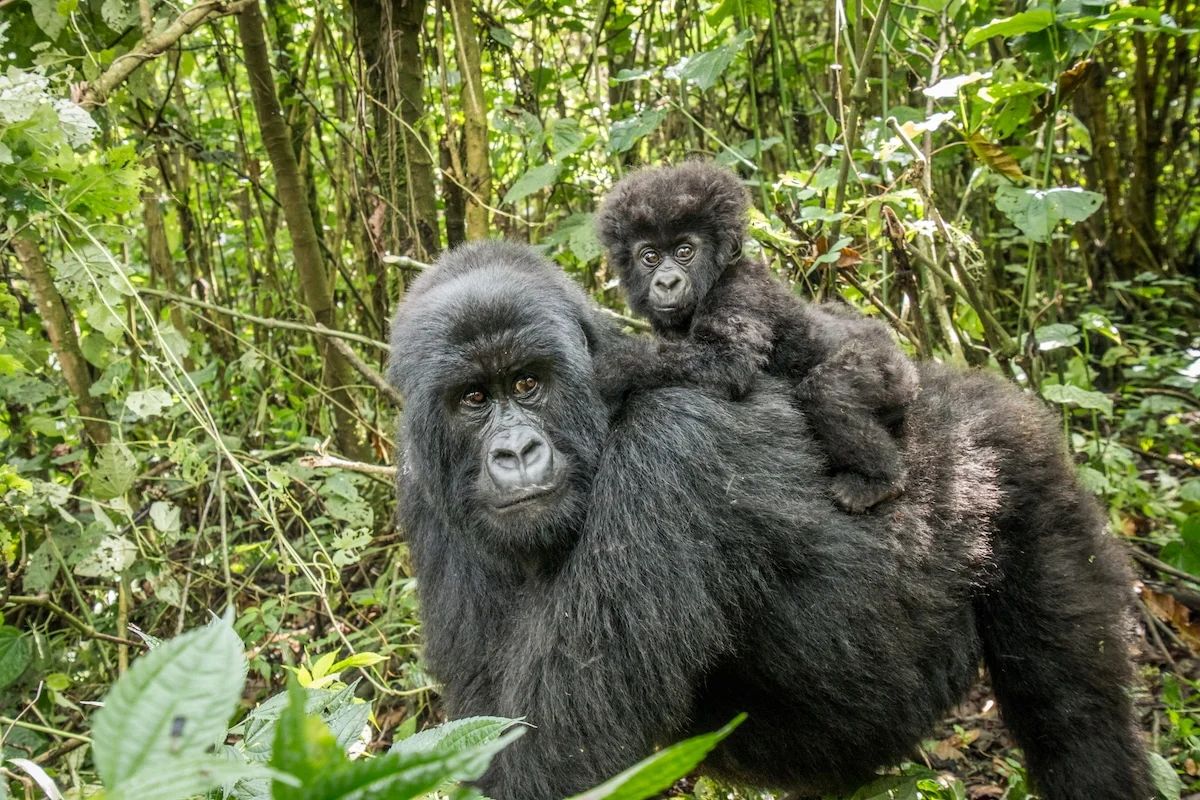
The Democratic Republic of the Congo (DRC) has moved to auction more than half of its national territory for oil and gas exploration, a decision that environmentalists warn could lead to an ecological catastrophe of global proportions. According to a comprehensive new report titled Forests to Frontlines: Oil Expansion Threats in the DRC, released by the research organization Earth Insight, the government’s latest licensing round covers approximately 306 million acres. This massive area includes some of the world’s most vital carbon sinks, including the Cuvette Centrale peatlands, and the primary habitats of critically endangered species such as the mountain gorilla, the eastern lowland gorilla, and the bonobo.
The expansion marks a significant escalation in the DRC’s pursuit of fossil fuel revenue, placing 64 percent of the country’s pristine tropical forests under threat. This move comes despite international pressure to preserve the Congo Basin, often referred to as the "second lung" of the Earth, which plays a pivotal role in regulating the global climate. The Earth Insight report, produced in partnership with the Rainforest Foundation UK and local Congolese civil society groups like the Coalition des Organisations de la Société Civile pour le Suivi des Reformes et de l’Action Publique (CORAP), highlights a stark contradiction between the government’s conservation rhetoric and its industrial ambitions.
A Massive Expansion of Hydrocarbon Frontiers
The current auctioning round involves 52 new oil blocks, in addition to three blocks that had been previously awarded to various interests. This represents a dramatic increase from a controversial 2022 auction that saw 30 blocks put on the market. The sheer scale of the 2025 licensing round means that 53 percent of the DRC’s entire landmass is now designated for potential oil and gas development.
Geospatial analysis provided in the report reveals that these oil blocks overlap with 20.5 million acres of officially protected areas and 21.3 million acres of designated Key Biodiversity Areas. Perhaps most alarming for climate scientists is the overlap with the Cuvette Centrale. This vast peatland complex is estimated to store roughly 30 gigatons of carbon—equivalent to three years of global fossil fuel emissions. Disturbance of these wetlands for road building, seismic testing, or drilling could trigger a "carbon bomb," releasing massive amounts of methane and carbon dioxide into the atmosphere and undermining international efforts to limit global warming to 1.5 degrees Celsius.
The Threat to Endangered Megafauna
The DRC is the only nation on Earth that serves as a home to three distinct types of great apes: the mountain gorilla, the eastern lowland gorilla (Grauer’s gorilla), and the bonobo. These species are already facing severe pressure from poaching, habitat loss due to illegal mining, and civil unrest. The introduction of large-scale industrial oil infrastructure into their remaining strongholds could be the tipping point for their extinction in the wild.
The mountain gorilla, found in the Virunga National Park—a UNESCO World Heritage site—has seen its population slowly recover due to intensive conservation efforts. However, Virunga has been a focal point of the oil debate for years. While the government has previously faced international backlash for allowing exploration in the park, the new licensing rounds indicate a renewed willingness to prioritize extractive industries over conservation landmarks.
Eastern lowland gorillas, found primarily in the Kahuzi-Biega National Park and surrounding forests, are even more vulnerable. Their populations have plummeted by more than 70 percent over the last two decades. The Earth Insight report notes that the fragmentation of these forests by oil roads would provide easier access for poachers and illegal loggers, further decimating these sensitive populations.
Human Impact and Indigenous Rights
Beyond the ecological toll, the proposed oil expansion threatens the lives and livelihoods of approximately 39 million people. This population includes numerous Indigenous and forest-dependent communities whose cultural identities and survival are inextricably linked to the Congo River and its surrounding rainforests.
Pascal Mirindi, a campaign coordinator for Notre Terre Sans Pétrole (Our Land Without Oil), expressed the outrage felt by many local advocates. "Imagine: 39 million Congolese people and 64 percent of our forests could be directly affected by the awarding of these oil blocks," Mirindi said. He highlighted the irony of the government promoting the Kivu-Kinshasa ecological corridor while simultaneously auctioning it off for drilling. "Where is the logic? Where is the coherence? We are reminding our leaders that the Congolese people are the primary sovereign. We will not remain silent while certain people organize themselves to sell off our future."
The report emphasizes that many of these communities have not been properly consulted, violating the principle of Free, Prior, and Informed Consent (FPIC) enshrined in international human rights law. The influx of oil workers and the construction of infrastructure often bring displacement, social disruption, and health risks associated with pollution, as seen in other oil-producing regions of the Gulf of Guinea.

Chronology of the DRC Oil Crisis
The tension between development and conservation in the DRC has been building for several years:
- 2021: The DRC government announces its intention to revamp its oil sector to boost the national economy, citing the need to alleviate extreme poverty.
- July 2022: The government officially launches an auction for 30 oil and gas blocks. This includes areas within Virunga National Park and the Cuvette Centrale peatlands. International environmental groups and the U.S. government express "grave concerns."
- 2023-2024: Despite tepid interest from major international oil majors (partly due to reputational risks), the DRC government maintains the auction and begins seeking smaller, less-regulated independent firms.
- 2025: The government drastically expands the scope of the licensing, moving from 30 blocks to a total that covers more than half the country. Earth Insight releases the "Forests to Frontlines" report, detailing the catastrophic overlap with protected lands.
The Paradox of the Kivu-Kinshasa Green Corridor
One of the most striking findings in the new report is the impact on the Kivu-Kinshasa Green Corridor. This project was established as a flagship initiative for sustainable development and ecological connectivity, intended to serve as a model for climate solutions in Africa. However, the report found that 72 percent of this corridor now intersects with designated oil blocks.
"The DRC’s new oil licensing round calls into question the country’s stated commitment to environmental protection and social progress," Earth Insight stated. "Rather than steering away from fossil fuel expansion, the government has dramatically widened the reach of oil concessions, putting at risk the ecological integrity of the Congo Basin."
Environmental analysts point out that the development of oil in a "Green Corridor" essentially renders the conservation status of the land meaningless. The industrial activity required for oil extraction—clearing land for rigs, pipelines, and transport—is fundamentally incompatible with the goals of a biological corridor intended to allow wildlife to migrate and plant species to thrive.
Economic Justification vs. Global Climate Responsibility
The DRC government, led by President Félix Tshisekedi, has frequently defended its right to exploit its natural resources. Government officials argue that Western nations, which built their wealth on fossil fuels, are in no position to demand that the DRC remain poor to serve as the world’s "carbon sink." They argue that oil revenues are necessary to fund infrastructure, education, and healthcare in a nation where a majority of the population lives on less than $2.15 a day.
However, critics argue that the "oil-for-development" model rarely benefits the poor in resource-rich African nations, often leading instead to corruption, environmental degradation, and the "resource curse." Anna Bebbington, a research manager at Earth Insight, noted that the long-term economic damage from losing ecosystem services—such as clean water, climate regulation, and biodiversity—could far outweigh the short-term gains from oil.
"Oil and gas development in these fragile ecosystems would have devastating impacts on biodiversity, communities, land rights, and the global fight against climate change," Bebbington said.
Recommendations and International Response
The Earth Insight report concludes with a series of urgent recommendations directed at the DRC government and the international community. Foremost among these is the call to cancel the 2025 licensing round and implement a moratorium on all new hydrocarbon expansion in sensitive ecosystems.
The report also urges international donors and financing institutions to align their support with the DRC’s climate and biodiversity commitments. This includes "debt-for-nature" swaps or direct financial compensation for keeping the oil in the ground—mechanisms that have been discussed at COP climate summits but have yet to be implemented at the scale necessary to sway the DRC’s policy.
Furthermore, the coalition of NGOs is calling for a formal mechanism to ensure that local and Indigenous communities are central to environmental governance. This includes legal protections for land rights and a guarantee of transparency in how natural resource contracts are awarded and managed.
As the global community looks toward upcoming biodiversity and climate summits, the situation in the DRC stands as a critical test of international environmental diplomacy. If the "second lung" of the planet is opened to industrial drilling, the path to meeting global climate targets will become significantly more difficult, and the survival of the world’s most iconic great apes will be placed in immediate jeopardy.