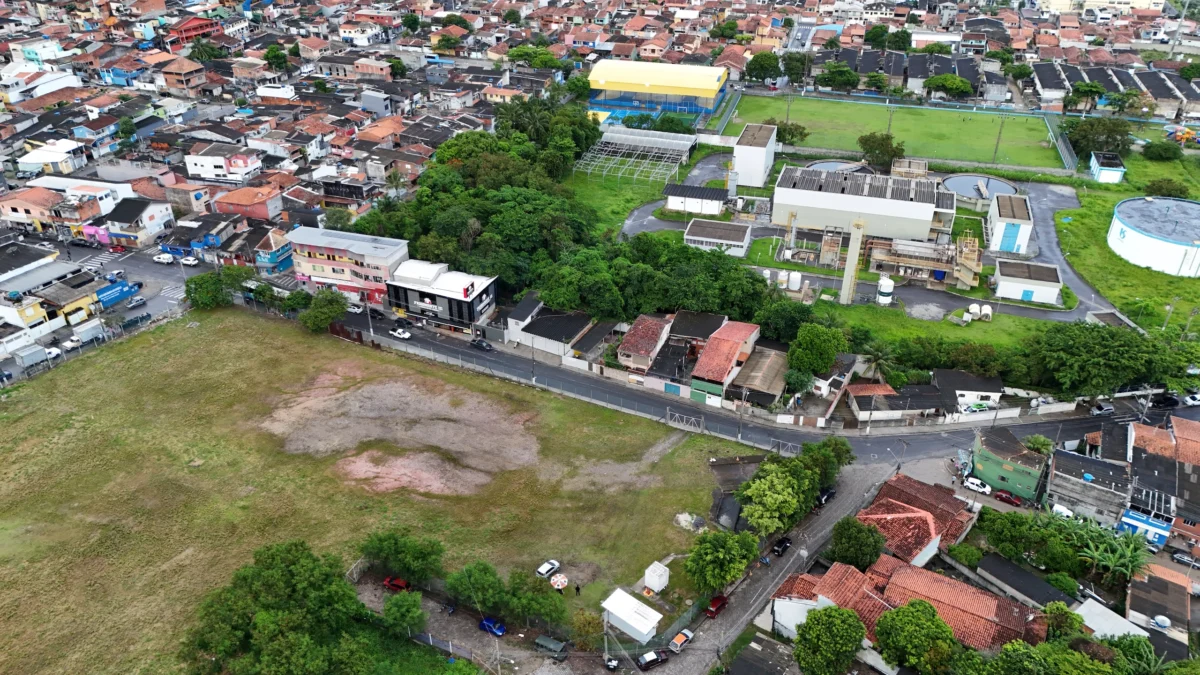
In the Itatinga neighborhood of São Sebastião, Brazil, the landscape is defined by more than just its proximity to the Atlantic Ocean and the industrial silhouettes of the country’s largest oil port terminal. For residents like Cosma da Silva, who has lived in the area for decades, the geography is mapped by loss. Standing outside her home, she points to a series of nearby buildings, reciting a grim inventory of neighbors and relatives who have succumbed to or are currently battling cancer. Her husband, Paulo José da Silva, died at the age of 51 from a brain tumor; Cosma herself recently underwent surgery to remove a nodule, leaving her with a persistent, burning wound. Her testimony is not an isolated one, but part of a collective narrative of illness that residents believe is inextricably linked to the ground beneath their feet.
The history of Itatinga is one of industrial convenience followed by urban neglect. Between the 1970s and 1980s, the land that now supports hundreds of family homes was used as a dumping ground for oily sludge—a toxic byproduct of oil exploration, transport, and processing. As São Sebastião expanded, these disposal sites were covered, subdivided, and sold to unsuspecting families. Decades later, the toxic legacy of this "black sludge" has resurfaced, manifesting as physical seepages in backyards and, many fear, as a silent epidemic of chronic disease. Despite nearly 20 years of documentation by environmental agencies, the link between the contamination and the community’s health remains unproven, largely because a critical, long-promised health study was recently abandoned in favor of a financial settlement.

The Toxic Legacy of Oily Sludge
The contamination in Itatinga is not a matter of speculation, but of documented record. Investigations conducted by the São Paulo State Environmental Company (CETESB), the State Prosecution Service (MPE), and the Federal Prosecution Service (MPF) have confirmed the presence of hazardous substances in the soil and groundwater. Chief among these is benzene, a highly toxic volatile organic compound. According to the International Agency for Research on Cancer (IARC) and Brazil’s National Cancer Institute (INCA), there is no safe level of exposure to benzene. It is a known human carcinogen associated with leukemia, bone marrow failure, and immune system suppression.
Beyond benzene, technical reports have identified various hydrocarbons, which can cause respiratory issues, neurological damage, and skin irritation. Maria do Carmo Barbosa da Silva, a resident of 30 years, recalls the early 2000s when a dark, foul-smelling substance began oozing onto sidewalks and into vacant lots. "It was a black sludge with a strange smell, like burnt oil," she says. Today, Maria suffers from chronic pain, glaucoma, and severe respiratory problems—ailments she shares with her daughter and young granddaughter. Her mother, who was healthy before moving to the neighborhood, died after battling uterine and ocular tumors.
A Chronology of Institutional Failure
The path toward accountability in Itatinga has been marked by legal maneuvers and bureaucratic delays. The following timeline illustrates the community’s long struggle for recognition:

- 1970s–1980s: Petrobras and associated entities utilize the Itatinga area for the disposal of oily sludge. The land is subsequently filled and developed for residential use.
- Early 2000s: Visible contamination prompts residents to report health concerns. Preliminary environmental investigations confirm the presence of oil-related toxins in the soil.
- 2011: A Conduct Adjustment Commitment (TAC) is signed between Petrobras, the São Sebastião municipality, and the State Prosecution Service to address environmental remediation.
- 2018: An amendment to the TAC officially mandates a "Cross-Sectional Health Study." This research was intended to be the definitive tool for determining whether the environmental toxins were responsible for the neighborhood’s high rates of illness.
- 2020–2022: The COVID-19 pandemic is cited by municipal authorities as a primary reason for delaying the study, claiming that household surveys were impossible to conduct safely.
- 2025: In a controversial move, the health study is officially scrapped. It is replaced by a financial transfer of R$ 2.46 million (approximately $479,122) from Petrobras to the Municipal Land Regularization Fund.
The Price of Silence: Compensation vs. Truth
The decision to replace an epidemiological health study with a financial transfer has drawn sharp criticism from environmental advocates and legal experts. Juliano Bueno, director of Arayara—a prominent Brazilian climate and environmental litigation organization—argues that this move transforms a fundamental human right into a "bargaining chip."
"You can’t say for sure that the illnesses are related, but you can’t say they aren’t either," says Bueno, who holds doctoral degrees in energy and environmental risks. "The study was precisely the tool to answer that question. By abandoning it, the problem can no longer be measured, preventive actions cannot be planned, and adequate assistance cannot be offered to the population."
From an environmental justice perspective, Itatinga fits the definition of a "sacrifice zone." This term refers to geographic areas where socially vulnerable populations are exposed to disproportionate levels of pollution and environmental hazards, often while the state and private corporations focus on liability management rather than human remediation. In such zones, the cost of industrial progress is externalized onto the bodies of the poor.

Official Responses and Corporate Defense
When questioned about the ongoing health concerns, the involved parties maintain a stance of technical compliance. Petrobras, the state-controlled oil giant, asserts that there is no scientific evidence linking local illnesses to the historical contamination. While the company has funded remediation efforts, it maintains that it was not responsible for the urbanization or subdivision of the land in the 1970s. A spokesperson for the company stated that their involvement in the rehabilitation of Itatinga is an act of "socio-environmental responsibility" rather than an admission of legal guilt.
The São Sebastião municipality has also downplayed the severity of the situation. Citing an Epidemiological Technical Report spanning 2006 to 2026, the city administration claims that cancer rates in Itatinga are comparable to other neighborhoods. They report that the Oncology and Nephrology Support Center (CAON) has recorded only 25 patients from Itatinga in the last decade. However, critics point out that this data may be flawed, as it does not specifically track the population most directly exposed to the contaminated sites, nor does it account for residents who may have sought treatment outside the municipal system. Furthermore, the city justified the failure to conduct the study by claiming that multiple bidding processes failed to attract "qualified institutions."
CETESB, the state environmental regulator, currently considers the remediated areas "safe" for their current use, provided the sites remain fenced off and unoccupied. However, the agency admitted that further studies are needed to investigate "vapor intrusion"—the process by which volatile chemicals in the soil or groundwater migrate into the air of overlying buildings. Petrobras is reportedly scheduled to begin fieldwork for this analysis later in 2025.

Broader Implications and the Path Forward
The situation in Itatinga serves as a cautionary tale for urban planning and industrial accountability in developing nations. As cities expand into former industrial zones, the lack of rigorous soil testing and historical land-use records creates a "toxic time bomb" for future generations.
For the residents of São Sebastião, justice remains elusive. According to Juliano Bueno, a fair resolution must be built on three pillars:
- Truth: An independent, comprehensive epidemiological study to provide a definitive answer on health impacts.
- Reparation: Permanent healthcare coverage for exposed residents and acknowledgement of historical damage.
- Guarantees of Non-Repetition: The implementation of permanent environmental health monitoring systems.
For Geraldo Ribeiro, who spends his days caring for his wife as she undergoes cancer treatment, the technicalities of "remediated soil" and "failed bidding processes" offer no comfort. His demand is simpler and more profound. "They have studied the land, but we are also here," he says. "A study of the area must be a study of us."

As the R$ 2.46 million transfer awaits final approval from the Prosecution Service’s Higher Council, the residents of Itatinga continue to live in a state of biological uncertainty. The abandonment of the health study ensures that while the soil may be fenced off, the questions regarding the neighborhood’s high mortality rate will remain buried—much like the oily sludge that started the crisis five decades ago. In the absence of data, the community is left only with its memories and its mounting list of the dead, a stark reminder that in the intersection of industry and poverty, the human cost is often the last thing to be measured.