The distant hum of New Horizons, NASA’s intrepid spacecraft, has once again graced the airwaves, signaling its successful emergence from a nearly year-long hibernation. Scientists at the Johns Hopkins University Applied Physics Laboratory (APL), which manages the mission, confirmed the spacecraft is in "good health" and has resumed transmitting vital science data. This marks a significant moment in the ongoing exploration of the heliosphere’s outermost reaches, the enigmatic boundary where the sun’s influence wanes and the vast expanse of interstellar space begins.
The awakening, a meticulously planned event, occurred after New Horizons spent 321 days in a low-power state, a necessary measure to conserve energy and protect its sensitive instruments during its extended journey through the frigid, distant corners of our solar system. This period of dormancy, a common practice for deep-space probes operating far from the sun, allows spacecraft to endure the long transits without constant system checks and unnecessary power consumption. For New Horizons, this latest hibernation represents a critical phase in its continued mission to unravel the mysteries of the Kuiper Belt and beyond.
A Journey to the Edge of the Solar System and Beyond
Launched on January 19, 2006, New Horizons embarked on an ambitious voyage with the primary objective of studying Pluto and its moons. After a nine-year journey, it made its historic closest approach to the dwarf planet on July 14, 2015, providing humanity with its first-ever detailed images and scientific data of this distant, icy world. The encounter revealed a surprisingly complex and geologically active Pluto, challenging previous assumptions about such frigid celestial bodies.
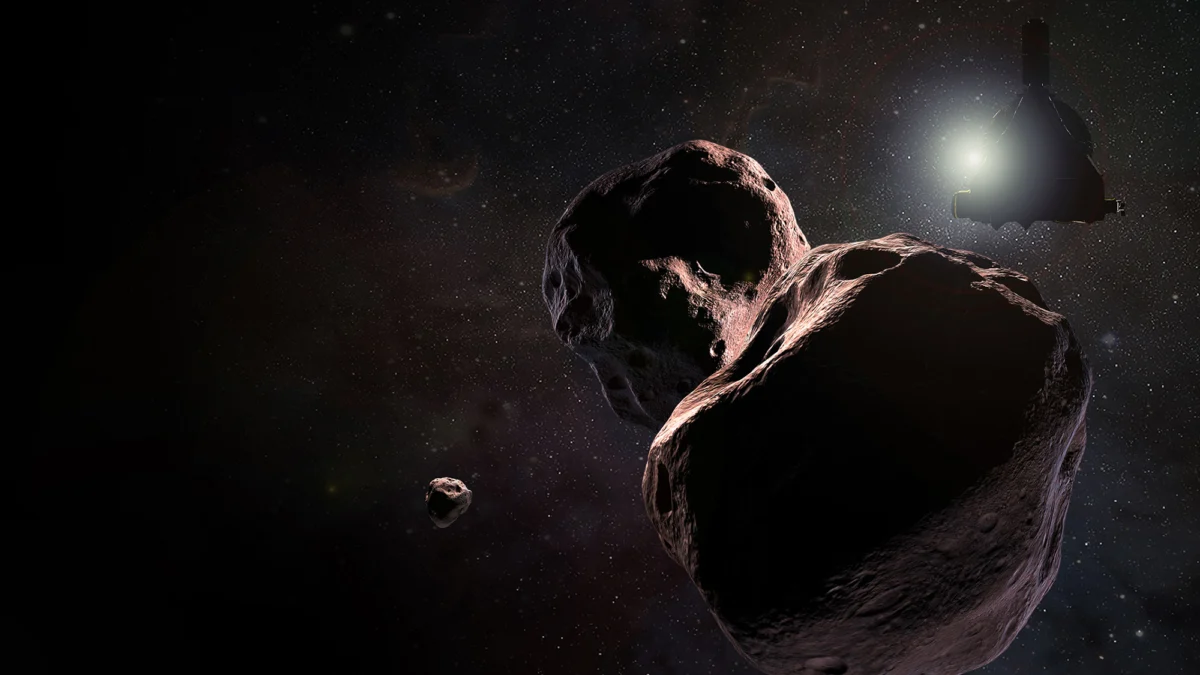
Following its groundbreaking Pluto flyby, New Horizons continued its outward trajectory, encountering another Kuiper Belt Object (KBO) named Arrokoth (formerly Ultima Thule) in January 2019. This second encounter, the most distant object ever explored by a spacecraft, offered further insights into the primordial building blocks of our solar system, shedding light on the conditions that existed during its formation billions of years ago. Arrokoth, a contact binary object, provided an unprecedented glimpse into the early accretion processes that formed planets.
The spacecraft’s current mission phase involves venturing further into the heliosphere, a vast bubble of charged particles and magnetic fields generated by the sun. New Horizons is tasked with studying the heliospheric boundary, a region where the solar wind, a stream of particles emanating from the sun, collides with the interstellar medium, the material that fills the space between stars. Understanding this boundary is crucial for comprehending the sun’s influence on the solar system and its interaction with the wider galaxy.
The Hibernation Cycle: A Prudent Measure for Deep Space Exploration
The decision to place New Horizons into hibernation is a testament to the careful planning and resource management required for long-duration deep-space missions. The spacecraft is currently billions of miles from Earth, a distance that makes real-time communication challenging and power conservation paramount. During hibernation, non-essential systems are powered down, and the spacecraft relies on its internal clock to wake itself up at a predetermined time. This process conserves the limited power available from its radioisotope thermoelectric generator (RTG), which converts heat from the radioactive decay of plutonium into electricity.
The nearly year-long slumber allowed mission controllers to meticulously analyze the vast amounts of data collected during its previous encounters and prepare for the next phase of scientific observations. It also provided an opportunity to ensure all systems were functioning optimally before embarking on potentially more demanding scientific investigations. The success of the awakening procedure is a critical milestone, demonstrating the resilience and longevity of the spacecraft’s engineering.
Resumption of Scientific Operations: A New Chapter in Exploration
Upon waking, New Horizons began its standard post-hibernation checks, a series of diagnostic tests to confirm the health of all its instruments and systems. The initial telemetry data received by NASA indicated that all systems are performing as expected. This news was met with enthusiasm by the mission team, who have been eagerly anticipating the resumption of scientific operations.
The spacecraft is now beginning to collect new data as it continues its journey through the outer heliosphere. Its instruments, including the Long Range Reconnaissance Imager (LORRI), the Solar Wind at Pluto (SWAP) instrument, the Pluto Energetic Particle Spectrometer Science Investigation (PEPSSI), and the Radio Science Investigation (RSI), are being brought back online to gather information about the plasma environment, dust particles, and magnetic fields in this unexplored region.
The primary scientific objectives for this extended mission phase include:
- Studying the Heliospheric Boundary: New Horizons will continue to gather data on the heliopause, the region where the solar wind is no longer strong enough to push back the interstellar medium. This will help scientists understand how our solar system is shielded from the harsh radiation of interstellar space.
- Investigating Interstellar Space: As New Horizons ventures further, it will have the opportunity to directly sample and analyze the composition of the interstellar medium, providing unprecedented insights into the material that permeates our galaxy.
- Continuing Kuiper Belt Exploration: While its primary focus is now the heliosphere, New Horizons may still encounter and study additional KBOs, further expanding our knowledge of these icy relics from the early solar system.
Looking Ahead: The Enduring Legacy of New Horizons
The successful awakening of New Horizons is a testament to the ingenuity and dedication of the scientists and engineers who have guided this mission for over a decade. Its journey to the edge of the solar system and beyond represents a monumental achievement in space exploration, pushing the boundaries of human knowledge and our understanding of the cosmos.
The data collected by New Horizons will continue to be invaluable for years to come, helping to shape our understanding of planetary formation, the heliosphere’s dynamics, and our place within the vastness of the Milky Way. As the spacecraft continues its silent, solitary voyage, it carries with it the hopes and curiosity of humanity, venturing into the unknown to bring back the secrets of the universe. The mission’s longevity and continued success serve as an inspiration, underscoring the profound rewards of persistent scientific inquiry and the relentless pursuit of discovery. The implications of its findings extend beyond the scientific community, offering a broader perspective on our solar system’s unique position and the universal processes that govern celestial bodies. As New Horizons continues its odyssey, it is not just a spacecraft; it is a symbol of humanity’s insatiable drive to explore and comprehend the magnificent cosmos we inhabit.