In an era where the American electrical grid faces unprecedented strain from climate-driven heat waves and the rapid electrification of the economy, a new technological frontier is emerging in New England. A coalition of major utilities and energy technology firms has officially launched a pioneering vehicle-to-grid (V2G) pilot program in Massachusetts, aiming to transform electric vehicles (EVs) from simple consumers of electricity into active, mobile components of the power grid. The initiative, led by utilities Eversource and National Grid in partnership with EnergyHub, Sunrun, and The Mobility House, seeks to prove that the millions of battery-powered cars expected to hit the roads this decade can serve as a decentralized "superpower" for the nation’s aging energy infrastructure.
The core of the project involves bidirectional charging, a process that allows electricity to flow not just from the grid into the car’s battery, but also from the battery back into the grid during periods of peak demand. For participating EV owners, this creates a potential revenue stream, as utilities are willing to pay for access to stored energy when the system is under duress. For the broader public, it offers a pathway to a more reliable and affordable energy future, potentially lowering costs even for those who do not own an electric vehicle.
The Mechanics of Bidirectional Energy Flow
While the average driver may not distinguish an EV from a traditional internal combustion engine vehicle on the highway, the internal architecture of modern electric cars represents a massive, untapped reservoir of energy. Most EVs today are equipped with batteries that have significantly more capacity than the stationary storage units typically installed in residential homes. For instance, a standard residential backup battery might store approximately 10 to 13 kilowatt-hours (kWh) of energy. In contrast, even a mid-range EV battery often holds between 60 and 100 kWh—roughly six times the capacity.
The Massachusetts pilot integrates these vehicles into an existing framework known as ConnectedSolutions. This program was originally designed to manage "demand response" by incentivizing homeowners to reduce their energy usage or draw from home batteries during peak periods, such as intense summer heat waves when air conditioning units push the grid to its limits. By adding EVs to this ecosystem, utilities can tap into a much larger "virtual power plant" (VPP).
"It’s really kind of a small number of hours per year that you’re discharging the battery," explained Russell Vare, vice president of vehicle-grid integration at The Mobility House North America. Vare noted that the system is not intended for daily discharge, but rather for strategic deployments during critical "peak events" when the margin between energy supply and demand becomes dangerously thin.
A Growing Convergence of Grid Challenges
The push for V2G technology comes at a time when utility providers are grappling with a complex set of overlapping challenges. First, the overall demand for electricity in the United States is projected to rise sharply. This growth is driven by the proliferation of power-hungry data centers—fueled by the artificial intelligence boom—and the transition toward heat pumps for home heating and EVs for transportation.
Simultaneously, the energy mix is shifting. To meet carbon reduction goals, utilities are decommissioning coal and gas-fired power plants in favor of renewable sources like wind and solar. However, these clean energy sources are intermittent; the sun does not always shine, and the wind does not always blow. This intermittency necessitates massive investments in energy storage to ensure that power generated during the day can be used at night.
Building traditional utility-scale battery storage facilities and new transmission lines is an expensive and time-consuming endeavor. These costs are frequently passed on to consumers, contributing to the skyrocketing energy bills seen across the country. V2G technology offers a more cost-effective alternative by utilizing the batteries that consumers have already purchased and parked in their driveways.
"It’s the cheapest cost of flexible energy storage that will be available for the grid," Vare said. By leveraging existing assets, utilities may be able to avoid some of the multi-billion-dollar capital expenditures required for new physical infrastructure, ultimately stabilizing rates for all ratepayers.
The Role of the Coalition and the Path to Scale
The Massachusetts initiative is significant because of the diversity of the stakeholders involved. Each company brings a specific piece of the puzzle to the table:
- Eversource and National Grid: As the primary utilities, they provide the grid access and the financial incentives for participants.
- EnergyHub: This firm specializes in the software required to aggregate thousands of individual EVs into a single, cohesive resource that the utility can control.
- Sunrun: Known primarily as a residential solar and battery provider, Sunrun is expanding its "grid services" to include mobile assets.
- The Mobility House: This company provides the underlying charging infrastructure and expertise in vehicle-to-grid integration.
According to Chip Silverman, director of grid services at Sunrun, the lessons learned from this early-stage test in Massachusetts will be vital for scaling the technology nationwide. "If you have a higher number of batteries out there in a virtual power plant, you can actually use less energy from each individual battery," Silverman noted. "But collectively, when you patch them all together and aggregate them, it comes out to a very large resource."
Chronology of EV Integration and Future Standards
The transition to V2G has followed a steady chronological progression over the last decade.
- Passive Charging (V0G): Early EVs were simply plugged in whenever the driver returned home, often coinciding with peak evening hours and adding stress to the grid.
- Managed Charging (V1G): Utilities began introducing "active managed charging," which uses software to stagger when vehicles draw power. This ensures that a fleet of EVs juices up during the middle of the night when demand is lowest.
- Bidirectional Charging (V2G/V2H): The current phase, being piloted in Massachusetts, allows for two-way flow. This includes Vehicle-to-Home (V2H) for backup power during outages and Vehicle-to-Grid (V2G) for stabilizing the public utility system.
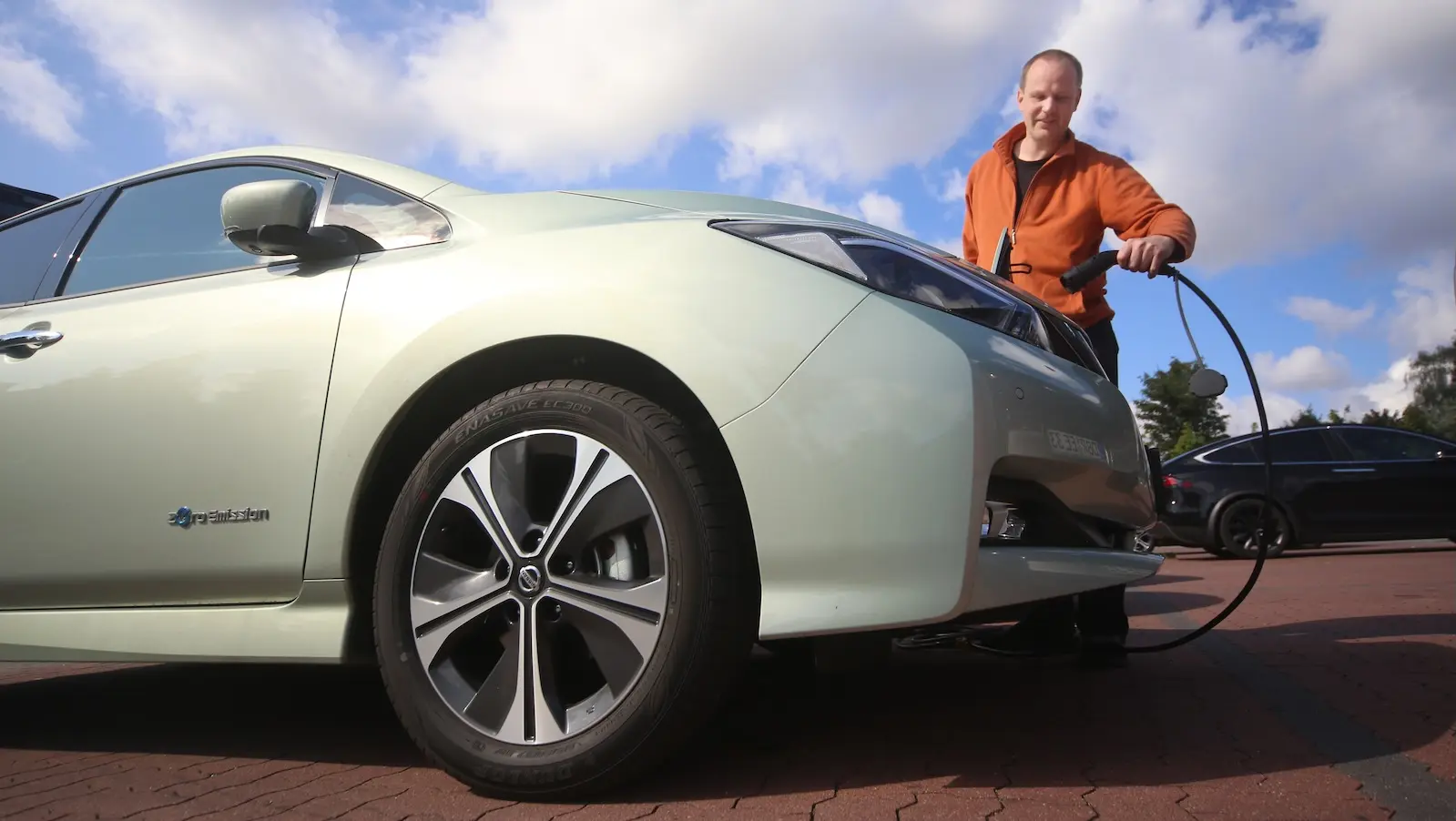
While the technology is promising, hardware remains a hurdle. Not all EVs are currently capable of bidirectional charging. The Nissan Leaf was an early pioneer in this space, and newer models like the Ford F-150 Lightning and certain Volkswagen ID models are beginning to incorporate the necessary hardware. Furthermore, bidirectional chargers are currently more expensive than standard "Level 2" home chargers.
However, industry experts expect costs to plummet as the technology matures and standards are unified. Seth Frader-Thompson, president of EnergyHub, stated that as hardware costs come down and installation becomes simpler, V2G will become "dramatically more accessible over the next several years."
Fleet Vehicles: The Low-Hanging Fruit
While residential EVs are a major focus, the pilot program also highlights the potential of municipal and commercial fleets. School buses, in particular, are considered the "perfect" candidates for V2G. They have massive batteries, follow highly predictable schedules, and—crucially—sit idle during the summer months when the grid is most likely to face peak demand from air conditioning.
A single electric school bus can hold enough energy to power several homes for days, or to provide a significant burst of stability to a local substation. By using these fleets as mobile batteries, municipalities can offset the higher upfront cost of electric buses through the revenue generated by selling power back to the grid.
Broader Economic and Environmental Implications
The implications of successful V2G implementation extend far beyond the automotive industry. As the planet warms, the demand for cooling increases, creating a feedback loop where higher energy use leads to more emissions, which in turn leads to more warming. V2G breaks this cycle by allowing for a higher penetration of renewable energy. When solar panels produce excess energy at noon, it can be stored in EV batteries; when the sun sets and demand peaks, that clean energy can be fed back into the system, reducing the need to fire up "peaker" plants that often run on dirty fossil fuels.
Furthermore, the democratization of grid participation could shift the power dynamic between utilities and consumers. Instead of being passive payers of monthly bills, consumers become active participants in the energy economy. This shift is essential for building a "resilient" grid—one that can withstand extreme weather events and the loss of centralized power stations.
Conclusion: A Paradigm Shift in Energy Management
The Massachusetts V2G pilot represents a critical proof-of-concept for a technology that could redefine the relationship between transportation and energy. By treating the millions of EVs expected on American roads not as a burden, but as a distributed solution, utilities are finding a way to navigate the challenges of the 21st-century energy transition.
The success of this coalition—Eversource, National Grid, EnergyHub, Sunrun, and The Mobility House—will be measured by their ability to coordinate complex charging schedules with the needs of the average driver. If they can prove that V2G is seamless for the owner and lucrative for the utility, the "superpower" of the electric vehicle may soon become a standard feature of the global effort to decarbonize and stabilize the electric grid. As the pilot moves forward, the data gathered will provide a blueprint for other states to follow, potentially turning the looming threat of grid collapse into a story of technological triumph.