The State of Colorado has officially launched a landmark environmental initiative, marking a significant shift in how the United States manages hazardous automotive waste and its associated packaging. Through the establishment of a specialized Extended Producer Responsibility (EPR) program, the state is addressing a long-standing gap in the circular economy: the effective recovery and re-refining of used motor oil and the recycling of the plastic containers that house it. This initiative is being spearheaded by the Lubricants Packaging Management Association (LPMA), an independent producer responsibility organization founded by five of the world’s largest oil companies—BP Lubricants, Chevron, ExxonMobil, Shell, and Valvoline. By moving beyond traditional waste management models, Colorado is positioning itself as a national testing ground for industry-led environmental stewardship.
The Scope of the Lubricant Waste Crisis
To understand the necessity of Colorado’s new program, one must look at the staggering volume of automotive waste generated across the United States. Each year, Americans dispose of approximately 1.3 billion gallons of used motor oil. While roughly 800 million gallons are collected for recycling, the quality of this "recycling" is often debated by environmentalists. Currently, the vast majority of recovered used oil is burned as an industrial fuel. While this provides an energy source, it represents a "linear" end-of-life rather than a "circular" one. When oil is burned, its molecular value is lost, and it cannot be reused as a lubricant.
The situation is even more dire for the packaging. Motor oil is typically sold in High-Density Polyethylene (HDPE) plastic bottles. While HDPE is a highly recyclable material used in milk jugs and detergent bottles, oil containers are almost universally rejected by municipal curbside recycling programs. The reason is residual contamination; even a small amount of leftover motor oil can ruin an entire batch of recycled plastic at a Material Recovery Facility (MRF). Consequently, the recycling rate for motor oil containers in most U.S. states is estimated at less than 1%. This leads to millions of pounds of oil-soaked plastic ending up in landfills or, worse, being illegally dumped, where the residual oil can leach into soil and groundwater.
The Genesis of the LPMA and the Colorado Mandate
In September 2024, the landscape of American waste policy shifted when Colorado gave lubricant producers a choice under its evolving producer responsibility statutes. Companies could either join the Circular Action Alliance (CAA)—a broad organization that manages general packaging and paper recycling—or they could develop a sector-specific program tailored to the unique challenges of the petroleum industry.
Recognizing that petroleum products require specialized logistics and hazardous material handling that general-purpose recyclers are not equipped to provide, the "Big Five" oil companies—BP, Chevron, ExxonMobil, Shell, and Valvoline—formed the Lubricants Packaging Management Association. The LPMA was established as a non-profit producer responsibility organization (PRO) with the specific mission of creating a closed-loop system for both used oil and its packaging.
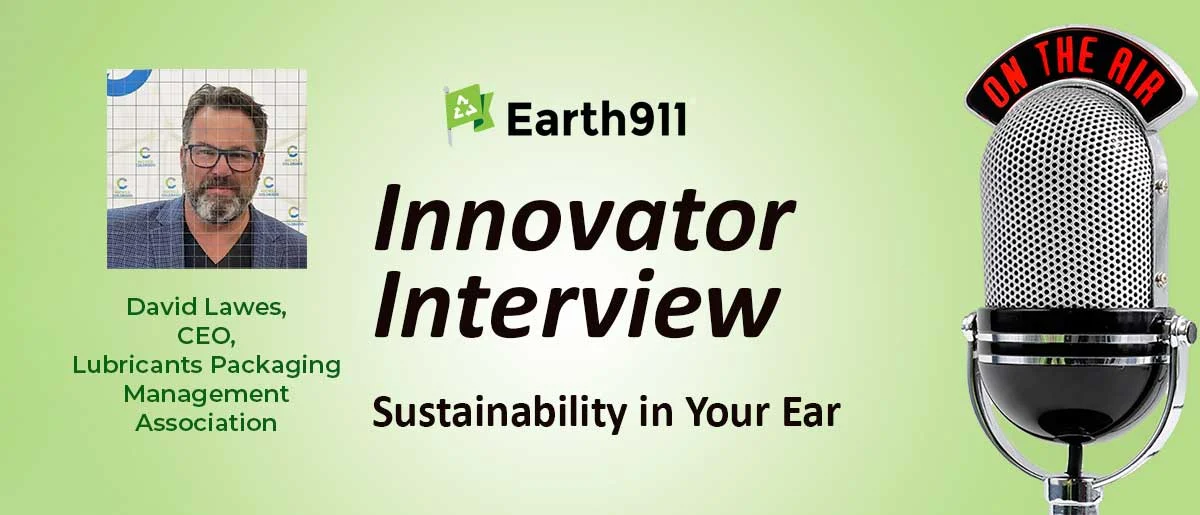
David Lawes, a veteran of environmental policy with over two decades of experience, was appointed as the CEO of LPMA. Lawes previously spent a decade regulating EPR programs in Canada, specifically in British Columbia, where he oversaw a system that achieved a 96% recycling rate for oil containers. The Colorado program aims to replicate this success by utilizing Lawes’ expertise to bridge the gap between corporate operations and state environmental mandates.

Learning from the Canadian Model
The success of the British Columbia model provides a roadmap for what the LPMA hopes to achieve in Colorado. In Canada, EPR for automotive products is a mature system where the costs of collection and processing are built into the product’s lifecycle, funded by the producers themselves rather than taxpayers.
The Canadian approach relies on a robust network of collection points, including retail locations, service centers, and specialized depots. By providing consumers and professional mechanics with convenient, dedicated drop-off points, the program ensures that oil and containers never enter the "blue bin" stream where they would cause contamination. Instead, they are collected in a "clean" stream, allowing the plastic to be washed and pelletized for reuse in new industrial products, and the oil to be sent to re-refineries.
In Colorado, the LPMA is tasked with demonstrating that it can achieve superior environmental outcomes compared to a general-purpose recycling program. This includes setting ambitious recovery targets and investing in the infrastructure necessary to transport hazardous materials safely from rural and urban areas alike to specialized processing facilities.
The Technical Challenge: Re-Refining vs. Burning
A core objective of the LPMA is to elevate the "hierarchy of waste" for used motor oil. Currently, the U.S. market relies heavily on "burning for energy recovery." While this is legally classified as recycling in many jurisdictions, the LPMA’s goal is to move toward re-refining.
Re-refining is a sophisticated industrial process that involves dehydrating, vacuum-distilling, and hydro-treating used oil to remove impurities, heavy metals, and degraded additives. The resulting "base oil" is chemically identical to virgin base oil refined from crude petroleum. According to industry data, re-refining used oil requires up to 85% less energy than refining oil from virgin crude. Furthermore, the process can be repeated indefinitely, making motor oil a truly circular product if managed correctly.
By taking control of the collection process, the LPMA can ensure that the used oil collected is not contaminated with other fluids like antifreeze or brake fluid, which can complicate the re-refining process. This high-quality feedstock is essential for the economic viability of re-refineries.
Industry Reactions and Strategic Alignment
The participation of global energy giants like Shell and ExxonMobil in a mandatory EPR program marks a significant pivot in corporate strategy. Historically, many industrial sectors resisted EPR laws, viewing them as additional taxes or regulatory burdens. However, the formation of the LPMA suggests a shift toward proactive engagement.

Industry analysts suggest that several factors are driving this cooperation:
- Regulatory Certainty: By forming their own PRO, oil companies can design a system that works with their existing supply chains rather than having a one-size-fits-all system imposed upon them by state agencies.
- ESG Goals: Most major oil companies have committed to ambitious Environmental, Social, and Governance (ESG) targets. Demonstrating a 90% or higher recovery rate for their products is a tangible way to meet "net-zero" and "circularity" promises.
- Resource Security: As global plastic regulations tighten, having a reliable stream of recycled HDPE becomes a strategic asset.
"This is not about skirting the law or finding an easier pathway," David Lawes explained during the program’s rollout. "It is about meeting the same results in an industry-friendly way that acknowledges the technical realities of our products."
Timeline and Implementation Phases
The Colorado program is set to roll out in distinct phases to ensure infrastructure can keep pace with regulatory requirements:
- Late 2024 – Early 2025: Data collection and baseline setting. The LPMA is currently mapping existing collection points and identifying "recycling deserts" in Colorado where new infrastructure is needed.
- 2025: Implementation of the fee structure. Producers will begin paying into a fund managed by the LPMA based on the volume of oil and packaging they sell in the state.
- 2026: Expansion of collection networks. The program will focus on increasing consumer awareness and providing incentives for retailers to act as collection hubs.
- 2027 and Beyond: Performance auditing. The State of Colorado will review the LPMA’s recovery rates against the targets set by the Department of Public Health and Environment (CDPHE).
Broader Impact and National Implications
The success or failure of the Colorado oil EPR program will likely determine the future of automotive waste management across the United States. Currently, several other states, including California, Oregon, and Washington, are closely watching the Colorado experiment. These states have already passed or are considering broad EPR laws for packaging, and the LPMA model offers a potential template for how to handle "difficult" materials like lubricants, paints, and electronics.
There is also a growing conversation regarding the need for national standards. A patchwork of 50 different state recycling laws creates significant logistical hurdles for manufacturers. If the LPMA can prove that a specialized, industry-led PRO can work effectively in Colorado, it may provide a case for a harmonized federal approach to lubricant recycling.
Conclusion: A Blueprint for Circularity
Colorado’s move to implement an EPR program for motor oil represents a critical intersection of public policy and corporate responsibility. By leveraging the expertise of industry leaders and the proven success of international models, the state is attempting to solve a decades-old pollution problem.
The transition from a "burn-and-bury" mentality to a re-refining and recovery model is not merely an environmental necessity; it is an economic evolution. If the LPMA achieves its goals, the 1.3 billion gallons of oil currently treated as a waste liability could become a sustainable, perpetual resource for the American automotive industry. As David Lawes and the LPMA begin their work in the Rocky Mountain State, the eyes of the environmental and industrial sectors remain fixed on Colorado, waiting to see if this first-of-its-kind program will indeed become the gold standard for the rest of the nation.