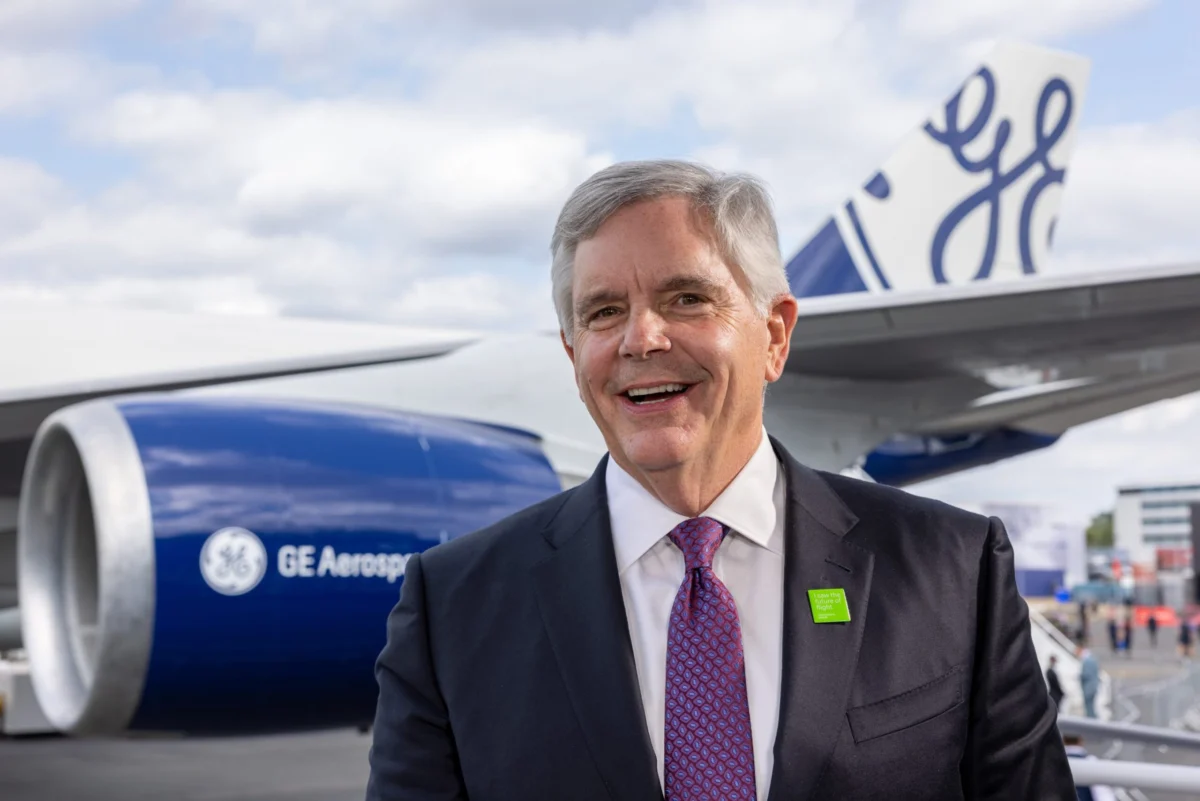
"I was sure GE was going to file for Chapter 11," Nelson Peltz, the activist investor and co-founder of Trian Fund Management, recently confided, reflecting on the precipitous decline of General Electric. "Then Larry arrived and performed the most amazing rescue I’ve ever read about or borne witness to." Peltz’s emphatic statement underscores the monumental achievement of Larry Culp, the outsider CEO who has steered the iconic American conglomerate, once a symbol of industrial prowess, back from the brink of collapse. His tenure marks one of the most remarkable corporate turnarounds in modern business history, transforming a sprawling, debt-laden entity into a streamlined, high-value industrial powerhouse.
The Precipitous Fall of an American Icon
To truly appreciate the scale of Culp’s rescue, one must first understand the depth of GE’s decline. For much of the 20th century, General Electric was an unassailable titan, a diversified conglomerate born from Thomas Edison’s vision, manufacturing everything from light bulbs and locomotives to jet engines and medical scanners. Under the legendary leadership of Jack Welch, GE became a model for corporate management, consistently delivering double-digit earnings growth and expanding into financial services, culminating in a market capitalization peak of over $600 billion in 2000.
However, the 21st century brought a series of missteps that slowly eroded GE’s foundation. The overextension into GE Capital, its financial services arm, proved a critical vulnerability during the 2008 financial crisis, forcing the company to seek government guarantees and shed assets. Subsequent leadership under Jeff Immelt and John Flannery struggled to right the ship. Costly acquisitions, such as the Alstom power assets in 2015, failed to deliver promised synergies and instead saddled GE with billions in debt and operational headaches. The company’s once-vaunted dividend was slashed multiple times, a painful blow to long-term investors, and its coveted AAA credit rating vanished. By 2018, GE’s market value had plummeted by over 80% from its peak, shrinking to a mere $96 billion on the day Culp took the helm. Speculation about bankruptcy was rampant, a stark contrast to its former glory. Activist investors like Peltz’s Trian Fund had already taken stakes, demanding radical change.
Culp’s Arrival and the Lean Transformation
Larry Culp’s appointment as CEO in October 2018 was historic; he was the first outsider to lead GE in its 126-year history. His reputation preceded him, forged during his successful tenure as CEO of Danaher Corporation, a diversified global science and technology innovator. At Danaher, Culp was renowned for implementing the Danaher Business System (DBS), a rigorous, continuous improvement methodology rooted in Lean manufacturing principles. It was this disciplined, operational excellence-focused approach that he brought to GE.
Culp’s initial strategy was clear: stabilize the balance sheet, improve cash flow, and simplify the business portfolio. This involved aggressive debt reduction through asset sales and a renewed focus on operational efficiency. Crucially, he began to instill a culture of "Lean" thinking, famously advocating for "going gemba." Gemba, a Japanese term meaning "the real place," refers to the factory floor, the site where actual work is done and value is created. Culp firmly believed that real problems and solutions were found not in corporate boardrooms or sophisticated spreadsheets, but by observing processes firsthand and engaging directly with front-line workers.
This hands-on approach was vividly demonstrated during a recent factory tour in Lynn, Massachusetts, a historic plant manufacturing engines for military aircraft like the F-16 fighter jet and Apache helicopters. Attired in a GE polo shirt and steel-toed shoes, Culp was "totally in his element," pointing out the daily huddle rooms where work crews would gather to transform "red" (problems or delays) into "green" (solutions and progress) by ensuring crucial parts reached their stations. His philosophy was simple: flow charts and headquarters-created decks often mask reality; true operational health is revealed on the factory floor.
Strategic De-Conglomeration: The Three Pillars
A cornerstone of Culp’s turnaround strategy was the decision to break up the sprawling conglomerate into three independent, publicly traded companies, each focused on a specific industrial vertical. This strategic de-conglomeration was announced in November 2021 and executed over the subsequent years:
- GE Healthcare: Spun off in January 2023, this entity focuses on medical technology, pharmaceutical diagnostics, and digital solutions. It leverages GE’s long-standing leadership in imaging, ultrasound, and patient monitoring.
- GE Vernova: Expected to be spun off in early 2024, Vernova comprises GE’s power, renewable energy, and digital businesses. It is positioned to be a leader in the energy transition, providing critical technologies for electricity generation, transmission, and storage.
- GE Aerospace: The remaining core business, led by Culp himself, is a global leader in jet engines, components, and aviation services for both commercial and military applications. This segment represents the historical heart of GE’s industrial might.
The rationale behind this radical restructuring was to unlock shareholder value by creating more focused, agile companies better positioned to compete in their respective markets. Each new entity would have its own balance sheet, investment strategy, and management team, free from the complexities and capital allocation challenges of a vast conglomerate.
Quantifying the Comeback
The results of Culp’s leadership and strategic vision are nothing short of astounding. From a market capitalization of $96 billion on his first day, the combined valuations of GE Aerospace, GE Healthcare, and GE Vernova now total an impressive $689 billion. This represents a nearly seven-fold increase in shareholder value in just over five years.
To put this in perspective, if these three enterprises were still combined, they would rank as one of the top industrial companies in the U.S. by market value, second only to Tesla ($1.5 trillion), and would stand as the 16th largest company overall, surpassing established giants like Visa, Johnson & Johnson, and ExxonMobil. Since Culp’s arrival, the trio has delivered annualized returns of approximately 30%, a figure twice that achieved by the S&P 500 during the same period, underscoring the exceptional value creation.
A Leader in the Trenches: Versatility and Buy-in
Beyond the impressive financial metrics, Culp’s leadership style has been a critical ingredient in GE’s resurgence. He embodies a rare blend of executive polish and shop-floor pragmatism. Observers describe him as an "extremely polished, articulate figure" capable of engaging with top political figures on complex issues like tariffs, yet equally adept at fostering strong rapport with front-line workers.
His commitment to Lean principles extends to fostering a collaborative environment. During "kaizen" sessions—another Japanese term referring to continuous improvement workshops—Culp is known to patiently explain productivity gains to union representatives, articulating how increased efficiency and higher sales will ultimately translate into more jobs and greater security for workers. This approach seeks to build consensus and secure buy-in, rather than imposing change top-down.
A former Danaher manager, now a CEO himself, recalls being "astounded" by Culp’s hands-on involvement during a week-long kaizen session at a plant in Saginaw, Michigan. Culp was observed drawing lines on the floor with a Japanese sensei (master teacher) and physically moving machines with engineers and welders. The manager emphasized Culp’s daily interactions with Teamster leaders, building relationships and seeking their "buy-in." This dedication to "rolling up one’s sleeves" and demanding the same from his lieutenants impressed upon the manager the profound importance of visible, engaged leadership.
Broader Implications for Corporate Leadership
Larry Culp’s turnaround of GE offers invaluable lessons for corporate leadership and the future of industrial giants. It highlights the critical importance of:
- Strategic Clarity: The bold decision to break up the conglomerate, focusing each entity on its core strengths, proved essential for unlocking value.
- Operational Excellence: The disciplined application of Lean manufacturing principles, driven from the top, can transform deeply entrenched inefficiencies.
- Cultural Transformation: Shifting an organization’s mindset towards continuous improvement and empowering front-line workers is paramount.
- Hands-on Leadership: Leaders who understand and engage with the "gemba" can identify problems and inspire solutions more effectively than those who remain in the executive suite.
The GE story also reignites the debate on the viability of conglomerates in a rapidly evolving global economy, suggesting that focused, agile enterprises may be better equipped to thrive than diversified behemoths.
Top Leadership News
SLB’s Dual Growth Engine: Energy Rebound and AI Data Centers
SLB, the century-old oilfield services giant, is strategically positioned to capitalize on two distinct yet powerful market trends: the rebound in Middle East energy production and the burgeoning demand from the AI data center boom. Founded in 1926, SLB has cultivated a reputation as the world’s largest oilfield services firm, partly due to its unwavering presence in volatile geopolitical regions. As James West, an analyst at Melius Research, notes, "They don’t leave countries when there’s a coup or a change in government or a conflict." This operational resilience has become a significant asset.
The company is now poised for substantial gains as the Middle East energy sector recovers from recent disruptions, including the closure of the Strait of Hormuz, which severely choked off nearly 20% of global oil supply. SLB’s deep-rooted relationships and operational infrastructure in these critical regions provide a distinct competitive advantage. Concurrently, SLB is diversifying its portfolio by pivoting towards AI infrastructure. Leveraging its expertise in complex project management and energy systems, the company is developing modular data centers and sophisticated power management solutions tailored for hyperscalers—the massive cloud computing providers driving the AI revolution. This dual-track strategy not only hedges against future energy market fluctuations but also positions SLB as a critical player in the rapidly expanding digital economy.
Meta Leans on Nostalgia Amidst AI Backlash
Meta CEO Mark Zuckerberg is attempting to reframe the company’s aggressive AI push by tapping into a wellspring of early tech optimism, declaring "the future is for everyone" in a recent video campaign. This marketing strategy aims to evoke a sense of shared progress and innovation, reminiscent of the internet’s early days. However, the campaign launches amidst growing public scrutiny and internal discontent regarding Meta’s AI initiatives.
Marketing professors speaking to Fortune suggest that the optimistic imagery sidesteps critical questions about the real-world implications of AI for Meta’s vast user base, including concerns about data privacy, algorithmic bias, and potential job displacement. The company is simultaneously grappling with a series of controversies, including internal "gulag" complaints related to working conditions, the recent scrapping of an AI image feature due to inaccuracies, and a lawsuit alleging AI-driven targeting of employees on leave for layoffs. This complex landscape underscores the challenge for major tech companies like Meta in balancing rapid AI innovation with ethical considerations and maintaining public trust.
ServiceNow’s ‘Agentic AI’ Pitch Gains Wall Street Traction
ServiceNow, a leading enterprise software company, appears to be finally winning over Wall Street with CEO Bill McDermott’s "agentic AI" narrative, following a robust second-quarter earnings report. The company announced impressive subscription revenue of $3.88 billion, marking a 24.5% year-on-year increase. Significantly, its AI products have now surpassed $1 billion in annual contract value for the first time, signaling strong adoption and market acceptance.
Furthermore, ServiceNow raised its full-year subscription guidance to an optimistic $15.76-$15.78 billion and comfortably beat earnings expectations. This positive performance comes as the broader enterprise software sector has been buffeted by fears of a "SaaSpocalypse"—the concern that autonomous AI agents could fundamentally undercut demand for traditional enterprise software subscriptions by automating tasks previously requiring human interaction with software. ServiceNow’s success suggests that its approach to "agentic AI," which focuses on intelligent automation that augments human capabilities rather than fully replacing software, is resonating with customers and investors alike, positioning the company favorably in the evolving landscape of business process automation.
The Global Markets: A Mixed Picture Amidst Geopolitical Tensions
Global markets are presenting a mixed picture in early trading, reflecting a complex interplay of geopolitical developments, inflationary concerns, and technological shifts. S&P 500 futures are up 0.3% this morning, following a 1.2% decline in the last session, indicating a cautious optimism in U.S. markets.
However, Asian markets are experiencing significant downturns. Hong Kong’s Hang Seng dropped 1.0%, South Korea’s KOSPI fell a steep 5.7%, Japan’s Nikkei 225 declined 2.7%, and Taiwan’s TAIEX dropped 2.7%. This broad regional decline is partly attributed to ongoing geopolitical tensions, particularly in the Middle East, and concerns over global trade and supply chain stability. Major Korean chipmakers, Samsung and SK Hynix, were particularly hard hit, down 7.6% and 8.3% respectively, reflecting broader concerns about semiconductor demand and regional economic headwinds. India’s NIFTY 50 saw a more modest decline of 0.4%. In contrast, the STOXX Europe 600 was up 0.5% in early trading, suggesting a more resilient outlook in European markets. In the cryptocurrency sphere, Bitcoin has slipped below the $65,000 mark, continuing its recent volatility. These movements underscore investor sensitivity to a range of global factors, from energy prices and political stability to technological advancements and inflation outlooks.
Around the Watercooler: Key Debates and Developments
Musk on AI Regulation: Peer Review Before Government Intervention
Elon Musk has weighed in on the contentious debate surrounding artificial intelligence regulation, advocating for a system where rival AI laboratories would conduct peer reviews of "frontier models" before their public release. He posits that government intervention should be considered only as a last resort, emphasizing a belief in industry self-regulation to ensure safety and ethical development. This stance highlights the ongoing tension between rapid innovation in AI and the urgent need for robust oversight.
Trump Dismisses ‘Affordability’ as Political Ploy Amid Surging Oil Prices
Former President Trump recently dismissed "affordability" as a term "made up by the Democrats," asserting that oil prices would "come tumbling down" under his policies. However, this political rhetoric contrasts sharply with market realities, as oil prices have since hit $100 a barrel. The rising cost of crude has significant implications for consumer spending, inflation, and global economic stability, underscoring the challenges of political promises confronting volatile commodity markets.
Japan’s Work-Life Balance Push Contrasts with PM’s Sleep Habits
Despite Tokyo’s concerted efforts to promote a four-day workweek and improve work-life balance across Japan, Prime Minister Sanae Takaichi recently made headlines by boasting of sleeping "zero to three" hours a night. This personal disclosure highlights a cultural dichotomy, where traditional expectations of extreme dedication in leadership clash with contemporary initiatives aimed at fostering healthier and more sustainable working environments for the broader populace.
Saudi Arabia Takes Center Stage as Oil Hits $100 Amid Escalating Iran War
Saudi Arabia finds itself at the epicenter of global energy and geopolitical dynamics as oil prices surge to $100 a barrel. This rise is largely fueled by the escalating conflict with Iran, marked by continued Houthi attacks and concerns over Iran’s expanding nuclear capabilities. The situation places Saudi Arabia in a critical position to influence global oil markets and regional stability, intensifying the focus on diplomatic efforts and military responses in the Middle East.
CEO Daily is curated and edited by Joseph Abrams, Jason Ma, Claire Zillman, and Lee Clifford.