The Democratic Congressional Campaign Committee (DCCC) has initiated a significant new digital advertising campaign, shared exclusively with CQ Roll Call, as the nation officially crosses the 100-day threshold until the critical midterm elections. This strategic advertising push, designed to resonate with voters grappling with persistent economic challenges, is set to launch on Sunday, July 27, 2026, targeting 25 incumbent Republican-held House districts identified by the DCCC as highly vulnerable. The ad, which will run across Meta platforms including Facebook and Instagram, zeroes in on the pressing concerns of escalating grocery bills and soaring gas prices, culminating in a pointed call to action: "remember in November."
The DCCC’s messaging strategy is explicit and unyielding. Nebeyatt Betre, a spokesperson for the committee, articulated the Democrats’ stance in a statement: “From groceries to gas to health care, House Republicans have bled Americans’ wallets dry with their cost-raising agenda. Voters are exhausted by all the bad news vulnerable House Republicans have created, and the DCCC is working to make sure voters know they can hold Republicans accountable on Election Day.” This statement underscores the party’s intent to firmly link Republican legislative actions, or perceived inactions, to the everyday financial burdens faced by American households.
The Economic Undercurrents Driving the Campaign
The decision by the DCCC to place economic affordability at the forefront of its midterm campaign is not arbitrary; it reflects a deep understanding of voter sentiment shaped by current economic realities. Over the past year, the United States has experienced a period of elevated inflation, with the Consumer Price Index (CPI) showing a consistent upward trend. While official figures vary by month, annual inflation has frequently hovered above 5%, significantly eroding purchasing power for many families. Gasoline prices, a highly visible and frequently discussed economic indicator, have seen substantial increases, with the national average per gallon rising by approximately 15-20% compared to the previous year, depending on regional fluctuations. Similarly, grocery costs have climbed steadily, with staples like dairy, meat, and produce experiencing noticeable price hikes, adding pressure to household budgets already strained by other rising expenses.
Healthcare costs also remain a perennial concern for American families. Despite various legislative efforts, out-of-pocket expenses, insurance premiums, and prescription drug prices continue to be a significant financial burden for many, especially those without comprehensive employer-sponsored plans. The DCCC’s inclusion of healthcare in its messaging aims to broaden the economic critique beyond just consumer goods, suggesting a holistic approach to the financial pressures on voters. This multifaceted attack on the cost of living seeks to create a narrative where Republican policies are portrayed as exacerbating these issues, rather than alleviating them.
A Challenging Landscape for House Republicans
The 2026 midterm elections are shaping up to be a formidable challenge for House Republicans, who currently hold a razor-thin majority. Historically, the party controlling the White House often faces headwinds in midterm elections, and this cycle appears to be no exception. President Donald Trump’s job approval ratings have consistently remained below the 50% mark, a critical threshold that often correlates with significant losses for the president’s party in Congress. Data from various polling organizations indicates that presidential approval ratings in the low 40s or high 30s can lead to double-digit seat losses for the incumbent party.
Adding to the complexity is the ongoing conflict in Iran, which, while not explicitly detailed in the ad, contributes to a broader sense of national unease and uncertainty. Geopolitical tensions often have economic ripple effects, particularly on energy markets, and can shift public focus from domestic issues to national security concerns. The war in Iran has garnered significant media attention, potentially influencing voter sentiment and perceptions of leadership effectiveness.
Furthermore, a recent Emerson College poll, released just days before the DCCC’s ad launch, painted a stark picture for Republicans. The survey, conducted nationally on Thursday, July 24, 2026, revealed Democrats with an 11-point lead over Republicans on the generic congressional ballot. This metric, which asks voters which party’s candidate they intend to support for Congress, is often seen as a bellwether for midterm performance. While an 11-point lead is substantial, political analysts caution that such polls can fluctuate significantly in the months leading up to an election, and local district dynamics often diverge from national trends. Nevertheless, such a significant advantage in a national poll provides a morale boost for Democrats and underscores the challenging environment Republicans face.
The Strategic Imperative of Affordability
The DCCC’s emphasis on affordability is a tested strategy that yielded positive results for Democrats in several key races during the previous year’s election cycle. In gubernatorial and state legislative contests, candidates who effectively campaigned on issues related to rising costs and economic relief often outperformed expectations, demonstrating the potent appeal of this message to a broad spectrum of voters. For instance, in critical swing states like Michigan and Pennsylvania in 2025, Democratic candidates who consistently hammered their opponents on issues like prescription drug costs and utility bills managed to mobilize base voters and persuade undecided independents. This historical success has evidently informed the DCCC’s current tactical deployment.
The party’s strategists believe that by framing the economic challenges as a direct consequence of Republican policies, they can create a clear contrast for voters. This narrative posits that while Democrats are fighting to lower costs, Republicans are either indifferent or actively pursuing an "cost-raising agenda." The digital ad, therefore, serves as an early and consistent reminder of this alleged culpability, aiming to cement this perception in the minds of voters long before Election Day.
Targeting and Digital Campaign Mechanics
The decision to run the ad in 25 Republican-held House districts is a calculated move designed to maximize impact and efficiently allocate resources. These districts are typically characterized as swing seats, where the incumbent Republican won by a narrow margin in the previous election, or districts where demographic shifts and changing political landscapes present a viable opportunity for a Democratic challenger. Many of these districts may have voted for President Biden in 2024 but elected a Republican to the House, indicating a propensity for ticket-splitting and a potentially persuadable electorate.
The use of Meta platforms – Facebook and Instagram – is central to modern political campaigning. These platforms offer sophisticated targeting capabilities, allowing the DCCC to reach specific demographics within each of the 25 districts. Campaigns can tailor their audience based on age, interests, geographic location, and even past political engagement, ensuring that the message reaches the most receptive or persuadable voters. Digital ads are also more cost-effective than traditional television advertising, allowing for a broader reach with a more modest initial investment. While the DCCC has not disclosed the exact financial outlay for this initial ad buy, similar campaigns typically involve an investment of several hundred thousand dollars, with the potential for escalation as the election draws nearer. The digital format also allows for rapid iteration and A/B testing, enabling the DCCC to refine its message based on real-time engagement data.
Chronology of the Campaign to Date
The path to these midterm elections has been a long and arduous one, marked by several key developments:
- November 2024: The previous general election saw Democrats lose a handful of seats in the House, leading to the current Republican majority. President Trump won re-election, setting the stage for a midterm environment where his approval ratings would be under intense scrutiny.
- Early 2025: Both parties began initial fundraising efforts and candidate recruitment for the 2026 cycle. Economic data from this period began to show persistent inflationary pressures.
- Summer 2025: Initial legislative sessions in the new Congress were characterized by partisan gridlock, with Republicans and Democrats clashing over economic policy, spending bills, and responses to global events.
- Late 2025 – Early 2026: Public concern over rising grocery and gas prices began to intensify, becoming a dominant theme in local news and public discourse. The conflict in Iran escalated, drawing more attention.
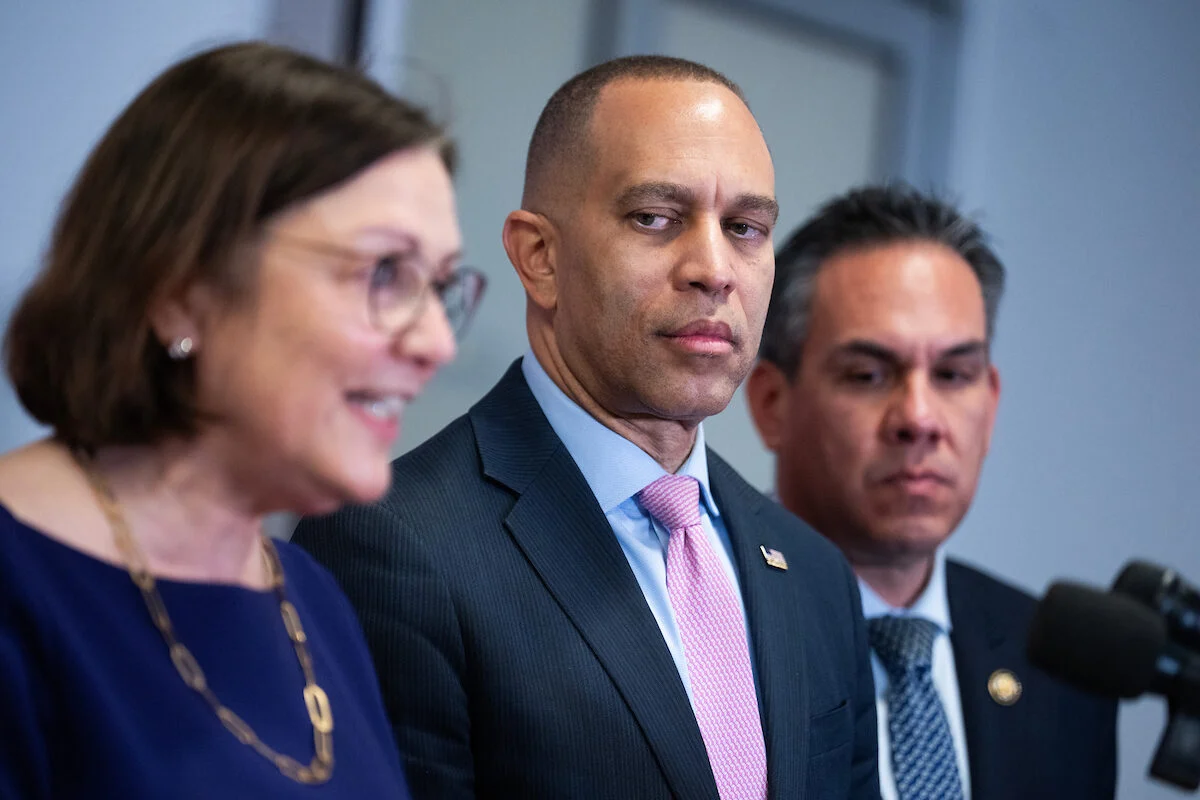
- April 2026: High-profile congressional leaders, including DCCC Chair Suzan DelBene, House Minority Leader Hakeem Jeffries, and House Democratic Caucus Chair Pete Aguilar, held news conferences, as depicted in the accompanying image, likely outlining their strategy and criticisms of the Republican agenda.
- July 22, 2026 (Thursday): Emerson College released its national poll showing Democrats with an 11-point lead on the generic congressional ballot, providing a significant data point for Democratic strategists.
- July 24, 2026 (Friday): The DCCC shared details of its new digital ad with CQ Roll Call, signaling its strategic timing and intent.
- July 27, 2026 (Sunday): The new digital ad is slated to begin running on Meta platforms in 25 targeted Republican-held House districts, officially kicking off a renewed focus on economic accountability with 100 days left until the midterms.
Republican Counter-Messaging and the NRCC’s Stance
The National Republican Congressional Committee (NRCC), the DCCC’s counterpart, is expected to mount a robust defense against these attacks. While an official statement regarding this specific ad launch was not immediately available, Republican strategists have consistently countered Democratic narratives on the economy by blaming what they term "reckless Democratic spending" for inflationary pressures. They often highlight the national debt, argue for fiscal conservatism, and criticize specific Democratic legislative initiatives as contributing to economic instability.
A likely response from the NRCC would be to pivot the conversation, focusing on issues where Republicans believe they have an advantage, such as border security, national defense spending, or crime rates in urban areas. They might also attempt to portray Democratic economic proposals as leading to higher taxes or increased government overreach. For example, a hypothetical statement from an NRCC spokesperson might read: "Democrats are desperately trying to distract from their failed policies that fueled inflation and burdened American families. House Republicans are focused on cutting wasteful spending, securing our border, and ensuring American energy independence, which are the real solutions to bring down costs and strengthen our economy." This preemptive counter-narrative is crucial for Republicans as they strive to defend their slim majority.
Broader Impact and Implications for House Control
The DCCC’s early and aggressive push on economic issues underscores the high stakes of the upcoming midterms. With a mere five-seat majority currently held by Republicans (assuming a 220-215 split or similar), every district is crucial. The Democrats need to flip just a handful of seats to regain control of the House, a prize that would significantly alter the legislative landscape for the remainder of President Trump’s term.
Political analysts suggest that early ad buys, particularly on digital platforms, serve multiple purposes. Beyond direct persuasion, they are instrumental in defining the narrative, setting the tone for the campaign, and putting incumbents on the defensive. By forcing Republican challengers and incumbents to address the DCCC’s chosen battleground – the economy – Democrats aim to control the conversation.
However, the strategy is not without risks. An over-reliance on a single issue, even one as potent as the economy, could leave the party vulnerable if economic conditions improve unexpectedly or if other issues, such as foreign policy developments related to Iran, suddenly dominate the news cycle. The generic ballot lead, while encouraging for Democrats, is also a national average; success will ultimately hinge on the effectiveness of localized campaigns and the quality of individual candidates in each of the 25 targeted districts.
As the election countdown continues, the DCCC’s new ad signals the intensification of the battle for Congress. The next 100 days will undoubtedly see a surge in campaign activity, increased ad spending from both sides, and a relentless focus on mobilizing voters around issues that resonate most deeply with their daily lives. The outcome will not only determine the balance of power in Washington but also shape the legislative agenda for the remainder of the decade.