The valuation of Tesla Inc. experienced a significant contraction during Thursday’s trading session, as shares fell to approximately $320, marking their lowest level since August of the previous year. This downward trajectory followed the release of the company’s second-quarter earnings report, which highlighted a series of operational challenges, including a substantial inventory of unsold vehicles and growing safety concerns regarding its driver-assistance technologies. While Tesla continues to maintain a dominant position in the United States electric vehicle (EV) sector, the recent market volatility reflects deepening investor skepticism regarding the timeline and safety of the company’s highly anticipated Robotaxi service.
The current stock price represents a notable retreat from the peak of $498 recorded in December 2025. However, market analysts point out that despite the recent "nosedive," Tesla’s long-term growth remains unprecedented; the company’s initial public offering (IPO) in 2010 was priced at a mere $17 per share. The current correction is being viewed by some as a necessary adjustment as the market weighs Tesla’s transition from a high-growth automotive manufacturer to a diversified artificial intelligence and robotics firm.
Quarterly Earnings and the Inventory Surplus
Tesla’s Q2 earnings report provided the primary catalyst for the sell-off. Chief Executive Officer Elon Musk revealed that the company is currently holding approximately 22,000 unsold vehicles year-to-date. This inventory surplus suggests a potential cooling in demand or a misalignment between production rates and consumer preferences in a high-interest-rate environment.
Compounding the financial data were safety disclosures that have alarmed both regulators and shareholders. Reports indicate that more than 200 crashes have been linked to Tesla’s driver-assistance systems. These figures have intensified the scrutiny of the National Highway Traffic Safety Administration (NHTSA), which has been investigating the company’s Full Self-Driving (FSD) and Autopilot features for several years.
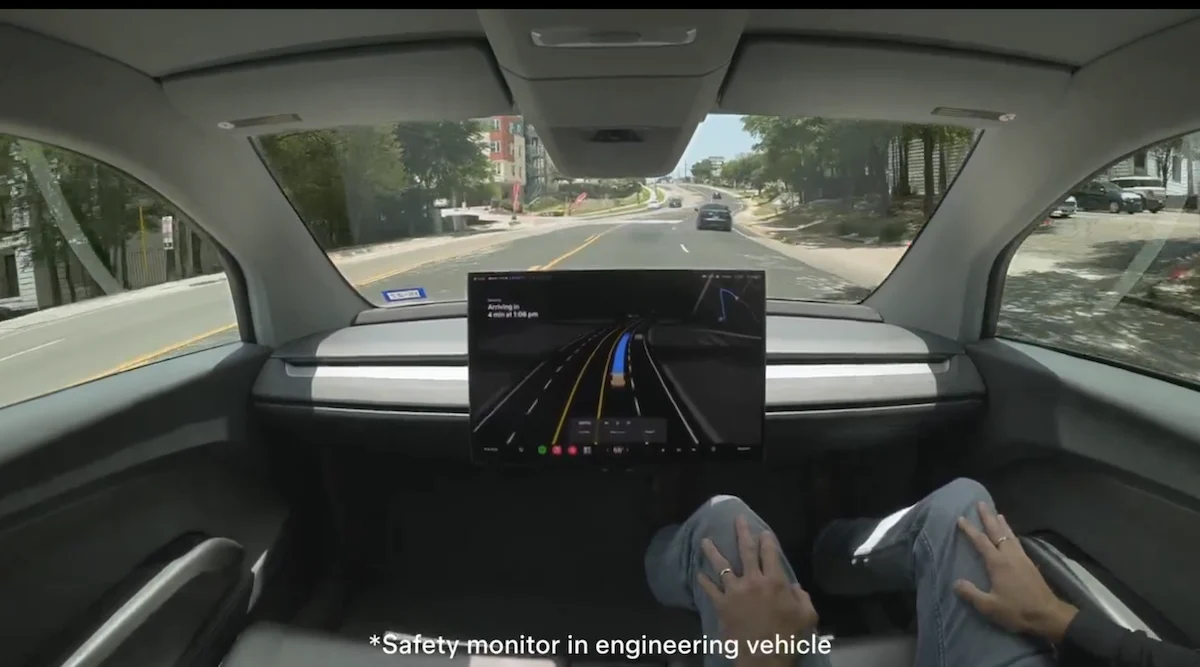
During the earnings call, Musk attempted to project confidence, emphasizing a high compound growth rate in terms of miles driven by the company’s autonomous test fleet. "Our goals are very ambitious for Robotaxi, but we do need to be cautious about causing any accidents or causing any harm to anyone," Musk stated. He further noted that the company has expanded its testing operations across several major metropolitan areas in Florida, Texas, and the San Francisco Bay Area, claiming a weekly growth rate of more than 10% in autonomous mileage.

The Robotaxi Vision vs. Operational Realities
The primary point of contention for investors remains the gap between Musk’s ambitious projections for the Robotaxi service and the reality of its deployment. In July 2025, Musk suggested that the driverless ride-hailing business would be accessible to roughly 50% of the U.S. population by the end of that year. As of mid-2026, those targets have not been met, leading to accusations of over-promising and under-delivering.
Recent field reports have exacerbated these concerns. Shortly after Tesla launched its driverless taxi service in Tampa, Florida, local news outlets reported safety infractions. On July 22, 2024, dashcam footage surfaced showing a Tesla Robotaxi traveling the wrong way down North Armenia Avenue, a one-way street. Such incidents, while anecdotal, serve as powerful symbols of the technical hurdles still facing Level 4 and Level 5 autonomy.
Zachary Shahan, editor of CleanTechnica, has been vocal about the disparity between the company’s marketing and its tangible progress. Shahan noted that despite claims of widespread availability, actual driverless operations remain confined to extremely limited geographic "geofences." The discrepancy between the vision of a nationwide autonomous fleet and the reality of a handful of cars in cities like Austin and Miami has led to a cooling of the "AI premium" that had previously bolstered Tesla’s stock price.
Market Share Dynamics and Competitive Pressures
Despite the internal hurdles, Tesla remains the undisputed leader in the U.S. EV market. In the second quarter of 2026, Tesla captured just over 50% of all electric vehicle sales in the country. While this is a significant achievement, it represents a substantial decline from the 80% market share the company enjoyed in 2019.
The erosion of Tesla’s dominance is attributed to the entry of "legacy" automakers and well-funded startups into the electric space. General Motors (GM) and Ford have navigated a complex transition, at times scaling back 100% EV commitments in favor of plug-in hybrids (PHEVs) to meet consumer demand for versatility. However, both companies have reaffirmed their long-term EV roadmaps. Ford is currently developing a mid-sized electric pickup truck intended to challenge the Cybertruck on price and utility. Meanwhile, GM has positioned its 2027 Bolt as the "most affordable EV in America," despite conflicting internal reports regarding the model’s future.
The competitive landscape is further complicated by the emergence of specialized all-electric startups. While companies like Lucid have struggled to find high-volume traction, Rivian has solidified its standing. Rivian recently secured billions in loans from the U.S. Department of Energy to facilitate the construction of a massive manufacturing facility in Georgia, signaling strong federal backing for Tesla’s most direct rival in the premium truck and SUV segment.

The Rise of Boutique and Niche EV Manufacturers
Beyond the major players, a new wave of innovative startups is targeting specific segments of the market that Tesla has yet to address. Slate Auto, backed by Amazon founder Jeff Bezos, is scheduled to begin its first deliveries later this year, focusing on the luxury "gasmobile" replacement market.
In the urban utility segment, TELO Trucks has gained attention for its MT1, a city-scaled electric pickup truck. Despite being roughly the size of a Mini Cooper, the MT1 recently demonstrated its capability by successfully towing a 5,800-pound Pebble Flow travel trailer. This "punching above its weight" approach appeals to urban consumers who require utility without the massive footprint of a traditional pickup.
At the high end of the market, the New York-based startup Dacora is carving out a niche for "hand-crafted luxury." Featuring retro-styling and unconventional materials such as customizable wooden hoods and dashboards, Dacora is marketing an "awakened experience" that eschews traditional touchscreens for tactile, movement-based interfaces. With a refundable deposit of $50,000, Dacora is targeting the ultra-high-net-worth demographic that may be seeking an alternative to Tesla’s minimalist, tech-heavy aesthetic.
Broader Implications and Future Outlook
The volatility in Tesla’s stock price is also being influenced by external factors related to its CEO’s public profile. Musk’s involvement in the Department of Government Efficiency (DOGE) and his increasingly vocal political stances have introduced a new layer of brand risk. Analysts suggest that some consumers may be pivoting toward competitors to avoid the "reputational baggage" now associated with the Tesla brand.
However, Tesla’s infrastructure remains its greatest "moat." The Supercharger network continues to be the gold standard for EV charging in North America, and the company’s vertical integration allows for higher margins than most of its competitors can currently achieve. If Tesla can successfully navigate the regulatory and technical minefield of the Robotaxi launch and clear its current inventory surplus, the "temporary blip" of Thursday’s stock dip may indeed be forgotten.
The next several quarters will be pivotal. As Ford and GM balance their portfolios with hybrids, Tesla’s commitment to an all-electric future will be tested by market demand. If the company can prove that its FSD technology is statistically safer than human drivers—and back that claim with incident-free operations in its new Florida and Texas markets—it may regain the investor confidence necessary to return to its 2025 valuation peaks. For now, the market is signaling that "vision" is no longer enough; shareholders are demanding verifiable safety and tangible delivery on long-standing promises.