
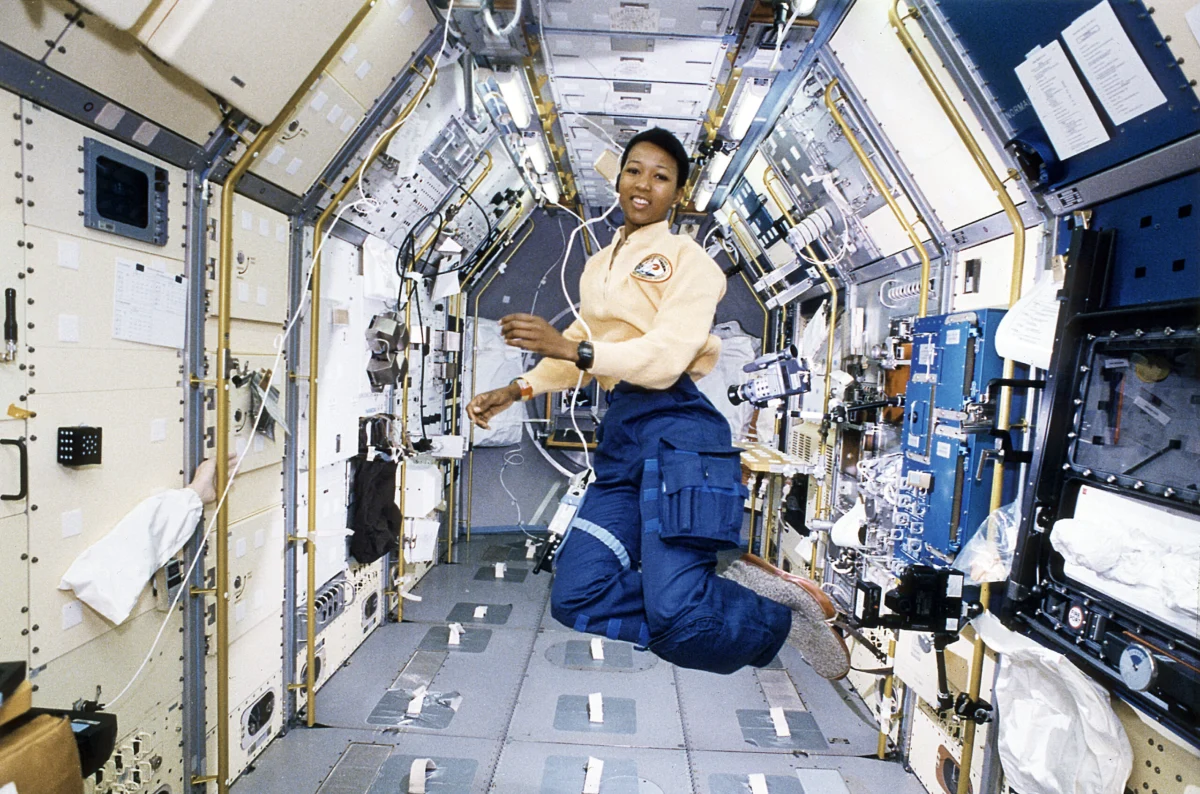
On September 12, 1992, NASA astronaut Mae Jemison etched her name into the annals of history by becoming the first African American woman to travel into space. Launching aboard the space shuttle Endeavour for the STS-47 mission, Jemison’s journey represented far more than a technical achievement in aerospace engineering; it served as a powerful symbolic milestone for a nation grappling with the slow, often uneven, progress of civil rights in high-stakes professional fields. Her presence in orbit underscored a critical evolution in the composition of the astronaut corps, challenging decades of systemic exclusion that had long relegated women and people of color to the margins of the American space program.
The path to the launchpad for Jemison was paved by the perseverance of those who preceded her, yet it remained fraught with historical obstacles. In the infancy of NASA, the agency’s selection criteria were famously narrow, favoring military test pilots who were exclusively white and male. This demographic homogeneity persisted for years, creating a culture that did not prioritize the inclusion of diverse perspectives. It was not until the seventh space shuttle mission in 1983 that Sally Ride became the first American woman to reach orbit. Later that same year, on the very next mission, Guion Bluford shattered a parallel barrier by becoming the first African American to reach space. Despite these breakthroughs, another nine years would elapse before an African American woman was selected to join the elite ranks of space travelers.
A Career Defined by Multidisciplinary Mastery
Mae Jemison’s selection as an astronaut was not a result of political tokenism, but rather the logical outcome of a life defined by extraordinary academic and professional rigor. Born in Decatur, Alabama, in 1956 and raised in Chicago, Illinois, Jemison demonstrated an early affinity for science and the arts. Her trajectory began at Stanford University, where she earned a Bachelor of Science degree in chemical engineering while simultaneously completing the requirements for a Bachelor of Arts degree in African and African American Studies.
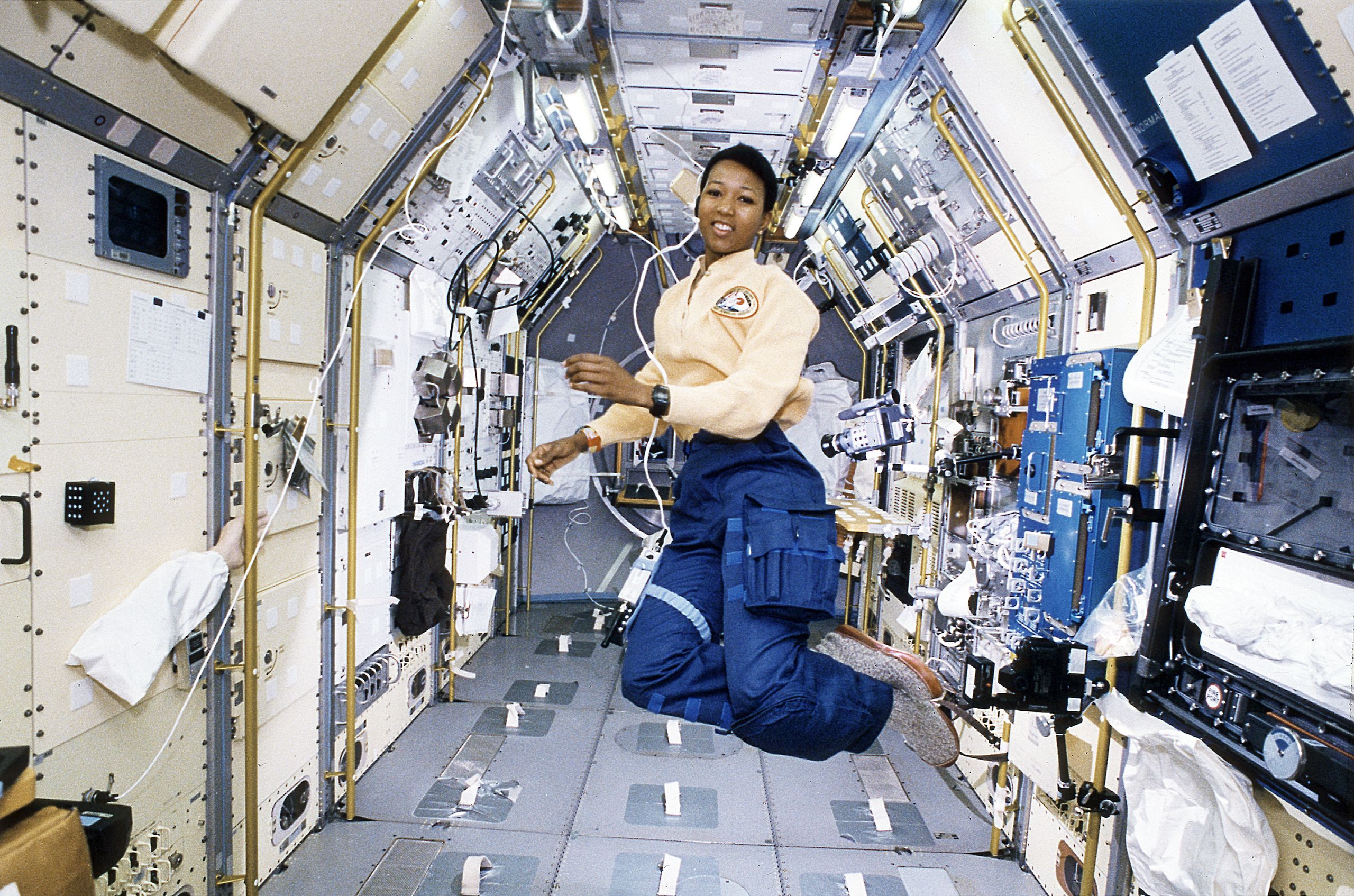
Her intellectual curiosity led her to Cornell University’s Medical College, where she obtained her Doctorate in Medicine. Following her medical training, Jemison did not immediately pivot toward aviation. Instead, she served as a general practitioner in Los Angeles and subsequently joined the Peace Corps. From 1983 to 1985, she served as the Area Peace Corps Medical Officer for Sierra Leone and Liberia. In this capacity, she was responsible for the health and welfare of Peace Corps volunteers, overseeing pharmacy, laboratory, and medical staff in a demanding, resource-constrained environment. This experience provided her with a unique perspective on global health and logistics, qualities that would prove invaluable during her time with NASA.
The STS-47 Mission and Scientific Contributions
When Jemison was selected for the astronaut corps in 1987, she joined a class of 15 candidates out of a pool of over 2,000 applicants. Her mission, STS-47, was a cooperative effort known as the Spacelab-J mission, a partnership between NASA and the National Space Development Agency of Japan (NASDA). The flight, which lasted from September 12 to September 20, 1992, was heavily focused on life sciences and material processing in microgravity.
As the mission science specialist, Jemison was tasked with the oversight of 44 distinct experiments. These included studies in fluid dynamics, human physiology, and developmental biology. Specifically, she acted as a co-investigator on a bone cell study, which examined how the absence of gravity affected the calcium metabolism of bone cells—a critical area of research for the long-term viability of human spaceflight. During her eight days in orbit, she logged 190 hours, 30 minutes, and 23 seconds of spaceflight. Her performance was marked by a clinical precision that reinforced the value of bringing medical expertise into the vacuum of space.
The Cultural Resonance of Representation
The significance of Jemison’s flight resonated far beyond the technical data collected during STS-47. In interviews following her return to Earth, Jemison frequently cited the influence of popular culture—specifically the character of Lt. Uhura, played by Nichelle Nichols in the original "Star Trek" series—as a formative inspiration. Seeing a Black woman on the bridge of a starship, however fictional, provided a visual template for possibility that was missing in the real-world news of the 1960s.
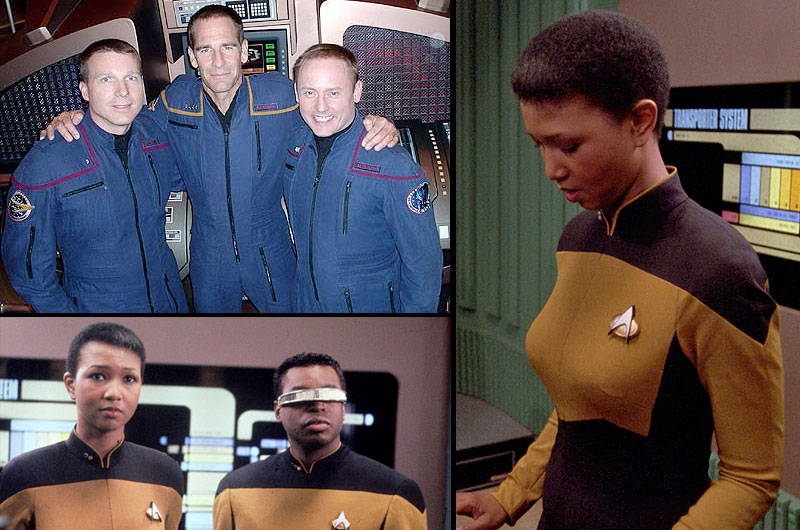
This inspiration came full circle in 1993, when Jemison became the first real-life astronaut to appear on "Star Trek: The Next Generation." Her cameo as Lieutenant Palmer in the episode "Second Chances" was a poignant acknowledgment of the circular relationship between science fiction and scientific reality. By stepping from the shuttle Endeavour onto the set of a television show about the future, Jemison solidified her role as a cultural icon, proving that the barriers of the past could be dismantled by imagination and sustained, hard-won expertise.
Broader Implications and Institutional Change
The impact of Jemison’s mission on the institutional culture of NASA was profound. By the early 1990s, the agency was beginning to realize that the challenges of the future—including long-duration missions to Mars and beyond—would require a diverse workforce capable of creative problem-solving. Jemison’s presence helped legitimize the idea that the astronaut corps should mirror the diversity of the society it represents.
Following her departure from NASA in 1993, Jemison continued to influence the aerospace sector. She founded the Jemison Group, a consulting firm focused on the intersection of technology and social improvement. She also spearheaded the 100-Year Starship project, a DARPA-funded initiative dedicated to ensuring the capabilities for human travel to another star system within the next century. Her leadership in this project emphasizes her philosophy that space exploration is not merely a government task, but a global, interdisciplinary endeavor that requires the input of social scientists, ethicists, and engineers alike.
Legacy and Future Horizons
Today, the influence of Mae Jemison is visible in the increasingly diverse classes of NASA astronauts, including those selected for the Artemis program, which aims to return humans to the lunar surface. Her induction into the pantheon of space pioneers was further cemented in 2017 when she was featured as a minifigure in the "Women of NASA" Lego set. This honor serves as a reminder to the next generation of children—particularly girls of color—that the field of aerospace engineering is not a closed circle.
As NASA shifts its focus toward the commercialization of low-Earth orbit and the eventual colonization of deep space, the foundational work of individuals like Jemison remains essential. She demonstrated that an astronaut is more than a pilot; an astronaut is a scientist, a communicator, and a symbol of human potential. Her 1992 mission was not just a successful flight; it was a necessary bridge between the exclusionary history of early space exploration and a future where the stars are accessible to anyone with the intellect and the grit to reach for them.
In reflecting on her career, observers often note that Jemison’s greatest contribution was not just the 190 hours she spent in orbit, but the decades she spent ensuring that the doors she opened remained unlocked for those who would follow. By synthesizing her roles as a physician, an engineer, and a public advocate, Mae Jemison redefined what it meant to be an explorer, ensuring that the history of spaceflight would forever reflect the diverse capabilities of the human race.








Leave a Reply