
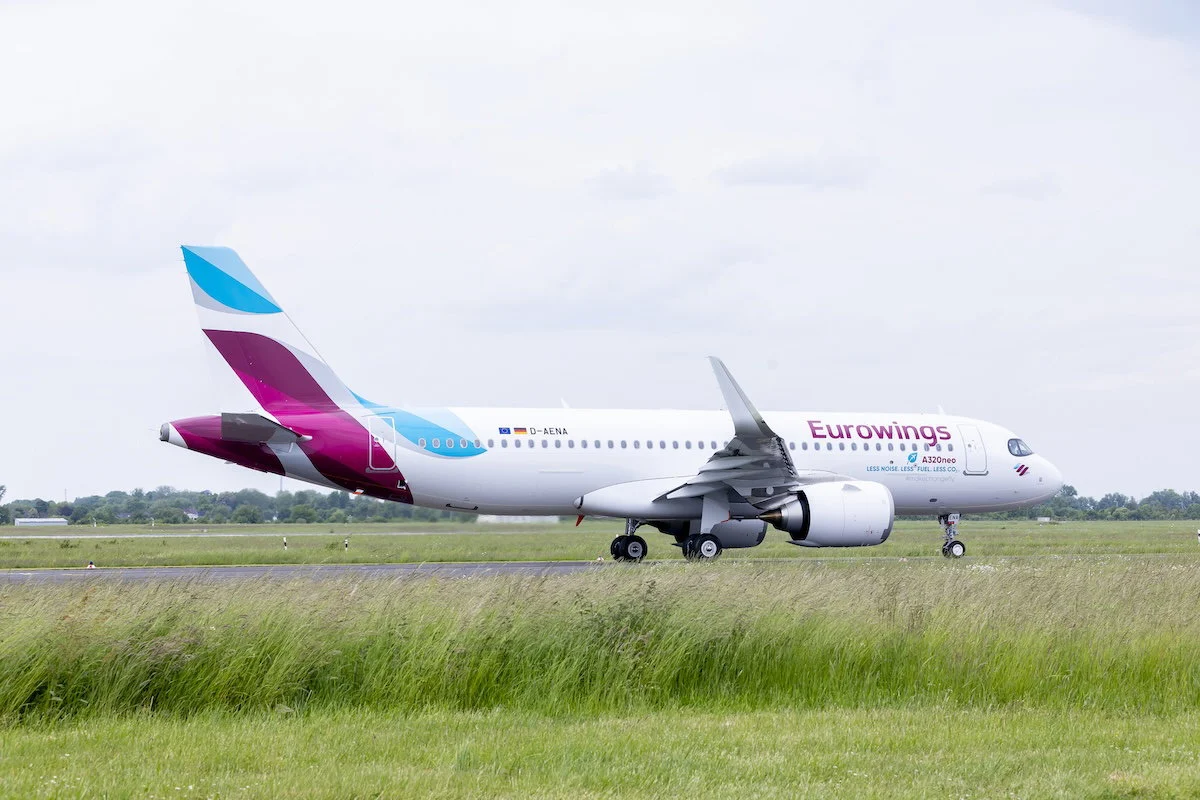
An ordinary Wednesday evening flight operated by German carrier Eurowings turned into an extraordinary logistical ordeal for its 156 passengers after a single piece of misplaced luggage forced a double diversion. Flight EW9503, an 896-mile scheduled journey from Ibiza Airport (IBZ) to Dusseldorf Airport (DUS) on September 9, 2026, was interrupted when airline personnel realized an unaccompanied bag had been loaded into the aircraft’s cargo hold. Strict international aviation security regulations, cemented in the decades following the 1988 Pan Am Flight 103 disaster over Lockerbie, Scotland, mandate that every checked item of baggage must correspond directly to a ticketed passenger on board the aircraft.
The cascading sequence of events highlights the rigid operational frameworks governing modern commercial aviation, where strict adherence to passenger-baggage matching protocols can rapidly transform minor ground-handling oversights into massive multi-airport disruptions. While no malicious intent or security threat was ever suspected, the discovery of the stray suitcase in mid-air set off a chain reaction involving an emergency diversion to France, an extensive security inspection, a secondary diversion due to nighttime airport curfews, and eventual midnight bus transfers that left weary travelers arriving hours behind schedule.
Comprehensive Chronology of Flight EW9503
The operational complications began even before the aircraft pushed back from the gate in the Balearic Islands. The Airbus A320, bearing registration code D-ABZN, was originally scheduled to depart Ibiza at 6:10 PM local time, with an expected arrival time in Dusseldorf of 8:35 PM. However, minor ground delays pushed the departure time back by over an hour. The aircraft finally lifted off the runway at 7:35 PM, setting a northerly course across Europe toward Germany.
Shortly after takeoff, while the aircraft was climbing to its cruising altitude, ground and flight operations realized a critical discrepancy: a piece of luggage loaded into the cargo hold had no corresponding passenger on the manifest. According to a spokesperson for the Lufthansa Group—Eurowings’ parent organization—the incident occurred entirely due to a routine "loading error" by ground handling staff at Ibiza.
Faced with the unauthorized bag, the flight crew had no operational discretion. Under European Union aviation security mandates and standard international protocols, if a passenger whose boarding pass is assigned to a checked bag fails to board the aircraft, that bag is classified as "unaccompanied freight." Transporting unaccompanied luggage without explicit, high-level security clearance and physical inspection is strictly prohibited. Consequently, the flight crew was forced to initiate immediate contingency procedures, altering their flight path toward the nearest suitable airfield.
First Diversion: Emergency Landing in Toulouse
The closest appropriate diversion point capable of handling an Airbus A320 was Toulouse-Blagnac Airport (TLS) in southern France. The flight crew declared a security-related diversion, turning the aircraft around and heading southwest. Flight EW9503 touched down safely in Toulouse at 8:37 PM local time, exactly one hour and two minutes after its initial departure from Ibiza.
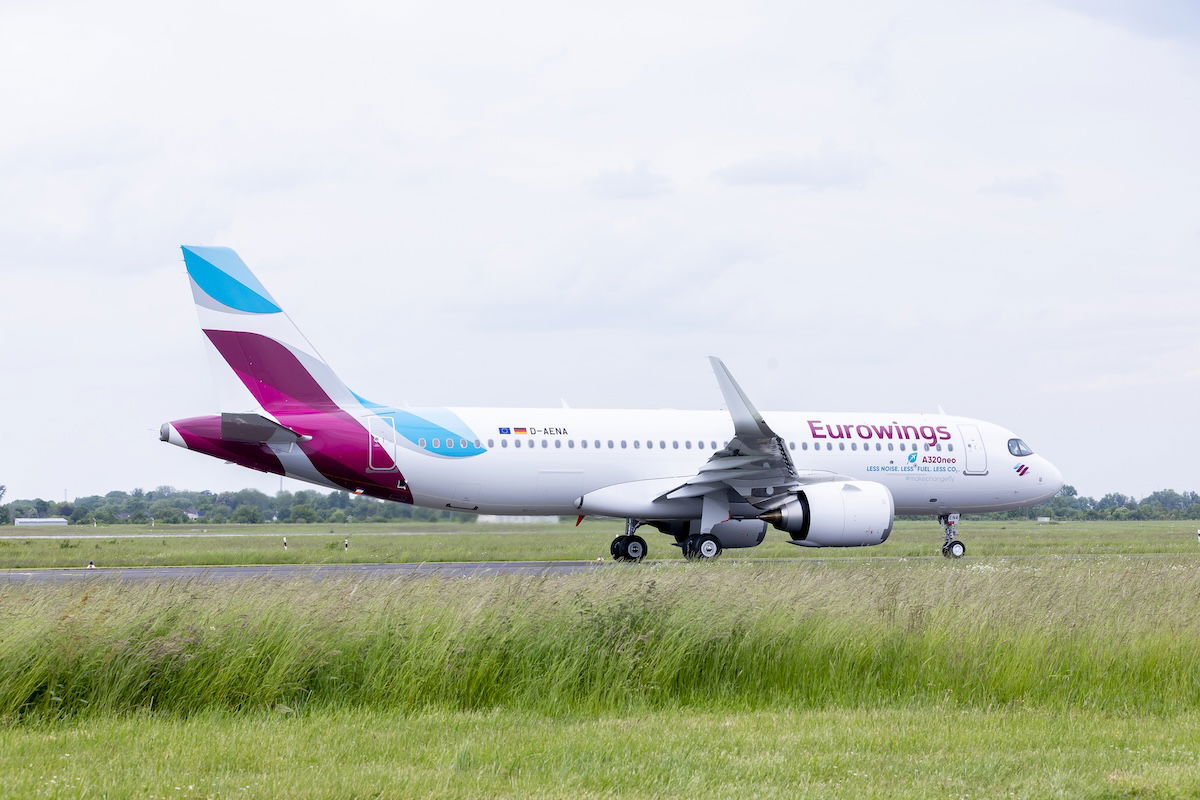
Upon landing, the aircraft was met by local airport security and ground personnel. Standard safety protocols in such scenarios require a complete physical screening of the aircraft, along with the offloading, identification, and manual inspection of the offending piece of luggage to ensure it poses no threat. This meticulous security sweep was time-consuming. Nearly three hours elapsed as ground teams verified the contents of the cargo hold and cleared the aircraft for continued operation. Finally, at 11:20 PM, the Airbus A320 was cleared for departure, taking off from Toulouse to resume its journey to Germany.
Second Diversion: The Dusseldorf Curfew and Arrival in Cologne
The extensive delay in Toulouse, however, introduced a secondary operational hurdle. Major European airports frequently enforce strict nighttime curfews to mitigate noise pollution for surrounding residential communities. Dusseldorf Airport operates under such a curfew, which prohibits the arrival of non-exempt commercial flights during late-night and early-morning hours.
By the time Flight EW9503 was airborne again, the midnight curfew at Dusseldorf had taken effect, legally barring the aircraft from landing at its original destination. Flight dispatchers were forced to divert the flight once more, routing the Airbus A320 toward Cologne Bonn Airport (CGN), which operates on a 24-hour basis and maintains 24/7 permissions for commercial arrivals.
The aircraft landed in Cologne at 12:53 AM, one hour and thirty-three minutes after departing Toulouse. By the time the weary passengers deplaned, they were stranded at an airport nearly 40 miles south of their intended destination in the middle of the night.
Ground Transport and Final Passenger Arrival
Recognizing the severity of the disruption, Eurowings ground operations scrambled to arrange alternative transportation for the 156 affected passengers. Fleet coaches and charter buses were organized at Cologne Bonn Airport to ferry the travelers northward to Dusseldorf Airport, where many had parked vehicles or intended to catch connecting transport.
The bus transfer took roughly an hour, meaning the passengers finally reached Dusseldorf between 3:00 AM and 4:00 AM on Thursday morning. When factoring in the initial delay, the mid-flight realization, the two separate diversions, the French security checks, and the ground transfer, travelers experienced a cumulative delay exceeding six hours compared to their original flight schedule.
Regulatory Frameworks and Historical Context

The strict protocols that led to the double diversion of Flight EW9503 are rooted in some of the darkest chapters of aviation history. The requirement that a passenger and their checked luggage must travel on the same aircraft—often referred to as positive bag matching—was universally adopted following the 1988 terrorist bombing of Pan Am Flight 103 over Lockerbie, Scotland. In that tragedy, an unaccompanied explosive-laden suitcase was transferred through multiple flights before detonating in the cargo hold, killing all 259 people on board and 11 people on the ground.
In the decades since, international aviation bodies, including the International Civil Aviation Organization (ICAO) and the European Union Aviation Safety Agency (EASA), have enforced zero-tolerance policies regarding unaccompanied baggage. Under current EU rules, if a passenger fails to board an aircraft after checking a bag, ground crews are legally obligated to locate and remove that specific item of luggage before the aircraft is permitted to depart.
If an unaccompanied bag is discovered only after the aircraft has become airborne, airlines face an acute operational dilemma. Aviation security experts note that while diverting a commercial jetliner incurs massive financial costs, burns unnecessary fuel, and severely disrupts passenger schedules, regulatory frameworks leave airlines with virtually no legal alternative once the error is verified in flight. The presence of an unverified bag bypasses standard reconciliation checkpoints, classifying the flight as a potential security vulnerability until the aircraft is grounded and inspected.
Operational Implications and Industry Reactions
The Eurowings incident underscores the heavy reliance of modern aviation on faultless ground-handling execution. Airports across Europe and globally frequently rely on third-party ground service providers to manage luggage sorting, scanning, and loading. While millions of bags are processed daily without incident, high-volume summer and autumn schedules can place immense pressure on ground crews, increasing the statistical likelihood of human error during ramp operations.
Airlines absorb substantial financial losses when diversions occur. Beyond the immediate costs of extra fuel, air navigation fees, and landing charges at two separate unplanned airports (Toulouse and Cologne), carriers must also compensate passengers under EU passenger rights regulations (EU261/2004) when delays exceed specific thresholds. Furthermore, airlines must bear the expenses of emergency ground transportation, hotel accommodations where applicable, and potential crew overtime compensation.
For the flight crew and passengers of EW9503, the event serves as a striking reminder of how quickly routine air travel can be upended by a clerical oversight on the tarmac. While the double diversion caused immense frustration and exhaustion for all 156 travelers, aviation safety advocates emphasize that the outcome, though inconvenient, demonstrates the uncompromising nature of modern aviation security protocols designed to prevent catastrophic risks at all costs.







Leave a Reply