
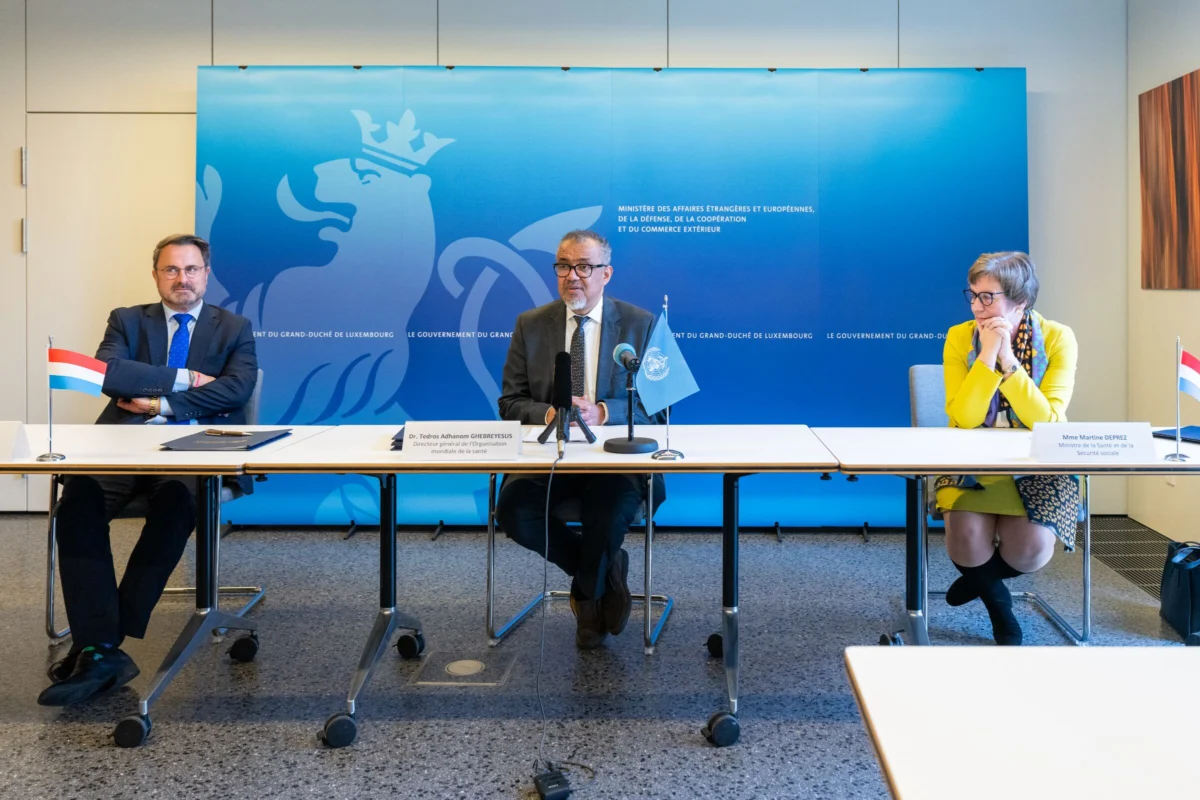
In a landmark diplomatic and humanitarian development, the Grand Duchy of Luxembourg has significantly deepened its longstanding alliance with the World Health Organization (WHO), solidifying a financial and strategic commitment aimed at transforming global health outcomes. On 20 December 2024—fittingly commemorated worldwide as the International Day of Human Solidarity—representatives from the Luxembourgish government and the United Nations health agency convened to sign two unprecedented agreements. This milestone package totals €47.5 million, representing the largest financial commitment Luxembourg has ever extended to the WHO in their shared history.
The comprehensive funding mechanism is divided into two distinct yet complementary pillars. The primary component is a multi-year Strategic Partnership Framework (SPF) negotiated with the Ministry of Development Cooperation and Humanitarian Affairs, amounting to €46.5 million. This forms the backbone of Luxembourg’s support for the WHO’s ambitious programmatic goals leading up to the 2025–2028 quadennium. Concurrently, the Ministry of Health and Social Safety launched its first-ever multi-year agreement with the organization, committing €1 million as Luxembourg’s inaugural voluntary contribution from that specific portfolio. Together, these funds are designed to propel international progress toward the United Nations Sustainable Development Goals (SDGs), focusing heavily on health equity, pandemic preparedness, and multilateral cooperation.
Chronology and Strategic Context of the Agreements
The culmination of these negotiations on 20 December 2024 represents the apex of years of steady diplomatic engagement and strategic alignment between Luxembourg and the WHO. The timeline of this partnership reflects a gradual escalation of Luxembourg’s role as a proactive, reliable donor within the global health architecture. Historically, the European nation has punched above its weight economically, consistently meeting or exceeding international benchmarks for Official Development Assistance (ODA) relative to its Gross National Income (GNI).
In the years leading up to the 2025–2028 funding cycle, discussions between WHO Director-General Dr. Tedros Adhanom Ghebreyesus and Luxembourgish officials centered on the urgent need for predictable, sustainable financing. Traditional funding models for international health organizations have historically relied heavily on earmarked voluntary contributions, which restrict how agencies can allocate resources during sudden crises. Recognizing this systemic vulnerability, Luxembourg structured its €46.5 million SPF to include a strategic mix of fully flexible and thematic funding.
The inclusion of fully flexible capital is a pivotal design element. It empowers the WHO to direct financial resources dynamically toward areas experiencing the highest acute need, whether responding to localized disease outbreaks, bolstering fragile health systems, or deploying emergency medical teams. Furthermore, specific allocations within the package have been earmarked for critical global health initiatives, including the Universal Health Coverage Partnership (UHC-P), advanced research into neglected tropical diseases, and the final, crucial push toward global polio eradication.

Breakdown of the Financial Allocation and Targeted Priorities
A closer examination of the €47.5 million financial package reveals a meticulous alignment with the WHO’s General Programme of Work. The investments target several vulnerable pillars of global public health infrastructure:
- Sanitary Crisis Preparedness and Response: In the wake of lessons learned from global health emergencies over the past decade, a significant portion of the funding is dedicated to strengthening early warning systems, enhancing national capacities for outbreak detection, and ensuring rapid, coordinated responses to future health shocks.
- Combating Health Inequalities with a Gender Lens: Recognizing that health crises disproportionately impact marginalized populations and women, Luxembourg’s contribution emphasizes gender-transformative health policies. This involves addressing systemic barriers to healthcare access and ensuring that health programs are tailored to the specific needs of vulnerable demographic groups.
- Core Normative Work and Technical Guidance: Beyond emergency response, the agreement supports the WHO’s foundational mandate: the creation, validation, and dissemination of rigorous scientific guidelines, norms, and standards. These technical products serve as the gold standard upon which low-, middle-, and high-income countries build their national health policies, regulations, and clinical practices.
- Targeted Disease Eradication and Research: Dedicated streams within the funding framework support specialized initiatives such as the Universal Health Coverage Partnership, which assists over 120 countries in scaling up primary health care. Additionally, resources are channeled into tropical disease research—frequently neglected by commercial pharmaceutical markets—and ongoing international campaigns to consign polio to history.
Official Statements and Diplomatic Reactions
The signing ceremony, held in a spirit of cooperative diplomacy, drew high-level participation from both Luxembourgish leadership and the highest echelons of the WHO.
Martine Deprez, Luxembourg’s Minister of Health and Social Safety, emphasized the domestic and international synergy of the new funding during high-level bilateral discussions. "From now till 2028, this contribution will help finance priority areas in Luxembourg’s collaboration with WHO," Minister Deprez stated. She underscored that the initiatives would focus intensely on "sanitary crisis preparedness and response and the fight against health inequalities, with a special focus on gender."
Echoing these sentiments, Xavier Bettel, Deputy Prime Minister and Minister of Foreign and European Affairs, Cooperation and Foreign Trade, framed the agreements within the broader context of Luxembourg’s foreign policy principles. "By signing two new partnership agreements, we have reaffirmed Luxembourg’s continued support for the WHO and its mission," Mr. Bettel remarked. He added that the milestone reflects "our strong commitment to promoting global health and multilateralism," noting a foundational philosophy of the cooperation: "We launch these agreements with WHO because we believe the best way to avoid is to prevent."
Dr. Tedros Adhanom Ghebreyesus, Director-General of the WHO, expressed profound gratitude for Luxembourg’s steadfast partnership. Pointing out the symbolic resonance of executing the agreements on the International Day of Human Solidarity, Dr. Tedros described the financial commitment as "a strong statement of solidarity by Luxembourg, not just with WHO, but with the people of the world." The WHO chief frequently highlights that flexible funding from reliable donor nations is the lifeblood of international health security, allowing the organization to operate independently and decisively.
Fact-Based Analysis of Implications for Global Public Health
The timing and composition of Luxembourg’s €47.5 million investment carry profound implications for the international health landscape as the world navigates the mid-2020s.

First, by providing a substantial volume of flexible and multi-year funding, Luxembourg directly addresses one of the most persistent structural challenges faced by the United Nations system: donor dependency on tightly earmarked grants. When funds are heavily earmarked, multilateral organizations often struggle to finance administrative overhead, preventative infrastructure, or unforeseen health emergencies that do not currently command media attention. The flexibility built into the Strategic Partnership Framework allows the WHO to bridge these critical funding gaps efficiently.
Second, the targeted focus on Universal Health Coverage (UHC) reinforces the foundational principle that global health security begins at the community level. Robust primary health care systems act as the first line of defense against potential pandemics. By supporting the UHC Partnership through this financial package, Luxembourg is indirectly helping dozens of developing nations fortify their local clinics, train community health workers, and establish resilient supply chains for essential medicines and vaccines.
Third, the partnership underscores the enduring value of effective multilateralism at a time when geopolitical fractures frequently threaten international cooperation. Small and medium-sized nations like Luxembourg often play an outsized, stabilizing role in global governance by acting as honest brokers and reliable financial contributors to multilateral institutions. By tying its national development and health objectives directly to the global frameworks managed by the WHO, Luxembourg demonstrates that national health security is inextricably linked to global health solidarity.
As implementation begins for the 2025–2028 strategic cycle, the international public health community will closely monitor the deployment of these resources. With clear benchmarks established around crisis preparedness, gender-sensitive health equity, and normative standard-setting, the historic partnership between Luxembourg and the World Health Organization sets a benchmark for modern international development cooperation—proving that strategic foresight and financial solidarity remain powerful antidotes to global health vulnerabilities.






Leave a Reply