
The Hashemite Kingdom of Jordan has long occupied a unique and critical geopolitical and humanitarian nexus in the Middle East. Balancing domestic development with the staggering logistical demands of hosting millions of displaced persons, the nation has continually positioned itself as an anchor of stability and compassion in a volatile region. It was against this backdrop that Dr. Tedros Adhanom Ghebreyesus, Director-General of the World Health Organization (WHO), arrived in Amman for a high-stakes, two-day State visit. The trip was designed to evaluate, reinforce, and expand the deep-rooted partnership between the global health body and Jordan, focusing on universal health coverage (UHC), cutting-edge humanitarian health responses, and the vital integration of mental health care into routine medical frameworks.
From high-level diplomatic engagements with the nation’s highest leadership to poignant, ground-level visits with evacuated children and frontline medical professionals, the visit underscored Jordan’s outsized role in global health diplomacy. The mission also attracted international philanthropic attention, notably featuring Prince Harry, Duke of Sussex, and Meghan, Duchess of Sussex, in their capacities as founders of Archewell Philanthropies, who joined Dr. Tedros to champion mental health and emergency medical advocacy.
Royal Audience and Strategic Health Priorities
The cornerstone of the visit’s opening day was a formal audience with His Majesty King Abdullah II. This high-level summit served to acknowledge Jordan’s visionary leadership in treating healthcare not merely as a localized utility, but as an indispensable pillar of national security, regional stability, and human dignity.
Discussions between King Abdullah II and Dr. Tedros were comprehensive, addressing the structural mechanics of fortifying national health systems, expanding equitable access to specialized care, and sustaining international support for regional emergency responses. Particular emphasis was placed on the immense logistical and financial pressures borne by Jordan as it continues to host over three million registered refugees. Primarily originating from Syria and, more recently, Gaza, this population places a persistent, heavy demand on the kingdom’s infrastructure, public utilities, and healthcare networks.
Dr. Tedros took the opportunity to explicitly praise the Jordanian monarch’s steadfast dedication to universal health coverage. “I wish to express my appreciation to His Majesty King Abdullah II for his commitment to advancing universal health coverage,” Dr. Tedros stated. “I also extend my thanks to His Majesty and the people of Jordan for their solidarity and generosity in providing health services to more than three million refugees, primarily from Gaza and Syria, who are living in the country.”
Furthermore, the talks spotlighted Jordan’s innovative humanitarian architecture, specifically highlighting His Majesty’s Medical Corridor initiative. This vital conduit has enabled the evacuation and treatment of critically ill and injured children from the besieged Gaza Strip, bringing them across borders to receive advanced medical care that would otherwise be entirely inaccessible. By maintaining these humanitarian lifelines, Jordan has continued to demonstrate to the international community what it truly means to place health and humanity above political divisions.
On-the-Ground Realities: Meeting Evacuated Children and Frontline Workers
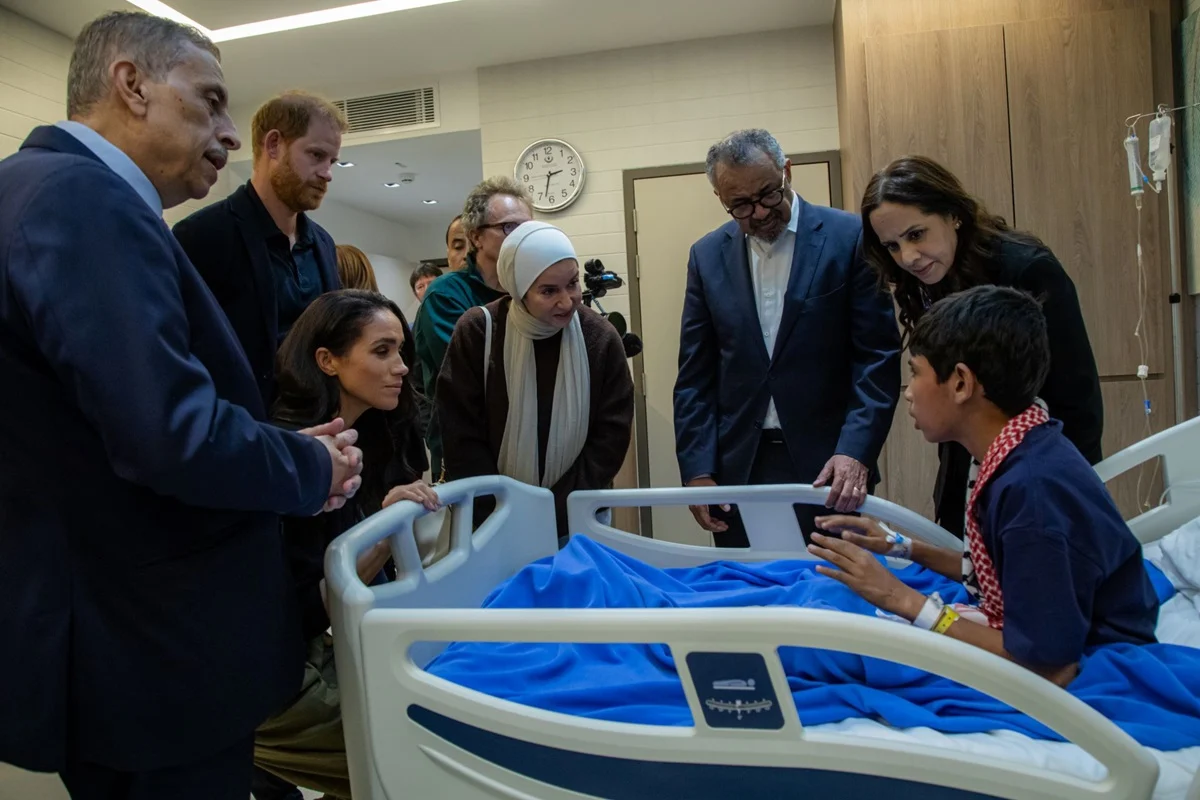
Moving from the halls of power to the frontlines of clinical care, Dr. Tedros spent a portion of his first day touring a specialized, WHO-supported hospital facility dedicated to treating pediatric patients evacuated directly from Gaza. The visit offered a sobering window into the human toll of ongoing regional conflicts, as well as the remarkable resilience of the medical personnel tasked with saving lives under immense pressure.
During the hospital tour, the WHO Director-General met directly with young patients undergoing intensive treatments for severe trauma, blast injuries, advanced oncology cases, and other life-threatening conditions. He also engaged with the doctors, nurses, and administrative personnel who form the backbone of the emergency response network.
This firsthand inspection underscored the operational indispensability of the medical evacuation corridor traversing Jordan. Without these specialized pathways, thousands of vulnerable patients—particularly children suffering from complex medical conditions—would face catastrophic outcomes due to the systemic collapse of local health infrastructure in conflict zones. Dr. Tedros emphasized that these corridors require robust, predictable, and sustained international financial support to remain operational, urging global donors not to suffer from compassion fatigue as crises stretch across months and years.
Convening Health Partners, Donors, and Philanthropies
Recognizing that localized efforts alone cannot shoulder the immense financial burdens of modern regional health crises, Dr. Tedros convened a high-level strategic roundtable later in the day. The gathering brought together key stakeholders, including representatives from major donor nations, United Nations agencies, international non-governmental organizations, and global philanthropic foundations.
The primary objective of the summit was to align funding priorities for the ongoing fortification of Jordan’s national health system while securing predictable funding streams for broader regional humanitarian operations. Key discussion points included the scaling up of specialized mental health services within primary care settings and the formulation of sustainable financial burden-sharing models for countries that host disproportionately large refugee populations.
Participants evaluated the current funding gaps facing health agencies in the Eastern Mediterranean region. Donors were reminded that investing in Jordan’s health infrastructure is not merely an act of charity, but a strategic investment in regional health security. Early interventions, robust epidemiological surveillance, and strong primary healthcare networks in host countries act as vital firewalls against the cross-border transmission of infectious diseases and the compounding psychological fallout of prolonged displacement.
Dr. Tedros welcomed the strong collaborative spirit demonstrated by the attending partners, praising their ongoing commitments to invest in the resilience of Jordan’s medical ecosystems. He noted that contemporary humanitarian crises require a unified, multi-sectoral approach that bridges the traditional divide between emergency relief and long-term development assistance.
Advancing Universal Health Coverage and Mental Health Integration
In addition to multilateral engagements, Dr. Tedros held extensive bilateral talks with Jordan’s Minister of Health. These discussions drilled down into the policy frameworks necessary to achieve and sustain universal health coverage across the kingdom.
Jordan has long been recognized as a regional pioneer in adopting a robust primary healthcare approach. Rather than relying solely on tertiary hospitals for routine health maintenance, the kingdom has systematically strengthened its network of primary health centers, ensuring that basic diagnostic, preventative, and therapeutic services remain geographically and financially accessible to both citizens and refugee communities alike.
A major focus of the ministerial discussions was the successful integration of mental health services into routine primary healthcare—a critical policy milestone supported extensively by the WHO Director-General’s Special Initiative for Mental Health. Historically, mental healthcare has been heavily stigmatized, underfunded, and relegated to specialized, urban psychiatric institutions that are frequently inaccessible to marginalized populations or those living in remote areas.
By decentralizing psychological support and embedding trained mental health professionals within standard community clinics, Jordan has dramatically expanded early intervention capabilities. This integrated model ensures that individuals grappling with depression, anxiety, post-traumatic stress disorder (PTSD), and other psychological conditions receive timely, destigmatized care as an intrinsic component of their overall physical health management.
The Role of Philanthropy: Prince Harry and Meghan Join the Mission
Adding a high-profile international dimension to the itinerary, the Duke and Duchess of Sussex, Prince Harry and Meghan, accompanied Dr. Tedros during several key engagements of the State visit. Operating in their capacities as founders of Archewell Philanthropies—and acting as long-standing, dedicated global advocates for the World Health Organization—the couple brought substantial media visibility and advocacy power to the mission.
Archewell Philanthropies has a documented history of partnering with the WHO on critical global health initiatives. Their past collaborations have spanned a wide spectrum of interventions, from championing equitable vaccine distribution during the acute phases of the COVID-19 pandemic to supporting complex medical evacuation logistics and community-level mental health programs.
During the Jordan visit, Prince Harry participated actively as a vocal ally of the WHO’s mental health advocacy agenda. He underscored the urgent necessity of investing in psychological resilience across diverse communities, with a specific focus on high-risk demographics such as men, young people, and children navigating the compounded traumas of war, poverty, and displacement.
Reflecting on the collaborative mission, Dr. Tedros expressed profound gratitude to the royal couple. “I want to thank our partners, including Prince Harry, Duke of Sussex, and Meghan, Duchess of Sussex, whose commitment to mental health and humanitarian action has helped bring visibility, resources, and hope to some of the world’s most vulnerable communities,” he remarked. “Their collaboration is helping to advance WHO’s mission to ensure health for all.”
In a joint statement highlighting the significance of the partnership, Prince Harry elaborated on the motivations driving their continued humanitarian engagement. “It is an honour to join the Director-General of the World Health Organization in Jordan, a country that is leading by example in compassion, resilience, and innovation,” Prince Harry said. “Through our work with Archewell Philanthropies, my wife and I have seen first-hand the impact of WHO’s efforts to support mental health and deliver life-saving care in emergencies. We remain deeply committed to advancing awareness, reducing stigma, and expanding access to mental health support for all those affected by conflict and crisis. Mental health is fundamental to recovery, dignity, and long-term peace, and we are proud to stand with WHO and partners around the world to make it a global priority.”
Looking Ahead: Day Two Itinerary and Institutional Visits
As the first day of the State visit drew to a close, preparations were finalized for a packed second day designed to examine Jordan’s specialized medical and humanitarian infrastructure from multiple angles.
Dr. Tedros is scheduled to visit the National Center for Rehabilitation of Addicts, a premier institution supported by the WHO that delivers integrated medical, psychological, and social rehabilitation services to individuals struggling with substance use disorders. This visit will highlight Jordan’s progressive approach to addiction—treating it as a complex public health challenge rather than purely a criminal justice issue.
Additionally, the Director-General will meet with prominent community leaders and grassroots women’s organizations, including representatives from the Jordanian Hashemite Fund for Human Development (JOHUD). These grassroots engagements are designed to evaluate how community-led resilience initiatives empower women and marginalized groups to take active roles in local health promotion and social welfare.
The second day will also feature a high-profile tour of the internationally renowned King Hussein Cancer Center. There, Dr. Tedros and his delegation will engage with oncology specialists to discuss cutting-edge advances in cancer diagnosis and treatment, as well as the center’s expanding role as a regional hub of medical excellence and cross-border research collaboration.
The multi-day State visit will formally conclude with a final series of bilateral meetings with humanitarian operations partners. These closing discussions will serve to reinforce Jordan’s irreplaceable, multifaceted role as a secure logistics hub for emergency medical evacuations, rapid disaster response, and long-term health system resilience throughout the Eastern Mediterranean and beyond. Through sustained partnership, strategic financing, and an unwavering commitment to human dignity, the collaborative efforts showcased during this visit provide a replicable blueprint for navigating the complex global health challenges of the twenty-first century.










Leave a Reply