
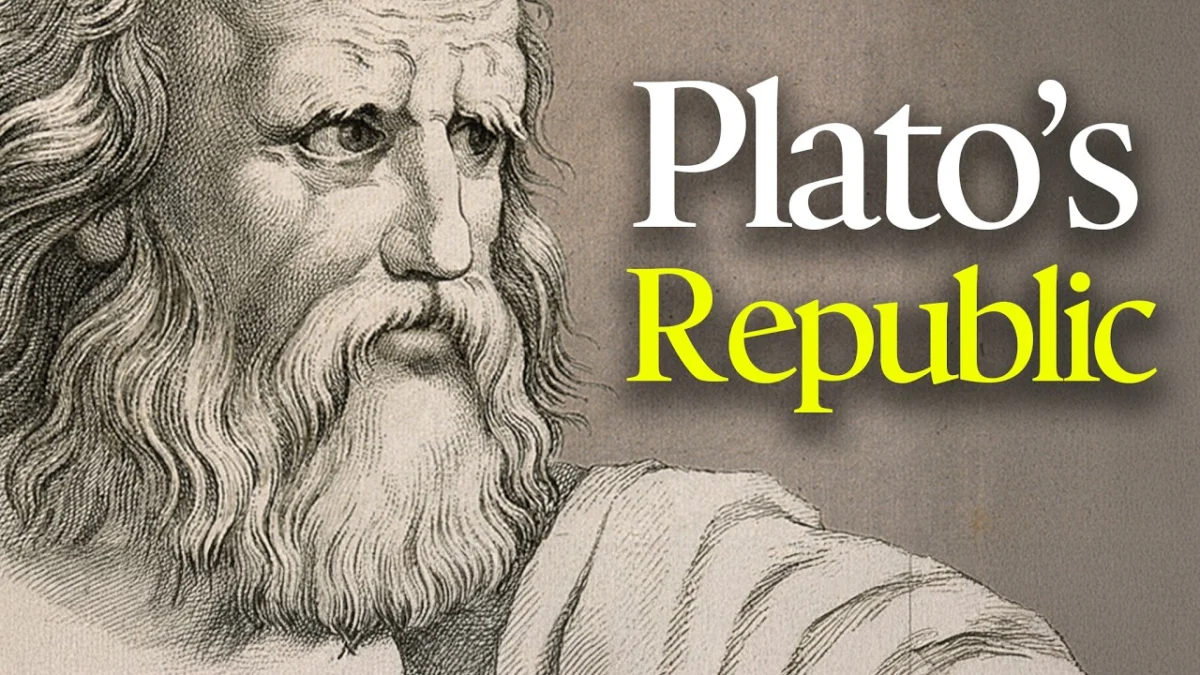
The enduring power of classical literature lies not in its ability to comfort contemporary sensibilities, but in its capacity to fundamentally disrupt them. In an era where modern educational curricula rarely challenge the core ideological frameworks of undergraduate students, texts originating from antiquity retain a surprising, often unsettling relevance. Chief among these is Plato’s Republic, a foundational work of Western political philosophy written approximately 2,400 years ago. Despite the passage of nearly two and a half millennia, even a superficial reading of this Socratic dialogue challenges the unarticulated political assumptions held by citizens of the developed world, particularly regarding the nature of democracy, societal organization, and justice.
A comprehensive new deep-dive video by commentator Jared Henderson explores these themes, presenting a detailed 78-minute analysis of the Socratic dialogues that formulate Plato’s utopian vision. Through this examination, modern audiences are invited to confront principles that run entirely counter to contemporary liberal democratic norms—including the rule of philosopher-kings, the enforcement of state censorship, carefully managed breeding festivals, and the deliberate deployment of "noble lies."
Main Facts and Philosophical Foundations
Written around 375 BC, Plato’s Republic takes the form of a dramatic conversation centered on Socrates, alongside various interlocutors such as Glaucon and Adeimantus. The primary objective of the dialogue is not to draft a literal administrative blueprint for an impending city-state—a distinction that differentiates it from Niccolò Machiavelli’s later, pragmatic manual The Prince—but rather to construct an ideal state as an analog for the human soul.
By scaling up the abstract components of justice, temperance, and wisdom to the macro-level of a city, Plato attempts to illustrate how these virtues manifest within an individual. However, the resulting society is profoundly authoritarian by contemporary standards. In the Republic, society is rigidly stratified into three distinct classes: the producing class (artisans, farmers, and merchants), the auxiliary class (military guardians), and the deliberative class (philosopher-kings).
Rather than celebrating individual liberty, personal autonomy, or egalitarianism, the Socratic ideal subordinates personal desires to the collective harmony of the state. Education is strictly monitored, poetry and art that depict the gods in an unflattering light are banned, and the ruling elite maintain social cohesion through engineered myths. For contemporary readers steeped in Enlightenment values, individual rights, and representative democracy, encountering these arguments acts as a profound shock, dragging deep-seated political presumptions out into the open for critical examination.
Chronology and Historical Context of the Text
To understand the radical nature of the Republic, one must contextualize the political environment of ancient Athens in which Plato lived and wrote. The composition of the dialogue follows a turbulent era in Athenian history, marked by the Peloponnesian War, the overthrow of Athenian democracy by the Spartan-backed Thirty Tyrants, and, most decisively, the trial and execution of Socrates in 399 BC on charges of impiety and corrupting the youth.
The historical timeline of these critical milestones underscores the anti-democratic sentiment embedded within Plato’s philosophy:
- 431–404 BC: The Peloponnesian War devastates Athens, leading to severe political instability and the eventual collapse of the Athenian Empire.
- 404–403 BC: The Thirty Tyrants establish an oligarchic dictatorship in Athens, resulting in widespread political purges, though Plato has familial ties to some of its leaders.
- 403 BC: Democracy is restored in Athens, accompanied by a general amnesty for political crimes.
- 399 BC: The restored democratic court condemns Socrates to death by hemlock poisoning—a trauma that profoundly shapes Plato’s lifelong skepticism toward direct democracy, which he views as unstable, emotional, and vulnerable to demagogues.
- c. 375 BC: Plato composes the Republic, synthesizing his epistemological theories with his disillusionment regarding existing political systems.
- c. 387–367 BC: Plato founds his Academy in Athens, the first institution of higher learning in the Western world, where texts like the Republic are used to train future statesmen in geometry, dialectic, and philosophy.
Supporting Data and Educational Trends in Modern Academia
The release of Jared Henderson’s analysis arrives at a critical juncture in modern education, coinciding with documented shifts in reading habits, civic engagement, and historical literacy across Western democracies. Recent pedagogical studies highlight a growing disconnect between contemporary students and complex textual analysis:
- Literacy and Attention Spans: According to data from national literacy foundations and educational researchers, the average daily time spent reading long-form books among young adults has declined steadily over the past two decades, replaced by short-form digital media and video content.
- Civic Knowledge: Standardized civic education assessments in various Western nations indicate that a declining percentage of high school and university students can accurately explain the structural mechanics of their own systems of government, let alone articulate alternative philosophical frameworks.
- Engagement with Long-Form Philosophy: Despite these challenges, digital educational platforms, video essays, and specialized academic channels have experienced a surge in popularity. Explanatory media regarding classical philosophy routinely attracts millions of views, demonstrating an active public appetite for deep intellectual engagement when translated into accessible multimedia formats.
Official Responses and Academic Reactions
Scholars of ancient philosophy have long debated the proper interpretation of the Republic, divided primarily between those who view it as a totalitarian manifesto and those who interpret it as an elaborate ironical thought experiment.
Prominent historians of political thought have noted that taking the Republic at face value ignores the complex comedic and dramatic elements woven by Plato. For instance, Socrates frequently notes the near-impossibility of actualizing his ideal city, famously remarking that states will only achieve true justice when "philosophers become kings or those currently called kings and rulers genuinely and adequately philosophize."
Conversely, twentieth-century critics such as Karl Popper, writing in the shadow of totalitarian regimes during World War II, famously indicted Plato in The Open Society and Its Enemies as an intellectual precursor to modern authoritarianism. Popper argued that the rigid class stratification, censorship, and eugenic practices outlined in the Republic directly undermined democratic ideals.
Modern educators and digital creators like Jared Henderson attempt to bridge these perspectives, arguing that the true value of the text does not lie in endorsing its specific policy proposals, but in its relentless interrogation of how ideology shapes human thought. Henderson’s analysis emphasizes that even individuals who consider themselves sophisticated, critical thinkers, and immune to propaganda are frequently influenced by the foundational narratives embedded within their cultures since childhood.
Broader Impact and Implications
The persistent fascination with Plato’s Republic carries significant implications for contemporary political discourse. In an age characterized by political polarization, the rise of populist demagogues, and the rapid spread of algorithmically driven information bubbles, the Socratic critique of democracy remains acutely relevant.
Socrates argued that democracy inherently degrades into ochlocracy (mob rule), because leaders in a democratic system are incentivized to pander to the immediate desires and passions of the electorate rather than pursue long-term wisdom or objective truth. When evaluated against modern political realities—where public opinion is easily manipulated by sophisticated rhetorical campaigns, media saturation, and targeted misinformation—Socrates’ warnings against unchecked popular sovereignty continue to disturb modern defenders of democratic institutions.
Furthermore, the text forces a confrontation with the fundamental purpose of education. Modern academic systems increasingly emphasize utilitarian, vocational outcomes, prioritizing economic productivity and technical skill over moral philosophy and self-examination. By contrast, the Republic posits that the ultimate task of an individual is the refinement of their own soul and the alignment of their desires with truth and justice.
As educational institutions navigate declining reading rates and shifting technological landscapes, resources like Jared Henderson’s video analysis serve as vital bridges between ancient wisdom and contemporary audiences. By stripping away academic jargon and presenting Socratic dialogues in an engaging format, such initiatives encourage a new generation of thinkers to question their most deeply held assumptions. Ultimately, the enduring legacy of the Republic is its insistence that true civic wisdom begins not with knowing the answers, but with having the courage to examine the foundations upon which our entire societal reality is built.










Leave a Reply