
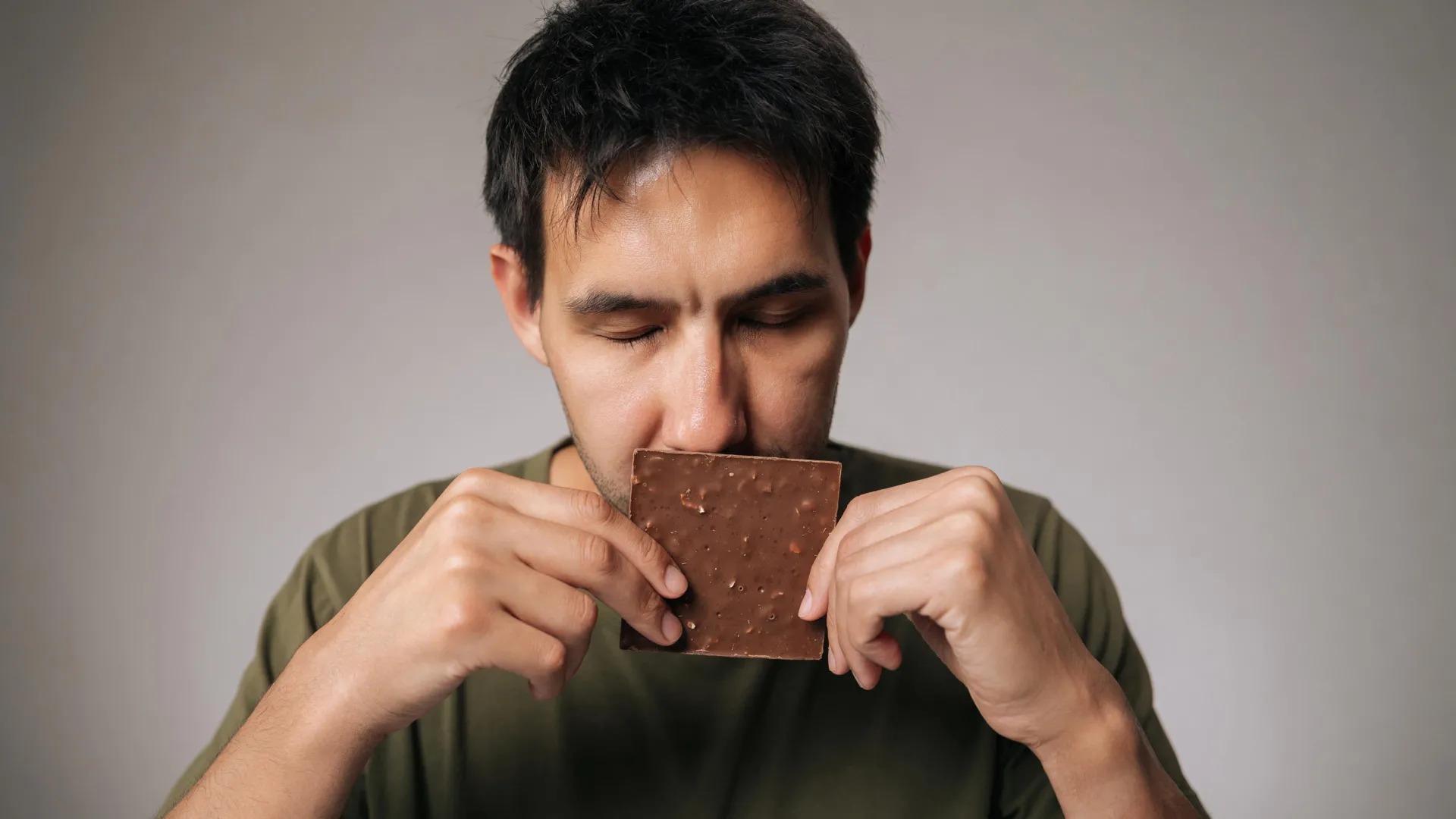
A grueling leg day at the gym may have an unexpectedly simple, sensory-based boost: the aroma of chocolate. Recent research published in the journal Frontiers in Physiology suggests that exposure to specific chocolate scents before and during resistance exercise can significantly increase the total volume of repetitions an athlete completes, all without a corresponding spike in the perceived exertion of the workout. This discovery offers a compelling look into the intersection of olfaction, appetite regulation, and athletic performance, suggesting that the brain’s response to food cues may be a more powerful tool for physical output than previously understood.
The study, led by Dr. Mohamed Nashrudin bin Naharudin, an assistant professor at the University of Malaya’s Faculty of Sports and Exercise Science, sought to bridge the gap between olfactory stimulation and physical endurance. While it is well-established that the human olfactory system is deeply linked to the brain’s emotional and reward-processing networks, this research marks one of the first systematic attempts to evaluate how the smell of food interacts with the physiological demands of heavy resistance training.
The Methodology and Experimental Design
The study cohort consisted of 23 healthy, moderately trained men, aged between 20 and 25. To ensure a standardized physiological baseline, researchers implemented a strict protocol: participants were required to fast for at least 10 hours prior to their arrival at the laboratory. This fasting state was crucial, as it allowed researchers to isolate the effects of the aroma from the influence of recent caloric intake.
Upon arrival, the participants were divided into three experimental conditions. Each group was exposed to a specific scent sample: a liquified dark chocolate solution (90% cocoa), a liquified milk chocolate solution (60% cocoa), or a control sample of plain water. The exercise protocol focused on leg extensions, a standard movement for measuring lower-body strength and endurance.
The chronology of the session was meticulously controlled. Participants provided baseline ratings for hunger, fullness, and their desire to eat before the exercise commenced. During the workout, the scent samples were presented to the participants for 30 seconds between each set. Researchers tracked performance metrics—specifically the total number of repetitions achieved—alongside real-time subjective reports of hunger and exertion.
The Divergent Effects of Cocoa Intensity
The findings revealed a fascinating dichotomy between the two types of chocolate. The 90% dark chocolate aroma demonstrated a marked impact on appetite regulation. Participants exposed to the dark chocolate scent reported significantly lower levels of hunger and a reduced desire to consume food compared to those in the water or milk chocolate groups. More importantly, this group experienced a tangible performance enhancement, completing approximately 18 additional repetitions of leg extensions compared to the control group.
In contrast, the milk chocolate aroma operated through a different mechanism. While participants consistently rated the milk chocolate scent as more pleasant than the dark chocolate, it did not significantly alter their hunger signals. Despite this lack of appetite suppression, the milk chocolate group still saw a performance boost, completing roughly nine more repetitions than the control group.
Dr. Nashrudin Naharudin suggests that these differing outcomes point to two distinct psychological pathways. The dark chocolate aroma likely acts as a "learned cue" for a rich, bitter, and highly satiating food, effectively tricking the body into an anticipatory state of satiety. The milk chocolate, meanwhile, functions as a "hedonic reward cue." By creating a more pleasant sensory environment, the milk chocolate scent appears to boost performance through mood enhancement and increased motivation rather than metabolic signaling.
The Role of Learned Associations
The underlying theory proposed by the research team is based on Pavlovian conditioning and learned associations. From childhood, humans are conditioned to associate specific food aromas with the act of eating and the subsequent feeling of satisfaction. Over time, these smells become neurological shortcuts; the brain anticipates the arrival of nutrients, triggering a physiological response that prepares the digestive and nervous systems for consumption.
By presenting these scents during a fasting state, the researchers were able to observe how the body reacts to these anticipatory cues when the expected food does not materialize. The result is a "psychobiological" shift: the brain enters a state of readiness that can be leveraged to delay the onset of fatigue or to increase the total work capacity of the muscles.
This is not the first time researchers have examined the impact of scent on performance. Previous studies have explored the use of peppermint, citrus, and menthol scents to improve alertness and reduce the perception of effort. However, the use of calorie-dense food cues represents a novel area of study that could have implications for athletes looking for non-pharmacological, ergogenic aids.
Limitations and the Need for Future Inquiry
Despite the promising results, the research team is quick to emphasize the limitations of the current study. As a preliminary investigation, the scope was relatively narrow, involving a small, homogenous group of young men. Consequently, the findings cannot yet be generalized to the broader population, including women or individuals of different age groups and fitness levels.
Furthermore, the researchers acknowledge that the study did not measure biological markers such as hormone levels (e.g., ghrelin or leptin) or neural activity via fMRI. Without this data, the precise biological pathways responsible for the performance boost remain speculative. Additionally, the intensity of the aromas could not be perfectly standardized, and the use of an odorless water control meant that participants were aware of when they were in the control condition, introducing the possibility of a placebo effect.
Dr. Nashrudin Naharudin noted that while the study is a significant first step, "research involving larger and more diverse groups will be needed to determine how broadly the findings apply." There is also the question of whether other food aromas could yield similar results. While chocolate is a universally recognized reward, it is likely that other highly palatable foods could trigger similar psychological shifts, provided the individual has a positive prior association with the scent.
Practical Implications for Sports Science
The implications for the sports and fitness industry are noteworthy. If the scent of a specific food can consistently increase training volume without adding extra calories or increasing perceived exertion, it could serve as a valuable tool for athletes, particularly those in high-intensity sports or those undergoing calorie-restricted periods for competition.
However, fitness professionals caution against relying on sensory cues as a replacement for proper training, nutrition, and recovery. The "scent-induced" boost is likely an acute psychological tool rather than a replacement for long-term physiological adaptation. Moreover, the effectiveness of the intervention may be highly individualized; for an athlete who dislikes chocolate or has negative associations with specific food smells, the effect could be neutralized or even counterproductive.
The broader potential of this research lies in the untapped power of the human sensory system. If researchers can identify a "scent profile" that optimizes physical performance, it could lead to the development of specialized olfactory environments in gyms or training facilities.
Conclusion: Looking Ahead
As the field of sports nutrition and exercise psychology continues to evolve, the integration of sensory science will likely play an increasingly prominent role. The study from the University of Malaya serves as a reminder that the brain is an integral component of physical performance. The ability to "hack" the brain’s anticipatory mechanisms via the olfactory system opens up a new frontier in performance enhancement.
For now, the advice for the average gym-goer remains rooted in traditional methods: consistent training, balanced nutrition, and adequate rest. However, the next time a lifter hits a wall during a set, they might consider whether the subtle, sweet scent of cocoa could be the secret ingredient to pushing past their previous limits. Whether or not chocolate becomes a staple in the athlete’s gym bag, the research underscores the profound, often overlooked connection between our senses and our physical capabilities. Future studies focusing on blood-hormone responses and broader demographic testing will be essential to validate these findings and determine the long-term feasibility of using olfactory cues to optimize human performance.










Leave a Reply