
The financial strain of the American healthcare system is acutely visible inside a modest trailer home in Cohutta, Georgia, where Amber Bates, her husband, and her mother-in-law navigate daily life without health insurance. Home to approximately 765,000 residents in the state’s northwestern corner, Georgia’s 14th Congressional District is widely recognized as the most conservative district in Georgia. Yet, despite being the epicenter of staunch Republican politics, the region is grappling with a wave of rising medical expenses and mounting uninsured rates following recent policy shifts in Washington.
Bates and her husband have gone without health coverage for two years. Their employment remains unsteady, pushing their earnings just high enough to disqualify them from Medicaid, the joint federal and public insurance program designated for low-income individuals and those with disabilities. Their situation worsened at the conclusion of the previous year when enhanced Affordable Care Act (ACA) marketplace subsidies—implemented during the COVID-19 pandemic to artificially lower monthly health insurance premiums—were allowed to expire by a Republican-led Congress. Consequently, Bates’s mother-in-law, who lives with them and cares for another son diagnosed with autism, was forced to drop her health insurance plan as well.
The family now funnels roughly one-third of their total household income directly into prescription medications. When acute medical needs arise, they routinely bypass primary care physicians and head straight to the local emergency room, drawn by the federal mandate that treats patients regardless of upfront billing capacity. Despite the immense financial and psychological stress, Bates remains a firm supporter of President Donald Trump, though she acknowledges the presence of leadership flaws. "He’s trying," Bates said. "It’s just a lot more other things have his attention."
Her sentiment reflects a broader national dichotomy. As the nation approaches crucial midterm elections, voters in deep-red strongholds like the 14th District face a complex reality: economic policies championed by their chosen political party often conflict directly with their immediate financial self-interest, yet deep-seated partisan loyalties remain unshaken.
A Timeline of Legislative Shifts and Expiring Subsidies
To understand the current healthcare crisis in northwestern Georgia, one must examine the chronological dismantling of pandemic-era health policy safeguards and the introduction of new restrictions under the current administration.
When the ACA was signed into law in March 2010, it passed without a single Republican vote in the House of Representatives. Over the ensuing decade and a half, the law became a prime target for conservative lawmakers seeking outright repeal. However, as complete repeal efforts repeatedly stalled in Congress, the legislative strategy transformed into a targeted rollback of coverage gains and financial assistance mechanisms.
In 2021, under the Biden administration, temporary enhanced tax credits were enacted through COVID-19 relief legislation. These credits significantly slashed monthly marketplace insurance premiums, fueling record-breaking enrollment numbers nationwide. These enhanced subsidies were slated to expire at the end of December 2025 unless explicitly renewed by Congress.
As the expiration deadline approached in late 2025, the Republican-controlled House and Senate opted not to extend the enhanced tax credits. Instead, Congress passed the One Big Beautiful Bill Act. Signed into law last summer, the legislation placed strict new limitations on the healthcare marketplace. It restricted open enrollment periods, instituted mandatory monthly fees for certain beneficiaries, and imposed rigorous documentation requirements designed to verify ongoing eligibility.
Simultaneously, the legislative package made qualifying for Medicaid significantly more difficult by introducing strict federal work requirements and bureaucratic hurdles. The Congressional Budget Office (CBO) projected that the combined impact of the new law, the expiration of the ACA subsidies, and auxiliary regulatory alterations would push an estimated 15 million Americans into the ranks of the uninsured over a ten-year period.
The immediate statistical fallout was swift. Following the expiration of the enhanced subsidies at the end of 2025, total ACA marketplace enrollment plummeted by nearly 3 million participants nationwide. In Georgia alone, marketplace enrollment nosedived by more than half a million people, triggering immediate warnings from rural healthcare advocates regarding the financial stability of regional hospitals that rely on insured patients to offset uncompensated care costs.
Political Upheaval and the Marjorie Taylor Greene Factor
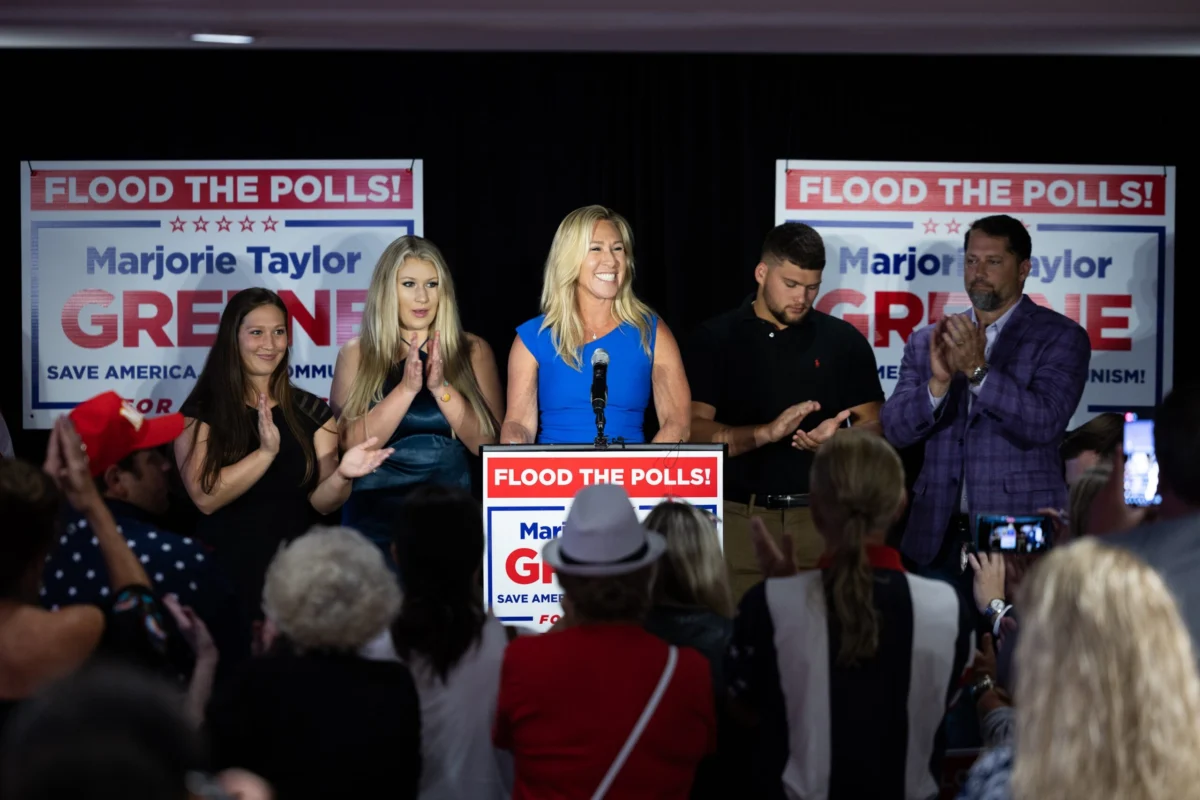
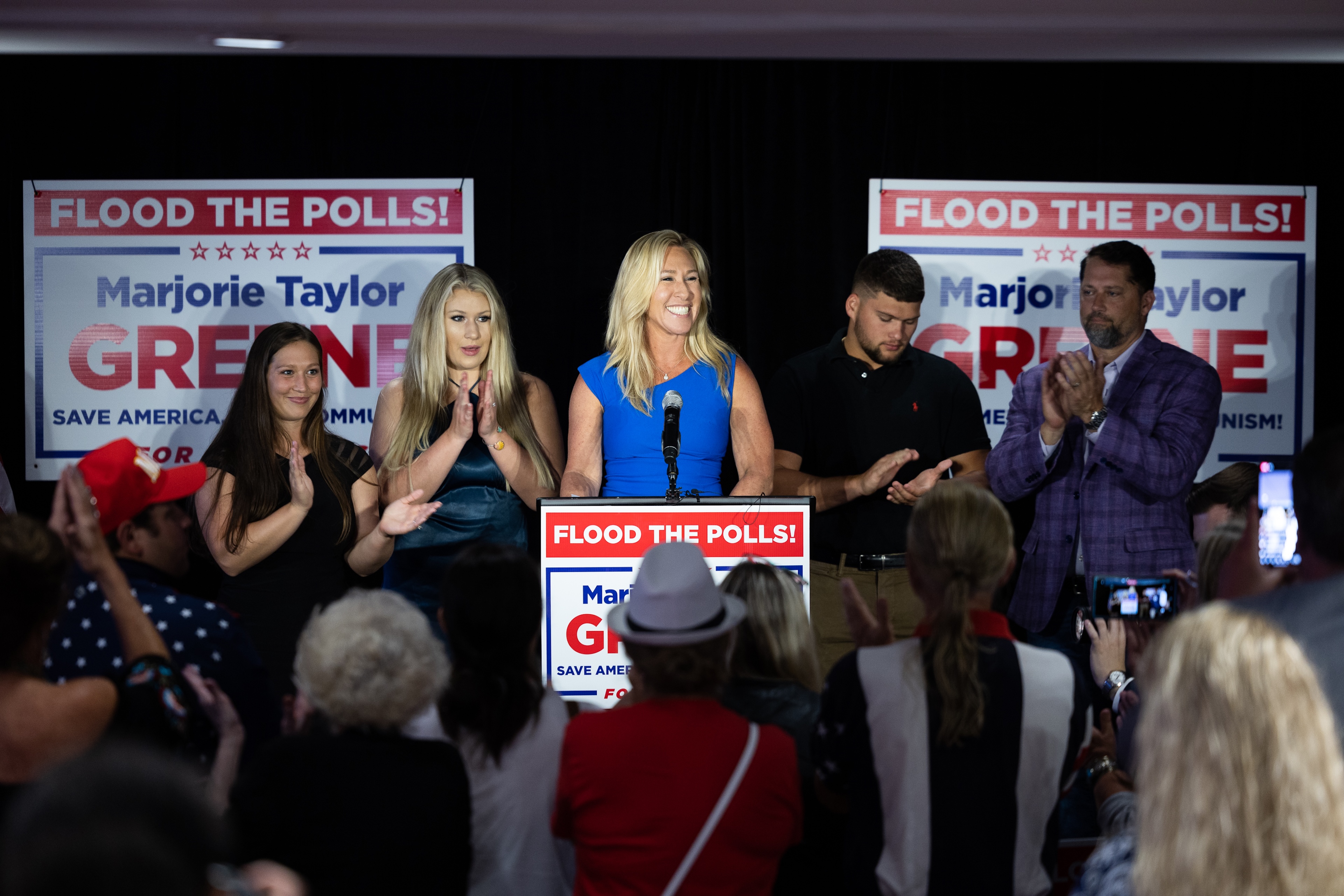
The 14th District’s political landscape has historically been anchored by firebrand conservative loyalty. For years, the district was represented by Marjorie Taylor Greene, who rose to national prominence as one of President Trump’s most vocal and unwavering defenders following her election in 2020. Yet, healthcare policy and foreign interventions eventually catalyzed a dramatic and unexpected break between Greene and the MAGA movement.
Last autumn, Greene launched a public campaign criticizing her fellow Republicans over their handling of the expiring ACA subsidies. She broke ranks with party leadership, noting publicly that the expiration of the tax credits would cause health insurance premiums for her own adult children to double, alongside tens of thousands of working-class families across her district. According to KFF estimates, approximately 74,000 residents in the 14th District alone relied on the enhanced subsidies to maintain affordable coverage.
In subsequent months, Greene publicly questioned the Trump administration’s focus on foreign policy engagements, specifically targeting U.S. foreign trips and military involvement in the Middle East at the expense of domestic economic relief. The public friction prompted a sharp rebuke from President Trump, who took to social media to disavow her political backing. Shortly after the public falling-out, Greene announced her resignation from Congress, effective January 2026.
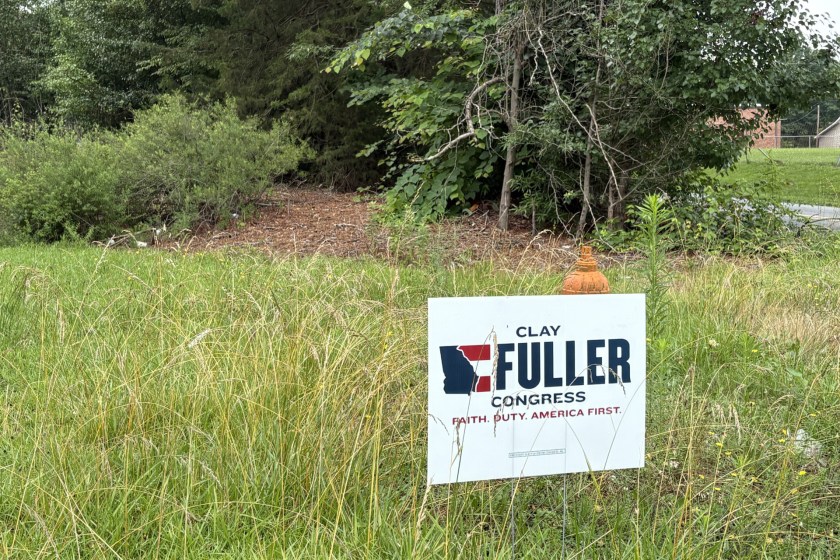
Following her departure, a special election was held in April 2026 to fill the remainder of her term. Voters in the 14th District elected Trump-backed Republican Clay Fuller, though his victory margin was notably narrower than those previously secured by Greene. Fuller is now campaigning to retain the seat for a full congressional term in the upcoming November midterms, facing Democratic challenger Shawn Harris, a resident of Rockmart, Georgia.
Fuller’s legislative platform aligns closely with traditional conservative orthodoxy. In previous public forums and candidate questionnaires, Fuller argued that the pandemic-era expanded ACA subsidies were never intended to serve as a permanent financial crutch. Instead, he contends that sustainable healthcare affordability can only be achieved by expanding market-based competition, eliminating bureaucratic redundancies, and rolling back federal overreach. Fuller’s campaign office did not respond to multiple requests for comment regarding current district insurance statistics.
Meanwhile, House Republican leadership advanced an alternative legislative vehicle in December, championing the Lower Health Care Premiums for All Americans Act as a structural replacement to the expired ACA subsidies. However, a formal analysis conducted by the CBO concluded that the measure would inadvertently increase the national uninsured population by 100,000 individuals annually between 2027 and 2035. Although the House passed the bill, the legislation has stalled in the Senate for nearly nine months without receiving a floor vote.
Reflecting on the stalled legislative agenda, Greene expressed deep frustration with her former colleagues during a June interview. "It’s a Republican-controlled House, Republican-controlled Senate, Republican-controlled White House," Greene said. "If Republicans had a plan, this was the perfect scenario to get it passed. You should have all the votes — get it done. And they’re not doing anything."
Supporting Data and Demographics of Uninsured Populations
The policy shifts in Washington arrive in a geographic region already vulnerable to healthcare volatility. Data compiled from NYU Langone Health’s Department of Population Health indicates that nearly 14% of residents under the age of 65 in Georgia’s 14th District were entirely uninsured in 2024, a figure tracking noticeably higher than national averages. Furthermore, data from Georgetown University’s Center for Children and Families shows that more than 16% of the district’s population relied on Medicaid or the Children’s Health Insurance Program (CHIP) in 2023.
Nationwide, public opinion polling underscores the depth of voter anxiety regarding medical expenditures. A KFF health tracking poll conducted in June revealed that 37% of surveyed Republican voters identified healthcare costs as an "extremely important" issue heading into the midterms. Furthermore, KFF data released in March indicated that over half of Republicans and Republican-leaning independents aligned with the MAGA movement believed Congress made a mistake by letting the enhanced marketplace subsidies lapse. Among all marketplace enrollees surveyed, 62% placed primary blame for the expiration on either congressional Republicans (30%) or President Trump (32%).
Despite this statistical dissatisfaction, political analysts emphasize that economic distress rarely translates into immediate partisan realignment in deeply entrenched partisan districts.
"They’re willing to stick with the party line," explained Charles Bullock, a professor of political science at the University of Georgia. "As long as Donald Trump and other Republicans are saying Obamacare is bad, they’re going to continue to buy into that idea, even when it’s against their economic self-interest."
Jonathan Oberlander, a professor of social medicine at the University of North Carolina-Chapel Hill, notes that decades of political messaging have cemented the nomenclature of the ACA as a toxic concept for conservatives. Even as millions of citizens utilize marketplace exchanges, the label "Obamacare" remains a potent political lightning rod.
Democratic challenger Shawn Harris argues that this disconnect is intentionally exploited by conservative campaigns. When voters are asked abstractly about "Obamacare," Harris noted, negative ideological conditioning often prompts an immediate rejection. However, when asked about the practical benefits of the Affordable Care Act—such as protections for pre-existing conditions and premium tax credits—constituents frequently demand to keep them. "They don’t realize it’s one and the same," Harris said. "They sold everybody a bill of goods."
Broader Implications and Outlook for the Midterms
As the November midterm elections draw closer, the political calculus in rural Georgia highlights a profound disconnect between the legislative priorities of Washington policymakers and the lived financial realities of everyday citizens.
For residents like Amber Bates, who lives alongside her husband and son in a North Georgia trailer park, the overarching political identity she holds provides ideological comfort, but offers zero immediate relief from mounting medical debt and pharmaceutical costs. Spending a third of her household income on necessary medications while relying on emergency departments for primary healthcare underscores a systemic vulnerability shared by thousands of uninsured families in the district.
While former Representative Greene warns that the Republican party risks alienating its base by remaining "totally tone deaf to what Americans’ needs really are," mainstream political analysts like Bullock suggest that partisan polarization will ultimately insulate GOP candidates from significant electoral blowback in ruby-red districts like the 14th.
For now, voters caught in the crossfire of federal policy debates are left managing the immediate financial fallout on their own. Bates harbors modest expectations for politicians on both sides of the aisle, wishing only that federal lawmakers were forced to experience the economic constraints faced by their constituents.
"I honestly wish Congress would actually spend time in the life that we live," Bates said. "They just sit behind their desks, and they don’t know what’s really going on in life, because they make so much money."








Leave a Reply