
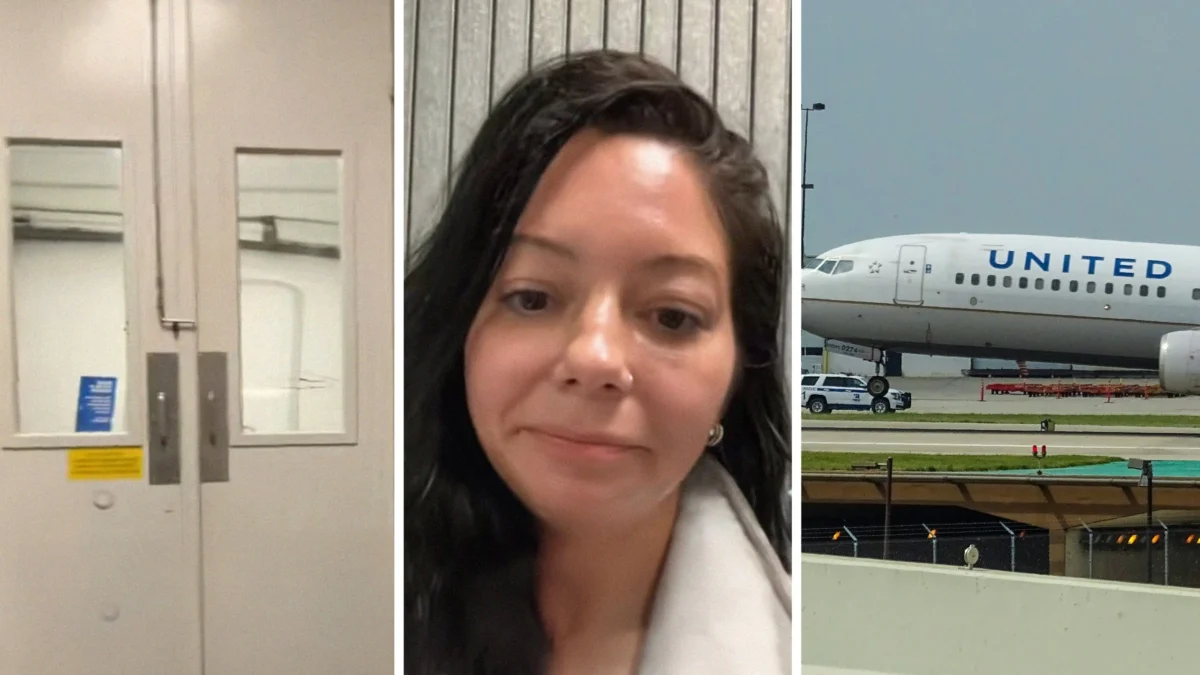
The aviation industry is facing renewed scrutiny regarding the treatment of passengers with accessibility needs following a troubling incident at Vancouver International Airport. A disabled traveler utilizing the social media platform TikTok to document her journey has sparked viral outrage and regulatory conversations after she was allegedly left locked alone on an airport jet bridge for roughly half an hour around midnight. The incident underscores ongoing systemic challenges within commercial aviation regarding the reliable execution of pre-booked special assistance and the enforcement of international disability rights mandates.
The traveler, known online by her handle Birdie (@birdiecda), shared a video detailing her experience arriving on a United Airlines flight from the United States to Canada. In the widely viewed clip, which has rapidly accumulated over 2.7 million views, she describes a harrowing scenario in which the aircraft door was closed and locked behind her, leaving her stranded in a transitional corridor with only her personal walking aid. The situation escalated when a gate agent reportedly claimed that no wheelchair assistance was attached to her reservation, setting off a chain of events that left the passenger isolated, terrified, and questioning the safety protocols of major commercial air carriers.
A Timeline of the Incident
The sequence of events began as Birdie prepared to deplane following her international flight. According to her subsequent video updates, the journey had involved a connecting flight earlier in the itinerary where wheelchair assistance had been seamlessly provided, leading her to reasonably assume that the service would continue through to her final destination in Vancouver. A flight attendant initially informed her that a wheelchair had indeed been requested for her arrival at the gate.
However, upon reaching the exit of the aircraft, the operational reality on the ground proved starkly different. Rather than a wheelchair waiting to transport her through the secure terminal infrastructure, only her personal walker and luggage were present. When the flight crew attempted to coordinate assistance, a gate agent reportedly stated that wheelchair services were absent from the digital manifest for her booking.
While the cabin crew offered to help her navigate the jet bridge, they were reportedly informed by the gate agent that airline personnel were not authorized to accompany passengers beyond certain secure boundaries without proper ground-agent protocols. Consequently, the flight crew departed. Moments later, the passenger heard the gate agent state from the top of the ramp that she would need to be locked inside the enclosed corridor.
Left entirely alone with the aircraft doors sealed, the traveler estimated she spent between 20 and 30 minutes stranded on the jet bridge. Factoring in the total time elapsed from the moment she stood up to deplane until the arrival of physical assistance, the ordeal stretched closer to an hour. The situation was eventually resolved when the gate agent unlocked the top of the ramp, accompanied by a male attendant pushing a wheelchair who escorted her through customs clearance. Rather than returning immediately to the United States following the distressing experience, the traveler opted to forgo her scheduled return flight out of discomfort, relying instead on a friend to drive her to the land border to reunite with her family.
Regulatory Frameworks and Legal Obligations
The incident has brought the legal responsibilities of commercial air carriers under the microscope, particularly regarding international flights operating under stringent regulatory oversight. Because United Airlines is a U.S.-based carrier, it is bound by the Department of Transportation’s (DOT) stringent disability regulations, codified under Title 14 of the Code of Federal Regulations, Part 382. These rules explicitly dictate that a carrier’s accessibility obligations apply regardless of geographic location or the specific airport where operations take place.
Under DOT regulations, airlines are legally required to provide requested deplaning assistance promptly. Furthermore, federal rules explicitly prohibit carriers from demanding advance notice for disability assistance, though passengers are strongly encouraged to provide notification to ensure operational readiness. An especially relevant rule frequently cited by aviation compliance experts and legal commentators in the wake of the viral video is the federal mandate barring airlines from leaving a passenger who has requested assistance unattended in a wheelchair or mobility device for more than 30 minutes if the individual is not independently mobile.
In addition to U.S. federal statutes, international flights arriving in Canada are subject to the Accessible Transportation for Persons with Disabilities Regulations overseen by the Canadian Transportation Agency. These guidelines stipulate that transportation service providers must make every reasonable effort to accommodate accessibility requests, even when the passenger has failed to provide advance notice.
The financial and regulatory consequences of failing to meet these standards are well-documented. In 2016, the U.S. Department of Transportation levied a substantial $2.75 million fine against United Airlines after an investigation revealed that the carrier had systematically failed to provide prompt and adequate assistance to passengers with disabilities during enplaning and deplaning procedures across multiple major hub airports. A portion of that settlement was specifically earmarked for auditing third-party wheelchair vendors and implementing rigorous tracking mechanisms to measure how long passengers wait for requested assistance.
Official Corporate Response
In response to inquiries from media outlets and mounting public pressure online, United Airlines issued a formal statement addressing the Vancouver incident. The airline defended the actions of its ground personnel while acknowledging the necessity of a direct follow-up with the customer.
"Our team in Vancouver responded as soon as we learned of this customer’s need for assistance, with one agent checking on her frequently while waiting for the person who could escort her through the airport," the airline stated. "We take seriously the unique travel needs of customers who require the use of wheelchairs, and have reached out to this customer to further discuss her experience."
Despite the airline’s assertion that an agent checked on the passenger frequently, the traveler’s public accounts emphasize a profound sense of isolation and terror while locked inside the jet bridge without access to basic seating accommodations outside of her portable walker.
Broader Industry Implications and Public Reaction
The viral nature of the TikTok video has triggered a broader public discourse regarding the treatment of hidden and visible disabilities within the commercial aviation sector. The comment section of the viral post quickly became a forum for industry professionals, frequent flyers, and disability advocates to debate operational protocols. Former airport workers and current flight attendants weighed in on the complex division of labor between cabin crew and ground handlers. While flight attendants noted that union and safety rules often prevent them from leaving an aircraft unattended or entering certain terminal zones without proper clearance, many concurred that abandoning a vulnerable passenger on a secure jet bridge is an unacceptable breach of protocol.
Critics of the airline’s handling of the situation have pointed out that logistical miscommunications regarding passenger manifests should never result in physical containment or isolation. Conversely, a minority of online commenters questioned the necessity of the mobility assistance, prompting swift pushback from the traveler and advocacy groups who stressed that many disabilities are non-visible, and that passengers should never be subjected to public skepticism or administrative hurdles when requesting accommodations.
The traveler has confirmed her intention to file formal administrative complaints with regulatory bodies, noting that her primary motivation is to prevent similar incidents from occurring to other passengers with accessibility needs. Under current DOT guidelines, passengers have up to six months from the date of an incident to formally file a disability-related complaint against an airline.
As the digital age continues to amplify individual travel mishaps into global public relations events, airlines face increasing pressure to modernize their ground-handling operations, improve communication between digital reservation systems and local station staff, and ensure that third-party wheelchair vendors adhere strictly to humanitarian and legal standards of care. For United Airlines, this latest episode serves as a stark reminder that the passenger experience does not end when the aircraft touches down, but rather when the traveler safely exits the airport terminal.










Leave a Reply