
The healthcare landscape of the Middle East has faced unprecedented strain over recent years, driven by regional conflicts, massive refugee influxes, and systemic economic pressures. Against this backdrop, the World Health Organization (WHO) has continuously emphasized the critical need for resilient healthcare infrastructure, universal health coverage (UHC), and robust humanitarian partnerships. It was within this context of urgency and collaboration that Dr Tedros Adhanom Ghebreyesus, Director-General of the WHO, arrived in the Hashemite Kingdom of Jordan for a high-profile, two-day State visit.
The visit, which commenced on its first busy day with a series of high-level meetings, field visits, and diplomatic engagements, served to underscore the enduring and strategic partnership between the WHO and Jordan. Dr Tedros’s itinerary was meticulously designed to highlight Jordan’s exemplary role as a regional leader in humanitarian health action, its unwavering commitment to hosting millions of displaced persons, and its progressive integration of primary healthcare and mental health services. Notably, the WHO Director-General was accompanied during several key engagements by Prince Harry, Duke of Sussex, and Meghan, Duchess of Sussex, in their capacities as founders of Archewell Philanthropies and long-standing advocates for global health equity.
As the international community grapples with compounding crises—ranging from post-pandemic recovery to acute geopolitical conflicts—Jordan’s model of inclusive healthcare provision offers vital lessons for global health governance. This comprehensive review examines the core developments of the first day of the visit, the broader contextual challenges facing the region, the collaborative efforts of international partners, and the anticipated agenda for the second day of the delegation’s mission.
Royal Audience and Strategic Health Priorities
The cornerstone of the first day of the State visit was an official audience with His Majesty King Abdullah II of Jordan. The high-level meeting underscored the paramount importance that the Jordanian leadership places on health as both a national security pillar and a fundamental human right. Discussions between Dr Tedros and King Abdullah II centered on critical areas of mutual concern, including the fortification of national health systems, the expansion of equitable access to medical care, and the urgent necessity of sustaining emergency responses across the Middle East.
Special attention was dedicated to Jordan’s ongoing efforts to support vulnerable populations, most notably the Palestinian people, patients evacuated directly from the Gaza Strip for specialized medical treatment, and the millions of refugees who have sought sanctuary within Jordan’s borders over the past decade.
Speaking after the meeting, Dr Tedros expressed profound gratitude for the Hashemite Kingdom’s steadfast leadership. “I wish to express my appreciation to His Majesty King Abdullah II for his commitment to advancing universal health coverage,” Dr Tedros stated. “I also extend my thanks to His Majesty and the people of Jordan for their solidarity and generosity in providing health services to more than three million refugees, primarily from Gaza and Syria, who are living in the country.”
Furthermore, the WHO Director-General lauded Jordan’s broader humanitarian leadership, highlighting specific logistical and medical undertakings. He drew particular attention to His Majesty’s Medical Corridor initiative, an innovative and life-saving program designed to bypass bureaucratic and physical barriers to deliver critical medical care to ill and injured children evacuated from the beleaguered Gaza Strip. “Jordan continues to show the world what it truly means to put health and humanity first,” Dr Tedros added.
On-the-Ground Realities: Visiting Evacuated Children and Frontline Workers
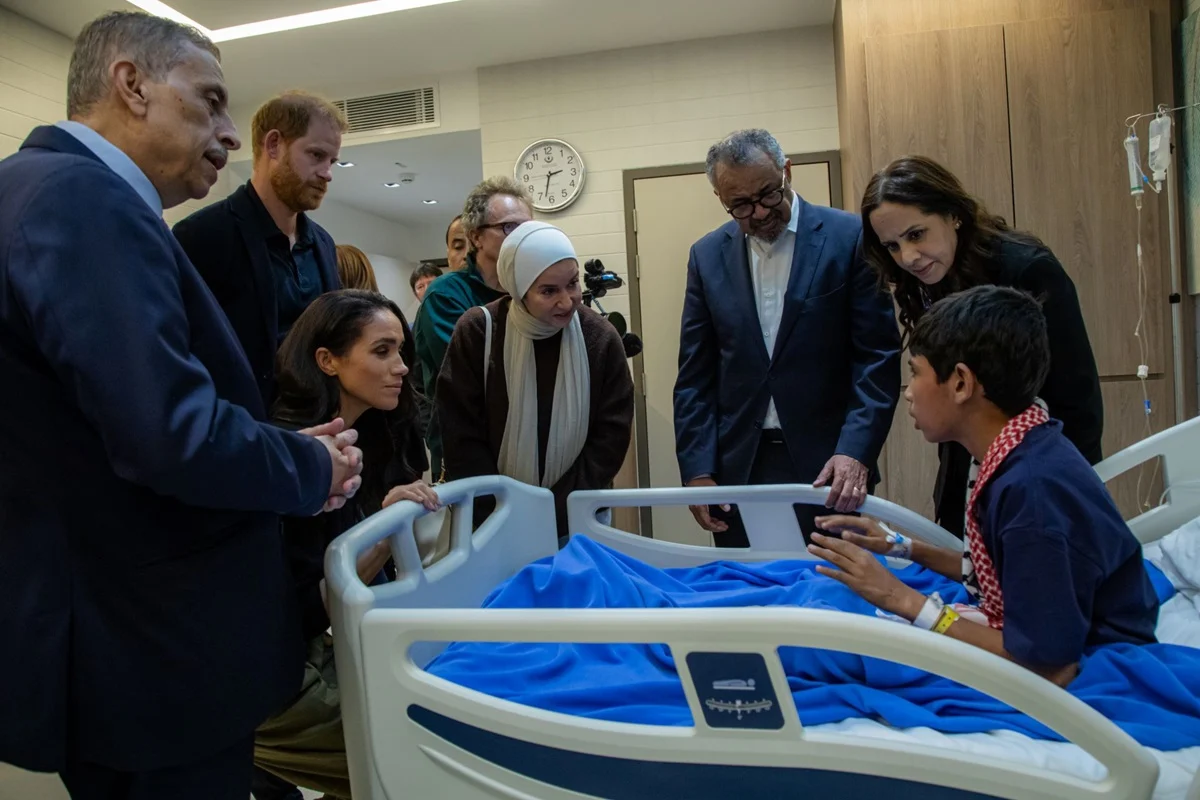
Moving beyond high-level diplomatic chambers, Dr Tedros transitioned from policy discussions to frontline realities by visiting a specialized, WHO-supported hospital facility in Jordan dedicated to caring for children evacuated from Gaza. The visit provided the Director-General with a firsthand look at the immense physical and psychological toll that contemporary conflicts exact on the youngest and most vulnerable members of society.
During the hospital tour, Dr Tedros met with young patients, their families, and the dedicated cadre of frontline healthcare workers. These medical professionals have been working tirelessly under immense pressure to deliver life-saving treatments for severe traumatic injuries, advanced-stage cancer, and other critical medical conditions that cannot be managed locally within Gaza’s devastated healthcare infrastructure.
The visit powerfully underscored the indispensable nature of the medical evacuation corridor operating through Jordan. Public health experts have repeatedly emphasized that as local health systems in conflict zones collapse, the availability of functional referral pathways into neighboring, stable nations is quite literally a matter of life and death. Dr Tedros’s presence at the bedside of these young patients served to amplify calls for sustained international financial and logistical support, ensuring that the evacuation corridor remains open and adequately resourced to handle future influxes of patients in dire need.
Mobilizing Resources: High-Level Partner and Donor Consultations
Recognizing that national governments cannot shoulder the staggering financial burdens of prolonged humanitarian crises alone, Dr Tedros convened a high-level strategic meeting later in the day. The gathering brought together key health partners, donor government representatives, United Nations agencies, and prominent philanthropic organizations.
The primary objective of the consultation was to align financing priorities for the continuous strengthening of Jordan’s health system while simultaneously securing long-term funding for ongoing humanitarian operations. Key discussion points included the scaling up of comprehensive mental health services—which remain critically underfunded in emergency settings—and providing robust, predictable support to countries hosting large populations of refugees.
Representatives from various international agencies praised Jordan’s transparent governance and its efficient utilization of aid. Dr Tedros welcomed the strong collaboration and the continued commitment of global partners to invest in health resilience, not only within Jordan but across the wider Eastern Mediterranean region, where systemic shocks threaten to reverse decades of public health gains.
Advancing Universal Health Coverage and Mental Health Integration
In addition to multilateral consultations, Dr Tedros held critical bilateral discussions with Jordan’s Minister of Health. These talks focused squarely on the tactical implementation of policies designed to advance Universal Health Coverage (UHC) and build long-term institutional resilience.
Jordan has increasingly earned recognition on the global stage for its progressive primary healthcare approach. Rather than treating primary care as a mere entry point, the Jordanian health system has aggressively pursued the integration of mental health services directly into routine primary care facilities. This integration ensures that citizens and residents alike can access psychological support without facing the severe social stigmas or financial barriers traditionally associated with specialized psychiatric care.
This progressive policy alignment is heavily supported by the WHO through the Director-General’s Special Initiative for Mental Health. Public health analysts point out that integrating mental health into routine care is especially vital in nations hosting trauma-affected refugee populations, where conditions such as post-traumatic stress disorder (PTSD), depression, and anxiety are pervasive. By embedding mental health practitioners within standard community clinics, Jordan is pioneering a scalable model that other developing and middle-income nations can readily replicate.
The Role of Archewell Philanthropies and Global Advocacy
A notable dimension of the first day’s engagements was the active participation of Prince Harry, Duke of Sussex, and Meghan, Duchess of Sussex. Participating in their capacities as the founders of Archewell Philanthropies—and as long-standing, dedicated supporters of the World Health Organization’s global mission—the Duke and Duchess joined Dr Tedros for several high-visibility engagements.
Archewell Philanthropies has a documented history of backing critical WHO initiatives, ranging from advocacy and resource mobilization for equitable access to COVID-19 vaccines during the pandemic to supporting modern medical evacuation protocols and comprehensive mental health support programs.
During the visit, Prince Harry participated actively as a global advocate and ally of the WHO’s mental health initiatives. He emphasized the urgent necessity of investing in mental health infrastructure across all communities, with a specific focus on high-risk demographics such as men, young adults, and children residing in conflict and emergency settings.
Expressing appreciation for their steadfast advocacy, Dr Tedros remarked, “I want to thank our partners, including Prince Harry, Duke of Sussex and Meghan, Duchess of Sussex, whose commitment to mental health and humanitarian action has helped bring visibility, resources and hope to some of the world’s most vulnerable communities. Their collaboration is helping to advance WHO’s mission to ensure health for all.”
Echoing these sentiments, Prince Harry shared his reflections on joining the WHO delegation in the Hashemite Kingdom: “It is an honour to join the Director-General of the World Health Organization in Jordan, a country that is leading by example in compassion, resilience and innovation. Through our work with Archewell Philanthropies, my wife and I have seen first-hand the impact of WHO’s efforts to support mental health and deliver life-saving care in emergencies.”
The Duke of Sussex further emphasized the fundamental interconnectedness of mental well-being and broader societal recovery. “We remain deeply committed to advancing awareness, reducing stigma and expanding access to mental health support for all those affected by conflict and crisis,” Prince Harry said. “Mental health is fundamental to recovery, dignity and long-term peace, and we are proud to stand with WHO and partners around the world to make it a global priority.”
Previewing Day Two: Rehabilitation, Community Leadership, and Specialized Oncology Care
As the first day of the high-level visit drew to a close, preparations were already underway for a dense and impactful second day. The itinerary for the final leg of Dr Tedros’s State visit reflects the multifaceted nature of Jordan’s healthcare ecosystem, moving from addiction rehabilitation to community empowerment and advanced oncology treatment.
According to advance briefings released by the WHO delegation, Dr Tedros is scheduled to visit Jordan’s National Center for Rehabilitation of Addicts. Supported technically and operationally by the WHO, the Center provides an integrated model of care that seamlessly blends medical treatment, psychological counseling, and social support services to address substance use disorders—an emerging public health challenge in many modernizing societies.
Following the rehabilitation center visit, the Director-General will engage directly with grassroots community leaders and prominent women’s advocacy groups. This will include a dedicated session with representatives from the Jordanian Hashemite Fund for Human Development (JOHUD), an organization renowned for empowering local communities, promoting sustainable human development, and championing women’s health initiatives across the Kingdom.
The official State visit will subsequently culminate with a high-profile visit to the globally acclaimed King Hussein Cancer Center (KHCC). At the KHCC, Dr Tedros will hold discussions with oncology specialists and hospital administrators regarding cutting-edge advancements in cancer care, early detection programs, and regional medical collaboration. The visit to KHCC will serve to highlight Jordan’s capacity to act not only as a domestic healthcare provider but as a specialized regional referral hub for complex oncology treatments.
Implications and Broader Regional Context
Public health analysts and international relations experts observing the visit have highlighted its profound strategic implications. As geopolitical fault lines continue to destabilize traditional health infrastructure across the Middle East, nations like Jordan that maintain institutional stability, open borders, and progressive health policies represent critical anchors of regional security.
By spotlighting Jordan’s successes, the WHO is not merely commending a single member state; it is actively championing a scalable blueprint for resilient health systems. The integration of mental health into primary care, the maintenance of efficient medical evacuation corridors during active hostilities, and the seamless incorporation of millions of refugees into national health insurance and service delivery schemes provide empirical proof that humanitarian imperatives can—and must—coexist with national development goals.
Furthermore, the involvement of high-profile philanthropic entities like Archewell Philanthropies demonstrates the growing necessity of multi-sectoral coalitions in modern global health. As traditional developmental aid budgets face increasing fiscal constraints globally, leveraging philanthropic visibility, private sector innovation, and multilateral institutional expertise will be paramount in closing funding gaps and reaching marginalized populations.
As Dr Tedros concludes his historic two-day mission to the Hashemite Kingdom of Jordan, the overarching message from Amman remains resoundingly clear: resilient health systems are built on political will, sustained international solidarity, and an unshakeable commitment to human dignity. Through continued collaboration between the WHO, the Jordanian government, and global partners, the framework for a healthier, more secure future in the Middle East continues to take concrete shape.








Leave a Reply