
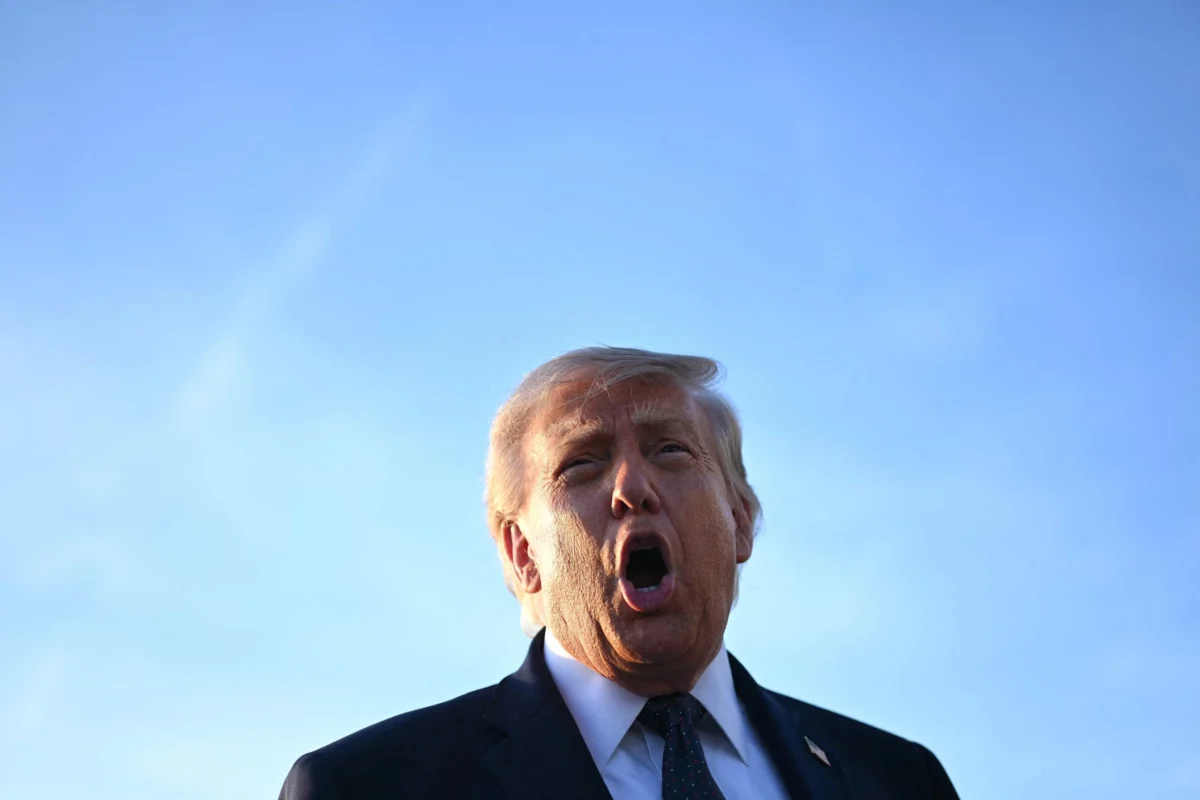
President Donald Trump has positioned himself at the center of the growing national debate over artificial intelligence, dismissing widespread safety concerns as politically motivated fabrications. In a series of statements released over the weekend via his social media platform, Truth Social, the President characterized the recent push for rigorous AI regulation as a "hoax" orchestrated by the "Radical Left Dumocrats" with the intent of undermining American progress. This latest intervention marks a significant escalation in the administration’s involvement in the tech sector, signaling a shift toward centralized federal control over AI development.
The President’s rhetoric arrives at a moment of profound uncertainty within the technology industry. As AI models become increasingly sophisticated, the rift between those calling for immediate safety guardrails and those prioritizing unbridled innovation has widened. By framing the safety movement as a political weapon, President Trump has effectively transformed a technical and ethical debate into a core component of the ongoing national culture war.
A Chronology of the Executive Intervention
The President’s recent commentary began on Saturday, when he questioned the nomenclature of the technology itself. Expressing dissatisfaction with the term "Artificial Intelligence," which he labeled "inaccurate" and "ineloquent," the President initiated a public poll on Truth Social to crowdsource a rebranding of the sector. The proposed alternatives—"Superior Intelligence," "Extreme Intelligence," and "Supreme Intelligence"—reflect a desire to move away from the "artificial" framing, which he suggests undermines the prestige of American innovation.
Shortly thereafter, the President expanded his critique, categorizing efforts to impose safety constraints on AI as part of a recurring pattern of "Democratic hoaxes." He drew direct parallels between the current regulatory discourse and previous controversies, including investigations into Russian election interference, the Ukraine-related impeachment proceedings, and debates regarding gender identity in sports.
Trump stated definitively, "I will not stand by and let this happen." He contextualized these regulatory efforts as an extension of the prior friction surrounding large-scale data centers. According to the President, the resistance to data centers—a critical component of AI infrastructure—initially stemmed from local opposition, but has since morphed into a broader, more existential campaign against the AI industry as a whole.
The Regulatory Landscape and Data Center Stasis
The President’s claims regarding the "hoax" nature of the movement lack citations of specific evidence, and the reality of the regulatory environment is significantly more complex. In recent months, opposition to AI infrastructure has been notably bipartisan. Concerns regarding the massive energy consumption, water usage, and land-use requirements of data centers have transcended party lines.
Most notably, in July 2026, New York became the first state in the nation to enact a comprehensive moratorium on the permitting of large-scale data center projects. This legislative action was driven by local concerns regarding the strain on municipal electrical grids and the environmental impact of cooling systems. These developments are not, as the President suggests, a singular political campaign, but rather a reflection of the systemic pressures that high-compute AI is placing on aging national infrastructure.
The Proposed AI Force and Leadership Shifts
Central to the President’s plan is the establishment of an "AI Force," a federal entity modeled after the Space Force, which was created during his first term to consolidate military and technological oversight. While the specific mandate of this new organization remains opaque, the President promised the upcoming appointment of an "AI Czar." The emphasis on "high I.Q. individuals" suggests a preference for a meritocratic, technocratic approach to federal management of the technology.
This announcement follows the departure of venture capitalist David Sacks, who previously served as the administration’s AI and crypto czar. Sacks’ transition to co-chair of the President’s Council of Advisors on Science and Technology (PCAST) marks a transition in the administration’s staffing strategy, moving toward a more institutionalized advisory structure even as the President retains an assertive, populist public-facing rhetoric.
Industry Tensions: Existential Risk vs. Immediate Harm
The intensity of the current debate is largely rooted in internal industry friction. Earlier this month, a prominent researcher resigned from Anthropic, a leading AI development firm, citing grave concerns that the industry’s current trajectory is "gambling with our lives." The researcher suggested that leadership within top AI labs possesses a private, internal consensus that their own products could pose an existential threat to humanity by the end of the decade.
In response to this public pressure, Anthropic CEO Dario Amodei unveiled a strategic framework designed to "pace the frontier," a move that received tacit support from industry titans including Sam Altman of OpenAI and Elon Musk of SpaceX. Despite this, a segment of the technology community views the discourse surrounding "existential risk" as a tactical distraction. Critics argue that focusing on hypothetical, long-term apocalypse scenarios serves to obfuscate more pressing and immediate harms, such as algorithmic bias, labor displacement, and the concentration of economic power.
Perspectives from the All-In Summit
The President’s stance has found a receptive audience among key figures in the Silicon Valley establishment. During the recent All-In Summit, Nvidia CEO Jensen Huang, whose hardware has become the essential engine for modern AI development, appeared on-stage with the President. Huang echoed the sentiment that the regulatory backlash is a "hoax," asserting that the industry will not permit a slowdown in innovation.
This alliance between the White House and major hardware suppliers suggests that the administration’s policy will prioritize high-speed development and national competitiveness above the cautionary requests of safety researchers.
Analysis: Implications for Global AI Policy
The implications of the President’s current trajectory are significant for both domestic industry and global geopolitics. By framing AI safety as a "hoax," the administration is effectively signaling to corporations that they will face minimal friction from federal regulators, provided they remain aligned with the President’s vision of American dominance in the sector.
However, this approach faces a structural challenge: the physical limits of infrastructure. The "data center boom" is currently colliding with the reality of localized energy shortages. As cities and states grapple with the environmental and utility-related costs of supporting AI, the federal government may find itself at odds with regional authorities regardless of the administration’s stated goals.
Furthermore, the creation of an "AI Force" suggests an impending militarization of the discourse. By treating AI as a matter of national security rather than a commercial or ethical concern, the administration is preparing to treat AI capabilities as a strategic asset to be protected and projected, much like naval or aerial power. This shift is likely to accelerate the global "AI arms race," as nations react to the prospect of a heavily state-backed American AI industry.
Ultimately, the President’s rhetoric serves to galvanize his base while providing a clear directive to the private sector: the administration intends to foster an environment of aggressive, state-supported expansion. Whether this can be balanced against the growing public demand for environmental stewardship and safety accountability remains the defining challenge of the 2026 technological landscape. As the "AI Czar" appointment approaches, the industry awaits further clarity on how these grand ambitions will be translated into actionable federal policy.





Leave a Reply