
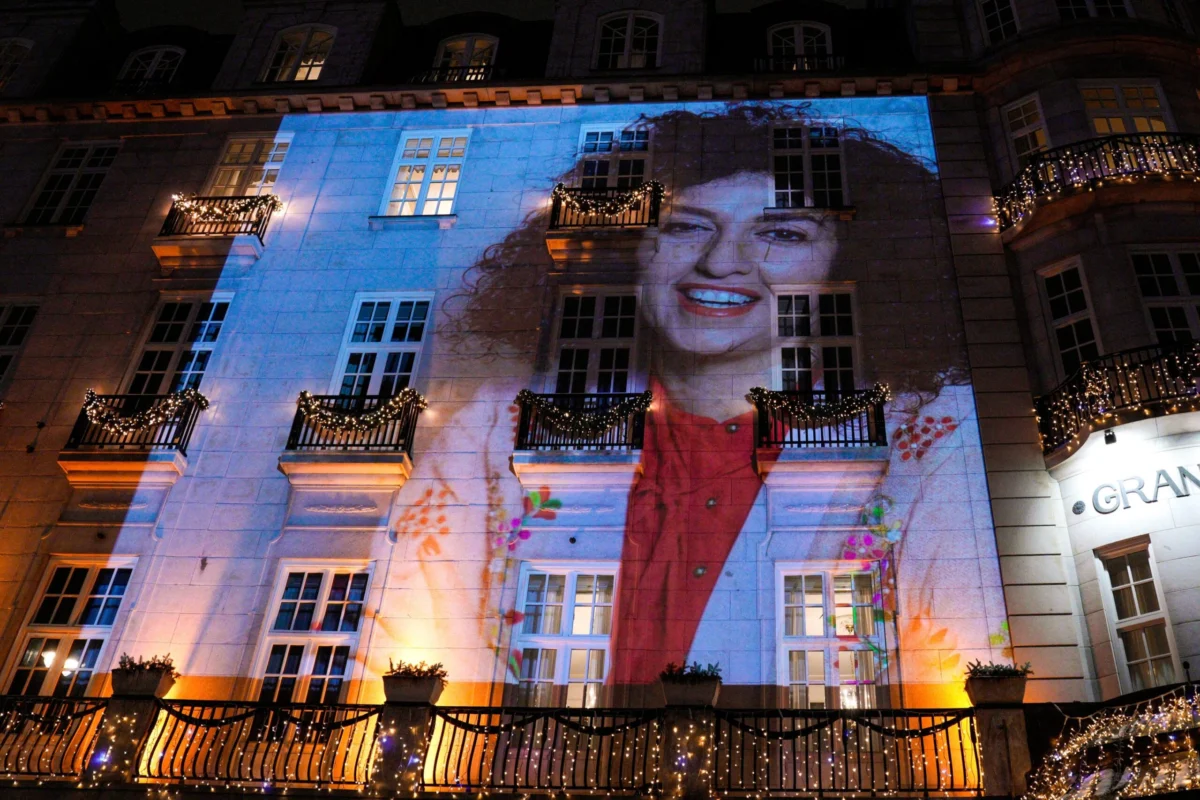
The compounding pressures of severe economic instability, intensifying domestic repression, and the cascading fallout of regional conflict have pushed ordinary citizens in Iran to a breaking point, leaving them with virtually "no room to breathe." This grim assessment was delivered by Narges Mohammadi, Iran’s most prominent human rights defender and the recipient of the 2023 Nobel Peace Prize, in a rare and revealing interview with international media following her temporary release from prison for urgent medical care.
Mohammadi, 54, spoke from outside Iran regarding the multifaceted crises suffocating the country. Her remarks arrive as her smuggled-from-prison memoir, "A Woman Never Stops Fighting," prepares for a widespread international rollout, with French, German, and nine other language editions hitting bookshelves this month. English and Farsi versions are slated for release next year to coincide with the anniversary of the death of Mahsa Amini, a touchstone moment that irrevocably transformed civil resistance in the Islamic Republic.
The convergence of Mohammadi’s personal ordeal—marked by brutal assaults, prolonged solitary confinement, and staggering cumulative prison sentences—with her unyielding public advocacy highlights the ongoing struggle for fundamental freedoms inside a nation increasingly caught between the anvil of authoritarian governance and the hammer of international geopolitical conflict.
Chronology of a Crisis: From Amini’s Death to Regional War
To fully understand the precarious landscape Mohammadi describes, it is necessary to examine the cascading timeline of events that have defined Iran’s turbulent domestic and geopolitical environment over the past several years.
The modern era of sustained mass protest in Iran crystallized in September 2022 with the death of 22-year-old Mahsa Amini while in the custody of the regime’s morality police. Amini had been detained for allegedly violating Iran’s strict mandatory hijab laws. Her death ignited nationwide demonstrations under the banner "Woman, Life, Freedom," drawing unprecedented cross-demographic participation and confronting the clerical establishment with its most severe ideological challenge since the 1979 revolution. The state responded with a lethal crackdown, resulting in the deaths of hundreds of protesters and the mass incarceration of thousands more.
Against this backdrop of heightened domestic volatility, geopolitical tensions escalated dramatically. Years of proxy conflicts culminated in direct military confrontations, most notably a tense 12-day war involving regional adversaries and Israel in 2025. During this period of heightened external peril, the Iranian state utilized the existential cover of war to further tighten internal security measures, accelerating the suppression of civil society, labor unions, and human rights organizations.
It was during this period of compounding national trauma that Mohammadi’s own persecution reached a physical zenith. In December, while attending a memorial service in the northeastern city of Mashhad for the late human rights lawyer Khosrow Alikordi—who was found dead under suspicious circumstances in his office—Mohammadi was violently targeted by security forces. While delivering a public speech, she was swarmed, severely beaten about the head, and subsequently arrested.
The judiciary slapped her with an additional 16-year prison sentence and over 100 lashes, ostensibly for participating in the gathering. She was thrown into solitary confinement for two months despite suffering from acute head trauma. Her health deteriorated to a critical juncture on May 1, when she lost consciousness inside her cell. Ten days later, facing intense international scrutiny and the threat of her death in custody, authorities transferred her to a Tehran hospital on bail, where she spent two weeks recovering before her temporary release.
The Genesis and Smuggling of a Memoir Behind Bars
The publication of Mohammadi’s memoir, "A Woman Never Stops Fighting," represents a remarkable feat of clandestine journalism and literary resistance. Written entirely behind the unforgiving walls of Iran’s penal system, the book chronicles her decades-long struggle for human rights, her observations of state cruelty, and the profound personal inspirations that drew her into activism.
Mohammadi’s journey as a dissident is long and well-documented. Over her lifetime, she has been handed cumulative sentences totaling 44 years. She has already served a decade behind bars, enduring 161 days in solitary confinement across multiple stints, including prolonged detentions in Tehran’s notorious Evin Prison—a facility that itself became a symbol of national trauma when it was damaged during the regional military escalations of 2025. Furthermore, she has been banned from traveling abroad since 2009, permanently separating her from her husband and two children, who live in political exile in France.
Despite these relentless measures aimed at silencing her, Mohammadi utilized her time in captivity to document the realities of the Iranian penal state. She had previously attempted to write a memoir in 2019 during an earlier imprisonment in Evin, only to have her handwritten notes confiscated and destroyed during a forced transfer to another facility.
Undeterred, she began drafting her current manuscript during subsequent detentions. Recognizing the impossibility of walking out of prison with a completed book, she relied on a network of solidarity among fellow political prisoners. Page by page, fragment by fragment, the manuscript was smuggled out of the facility via visiting family members and sympathetic contacts.
"If it weren’t for them, I couldn’t have done it," Mohammadi acknowledged regarding her fellow inmates. The international rollout of the book in French, German, and other European languages serves not only as a literary milestone but as an ongoing lifeline to keep the plight of Iranian political prisoners in the global spotlight.
Economic Misery, Internal Repression, and the Heavy Toll on Citizens
In her interview with international media, Mohammadi emphasized that the intersection of external conflict and internal tyranny has created an untenable living standard for the Iranian populace. Years of stringent international economic sanctions, systemic governmental corruption, and fiscal mismanagement have plunged millions of Iranians into poverty, drastically eroding the purchasing power of the middle and working classes.
When these severe economic pressures are layered atop an unyielding apparatus of state security—characterized by arbitrary arrests, heavy surveillance, public executions, and the suppression of dissenting voices—the result is an atmosphere of pervasive suffocation.
"I am sorry to say, but since the outbreak of war, in the past months and last year and a half, we have seen that repression in society has severely increased," Mohammadi stated. "And now, with these economic pressures and with the repression that really has left no room for people to breathe, it’s the people who are paying an extremely heavy price."
Human rights organizations and economic analysts frequently point out that while the Iranian ruling elite and its security apparatus absorb the financial shocks of sanctions through illicit networks and state-controlled conglomerates, the civilian population bears the brunt of inflation, currency devaluation, and the scarcity of basic medical supplies. The diversion of state resources toward regional military objectives and domestic policing leaves public infrastructure, healthcare, and social welfare systems drastically underfunded.
Intergenerational Resilience: The New Face of Iranian Resistance
Despite the grim reality of state-sponsored intimidation, Mohammadi remains resolute in her belief that the spirit of civil resistance in Iran has fundamentally and irreversibly changed. Drawing a direct line from the historical trauma she witnessed as a child during the 1980s Iran-Iraq war—a formative period that instilled in her a lifelong abhorrence of armed conflict and state executions—to the modern youth-led movements, she sees profound cause for optimism.
Mohammadi noted that the 2022 "Woman, Life, Freedom" movement marked a watershed moment in political consciousness. Unlike previous generations that navigated dissent through quieter, more cautious channels, a new generation of Iranians—particularly young women and students—possesses an acute awareness of their civil liberties and an unshakeable determination to reclaim them.
"If you go out into the streets, you see a wave of resistance among the people, a wave of awareness, and their determination to stand up for their rights," she said. This younger demographic, she observed, refuses to be cowed by traditional methods of state terror. Their persistence, visible in acts of civil disobedience ranging from the public rejection of mandatory dress codes to labor strikes and underground cultural expression, forms the bedrock of her hope for the future.
Broader Impact, Implications, and the Threat of Re-Imprisonment
The implications of Mohammadi’s testimony extend far beyond her personal health or the launch of her literary work. As a Nobel Peace Prize laureate whose freedom remains perpetually provisional, her case serves as a powerful litmus test for the Iranian government’s willingness to engage with international human rights norms amid escalating geopolitical isolation.
Human rights advocates have continuously called upon the international community to maintain diplomatic and economic pressure on Tehran, demanding the unconditional release of all political prisoners, an end to gender-based discriminatory laws, and a cessation of the violent crackdowns on peaceful assembly. However, the capacity of foreign governments to influence Iranian domestic policy remains severely constrained by broader geopolitical negotiations surrounding Iran’s nuclear program and its regional alliances.
For Mohammadi, the immediate future remains precarious. Her release from custody was granted strictly on medical bail following life-threatening conditions in solitary confinement, and her 44-year cumulative prison sentence hangs over her head like a sword of Damocles.
"My sentence is currently suspended, and I must return whenever the judiciary issues the order," she noted via text message through her representatives.
Whether the state will choose to drag the Nobel laureate back to her cell or allow her to remain under medical supervision remains an open question. Yet, as her memoir reminds the global community, the movement she represents has transcended individual incarceration. In the face of structural injustice, economic collapse, and the shadow of war, the collective resolve of a population refusing to be silenced continues to challenge the foundations of authoritarian rule in Iran.






Leave a Reply