
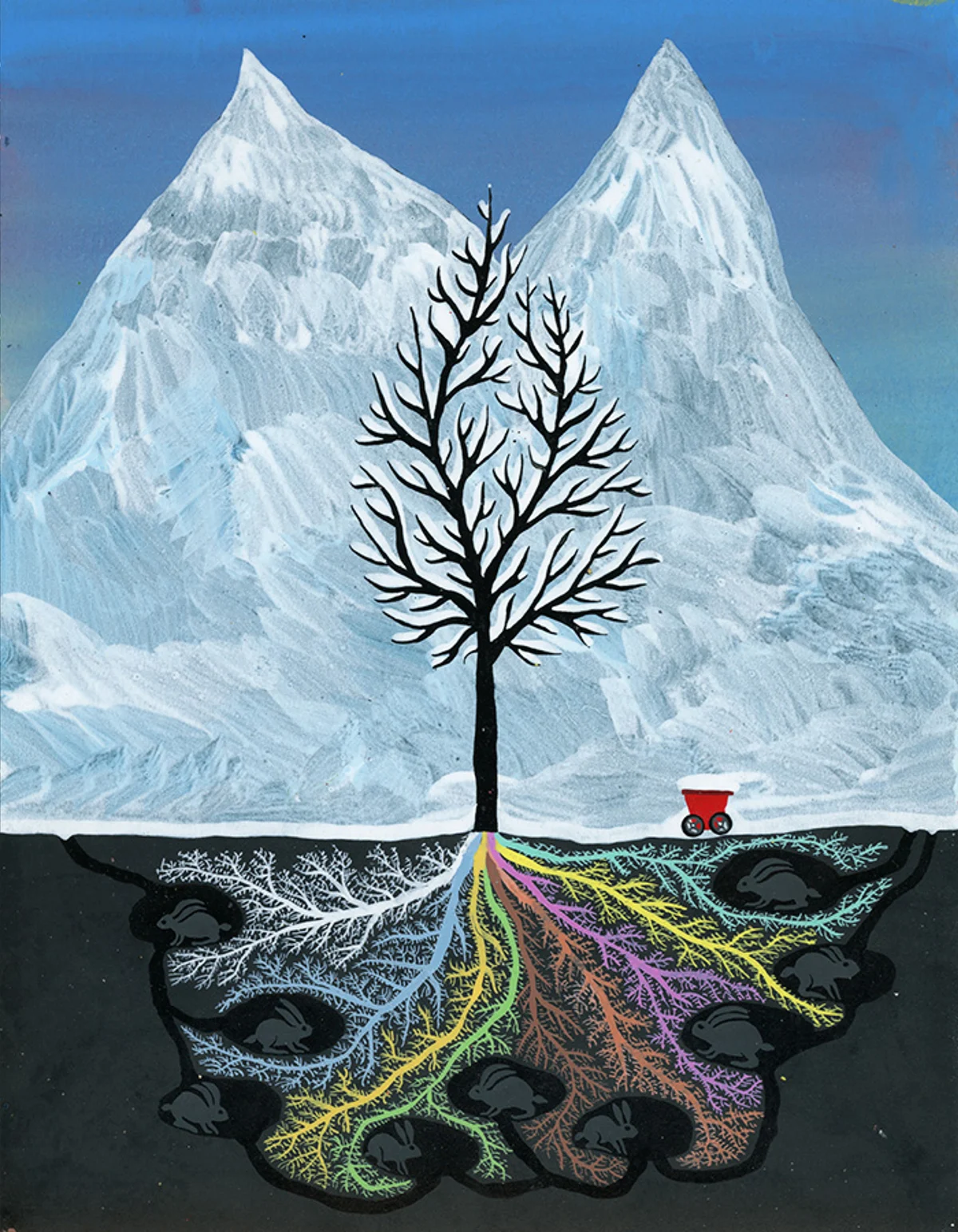
For half a millennium, Western thought has been shaped by the Cartesian dualism that famously severed the mind from the body, a philosophical fracture that has bled into the modern industrial experience as the damaging divide between our professional and personal lives. In the contemporary era, this "Cartesian cleft" manifests as the performative "workaholic" identity, where individuals treat labor as the primary axis of existence, often at the expense of lived experience. This industrial model of labor, which demands a rigid separation of the productive self from the living self, is now facing a reckoning. As legendary theater director André Gregory suggests in his posthumous reflections on his friendship with photographer Richard Avedon, the act of creation is not a mechanical process akin to assembly-line manufacturing, but a holistic culmination of every experience, sorrow, and joy an individual has accrued over a lifetime.
A Chronology of Artistic Reflection
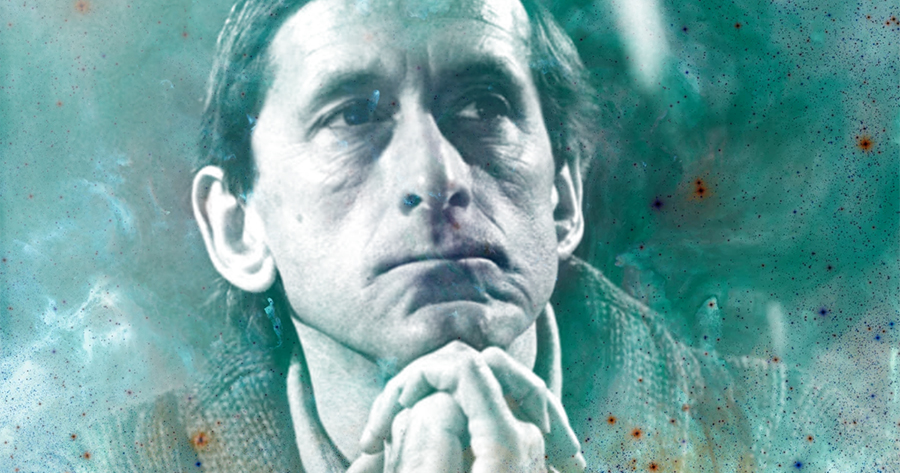
The dialogue between Gregory and Avedon—two titans of 20th-century American culture—serves as a lens through which to examine the evolution of the modern creative spirit. Their friendship, spanning decades, was defined by a fundamental tension: Gregory’s transition toward an integrated, life-centered approach versus Avedon’s relentless, high-pressure pursuit of professional perfection.
The catalyst for Gregory’s recent public musings was the approach of his seventieth birthday, a milestone that coincided with the terminal illness of Avedon. During this period, Gregory unexpectedly turned to drawing. He described this activity as a return to an "early state," a psychological space existing before the encumbrances of reputation, fear, and abandonment. By stepping outside the comfort zone of his established directorial competency, Gregory discovered that these seemingly "unproductive" pastimes acted as essential nutrients for his creative output.
Shortly after Avedon’s death in 2004, Gregory composed a letter to his departed friend—a missive that had been gestating for years. This letter functions not merely as an obituary, but as a formal interrogation of the work-life divide that defined their friendship. The correspondence highlights the struggle of the artist to sustain a creative life while trapped in a cycle of constant output, a struggle that mirrors the experiences of countless professionals in the digital age.
The Industrial Model vs. The Creative Spirit
The modern obsession with "work-life balance" is rooted in the early 20th-century industrial management theories of Frederick Winslow Taylor, whose principles of "scientific management" sought to maximize efficiency by segmenting tasks. However, sociologists and psychologists have increasingly pointed to the flaws in applying these mechanical metrics to intellectual or creative labor.
Data from the World Health Organization (WHO) and the International Labour Organization (ILO) regarding global work patterns indicate that long working hours are increasingly linked to cardiovascular disease and stroke, yet the cultural prestige of the "workaholic" remains intact in many sectors. In the creative industries, this is often rebranded as "hustle culture." The implication is that the individual is a resource to be depleted, rather than a vessel to be filled.
Gregory’s critique of Avedon’s lifestyle provides a poignant case study. Avedon, despite his immense success and the creation of an architectural sanctuary in Montauk, rarely inhabited the spaces he designed. His identity was so inextricably linked to his labor that any pause in production resulted in profound psychological distress. Gregory notes that in Avedon’s social circles, even in moments of leisure, the conversation remained tethered to work. This inability to disconnect suggests a systemic failure to recognize that, as Gregory puts it, "the work changes the life, and the life changes the work."
Analysis of the Creative Integration
The argument presented by Gregory aligns with contemporary findings in cognitive science regarding the "incubation period" of creativity. Psychologists such as Mihaly Csikszentmihalyi, who coined the term "flow," have long argued that high-level creative output is rarely the result of brute-force labor. Instead, it requires periods of low-intensity engagement—play, reflection, and diverse environmental stimuli—to allow for the combinatorial synthesis of ideas.
Gregory’s perspective offers a radical alternative:

- The Principle of Rooting: He posits that artists are like plants in winter; they may appear dormant, but they are taking root beneath the surface. Productivity metrics that fail to account for this gestation period are inherently flawed.
- The Community Vacuum: Gregory identifies that Avedon’s singular focus on work resulted in a lack of true community. By viewing others only through the lens of their professional output, the capacity for genuine human connection is stunted.
- The Reciprocal Loop: The most significant implication of Gregory’s philosophy is the assertion that personal development—the "work on the self"—is the most effective way to improve professional output. When an individual expands their capacity for compassion, laughter, and intellectual breadth, that expansion inevitably elevates the quality of their work.
Broader Implications for the Modern Workforce
The relevance of this discourse extends far beyond the theater or the art studio. In an age of remote work and the erosion of the boundary between the home and the office, the Cartesian cleft is deeper than ever. The expectation of constant availability—facilitated by digital technology—has accelerated the burnout rates that Gregory observed in his friend.
Economic analysts observe that the "burnout epidemic" is now a measurable factor in labor market volatility. Companies are beginning to experiment with four-day workweeks and "unplugged" policies, acknowledging that human cognition requires the very "unproductive" time that Gregory advocates. However, these are often superficial policy changes that fail to address the underlying cultural belief that human value is derived solely from economic production.
Gregory’s defense of the creative spirit acts as a manifesto for a more sustainable human condition. By prioritizing the "life" as the foundational element, he argues that the "Work" (with a capital W) becomes more authentic, resonant, and enduring. This perspective challenges the current paradigm of professional success by suggesting that the most productive life is one that refuses to be fragmented into parts.
Conclusion: The Legacy of the Whole Self
As we evaluate the trajectory of labor in the 21st century, the lessons from the lives of Gregory and Avedon remain critical. The "Cartesian cleft" is not merely an academic problem; it is a lived experience that impacts mental health, community cohesion, and the quality of our collective cultural output.
The story of their friendship underscores that the most important work an individual can undertake is the work of becoming fully human. When we stop viewing our lives as a series of tasks to be completed and start viewing our experiences as the raw material for our contributions, we move away from the mechanical, industrial model of existence. We begin to realize, as Gregory did, that the smallest wooden spoon carved by a carpenter or the simplest poem written by a poet is not just a commodity, but the crystallization of a lifetime of being. In the final assessment, the integration of life and work is not a luxury for the artist; it is a necessity for the preservation of the human spirit in an increasingly fragmented world.









Leave a Reply