
As California has reeled from increasingly severe and prolonged heat waves driven by global climate change, state workplace safety regulators have repeatedly issued stern reminders to employers across the state. Businesses, agricultural operations, and industrial managers are routinely directed to safeguard their workforces from heat-related illnesses by maintaining adequate hydration, establishing shaded rest areas, and mandating additional cooldown breaks when ambient temperatures reach dangerous levels.
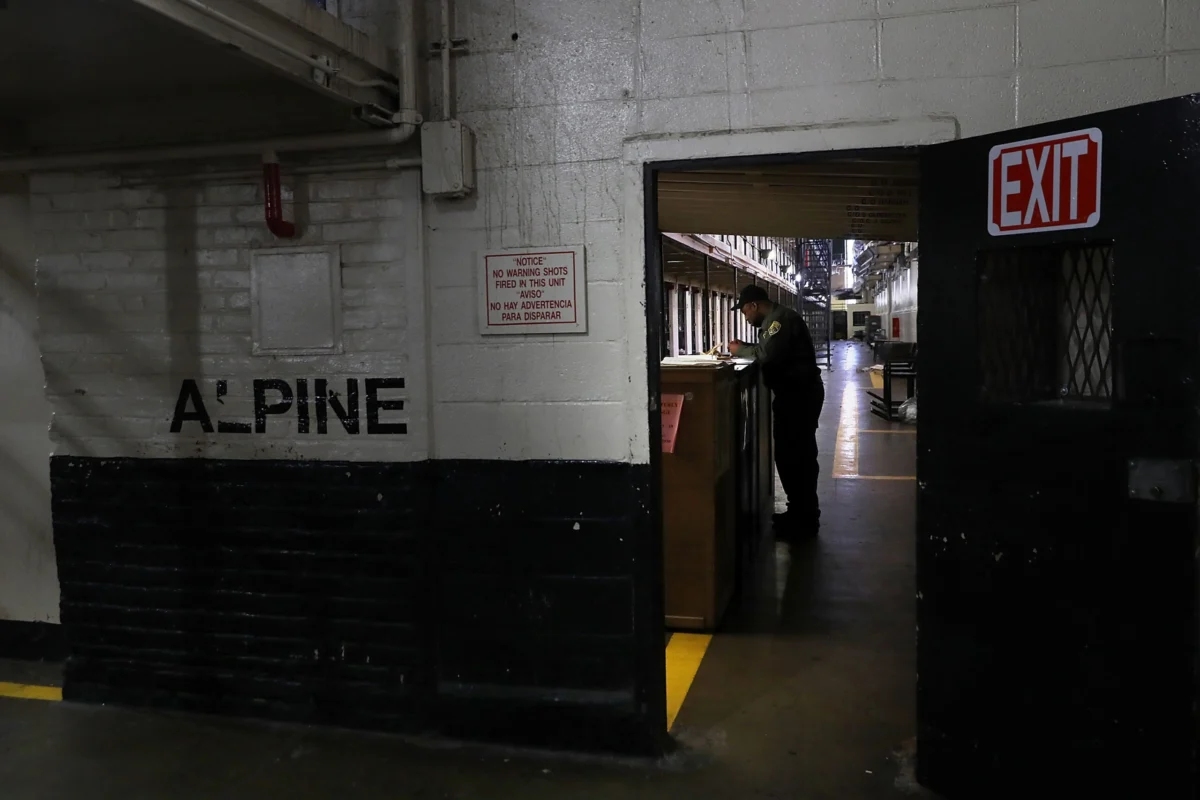
Yet, a glaring and contentious loophole persists within the state’s regulatory framework. Excluded entirely from these stringent heat safety mandates are the nurses, correctional officers, administrative staff, and tens of thousands of incarcerated individuals who labor within California’s aging, largely unconditioned penal institutions. This regulatory blind spot has ignited a fierce debate involving labor unions, public health experts, civil rights advocates, and the administration of Democratic Governor Gavin Newsom over equity, fiscal responsibility, and basic human survival inside the state’s massive correctional system.
Landmark Protections and the Prison Carve-Out
The controversy stems from regulatory actions taken in 2024, when California formally adopted landmark indoor heat safety rules. Designed to shield more than one million workers across the state, these standards targeted sweltering warehouses, industrial kitchens, commercial laundries, and manufacturing plants. Under the 2024 regulations, employers are legally required to initiate protective measures—such as providing designated cooldown areas—once indoor temperatures hit 82 degrees Fahrenheit. Furthermore, employers must maintain indoor temperatures and heat indices below 87 degrees, or lower if workers are required to wear heat-restrictive protective gear or operate near heavy thermal sources like industrial ovens.
However, during the rulemaking process, the California Occupational Safety and Health Standards Board carved out a massive exemption. Prisons, local detention centers, and juvenile facilities were entirely excused from the standards. This decision followed sharp warnings from Governor Newsom’s administration, which argued that retrofitting and cooling the state’s sprawling correctional infrastructure could carry an upfront price tag running into the billions of dollars.
Nearly two years after that initial exemption, the Newsom administration has advanced a secondary, significantly watered-down set of indoor heat standards specifically tailored for correctional institutions. Draft rules released by the California Division of Occupational Safety and Health (Cal/OSHA) in May propose that mandatory safety interventions would not even trigger until indoor temperatures reach 87 degrees—a full five degrees higher than the threshold established for warehouse workers, commercial bakers, and other indoor laborers. Moreover, the proposed prison rules completely omit requirements to factor in humidity, radiant heat, or the comprehensive heat index, metrics that dictate how hot conditions actually feel to the human body.
The introduction of these divergent standards has drawn swift condemnation from worker safety organizations and labor representatives, who argue that human physiology remains constant regardless of whether an individual works in a logistics facility or a correctional complex.
"It’s basically a second-class standard, and we don’t accept that correction workers get weaker protections than everybody else, with no scientific or medical basis," said Stephen Knight, co-executive director of Worksafe, a California-based nonprofit dedicated to occupational health and safety. "The human body doesn’t handle heat differently in a prison than, you know, an Amazon warehouse."
A Legacy of Aging Infrastructure Meet Climate Realities
The debate unfolds against a backdrop of accelerating climate disruption. According to state environmental data, California’s annual average temperature is approximately 2.5 degrees warmer than it was in 1895. At least nine of the ten warmest years in recorded state history have occurred since 2014, with climatologists projecting that upcoming seasonal shifts could shatter previous temperature benchmarks.
This rising baseline poses an acute hazard within California’s 31 adult state correctional facilities, many of which were constructed decades ago, long before modern climate control systems were standard architectural features. A January report published by the California Department of Corrections and Rehabilitation (CDCR) revealed that fewer than a quarter of the prison system’s 791 housing units are equipped with any form of mechanical air conditioning.
Instead, institutions situated in historically sweltering regions—such as the Central Valley and the inland deserts of Southern California, where summer temperatures regularly eclipse 100 degrees—rely on industrial fans and evaporative swamp coolers. Because these facilities typically feature uninsulated concrete and steel construction, these makeshift cooling mechanisms often prove utterly ineffective against prolonged heat waves.
Leonard Brown, a community organizer with Worksafe who spent more than three decades incarcerated across ten different California state facilities, described the interior conditions bluntly. "The best way to describe it is like someone turned on the microwave, and then they put you in it," Brown said.
Data compiled by the corrections department underscores the severity of the problem. In 2024 alone, CDCR recorded 86 separate days where indoor temperatures reached or exceeded 90 degrees in at least one institution, with 46 days climbing past 95 degrees. Departmental memos note that the aging institutions, which average 52 years in age, were built during an era when the thermal comfort and health of incarcerated populations and staff were simply not priorities.
Vulnerability and Lack of Agency
Public health professionals emphasize that workers in closed environments face uniquely compounding dangers during extreme heat events. Extreme heat is recognized as the leading weather-related killer in the United States, with spikes in mortality and morbidity heavily linked to cardiovascular and respiratory distress brought on by sustained thermal stress. Prolonged exposure without adequate relief inevitably triggers heat exhaustion and heat stroke, both of which can be fatal.
While traditional indoor and outdoor workers may possess some degree of autonomy to seek relief, change jobs, or utilize personal cooling devices, incarcerated workers and institutional staff navigate a rigid framework where personal agency is virtually nonexistent.
"Say you’re working in a warehouse or an agricultural field. It can be really hard to walk away because you need the money for yourself or for your family. But you can, right? It’s an option," explained Bharat Venkat, director of the UCLA Heat Lab, which researches the unequal health impacts of extreme weather. "If you’re incarcerated, you can’t really say no."
Compounding this vulnerability is the economic reality of the prison labor system. Incarcerated workers in California frequently earn wages of less than 50 cents per hour. A June analysis conducted by the UCLA Heat Lab calculated that an inmate working at these standard wages would have to labor for weeks simply to afford a basic personal fan or a commercial cooling towel from the commissary.
Official Rationales and Financial Hurdles
State officials maintain that the implementation of comprehensive indoor heat protections within correctional environments presents logistical and financial hurdles distinct from traditional workplaces.
During public stakeholder sessions, Eric Berg, Cal/OSHA’s deputy chief of health, research, and standards, defended the creation of a separate regulatory track. "These facilities were exempted from the indoor heat standard due to the unique challenges in the correctional institutions with complying," Berg stated, adding that the state was formulating an alternative to address the specific operational constraints of penal facilities.
Chief among these concerns is the fiscal impact and security logistics associated with staff deployment. Alex Norring, assistant secretary for legislative affairs for CDCR, highlighted the staffing complexities during a May administrative meeting. Norring noted that prison guards and support personnel require continuous relief rotations to take mandated cooldown breaks, which in turn demands higher baseline staffing levels to maintain institutional security.
"The biggest challenge is the direct fiscal impact because staff provide guarding for the incarcerated population, and we need to ensure that there is appropriate staffing in order to cover that and comply with providing the relief," Norring explained.
Similarly, the Chief Probation Officers of California warned that installing supplementary cooling equipment, portable air conditioning units, or designated cooldown zones inside juvenile halls and local detention centers could introduce complex structural and security risks requiring systemic architectural redesigns.
State cost projections regarding facility retrofits have fluctuated wildly. Initial estimates presented to the Occupational Safety and Health Standards Board in 2023 placed the first-year price tag at approximately $900,000, with annual maintenance dropping below $500,000. However, subsequent evaluations provided by the Department of Finance following updated data from CDCR skyrocketed the projected cost into the billions of dollars. Despite public interest and media inquiries, the Department of Finance and CDCR have repeatedly withheld detailed breakdowns of these fiscal estimates under public records requests.
Political Context and the Road Ahead
The regulatory standoff places Governor Gavin Newsom in a difficult political position. Newsom, who has cultivated a national profile as a progressive leader on climate change initiatives, released an exhaustive extreme-heat action plan that prominently highlighted the state’s 2024 indoor worker protections while noting that correctional rules were concurrently under development.
"Californians are feeling the impacts of extreme heat earlier, longer, and more intensely than ever before," Newsom remarked during the release of the action plan. "We’re setting the path for the next chapter of our hotter, drier future."
Yet, critics argue that the administration’s cautious approach to prison safety undermines its broader environmental and labor messaging. The friction has already sparked high-level administrative fallout. Notably, Laura Stock was dismissed from the Occupational Safety & Health Standards Board by Newsom following her public criticism of the administration’s delays in establishing adequate protections for correctional personnel.
"You’re leaving a very important population uncovered. That’s very unjust. There’s no argument for that," Stock stated following her removal.
As Cal/OSHA continues to review public comments and refine its draft guidelines, the timeline for finalizing and implementing heat standards for California’s prisons remains undefined. Labor unions representing medical personnel, mental health workers, and administrative staff inside the facilities—such as the American Federation of State, County and Municipal Employees (AFSCME)—insist that temperature thresholds alone are insufficient without accounting for humidity and protective gear.
For the hundreds of thousands of workers and residents navigating California’s unconditioned correctional facilities, the debate transcends bureaucratic timelines, centering instead on an urgent, warming reality that grows more pressing with every passing summer.










Leave a Reply