
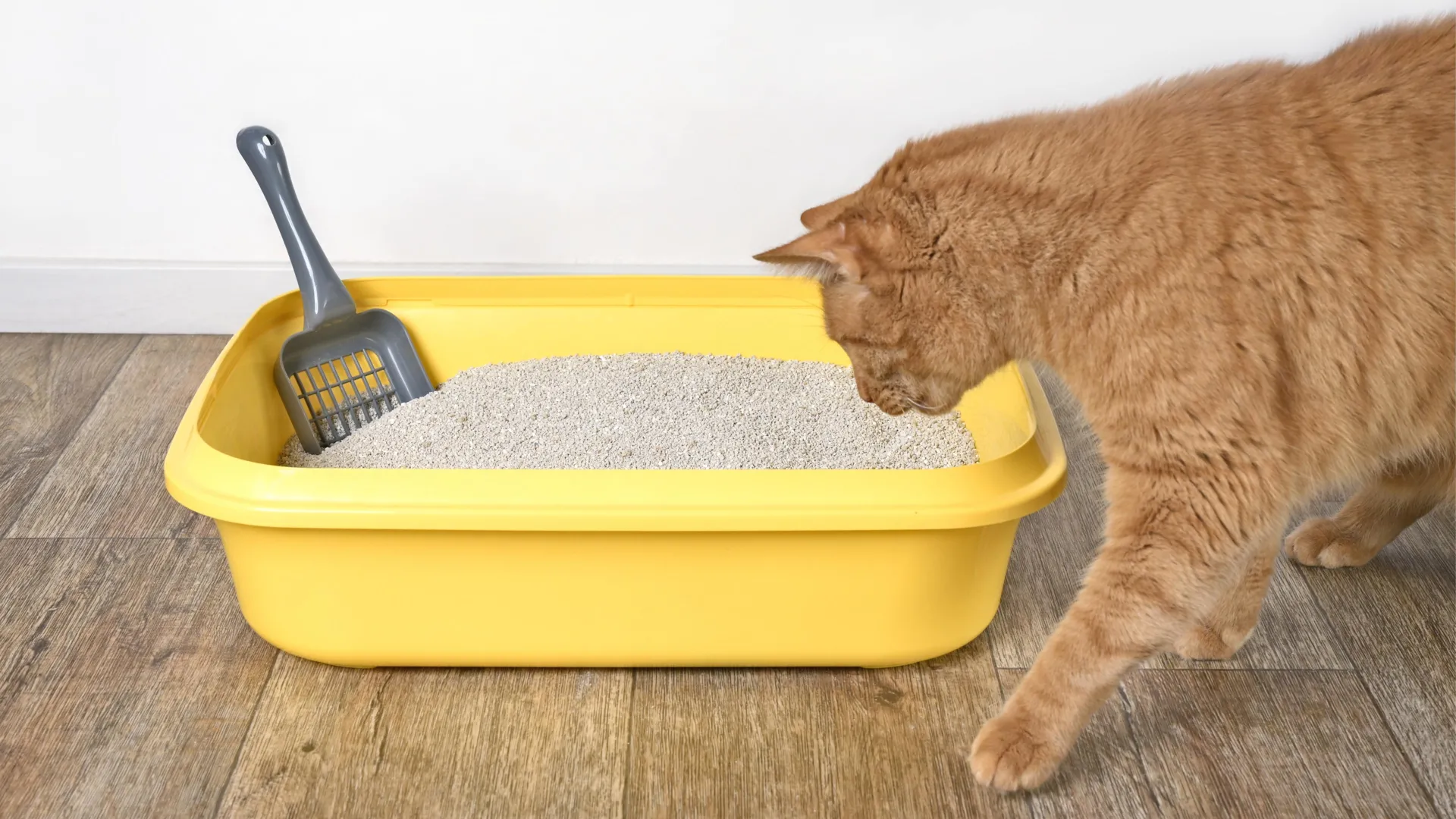
For decades, biologists have marveled at the olfactory prowess of the domestic cat, an animal that relies on a complex chemical language to navigate its social world. While humans primarily communicate through sight and sound, cats utilize a sophisticated system of scent marking—depositing urine and other chemical signals to define territory and relay information to conspecifics. However, this method of communication has long presented a scientific paradox: if volatile odor molecules dissipate or degrade almost immediately upon exposure to the environment, how can a scent mark serve as a reliable, long-term calling card for an individual cat? A groundbreaking study, published in the journal Current Biology, suggests that the answer lies in a specific group of unusual, semi-volatile fatty acids that act as a stable chemical signature, effectively solving a puzzle that has occupied behavioral ecologists for years.
Unlocking the Mystery of Feline Olfactory Memory
The research project, led by Professor Masao Miyazaki of Iwate University in Japan, began with the foundational observation that cats possess an exceptional capacity for individual scent recognition. Through a series of behavioral experiments conducted with teams from Germany and Spain, the researchers first confirmed that cats exhibit a measurable decline in interest—a process known as habituation—when presented with the same urine sample repeatedly. Conversely, their curiosity is reignited when presented with the urine of a new individual.
Crucially, the study demonstrated that this olfactory memory is not fleeting. Cats were able to distinguish between familiar and unfamiliar scents even after intervals lasting several months. This long-term retention of "scent profiles" indicated that the chemical markers left behind must contain a consistent, identifiable code that persists despite the natural decay of other urinary components. By observing the "flehmen response"—the characteristic behavior where a cat curls its upper lip to direct air toward the vomeronasal organ—researchers were able to quantify the animals’ reactions to specific chemical fractions, providing a behavioral roadmap to identify the compounds responsible for this recognition.
The Role of 13 Branched-Chain Fatty Acids
After isolating the chemical fractions that triggered the flehmen response, the research team identified 13 distinct branched-chain fatty acids (BFAs). These compounds represent a unique chemical signature, as there is no prior scientific documentation of these specific BFAs appearing in the secretions or excretions of other mammals.
The significance of these molecules is found not in their individual presence, but in their collective profile. Each cat produces a unique ratio and concentration of these 13 BFAs, akin to a chemical fingerprint. While the profile of an individual cat remains relatively stable over time, the differences between individuals are distinct enough for other cats to perceive. When the researchers experimentally swapped the BFA-containing fraction in urine samples while keeping other lipids constant, the cats showed a renewed interest in the scent, confirming that these specific fatty acids are the primary drivers of individual identification.
A Century-Old Kidney Conundrum Resolved
One of the most intriguing aspects of the study is its link to a biological mystery that has persisted for over a century. For more than 100 years, histologists have observed that the renal cortex of a cat’s kidney is packed with an unusual abundance of lipid droplets. The biological purpose of these structures has remained a subject of speculation and debate within the veterinary community.
The team at Iwate University discovered that these same 13 BFAs are present within these renal lipid droplets, suggesting that the kidneys serve as a biological reservoir. This mechanism likely functions as a metabolic buffer, ensuring that a cat’s "chemical signature" remains consistent even when diet, hydration, or other physiological stressors would otherwise cause the chemical composition of urine to fluctuate. This discovery transforms our understanding of renal function in felines, suggesting that the kidney is not merely a waste-filtration system, but an active participant in maintaining the integrity of the animal’s social and communicative identity.
Evolutionary Conservation Across the Felidae Family
The study extended its scope beyond the domestic cat (Felis catus) to examine whether this chemical communication system is shared among other members of the Felidae family. Using non-invasive sampling, researchers identified BFA-related compounds in the urine and kidney tissue of lions, tigers, leopards, jaguars, lynxes, and the rare Iriomote cat.
The findings indicate that while the underlying chemistry is widespread across the cat family, the specific "profiles" have evolved and diversified alongside the species themselves. Even within the same species, such as the leopard cat, geographical isolation has led to measurable differences in BFA composition and the distribution of renal lipid droplets. This suggests that the evolution of scent-marking chemistry may be linked to the ecological and social pressures faced by different felid populations, providing a new dimension for evolutionary biologists to explore.
Implications for Wildlife Conservation and Veterinary Science
While the study is currently in the realm of basic research, the implications of these findings are far-reaching. In the field of wildlife conservation, the ability to identify individual animals through their urine could revolutionize the monitoring of endangered species. Currently, tracking wild cats often requires intrusive methods like radio-collaring or camera trapping, which can be expensive and logistically difficult. If researchers can standardize the analysis of BFA profiles, environmental DNA (eDNA) sampling of urine could allow for the non-invasive tracking of elusive populations, providing a more accurate census and a better understanding of individual movement patterns in the wild.
Furthermore, the study provides a new lens through which to view lipid metabolism in cats. By understanding how the kidney manages the storage and release of these fatty acids, veterinary researchers may gain insights into why lipid accumulation becomes pathological in some clinical scenarios. The research effectively bridges the gap between behavioral ecology, chemistry, and physiology, demonstrating that the "calling card" a cat leaves on a tree or fence post is the result of a highly sophisticated, evolved, and internally regulated biological system.
A New Framework for Animal Communication
The discovery also addresses a fundamental question in animal behavior: how do animals maintain a stable, communicative signal in an environment characterized by rapid chemical decay? Previous research on other mammals, such as the major urinary proteins (MUPs) found in mice, provided one model for chemical signaling. However, the feline system appears to operate on a different logic, utilizing semi-volatile lipids that persist in the environment longer than standard volatile compounds.
By identifying these 13 branched-chain fatty acids, the researchers have uncovered a durable, individualized communication system that allows cats to transcend time. A scent mark is no longer just a fading odor; it is a persistent piece of biological data, encoded with the identity of the animal that left it. This research not only clarifies how cats perceive their world but also highlights the complexity of the chemical signals that underpin the social lives of one of the world’s most successful predators.
As Professor Miyazaki and his colleagues look toward future research, the focus will likely shift toward the mechanisms of BFA release and the potential for these findings to be applied in practical veterinary and environmental settings. The century-old mystery of the feline kidney appears to have been solved, but in doing so, it has opened a new chapter in our understanding of how chemical signatures define the lives of wild and domestic animals alike. For the cat, the world is not merely a collection of sights and sounds, but a vibrant, enduring tapestry of individual chemical histories, written in fatty acids and carefully preserved by the kidney.






Leave a Reply