
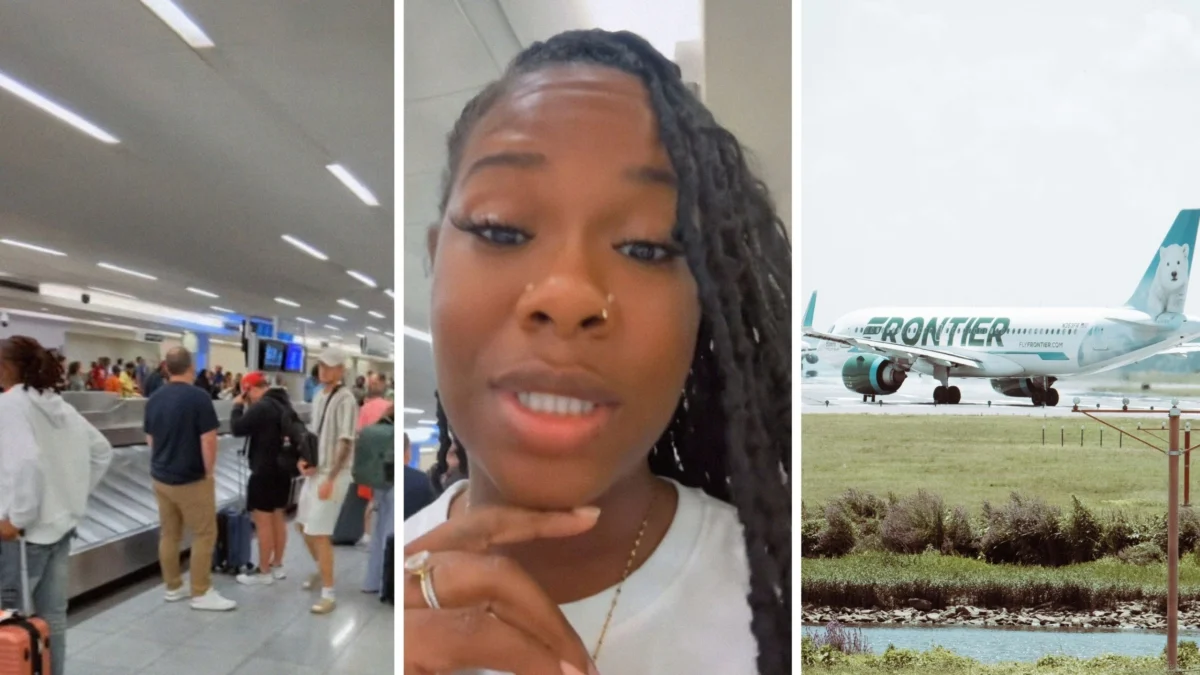
Air travel often tests the patience of even the most seasoned flyers, but a recent experience shared on social media has once again spotlighted the complex and often frustrating web of airport ground operations. A Frontier Airlines passenger traveling for a family emergency found herself stranded at a baggage claim carousel for over two hours, watching empty belts and witnessing passengers from subsequent Delta Air Lines flights receive their luggage first. The incident, documented on TikTok by user @not2muchonm3, has ignited a broader online debate regarding airline accountability, third-party ground handling, and the stark realities of flying with ultra-low-cost carriers.
The Chronology of a Baggage Delay
The ordeal began when the passenger’s Frontier Airlines flight touched down at approximately 5:50 p.m. Expecting the standard post-flight routine of waiting 20 to 30 minutes for bags to appear, passengers instead found themselves lingering indefinitely. By 7:55 p.m.—more than two hours after landing—the baggage carousel remained largely inactive, with only a scattering of unclaimed bags from unrelated flights cycling through.
According to the passenger, ground staff provided a startling explanation for the holdup: the third-party ramp agents responsible for unloading the aircraft were prioritizing incoming Delta Air Lines flights. The traveler alleged that while multiple Delta flights landed, were unloaded, and saw their passengers depart with their belongings, the Frontier aircraft sat waiting on the tarmac with its cargo hold untouched. A lone airline representative was reportedly left to manage the frustrated crowd of passengers seeking answers.
Compounding the traveler’s frustration was the urgent nature of her trip. She explained that she had booked the Frontier flight specifically to attend her uncle’s funeral in Jamaica. Vowing never to use the airline again, the passenger emphasized that her grievance extended beyond the inconvenience of the delay, noting that she was not seeking vouchers, flight credits, or financial compensation—she simply wanted accountability and her belongings.
Unraveling the Chain of Responsibility: Who Actually Unloads the Bags?
As the TikTok video circulated online, gathering thousands of views and comments, social media users quickly flooded the comments section to debate who bore responsibility for the mishap. Many commenters pointed out a fundamental misunderstanding common among travelers: the personnel handling baggage and operating the carousels are rarely employed directly by the airline whose name is painted on the aircraft hull.
This observation aligns closely with Frontier Airlines’ corporate structure and operational model. As an ultra-low-cost carrier (ULCC), Frontier maintains low ticket prices by heavily outsourcing ancillary operations. According to the airline’s annual report filed with the U.S. Securities and Exchange Commission (SEC), Frontier minimizes fixed overhead costs by outsourcing critical functions, including customer contact centers, lost bag services, catering, and ground handling services.
The company explicitly states in its regulatory filings that it enters into agreements with third-party specialists to furnish facilities and operational services, including passenger and ground handling at various airports. Consequently, the ramp agents and baggage handlers servicing a Frontier flight at a given destination are typically third-party contractors hired by the airport or the handling agency, rather than direct employees of the airline. This operational separation means that decisions regarding gate allocations, ramp staffing levels, and aircraft unloading priorities are frequently managed by independent ground handling companies or airport authorities rather than airline executives in corporate headquarters.
Federal Regulations and Baggage Delay Protections
While frustrated passengers frequently demand immediate answers and compensation, federal regulations governing delayed baggage establish clear thresholds that often differ significantly from consumer expectations.
Under current rules enforced by the U.S. Department of Transportation (DOT), a checked bag is not legally classified as "significantly delayed" until a specific timeframe has elapsed following the arrival of the flight. For domestic itineraries, a bag must be missing for more than 12 hours after arrival to trigger mandatory refund considerations. For international itineraries involving a nonstop U.S. segment of 12 hours or less, the threshold is 15 hours, extending to 30 hours for longer international routes.
Furthermore, these protections are not automatically applied. Air carriers are generally under no legal obligation to process refunds or compensation unless the passenger formally files a Mishandled Baggage Report with the operating airline.
Frontier’s own Contract of Carriage imposes strict internal timelines that govern passenger claims. For domestic flights and international routes not governed by the Montreal Convention—the international treaty establishing airline liability limits—passengers must report any damage, delay, or loss of baggage to Frontier within four hours of flight arrival. Where the Montreal Convention applies, formal written complaints regarding baggage delays must be submitted within 21 days. The contract stipulates that passengers who incur necessary incidental expenses due to delayed baggage delivery will be reimbursed, provided they adhere to established DOT guidelines and present valid receipts.
Broader Public Reaction and the Ultra-Low-Cost Debate
The viral video provoked a polarized response across social media platforms, dividing viewers into distinct camps regarding the realities of modern air travel. Seasoned ultra-low-cost travelers frequently defended the carrier, arguing that the logistical failure lay with airport infrastructure and third-party vendors rather than Frontier Airlines itself.
One frequent flyer, who identified herself as a holder of Frontier’s annual pass, noted that she had avoided checking bags entirely since 2019 to bypass potential mishandling issues altogether. Other commenters echoed the sentiment that third-party ramp agents operate independently of the airlines they service, contrasting Frontier’s outsourcing model with legacy carriers like Delta Air Lines, which traditionally employ dedicated, in-house ramp and ground crews at major hubs.
Conversely, stranded passengers and consumer advocates argued that regardless of outsourcing arrangements, the ultimate responsibility for passenger satisfaction and luggage delivery rests with the airline contracted to perform the transport. When a traveler purchases a ticket, the contractual obligation is between the passenger and the airline, making the airline accountable for the seamless execution of all subcontracted services.
Implications for the Aviation Industry
Incidents of this nature highlight the ongoing structural challenges within the commercial aviation sector, particularly concerning ground handling operations. As airports face persistent labor shortages and third-party contractors are forced to manage multiple carriers simultaneously, resource allocation on the ramp has become a critical point of friction.
When ground handlers are stretched thin, prioritization decisions—whether real or perceived—can lead to significant customer service breakdowns. For ultra-low-cost carriers relying on rapid aircraft turns to maintain profitability, delayed baggage unloading can create cascading scheduling issues, while simultaneously inflicting reputational damage among passengers already sensitive to the service trade-offs inherent in budget travel.
As media outlets and consumer advocacy groups continue to examine the passenger experience, transparency regarding the roles of third-party vendors remains a central issue. Industry analysts suggest that as long as airlines continue to outsource foundational ground operations, friction between passenger expectations and operational realities will persist.
Requests for comment sent by industry publications to the creator of the viral video and representatives for Frontier Airlines remained unanswered at the time of publication. Observers note that until ground handling coordination improves across shared airport terminals, passengers traveling on tight schedules—particularly those attending time-sensitive life events—may find that checking baggage on ultra-low-cost carriers carries risks that extend far beyond the ticket counter.









Leave a Reply