
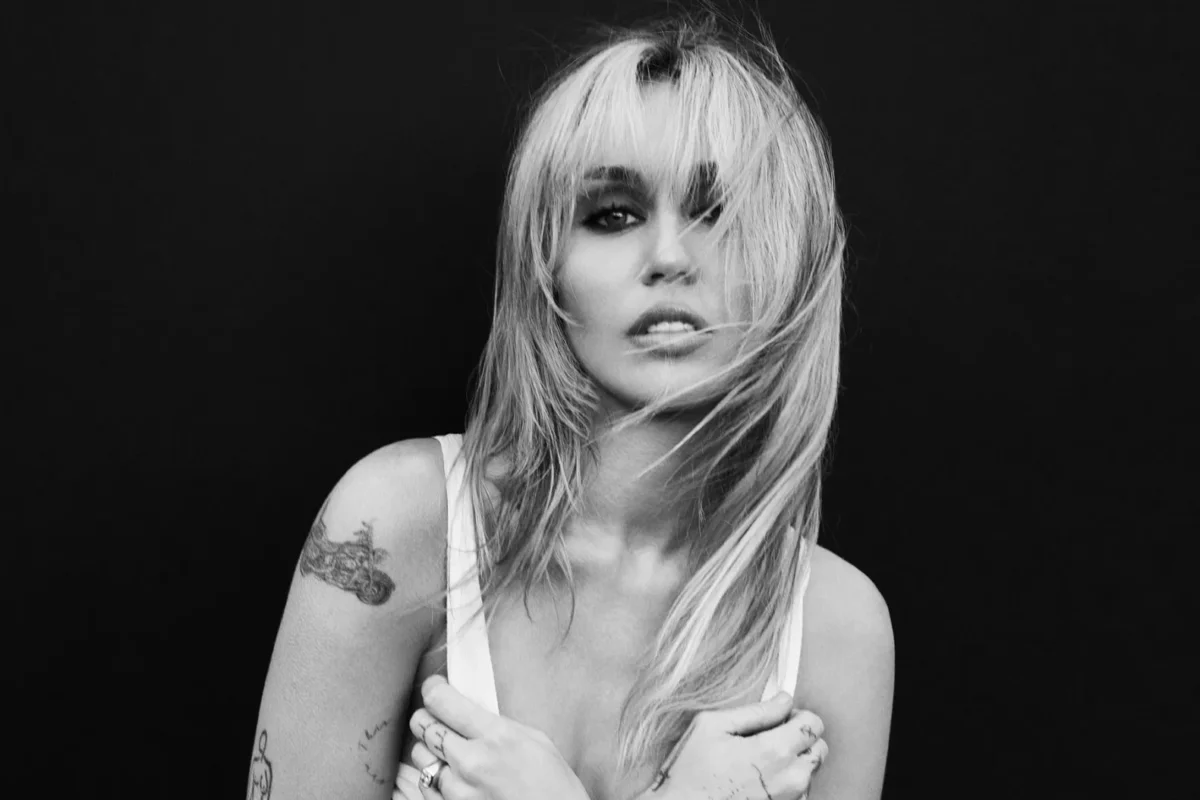
Miley Cyrus has officially stepped off the unrelenting treadmill of global pop stardom, choosing instead to anchor her life in personal sobriety, stability, and domestic devotion. Released amid significant industry anticipation, her latest studio album, Bass Persuades, marks a profound departure from the high-octane anthems that defined earlier eras of her career. Rather than chasing chart dominance or embarking on exhaustive international stadium tours, the 33-year-old artist has pivoted toward a localized, deliberate existence, prioritizing mental health and the grounding presence of a stable home life above all else.
The conceptual foundation of Bass Persuades was laid clear during a candid interview with Apple Music host Zane Lowe just one day prior to the album’s drop. Reflecting on the realities of her adult life, Cyrus addressed her deliberate scaling back of touring schedules, explaining that the chaotic nature of life on the road presents a direct hazard to her sobriety. Maintaining her recovery requires strict routines, emotional consistency, and familiar environments—luxuries that standard touring cycles routinely destroy. Consequently, Cyrus has chosen a localized approach to live performance, exemplified by a pair of highly anticipated headline shows at the historic Hollywood Bowl.
"This is perfect because people like to see me perform and I like to sleep in my marshmallow bed," Cyrus told Lowe, summarizing her current philosophy. "We can both be happy."
This prioritization of comfort over scale signals a mature recalibration of her relationship with fame. While the global music public frequently attempts to dissect her motivations and nostalgic longing for her past personas, Cyrus has made it clear that her primary metric of success is no longer external validation.
Navigating Existentialism and the Weight of the Past
Despite her current contentment, Cyrus’s journey to this point has been marked by profound turbulence. During her conversation with Lowe, the singer opened up about wrestling with grief, chronic anxiety, and a harrowing near-death experience in 2022. She recalled a surreal moment during a 2022 festival performance where she looked out at a crowd of 250,000 people while singing her 2008 track "Fly on the Wall." Instead of feeling empowered by the scale of the audience, she experienced a paralyzing existential crisis regarding human scale and the relentless passage of time.
Looking back, that particular 2022 set leaned heavily on a greatest-hits format, heavily outnumbering tracks from her critically acclaimed 2020 record, Plastic Hearts. For an artist who performs live only sporadically, leaning on nostalgic material acts as a temporary bridge to connect with fans. However, as Bass Persuades demonstrates, maintaining that exact past-facing identity is no longer creatively sustainable for a 33-year-old artist.
Fans may still travel long distances to hear foundational hits like "See You Again" or "We Can’t Stop," but Cyrus herself has evolved far beyond the young woman who recorded them. When she attempts to force a recreation of that historic energy, the results can feel disjointed. The album’s title track, "Bass Persuades," is a sprawling, somewhat meandering lead single where Cyrus repeats the phrase "the kids don’t wanna dance" 19 times over a throbbing, detached production. By closing the album with an industrial noise-rock remix by Model/Actriz, she deliberately allows herself to fade into the sonic background, signaling an artist actively shedding the pressure to be the center of every room.
A Sonic Shift Toward Devotion and Domesticity
While the edges of Bass Persuades experiment with industrial detachment, its emotional core is profoundly intimate. The album is fundamentally uninterested in club culture or youth trends; instead, it is an exploration of romantic devotion and the sanctuary found in a committed relationship.
Model/Actriz returns to collaborate with Cyrus on "Different Religion," a gothic-pop track characterized by roaring industrial soundscapes and themes of fierce devotion. "I’ve got my own god," Cyrus declares on the track, singing, "My god’s a hot boy." Even when utilizing heavy, battering production, the lyrics consistently pivot toward tender adoration, showcasing an artist who prefers serenading her muse to delivering abstract social commentary.
This vulnerability shines brightest on stripped-down numbers like the piano ballad "Orbit," where Cyrus sings, "I would bend all space and time to fall into your hands." Trading flash and spectacle for stark honesty, the song stands as a high-water mark on the record. Similarly, "Let’s Get Married" captures the sweet simplicity of racing toward a lifelong commitment, while "Snow" offers an autobiographical glimpse into the proposal itself: "Now your knee’s in the dirt as I hold out my left / You should swallow the nerves ’cause there’s yes on my breath."
These wholesome, earnest declarations carry extra weight given Cyrus’s well-documented romantic history, which includes a highly publicized divorce. Having previously expressed candid skepticism about marriage to her fans, her ability to write unreservedly about finding love in the wake of emotional wreckage demonstrates remarkable resilience. This theme of excavation continues on "Aftermath," where she confronts the debris of old heartbreaks head-on: "Do you ever fall into pieces? Do you ever think of me now and then? Don’t avoid the question."
Confronting Family Struggles and Mental Health
Not all of the album’s emotional heavy-lifting is tied to romance. On "Innocent Ways," Cyrus turns her lens toward familial strain, addressing her sister over a heavy, pulsing bassline. "I want better for my sister / She calls me only when it’s late night and she’s high," Cyrus sings in the opening verse, capturing a painful sense of helplessness. "I wonder if she went and changed her number / I tried to call her three times over / Is she alright? It keeps on ringing."
Having lived an extraordinarily public life since her adolescence, Cyrus often finds herself positioned as a guiding light, yet she remains transparent about her own ongoing navigation of fear and anxiety. These anxieties trickle into "REDLIGHTS," a euphoric, string-backed synth-pop track that stands as the structural and thematic blueprint of Bass Persuades. "Truth is all we need, and also what I fear," she admits, perfectly encapsulating the delicate balance between hard-earned peace and lingering vulnerability.
The Broader Impact and the Hannah Montana Generation
As the music industry evaluates the cultural footprint of Bass Persuades, critics note that the release lacks the calculated commercial ambition of previous records like Endless Summer Vacation or the conceptual experimentation of her earlier work. Cyrus is no longer engaged in the high-stakes game of vying for mainstream chart supremacy.
Her legacy in modern pop music is already permanently cemented. As the industry enters what cultural analysts term the "Hannah Montana generation"—marked by contemporary pop superstars like Sabrina Carpenter and Chappell Roan—Cyrus’s formative influence remains undeniable. Furthermore, the global success of modern hits like Adéla’s "Ain’t in LA" directly traces its lineage back to the sonic blueprints laid down by Cyrus’s landmark 2013 album Bangerz.
Ultimately, the fickle demands of the pop public no longer hold leverage over Miley Cyrus. Through the thundering, industrial basslines of her new era, she is entirely insulated from external noise, motivated not by the approval of stadiums, but by the love waiting for her at home.
Closing out the album on "REDLIGHTS," Cyrus delivers her most resolute statement of peace and self-acceptance: "So when I’m summoned to the sky / I won’t fear anything, even enjoy that last goodbye / ‘Cause I have something to believe in, and baby, you’re the reason / I’ll turn my face up toward the light / Surrender lovingly and disappear into the night."






Leave a Reply