
A intensifying standoff has erupted between the White House and Capitol Hill regarding the future of federal research funding, as the Trump administration explores new mechanisms to exert direct political oversight over the grantmaking processes at the National Institutes of Health (NIH). Reports surfacing this week indicate that the administration is weighing the implementation of an executive order or a centralized White House review process designed to filter research proposals, ensuring that awarded grants align with the current administration’s policy priorities.
This development marks a significant escalation in the administration’s ongoing efforts to reshape the scientific bureaucracy. For decades, the NIH has operated under a "merit-based" paradigm, where grant applications are evaluated by independent panels of scientific peers. The proposed shift would introduce an layer of executive-branch screening, a move that has drawn sharp rebukes from a bipartisan coalition of lawmakers who argue it threatens the integrity of American medical research.
The Legislative Pushback
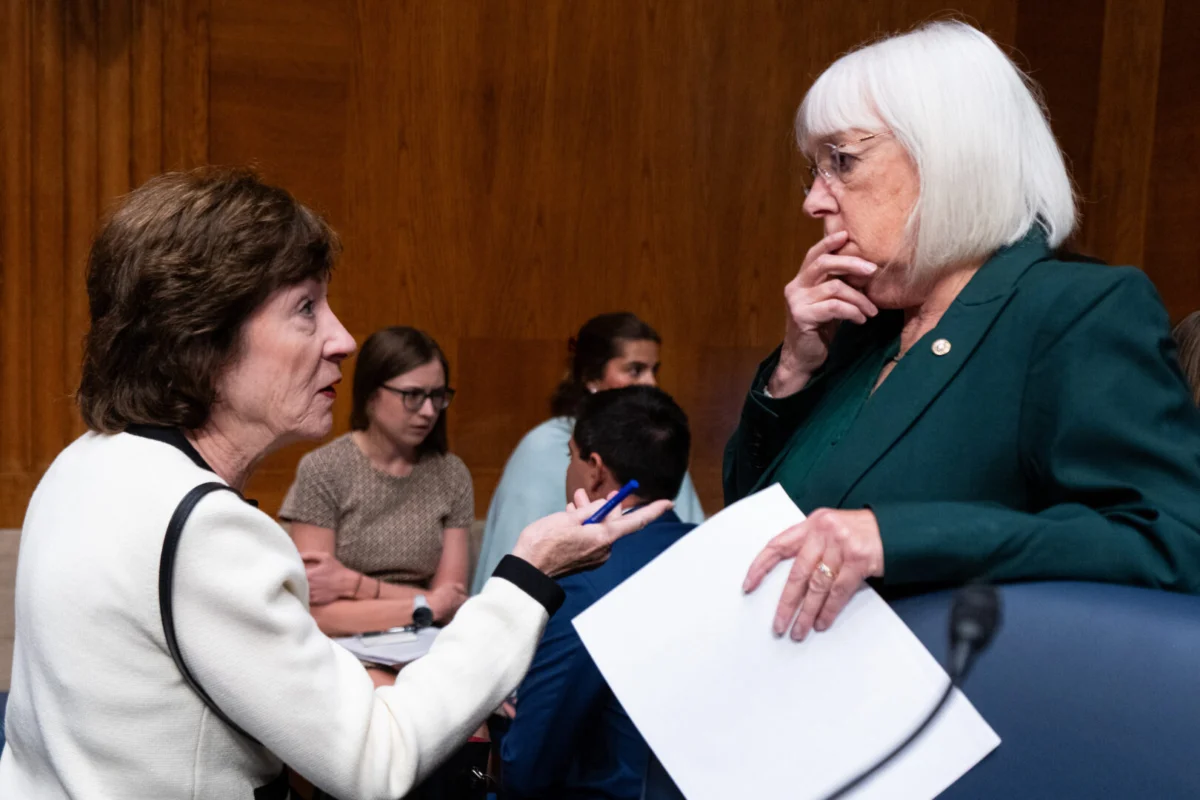
The outcry from Congress was immediate following the publication of reports detailing the administration’s potential plans. Senator Susan Collins (R-Maine), chair of the Senate Appropriations Committee, issued a stern statement on Monday, marking a rare moment of public friction between a senior Republican leader and the White House on scientific policy.
"Any attempt to politicize grantmaking at the National Institutes of Health, or any other agency, by another means—whether an Executive Order or guidance—is contrary to congressional intent," Collins stated. She emphasized that the current rigorous, merit-based selection process is the bedrock of global scientific leadership. "Imposing a political review on awards that have already been selected through a rigorous scientific and merit-based process undermines the long-standing principle that the government funds awards based on scientific need and merit, rather than political ideology."
Senator Patty Murray (D-Wash.), the ranking member of the Appropriations Committee, echoed these concerns, framing the issue as a fundamental question of the government’s role in public health. "Only one question should decide which research gets funded: is this good science that could save lives?" Murray said. "Trump wants to answer a different question: does this help me settle a score?"
Chronology of Administrative Intervention
The current controversy is the latest chapter in a multi-year effort by the administration to tighten its grip on the NIH. This struggle has unfolded through a series of administrative maneuvers, executive actions, and budget proposals designed to pivot the agency away from its traditional autonomy.
- 2025 (Early Year): The administration begins a targeted review of existing grants, leading to the freezing or termination of over 1,800 research projects. Many of these projects were explicitly targeted for their focus on diversity, equity, and inclusion (DEI) initiatives.
- 2025 (Mid-Year): The administration introduces a proposal to cap researchers’ overhead costs by shifting to a "forward-funding" model. This would have required the total funding for multi-year grants to be provided upfront, effectively limiting the agency’s ability to manage long-term fiscal commitments. Congress rejected this proposal.
- 2026 (Summer): The Office of Management and Budget (OMB) introduces the "Uniform Guidance" proposed rule. This regulation sought to empower political appointees to review discretionary grants for alignment with presidential priorities and created provisions for terminating grants "for convenience."
- 2026 (September): The current conflict flares as reports indicate the White House is considering bypassing standard regulatory rulemaking in favor of an executive order to institutionalize political oversight of grant selection.
The "Uniform Guidance" Conflict
Central to the ongoing legislative battle is the OMB’s "Uniform Guidance" proposal. The rule, which lawmakers have fought to delay, would fundamentally alter how discretionary grants are handled across federal agencies, not just the NIH. By requiring that grants be vetted by political appointees for "presidential priorities," the administration aims to ensure that no federal dollars are spent on research projects that might run contrary to its broader political platform.
Senator Collins, acting on behalf of the committee, authored a formal letter to the OMB earlier this summer, demanding a withdrawal of the rule. In the current continuing resolution designed to keep the government funded through mid-December, lawmakers successfully included a provision that forces a delay in the implementation of the Uniform Guidance. This legislative "timeout" represents a temporary reprieve for the scientific community, but it does not resolve the underlying tension between the White House and the legislative branch over who holds the authority to direct scientific inquiry.
Economic and Scientific Implications
The potential for a political filter on scientific grants carries profound implications for the biomedical research industry. Advocates for the research community argue that the stability of funding is essential for the continuity of long-term clinical trials.
Erica Sward, executive director of the biomedical research advocacy group United for Cures, highlighted the human cost of these policy shifts. "Medical research for patients isn’t a partisan issue—it never should be," Sward said. "We call on Congress, Democrats and Republicans alike, to reject this proposal outright."
From a data-driven perspective, the NIH budget—which exceeds $45 billion annually—supports a vast ecosystem of university research, private-public partnerships, and pharmaceutical development. Critics point out that politicizing this funding stream could result in:
- Chilling Effect on Innovation: Researchers may self-censor their proposals to avoid topics that could be perceived as "politically sensitive," thereby stifling unconventional or groundbreaking inquiry.
- Administrative Burden: Adding a layer of political review to thousands of grant applications annually would likely lead to significant delays, potentially causing the loss of talent and the expiration of time-sensitive research windows.
- Global Competitiveness: As other nations, including China and members of the European Union, aggressively increase their investment in biotechnology and basic science, the U.S. risks losing its competitive edge if its internal research apparatus becomes hampered by political volatility.
Analysis of Executive Authority
The constitutional tension at play involves the scope of executive oversight versus congressional appropriation power. While the executive branch is responsible for the implementation of laws and the management of agencies, the power of the purse resides exclusively with Congress. Lawmakers argue that by dictating which specific projects receive funding based on political alignment, the administration is effectively usurping the authority of the legislative branch to define the scope and mission of federal agencies.
Legal scholars suggest that an executive order could face significant judicial challenges. If the order were found to violate the underlying statutes that establish the NIH’s mandate, it could be struck down. However, the process of litigation would take months, if not years, during which time the agency’s grant-making operations would effectively be under a cloud of uncertainty.
Looking Ahead
As the December deadline for the current continuing resolution approaches, the debate over NIH oversight is expected to become a central feature of the broader government funding negotiations. With the administration showing little sign of backing down from its goal of increasing executive control, the burden falls on congressional appropriators to determine if they can secure lasting protections for the scientific merit-review process.
The White House has yet to provide a formal response to the recent outcry, maintaining its stance that the executive branch has the authority to ensure that taxpayer-funded research aligns with the stated goals of the President. Meanwhile, the scientific community remains in a state of high alert, bracing for a potential shift in the landscape that could alter the trajectory of American medical progress for the foreseeable future.







Leave a Reply