
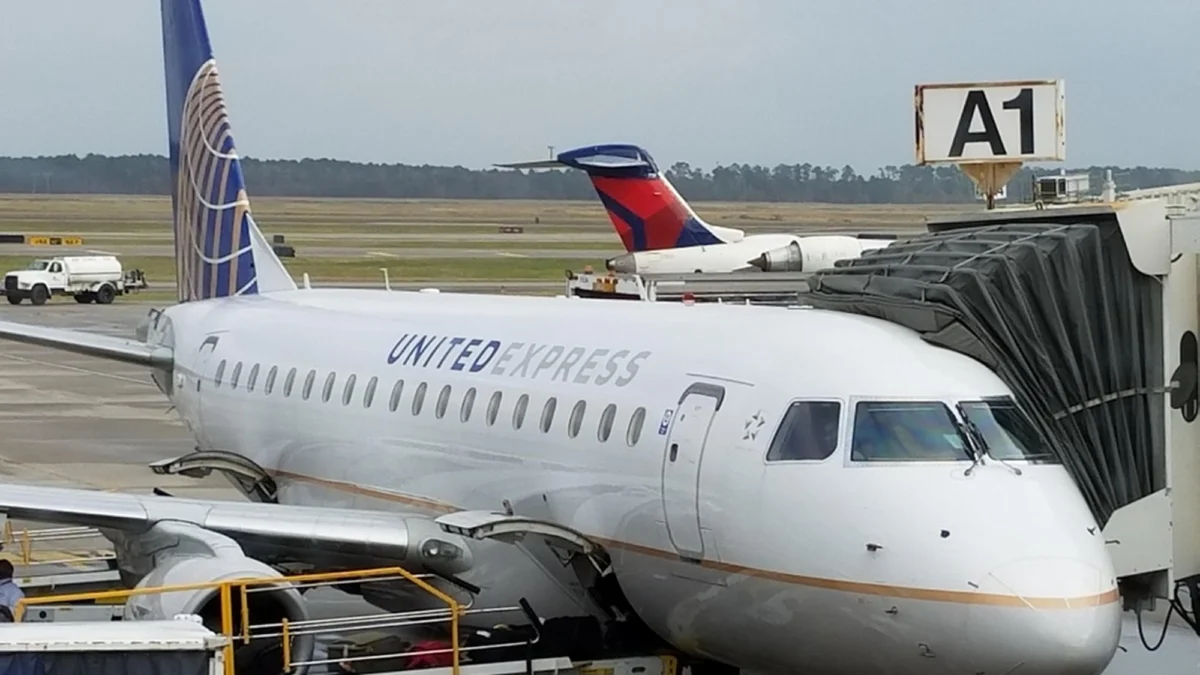
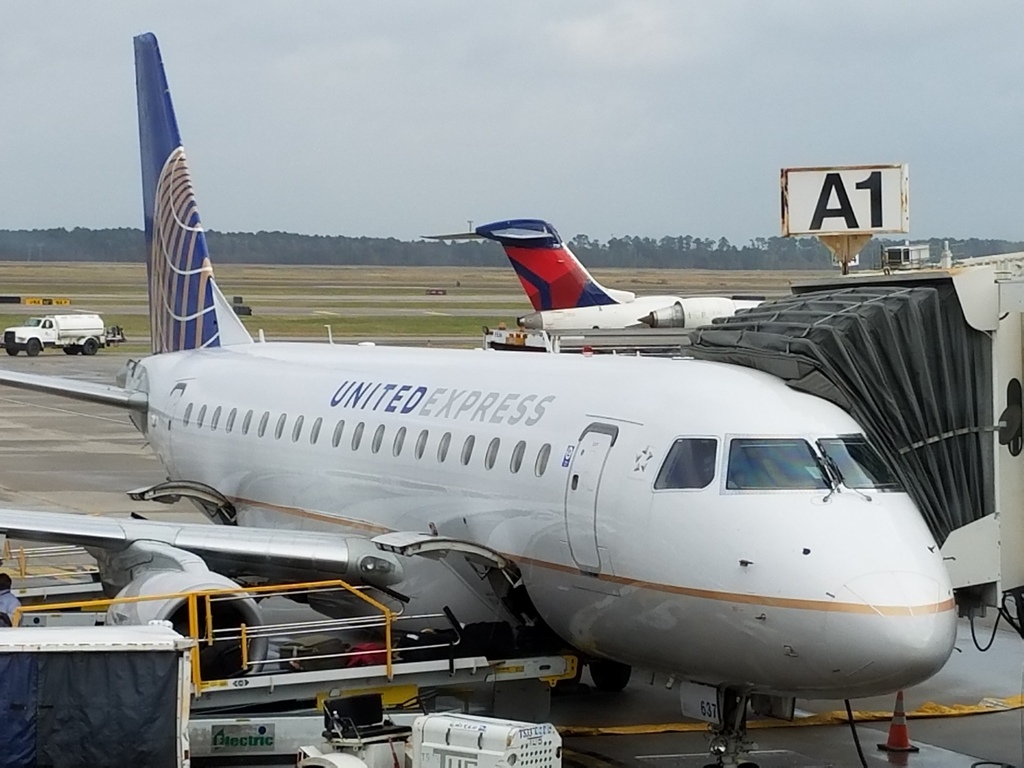
A 25-year-old traveler who reported being subjected to sexual misconduct on a United Express flight has ignited a broader conversation regarding airline protocols for handling in-flight criminal behavior. The incident, which occurred on September 3 aboard a GoJet-operated CRJ-550 regional jet traveling from Rochester to Newark, involved a female passenger alleging that a man seated next to her engaged in self-gratification while staring at her. Despite her immediate report to the cabin crew, the passenger claims she was forced to remain seated next to the individual for the duration of the descent and landing, and that the man was permitted to disembark without being met by law enforcement.
The incident underscores a recurring tension in the aviation industry: the requirement for flight crew to maintain safety and compliance during critical phases of flight versus their duty of care to protect passengers from criminal acts. As the woman sought to visit friends for Labor Day weekend, her routine morning flight turned into a traumatic ordeal that has since prompted inquiries to the Federal Aviation Administration (FAA) and the Federal Bureau of Investigation (FBI).
Chronology of the Incident
The flight departed Rochester at approximately 6:00 a.m. and lasted roughly one hour. According to the passenger’s account, the encounter began shortly after takeoff. Upon witnessing the man’s behavior, the woman sought intervention from the flight attendants. While the crew allowed her to stand in the aisle for a portion of the flight to distance herself from the passenger, the situation deteriorated as the aircraft began its approach into Newark Liberty International Airport.
During the descent, flight attendants reportedly informed the woman that all other seats on the aircraft were occupied and that she was required to return to her assigned seat beside the man to comply with safety regulations regarding landing. Despite her repeated objections and clear distress, the crew insisted she be buckled in for arrival. The passenger noted that sitting at the back of the aircraft further extended the time she was forced to remain in close proximity to the man while waiting for the aircraft to reach the gate.

Upon arrival at the gate, the passenger expected that law enforcement would be waiting to address the criminal allegation. Instead, she alleges that a United ground agent informed her it was her responsibility to personally contact the police. Another staff member reportedly suggested that the flight crew had failed to follow standard protocols regarding the reporting of onboard incidents. The man was subsequently allowed to exit the aircraft and leave the airport terminal without being questioned or identified by authorities.
The Response from United Airlines
In the aftermath of the event, the passenger contacted United Airlines to formally report the incident. Rather than receiving an investigation update or an apology acknowledging a failure in safety protocols, the airline offered a $100 travel credit. In a written response, the airline stated, "I can imagine how upsetting and uncomfortable it must have been to experience behavior from another passenger that caused you concern, particularly while seated in a location where you felt concerned."
The adequacy of this response has been widely criticized by legal observers and passenger advocacy groups. For a major carrier to provide a nominal travel voucher in response to a report of federal criminal activity reflects a potential disconnect between corporate customer service policies and the severity of in-flight criminal investigations. The passenger has since escalated her complaint to the FBI, which oversees investigations into sexual assault and indecent exposure in the special aircraft jurisdiction of the United States.
Legal Implications and Federal Statutes
Under federal law, acts of indecency on aircraft are treated with significant gravity. Specifically, 49 U.S.C. § 46506(2) provides a framework for prosecuting criminal acts committed in the special aircraft jurisdiction of the United States. By incorporating relevant statutes, including those prohibiting public self-gratification, the law allows for severe penalties for offenders. Such an offense can result in up to 90 days in federal prison and a maximum fine of $5,000.
The legal venue for such crimes is typically the jurisdiction where the aircraft lands. In this case, New Jersey authorities would have primary jurisdiction for a flight terminating in Newark. The failure to secure the scene or identify the suspect immediately upon landing creates significant evidentiary hurdles, as witnesses often disperse rapidly once an aircraft reaches the gate.
A Pattern of Reported Inaction
This incident is not an isolated report of airlines failing to adequately address sexual misconduct in the cabin. Similar cases have appeared in recent years, drawing criticism for the industry’s inconsistent response to passenger safety. For example, American Airlines has previously faced scrutiny after a passenger reported a man fondling himself on a flight from Orlando to Dallas. In that instance, the passenger alleged that the crew allowed the man to leave the aircraft without questioning, and the airline offered 5,000 frequent flyer miles as a gesture of goodwill.
In 2020, a high-profile lawsuit was filed against United Airlines by an NFL player who alleged that the carrier failed to respond to repeated complaints of sexual harassment and assault. The plaintiff in that case was reportedly offered a $150 voucher, a move that prompted widespread condemnation regarding the airline’s prioritization of liability over victim support.
The Role of the FBI and Airline Protocol
The FBI has actively campaigned to increase awareness regarding sexual assault in the skies, emphasizing that passengers must notify the flight crew immediately so that law enforcement can be coordinated to meet the aircraft upon arrival. According to data from the FBI, there were 104 investigations into sexual assaults aboard aircraft in 2024 alone. The agency warns that these numbers likely represent only a fraction of actual incidents, as many victims fear a lack of support or retribution.
Airlines are generally required to have robust training programs to help cabin crew recognize, document, and report criminal activity. The standard protocol for an incident involving indecent exposure involves isolating the offending passenger, documenting the behavior, securing witness statements, and contacting the pilot in command to request that law enforcement meet the aircraft at the gate. The failure to execute these steps not only puts the victim at further risk but also compromises the integrity of potential criminal investigations.
Industry Implications and Future Policy
The situation raises critical questions about the training provided to regional airline crews. While GoJet operates the aircraft, it does so under the United Express brand, meaning passengers operate under the expectation of United’s safety standards and corporate policies. If ground and flight personnel are not consistently trained to treat reports of sexual misconduct as criminal matters rather than "uncomfortable" customer service issues, the safety of the flying public is inherently compromised.
For the passenger involved, the ordeal has left a lasting impact. Despite the lack of support and the distress caused by the incident, she has expressed that she will likely continue to fly with United due to a lack of viable alternatives from her local airport and her existing investment in the airline’s loyalty programs. This forced reliance on a carrier that allegedly failed to protect her highlights the limited agency victims of in-flight crimes often experience when trying to navigate the complex world of air travel.
As the industry continues to move toward a post-pandemic recovery, the focus on "passenger experience" must prioritize the physical and psychological safety of travelers. Without more stringent federal oversight and a fundamental shift in how airlines handle reports of criminal behavior, incidents like the one on the Rochester-to-Newark flight threaten to undermine the trust that is essential for the aviation industry to function effectively. The demand for clear, transparent, and victim-centered protocols has never been more urgent, and the eyes of the public remain on major carriers to see if they will implement the necessary reforms to prevent such situations from recurring.










Leave a Reply