
The Hashemite Kingdom of Jordan has long occupied a unique and precarious geopolitical intersection, serving as a pillar of stability and a sanctuary for millions displaced by successive regional conflicts. Against this complex backdrop, the Director-General of the World Health Organization (WHO), Dr. Tedros Adhanom Ghebreyesus, arrived in Amman to launch a comprehensive two-state visit aimed at evaluating public health frameworks, reinforcing universal health coverage (UHC), and addressing acute humanitarian emergencies. The visit highlights the indispensable role Jordan plays not only as a domestic healthcare provider for its own citizens, but also as an extraordinary regional humanitarian hub offering shelter, medical evacuation pathways, and specialized care to vulnerable populations from neighboring territories, most notably Syria and the Palestinian enclave of Gaza.
The first day of Dr. Tedros’s itinerary was marked by high-level diplomatic engagements, on-the-ground hospital visits, and strategic roundtable discussions with international partners, philanthropies, and United Nations agencies. Accompanied by high-profile global health advocates, the WHO chief underscored that Jordan’s integration of refugee populations into its national healthcare grid serves as an exemplary model for the international community. As global systems strain under the weight of compounding geopolitical crises, the Kingdom’s proactive stance on primary healthcare, mental health mainstreaming, and emergency medical corridors offers critical lessons in institutional resilience and compassionate statecraft.
A Royal Audience and Strategic Health Priorities
The cornerstone of the visit’s opening day was a formal audience with His Majesty King Abdullah II of Jordan. The high-level dialogue underscored the Hashemite leadership’s unwavering commitment to positioning health as both a national security priority and a fundamental human right. Central to the conversation was the imperative of strengthening domestic health infrastructure to withstand persistent regional shocks, expanding equitable access to specialized medical care, and sustaining multi-lateral support for ongoing humanitarian relief operations.
Particular attention was dedicated to the plight of Palestinian patients evacuated from Gaza for urgent, life-saving interventions in Jordan, as well as the enduring socioeconomic and medical demands of hosting over three million registered refugees. Dr. Tedros formally expressed his profound appreciation to the Jordanian monarch, noting that the nation’s generosity transcends mere policy; it represents a deep-seated humanitarian ethos.
"I wish to express my appreciation to His Majesty King Abdullah II for his commitment to advancing universal health coverage," Dr. Tedros stated during the proceedings. "I also extend my thanks to His Majesty and the people of Jordan for their solidarity and generosity in providing health services to more than three million refugees, primarily from Gaza and Syria, who are living in the country."
Furthermore, the discussions shed light on the mechanics of His Majesty’s pioneering Medical Corridor initiative. This vital logistical channel has successfully bypassed systemic blockages to deliver critical, specialized care to critically ill and injured children evacuated from Gaza. By facilitating these transfers, Jordan continues to demonstrate how national sovereignty can be leveraged to put health and humanity first, even amid profound regional volatility.
Frontline Realities: Bearing Witness to Medical Evacuations
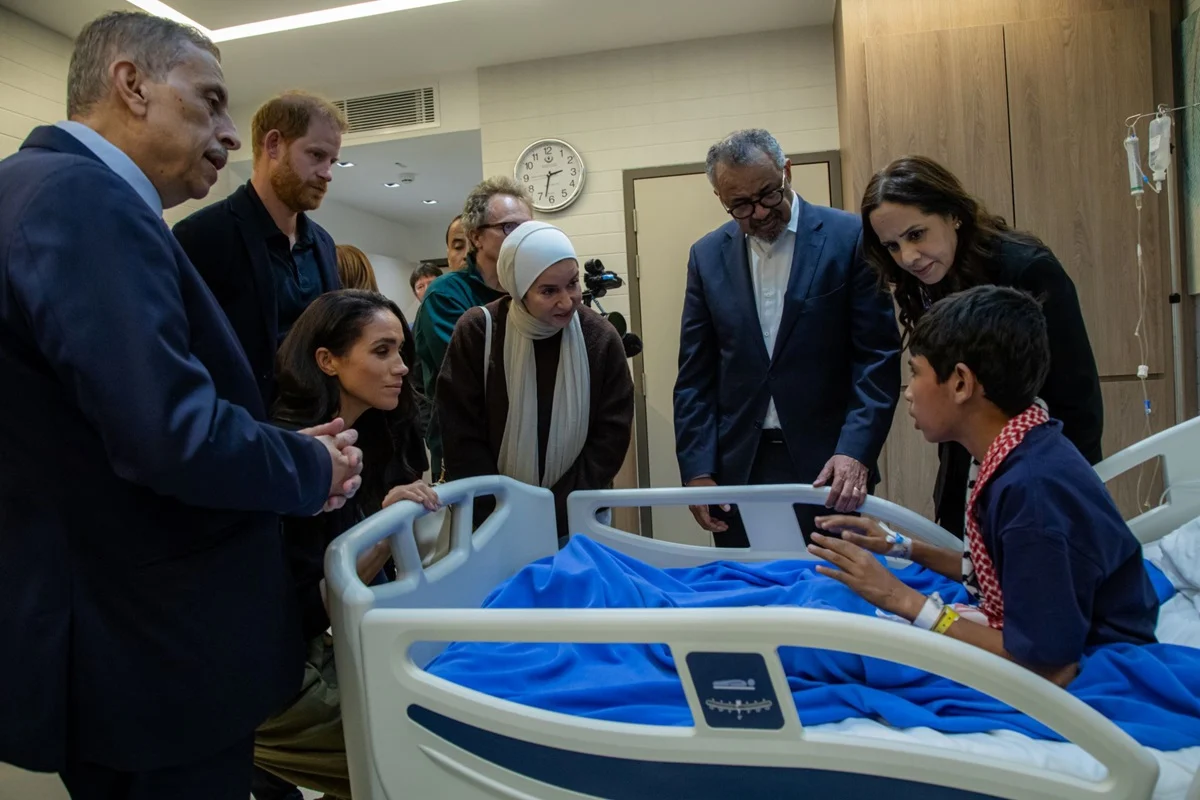
Following the royal audience, Dr. Tedros transitioned from diplomatic halls to clinical frontlines, visiting a specialized, WHO-supported hospital facility dedicated to treating children evacuated from Gaza. The visit offered a harrowing yet inspiring window into the human toll of contemporary conflicts and the remarkable resilience of medical personnel operating under intense pressure.
During the tour, the WHO Director-General engaged directly with young patients, their families, and the multidisciplinary teams of physicians, nurses, and specialists delivering intensive treatments for severe traumatic injuries, advanced oncological conditions, and other catastrophic health emergencies. This firsthand inspection served to emphasize the absolute indispensability of the medical evacuation corridor traversing Jordan. Without sustained, predictable international funding and logistical protection, these conduits of survival risk collapsing under the sheer volume of need.
Public health analysts observing the visit note that Jordan’s health sector absorbs immense secondary pressures from regional conflicts. Hospitals that were originally engineered to serve local municipal populations now operate as advanced trauma centers for regional casualties, stretching equipment, pharmaceutical inventories, and human resources to their absolute limits. The WHO’s presence served not only to evaluate clinical capacities but also to issue an urgent global call to action for increased international cost-sharing and resource mobilization.
High-Level Partner Consultations and Financing Priorities
Recognizing that national health resilience requires robust financial architectures, Dr. Tedros convened a high-level strategic meeting later in the day. The gathering brought together key stakeholders, including representatives from donor governments, sister United Nations agencies, and prominent philanthropic organizations.
The core agenda of the roundtable revolved around sustainable financing mechanisms for health system strengthening within Jordan, alongside the continuation and expansion of targeted humanitarian health interventions. Discussions specifically targeted the scaling up of mental health services—an area where Jordan has made notable legislative and operational strides—and the equitable distribution of financial burdens borne by countries hosting disproportionately large refugee populations.
Dr. Tedros welcomed the concrete commitments articulated by international partners, emphasizing that investing in Jordan’s health infrastructure yields regional stability. As protracted crises stretch humanitarian budgets thin, innovative financing models and predictable multi-year donor commitments are widely recognized by global health economists as the only viable path to preventing systemic collapse in host nations.
Advancing Universal Health Coverage and Mental Health Integration
In addition to multilateral forums, Dr. Tedros held extensive bilateral consultations with Jordan’s Minister of Health. The discussions focused heavily on institutionalizing primary health care (PHC) as the foundational bedrock for achieving universal health coverage.
Jordan has earned international acclaim for its methodical approach to embedding primary care into community structures. Notably, the Kingdom has made significant strides in integrating mental health services into routine clinical care settings, dismantling traditional silos that historically separated psychological wellbeing from physical medicine. This progressive integration is actively supported by the Director-General’s Special Initiative for Mental Health, a global WHO framework designed to expand access to quality, affordable care for populations affected by adversity.
Public health experts emphasize that integrating mental health at the primary care level is particularly crucial in nations experiencing high demographic turnover and trauma exposure, such as Jordan. By training general practitioners to recognize and treat common psychological disorders, the healthcare system reduces stigma, lowers financial barriers to treatment, and reaches marginalized populations who might otherwise avoid specialized psychiatric facilities.
A High-Profile Partnership for Global Mental Health Advocacy
A distinctive dimension of the Director-General’s engagements in Amman was the participation of Prince Harry, Duke of Sussex, and Meghan, Duchess of Sussex. Traveling in their capacities as founders of Archewell Philanthropies and long-standing strategic partners of the World Health Organization, the Duke and Duchess joined Dr. Tedros for several key events.
Archewell Philanthropies has a documented history of collaboration with the WHO, ranging from supporting equitable access to medical countermeasures during global health emergencies to funding targeted medical evacuation pipelines and mental health advocacy campaigns. During the Jordan visit, Prince Harry participated actively as an outspoken ally of the WHO’s mental health initiatives, emphasizing the urgent need to prioritize psychological resilience across communities fractured by conflict, with a specific analytical focus on men, youth, and children.
Dr. Tedros lauded the sustained partnership with the Duke and Duchess, noting the unique value that high-visibility advocacy brings to neglected health crises. "I want to thank our partners, including Prince Harry, Duke of Sussex and Meghan, Duchess of Sussex, whose commitment to mental health and humanitarian action has helped bring visibility, resources and hope to some of the world’s most vulnerable communities," Dr. Tedros remarked. "Their collaboration is helping to advance WHO’s mission to ensure health for all."
Echoing these sentiments, Prince Harry articulated the philosophical and practical imperatives driving their philanthropic involvement. "It is an honour to join the Director-General of the World Health Organization in Jordan, a country that is leading by example in compassion, resilience and innovation," the Duke of Sussex stated. "Through our work with Archewell Philanthropies, my wife and I have seen first-hand the impact of WHO’s efforts to support mental health and deliver life-saving care in emergencies. We remain deeply committed to advancing awareness, reducing stigma and expanding access to mental health support for all those affected by conflict and crisis. Mental health is fundamental to recovery, dignity and long-term peace, and we are proud to stand with WHO and partners around the world to make it a global priority."
Looking Ahead: Day Two Itinerary and Comprehensive Regional Scope
As the high-profile State visit transitions into its second and final day, Dr. Tedros’s schedule remains intensely focused on specialized care, community engagement, and institutional resilience. The Director-General is slated to visit the National Center for Rehabilitation of Addicts, an advanced facility supported by the WHO that delivers integrated medical, psychological, and social rehabilitation services. This visit highlights Jordan’s progressive approach to substance use disorders as a public health challenge rather than purely a criminal justice issue.
Additionally, Dr. Tedros is scheduled to meet with prominent community leaders and women’s advocacy organizations, including representatives from the Jordanian Hashemite Fund for Human Development (JOHUD), recognizing the vital role that community-based grassroots networks play in health education and social cohesion. The itinerary also features a comprehensive tour of the renowned King Hussein Cancer Center, where discussions will center on advanced oncological treatments, medical research, and regional clinical networking.
The State visit will formally conclude with a series of wrap-up consultations with international operational partners. These final meetings are designed to solidify logistical commitments, streamline emergency response protocols, and reinforce Jordan’s irreplaceable strategic status as an indispensable regional hub for medical evacuation, epidemiological resilience, and humanitarian diplomacy. Through this high-level mission, the WHO has reaffirmed its partnership with Jordan while issuing a clear message to the international community: sustaining regional health security requires active investment, moral clarity, and unwavering solidarity with those who keep their borders and hearts open in times of crisis.







Leave a Reply