
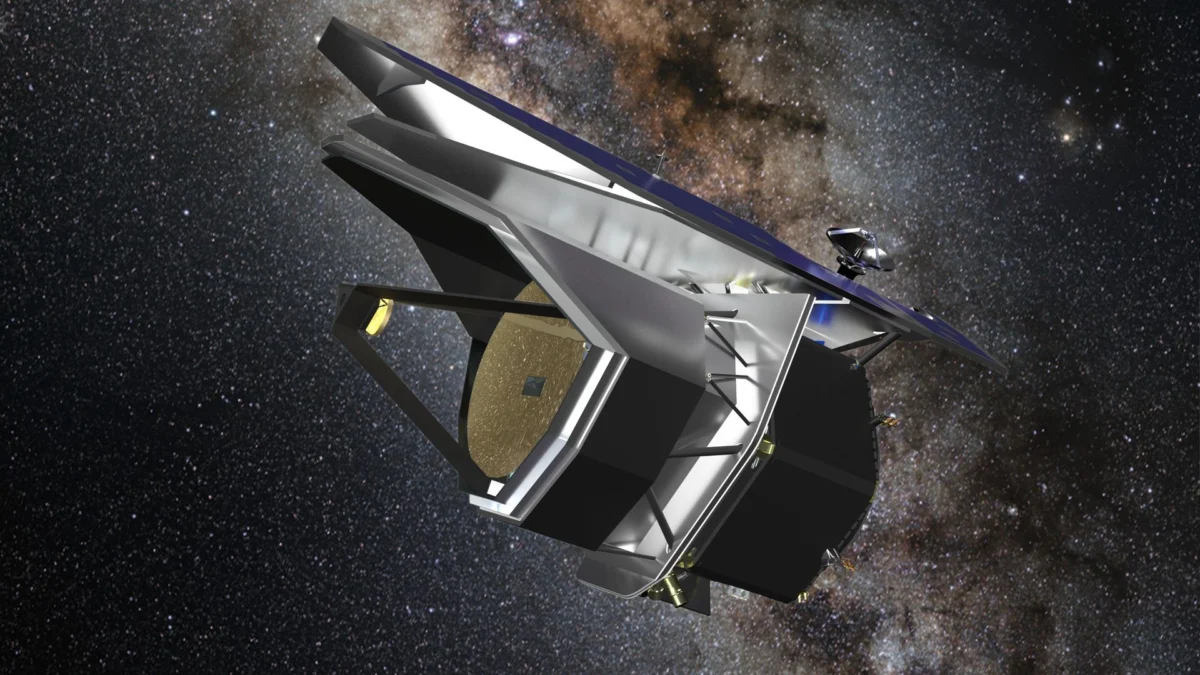
NASA has officially advanced the development of an ambitious new space observatory designed to peer even deeper into the infrared universe than the groundbreaking James Webb Space Telescope (JWST). Known as the Probe far-Infrared Mission for Astrophysics, or PRIMA, the project has successfully cleared its initial hurdles and is now advancing into Phase B, which encompasses preliminary design and technology maturation.
According to an official agency statement, this critical transition marks the beginning of formal engineering and architectural refinement for the observatory. Managers will continuously review the mission’s design progress and technological readiness before granting final approval for construction and eventual launch. If the mission adheres to its current development timeline, PRIMA is scheduled to embark on a primary five-year operational mission no earlier than 2033.
The selection of PRIMA as the inaugural mission in a new class of astrophysics probes signals a strategic shift in NASA’s long-term exploration strategy. By filling a crucial technological gap in the agency’s observational capabilities, PRIMA is poised to answer some of the most enduring questions in modern cosmology, ranging from the formation of the earliest galaxies to the chemical composition of planetary systems currently forming across the Milky Way.
Bridging the Observational Gap in the Infrared Spectrum
To understand the significance of PRIMA, astronomers emphasize the limitations of current space-based assets. While the James Webb Space Telescope has revolutionized our understanding of the cosmos by capturing unprecedented views of the near-infrared and mid-infrared universe, it operates at wavelengths that leave a significant portion of the far-infrared spectrum largely unexplored.
The far-infrared regime—spanning wavelengths roughly from 25 to 300 micrometers—is exceptionally difficult to study from the ground because Earth’s atmosphere absorbs the vast majority of these wavelengths. Water vapor, carbon dioxide, and other atmospheric gases act as an impenetrable blanket against far-infrared light. While airborne observatories like NASA’s retired Stratospheric Observatory for Infrared Astronomy (SOFIA) and space telescopes like the European Space Agency’s Herschel Space Observatory have previously provided glimpses into this hidden domain, a dedicated, highly sensitive, cold-space telescope has long been absent from NASA’s flagship fleet.
PRIMA aims to fill this void with a technologically advanced 1.8-meter telescope cooled to cryogenic temperatures just a few degrees above absolute zero. By maintaining an extremely cold operating environment, the telescope will minimize its own thermal emissions, allowing its ultra-sensitive instruments to detect faint infrared signals from the distant universe without interference.
Timeline and Chronological Development of the Mission
The journey toward PRIMA’s Phase B milestone is the result of years of strategic planning, community input, and competitive selection processes within the scientific and aerospace engineering communities.
The conceptual framework for a probe-class far-infrared mission was heavily informed by the Decadal Survey for Astronomy and Astrophysics (Astro2020), a landmark report compiled by the National Academies of Sciences, Engineering, and Medicine. The survey outlined high-priority recommendations for the coming decade, emphasizing the critical need for space-based capabilities in the far-infrared band to complement upcoming flagship missions like the Nancy Grace Roman Space Telescope and the Habitable Worlds Observatory.
Following the decadal recommendations, NASA structured a new class of astrophysics missions—the Probe-class missions—designed to fill the cost and capability gap between smaller Explorers-class missions and multibillion-dollar flagship observatories. In response to competitive solicitations, teams of scientists and engineers from across the globe submitted comprehensive mission proposals.
PRIMA emerged as the winning concept for the first mission in this new class, championed by a collaborative team led by principal investigators and researchers from institutions such as the Jet Propulsion Laboratory (JPL) and various academic partners. The transition to Phase B means the mission has moved past pure conceptualization and abstract design, entering an intensive period where engineering teams build components, test detector prototypes, and refine the spacecraft’s structural, thermal, and optical architecture.
Over the coming years, project managers will navigate a series of rigorous milestone reviews, including Preliminary Design Reviews (PDR) and Critical Design Reviews (CDR). These evaluations are designed to ensure that the mission remains within its allocated budget, adheres to strict safety and reliability standards, and stays on track for its targeted launch window in the early 2030s.
Supporting Data and Technical Capabilities
While JWST has excelled at detecting the light of the earliest stars and characterizing the atmospheres of nearby exoplanets in the near-infrared, PRIMA’s focus on the far-infrared will provide complementary data essential for understanding cosmic evolution.
Far-infrared astronomy is uniquely suited for peering through dense clouds of cosmic dust. When stars and planets form, they do so within immense nurseries of gas and dust that completely obscure visible light. Furthermore, as galaxies evolve over billions of years, vast quantities of interstellar dust absorb starlight and re-emit it at far-infrared wavelengths. Consequently, to study how galaxies assemble, how supermassive black holes grow, and how planetary systems originate, astronomers must observe the universe in the far-infrared.
PRIMA is designed to carry two primary science instruments optimized for spectroscopy and imaging across the far-infrared spectrum. These instruments will enable researchers to measure the chemical signatures of water, organic molecules, and various heavy elements in diverse astrophysical environments. By analyzing these spectral lines, scientists can trace the cycling of matter from diffuse interstellar clouds to newly formed stars and protoplanetary disks.
In addition to its spectroscopic power, PRIMA’s mapping capabilities will allow astronomers to conduct deep sky surveys, cataloging tens of thousands of distant galaxies that are entirely invisible to optical and near-infrared telescopes. This capability will shed light on the peak epoch of star formation in the universe—a period roughly 10 billion years ago when galaxies were forming stars at a rate vastly exceeding that of the modern cosmos.
Official Responses and Scientific Anticipation
The advancement of PRIMA has generated considerable enthusiasm within the global astronomical community, with researchers viewing the mission as a vital piece of the puzzle in modern astrophysics.
"The far-infrared universe holds the answers to some of the most fundamental questions about how matter organizes itself on cosmic scales," said a leading astrophysicist familiar with the mission planning, speaking on the condition of anonymity due to internal agency protocols. "With PRIMA, we are not just building another telescope; we are opening an entirely new window onto processes that are completely obscured at other wavelengths. It bridges the gap between what we can see with Webb and what we hope to achieve with future concepts."
NASA management has likewise emphasized the strategic importance of the probe-class mission structure. By establishing a dedicated tier of mid-sized missions, the agency aims to maintain a steady cadence of scientific discovery without incurring the massive financial risks and prolonged development timelines associated with traditional flagship observatories.
Agency officials noted that the rigorous evaluation process for Phase B ensures that potential technical bottlenecks—such as cryogenic cooling systems and ultra-sensitive detector arrays—are thoroughly vetted and resolved long before assembly begins. This proactive approach aims to safeguard the project’s schedule and budget, maintaining confidence among international partners and congressional oversight committees alike.
Broader Impact and Implications for Modern Astrophysics
The implications of PRIMA extend far beyond academic curiosity, touching upon fundamental questions regarding humanity’s place in the cosmos. By unveiling the hidden mechanisms of star and planet formation, the mission will provide critical context for the search for habitable environments beyond our solar system.
Understanding how protoplanetary disks evolve and how volatile elements are distributed during planet formation is essential for determining how common Earth-like worlds might be in the galaxy. Because far-infrared observations can penetrate the thickest regions of these disks, PRIMA will offer unprecedented insights into the early stages of planetary system architecture.
Furthermore, the technological innovations required to realize PRIMA—particularly in the realms of lightweight optics, cryogenic cooling, and low-noise far-infrared detector arrays—are expected to yield spin-off benefits for terrestrial industries and future space exploration initiatives. As engineering teams push the boundaries of what is possible in cold-space environments, the resulting advancements will pave the way for even more ambitious observatories in the latter half of the 21st century.
As development continues through Phase B, the international scientific community will watch closely as NASA shapes the blueprint for its next major leap into the infrared universe. With a clear trajectory established and engineering efforts now officially underway, PRIMA stands as a testament to humanity’s enduring drive to decode the deepest mysteries of space and time.










Leave a Reply