The global fight against infectious disease reached a monumental turning point today as the Africa Regional Certification Commission officially declared the World Health Organization (WHO) African Region free of the wild poliovirus. This historic milestone comes after four consecutive years without a single recorded case of the wild virus on the continent. With this achievement, five of the six WHO regions—collectively representing over 90 percent of the global population—have successfully eradicated wild polio, bringing humanity closer than ever to the complete and permanent eradication of the disease worldwide.
Only two nations on Earth continue to battle active wild poliovirus transmission: Afghanistan and Pakistan. The certification of Africa as wild polio-free marks a monumental psychological and tactical victory for global health advocates, proving that even the most complex epidemiological challenges can be overcome through sustained international cooperation, unwavering political will, and grassroots community engagement.
The Global Polio Eradication Initiative (GPEI)—a premier public-private partnership comprising national governments, the WHO, Rotary International, the US Centers for Disease Control and Prevention (CDC), UNICEF, the Bill & Melinda Gates Foundation, and Gavi, the Vaccine Alliance—was quick to praise the national governments of the 47 countries within the WHO African Region for their tireless dedication.
A Legacy of Leadership, Innovation, and Perseverance
Ending the transmission of wild polio in a region as geographically, culturally, and politically diverse as Africa required extraordinary innovation and steadfast leadership. Governments across the 47 nations successfully coordinated massive cross-border immunization campaigns, often deploying ingenious strategies to overcome formidable obstacles.
Health workers and community volunteers frequently had to navigate high levels of population movement, complex geopolitical conflicts, and severe insecurity that restricted physical access to vulnerable children. Furthermore, the wild poliovirus is notoriously adept at spreading quickly and crossing international borders, necessitating unprecedented levels of regional solidarity and synchronized vaccination schedules.
The financial and logistical backbone of this endeavor was provided by a coalition of generous donors, including sovereign governments, the private sector, multilateral institutions, and philanthropic organizations. Their shared commitment helped build robust public health infrastructure that enabled health agencies to reach more children than ever before, ensuring that even remote communities received life-saving vaccines.
Dr. Tedros Adhanom Ghebreyesus, Director-General of the WHO, reflected on the magnitude of the achievement during the official certification announcement. “Ending wild poliovirus in Africa is one of the greatest public health achievements of our time and provides powerful inspiration for all of us to finish the job of eradicating polio globally,” Dr. Tedros stated. He extended his deepest gratitude to the governments, frontline health workers, community volunteers, traditional and religious leaders, and parents across the continent who united to banish the wild virus from Africa.
Echoing these sentiments, Rotary International President Holger Knaack emphasized the long trajectory of the campaign. “During a challenging year for global health, the certification of the African region as wild poliovirus-free is a sign of hope and progress that shows what can be accomplished through collaboration and perseverance,” Knaack noted. He recalled the pivotal moment in 1996 when the late Nelson Mandela joined forces with Rotary, the GPEI, and African governments to launch the "Kick Polio Out of Africa" campaign. “Today’s milestone tells us that polio eradication is possible, as long as the world remains committed to finishing the job. Let us work together to harness our collective energies to overcome the remaining challenges and fulfill our promise of a polio-free world.”
A Timeline of Resilience: The Long Road to Eradication
To fully understand the gravity of today’s announcement, one must look back at the harrowing state of public health in Africa during the late 20th century. At its peak, polio paralyzed an estimated 75,000 children every single year across the African continent, leaving countless individuals with lifelong disabilities and straining fragile healthcare systems.
The turning point began in 1988, when the World Health Assembly passed a resolution to eradicate polio globally. At that time, the virus was endemic in 125 countries worldwide, paralyzing approximately 350 children every hour.
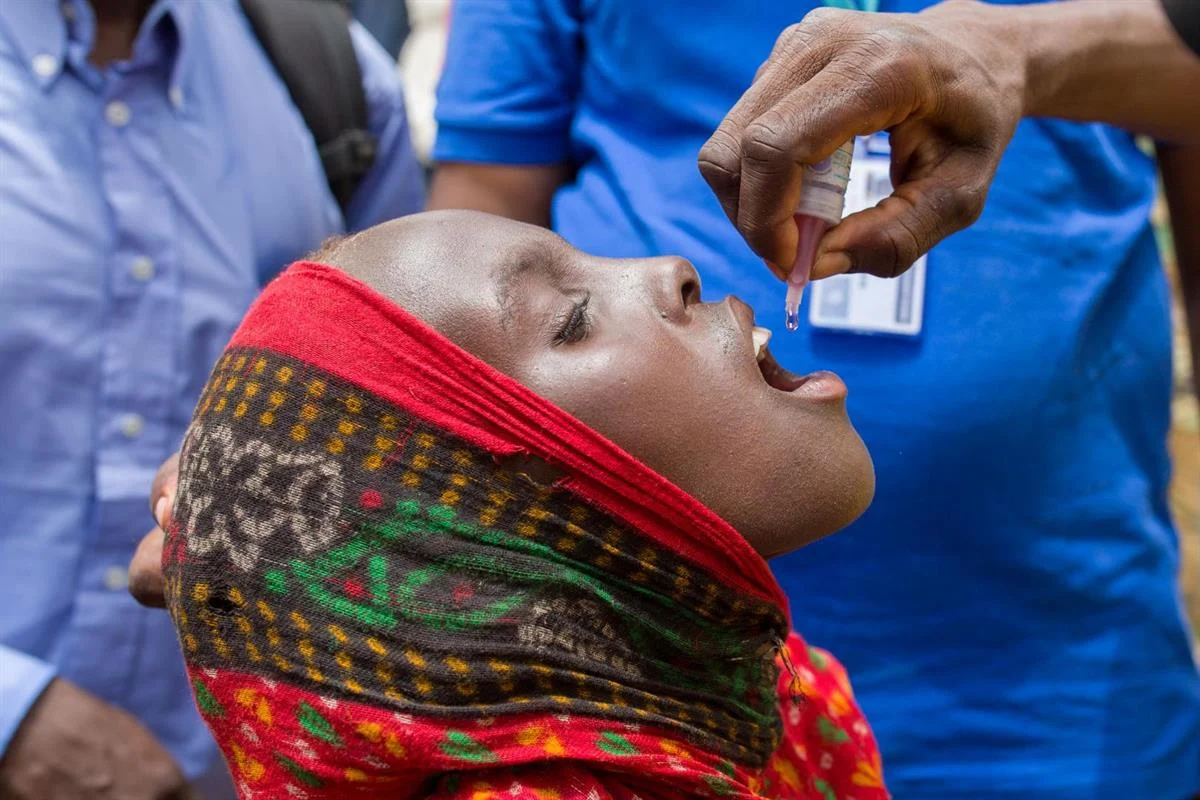
In 1996, leveraging the moral authority of global icons like Nelson Mandela, African nations committed deeply to the eradication initiative. Through coordinated "National Immunization Days," millions of health workers and volunteers traversed deserts, rainforests, and urban slums to administer oral polio vaccines (OPV) drop by drop to every eligible child under the age of five.
Despite setbacks—including localized conflicts, vaccine hesitancy, and infrastructural deficits—the number of wild polio cases in Africa steadily plummeted. By 2014, Nigeria, the final endemic stronghold on the continent, recorded its last case of wild poliovirus on August 24, 2014. Following four years of rigorous, intensive surveillance and zero detected cases, the African continent has officially crossed the finish line.
Beyond Polio: Strengthening Broader Health Systems
The infrastructure, expertise, and surveillance networks built to hunt down and eliminate wild polio have not existed in a vacuum. They have fundamentally transformed the broader public health landscape across Africa.
The cold-chain storage facilities, laboratory networks, and trained epidemiological workforce developed for the polio eradication initiative have repeatedly served as the first line of defense against other deadly pathogens. In recent years, these very systems have been leveraged by African nations to mount robust responses to major public health emergencies, including Ebola outbreaks in West and Central Africa, measles resurgences, yellow fever alerts, and, most recently, the COVID-19 pandemic.
Furthermore, polio eradication workers have frequently integrated routine immunization services into their door-to-door campaigns, delivering vaccines against diphtheria, tetanus, pertussis, and tuberculosis to marginalized communities that otherwise would have had zero access to formal healthcare infrastructure.
Ongoing Challenges: Guarding Against Complacency
While today’s certification is a monumental cause for celebration, public health experts and international bodies emphasize that the battle is far from over. The global health community faces a dual imperative: maintaining absolute vigilance against the resurgence of wild polio while aggressively tackling the evolving threat of vaccine-derived polioviruses.
Pockets of low population immunity remain a vulnerability in various parts of the African region. These immunity gaps have allowed type 2 circulating vaccine-derived poliovirus (cVDPV2)—a rare strain of the virus that mutates from the weakened live virus contained in the oral polio vaccine in under-immunized populations—to emerge and spread. Currently, cVDPV2 outbreaks are active in 16 countries across the African region.
This risk has been further magnified by the disruptions to routine immunization and vaccination campaigns caused by the COVID-19 pandemic, which temporarily forced many nations to pause door-to-door outreach to prevent viral transmission. Consequently, millions of children missed their scheduled immunizations, leaving communities temporarily more vulnerable to vaccine-preventable disease outbreaks.
In response, the GPEI and its partners are urgently calling on national governments, international donors, and local stakeholders to remain hyper-vigilant against all forms of polio. Epidemiologists stress that until every single strain of the poliovirus—wild and vaccine-derived alike—is eradicated globally, the incredible progress made against polio will remain under threat.
Implications for Global Health Equity
The successful eradication of wild poliovirus in the WHO African Region offers a profound lesson for global health diplomacy. It demonstrates that deep-seated, systemic health challenges can be systematically dismantled when international organizations, philanthropic entities, national governments, and local communities align their resources, science, and political will toward a singular objective.
As the world looks toward the final horizon of global polio eradication—focusing intensive efforts on the remaining endemic reservoirs in Afghanistan and Pakistan, while suppressing vaccine-derived outbreaks in Africa and elsewhere—the African continent stands as a beacon of hope. What was once considered an impossible dream by many in the medical community has become a living reality, proving that human ingenuity and collective perseverance can permanently rid the world of one of history’s most debilitating diseases.
For further information, official press releases, and multimedia assets regarding the WHO African Region’s historic achievement, visit africakicksoutwildpolio.com. To track ongoing global eradication efforts, visit polioeradication.org.