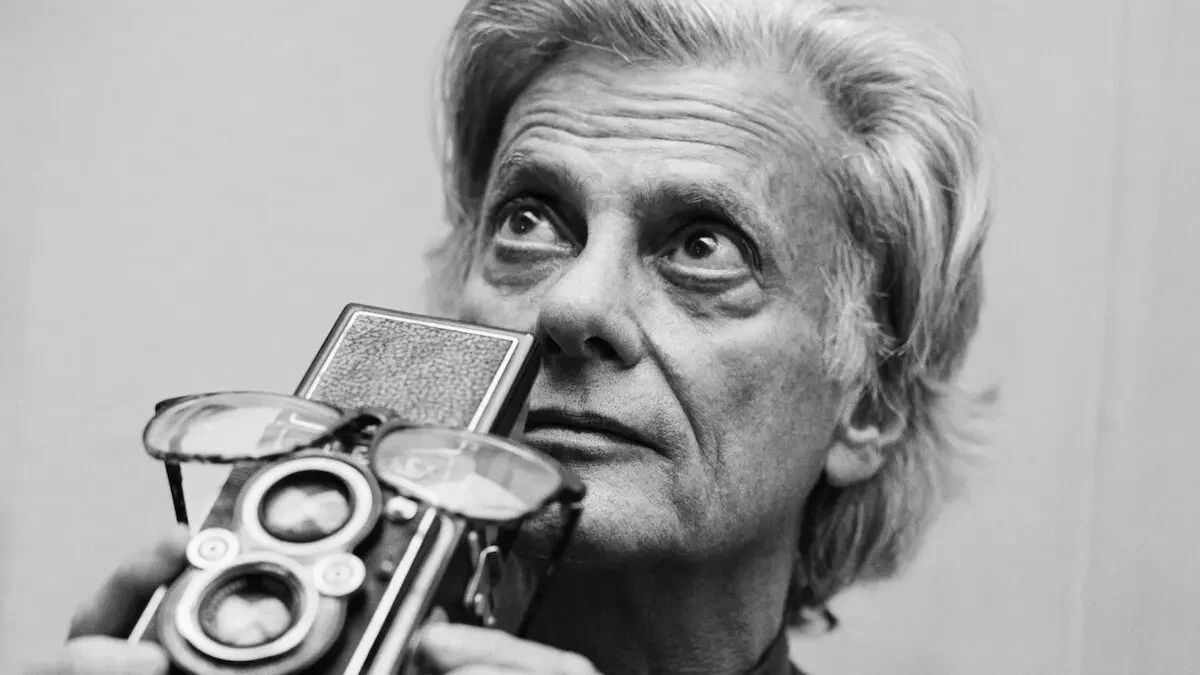
The cinematic landscape of 20th-century photography is indelibly marked by the work of Richard Avedon, a man who famously claimed he followed no rules and no laws. In the newly released documentary Avedon, directed by Academy Award-winner Ron Howard, the enigmatic photographer is finally given a comprehensive biographical treatment. Howard, perhaps best known for his narrative features and his previous musical documentary The Beatles: Eight Days a Week, employs an editorial rhythm that elevates the film beyond a standard retrospective. Edited by Andrew Morreale, the film utilizes a mosaic of thousands of images to articulate how Avedon fundamentally altered the metaphysics of portraiture.
The Architect of Modern Portraiture: A Chronological Overview
Richard Avedon’s career spanned six decades, beginning in earnest during the mid-1940s and extending until his passing in 2004. Born in New York in 1923, Avedon’s early life was defined by a sensory obsession with visual memory. He frequently recounted how, as a child, he would blink and keep his eyes closed while walking down the street to preserve a fleeting mental image, a practice that served as a precursor to his formal photographic training.
His professional trajectory was catalyzed by his service in the U.S. Merchant Marines during World War II. Assigned to the photographic department, Avedon captured roughly 100,000 portraits for military identification cards. While this task was ostensibly a mundane administrative necessity, it provided the laboratory where Avedon developed his signature style. By stripping away environmental distractions and focusing solely on the subject against a stark white backdrop, Avedon discovered that the face itself—unadorned and unfiltered—possessed a profound narrative quality.
Following the war, Avedon moved into the high-stakes world of fashion and editorial photography. His work appeared in Harper’s Bazaar and later Vogue, where he revolutionized the industry by capturing models in motion rather than static poses. By the 1957 film Funny Face, which featured Fred Astaire as a photographer modeled explicitly on Avedon, his reputation was cemented in the cultural consciousness.
Statistical Scope and Artistic Paradox
The scale of Avedon’s output is staggering. According to the Richard Avedon Foundation, the photographer completed approximately 16,000 portrait sittings between 1944 and 2004. When averaged over a 60-year period, this equates to roughly one session per working day, Monday through Friday, for six decades.
The paradox of Avedon’s career, which the documentary explores with clinical precision, lies in the tension between his public persona and his artistic mission. He was a pillar of the high-fashion establishment—a world defined by the pursuit of impossible beauty and artifice—yet he remained, at his core, a democratic humanist. He possessed the unique ability to make the world’s most glamorous figures, such as Elizabeth Taylor or Marilyn Monroe, look profoundly human and vulnerable, while simultaneously imbuing the faces of common laborers and civil rights activists with the same level of existential gravity.
The Methodology of the Invisible Technique
One of the central themes in Howard’s film is the demystification of Avedon’s technical process. Avedon famously disdained discussions of f-stops, lighting ratios, or mechanical settings. His technique was psychological rather than technical. As noted by subject and actress Isabella Rossellini in the documentary, Avedon’s sessions were remarkably brief and sparse. He would often spend the majority of a scheduled hour in conversation with the subject, only engaging the camera for a few frames when he sensed the subject’s guard had faltered.
This approach yielded iconic results, such as the 1953 session with Charlie Chaplin, during which the actor spontaneously placed his hands above his head to form devil’s horns. Such moments were not planned; they were the byproducts of a curated environment where the subject felt comfortable enough to reveal a side of themselves they typically kept hidden.
Contributions and Perspectives
The documentary assembles a broad array of voices to contextualize Avedon’s influence, including media figures like Tina Brown, art dealer Larry Gagosian, cultural critic Hilton Als, and designer Calvin Klein. These contributors highlight how Avedon’s work served as a bridge between high-art photography and commercial media.
John Avedon, the photographer’s son, provides a crucial layer of intimate insight, discussing the complex personal life of a man who was simultaneously a visionary and a complicated family figure. These testimonials are supplemented by deep dives into the archives conducted by James Martin, executive director of the Richard Avedon Foundation, who illustrates the sheer physical density of Avedon’s life’s work.
Broader Implications and Legacy
Beyond the glamour, the film addresses the more difficult chapters of Avedon’s life, including his struggles with his sister’s mental health and the friction in his personal relationships. It also explores his forays into sociopolitical commentary, such as his extended documentation of the American West and his coverage of the Vietnam War era.
When he photographed the residents of the American West in the late 1970s and early 1980s, the work was initially met with resistance from the New York art establishment. The images were perceived as too raw and unflattering. History, however, has vindicated these portraits, which are now considered masterpieces of mid-century American documentation.
Avedon’s work in advertising—such as the famous television spots for Obsession perfume—further underscores the fluidity of his talent. While some critics of the time viewed commercial work as a compromise, the documentary posits that Avedon saw no distinction between his editorial work and his advertising. For Avedon, the objective remained constant: to strip away the artifice of the image to reveal a singular, undeniable truth.
Conclusion: The Lasting Impact
The legacy of Richard Avedon is not found in a specific camera lens or a lighting setup, but in the shift of the viewer’s perspective. He moved photography away from the stiff, posed portraits of the early 20th century toward a direct, confrontational style that continues to influence contemporary photographers. By prioritizing the relationship between the artist and the subject, Avedon managed to freeze the ineffable qualities of human experience in silver gelatin.
Ron Howard’s Avedon succeeds by refusing to treat the subject as a static icon. Instead, it presents him as an active, evolving force who challenged the world to look closer. Whether capturing the grace of Twiggy in mid-air or the weary lines on the face of a war general, Avedon remained committed to the idea that the photograph is not an end in itself, but a medium designed to open the viewer’s eyes. As the film demonstrates, this 60-year endeavor resulted in an archive that serves as a mirror for the 20th century, capturing not just how we looked, but who we were.